

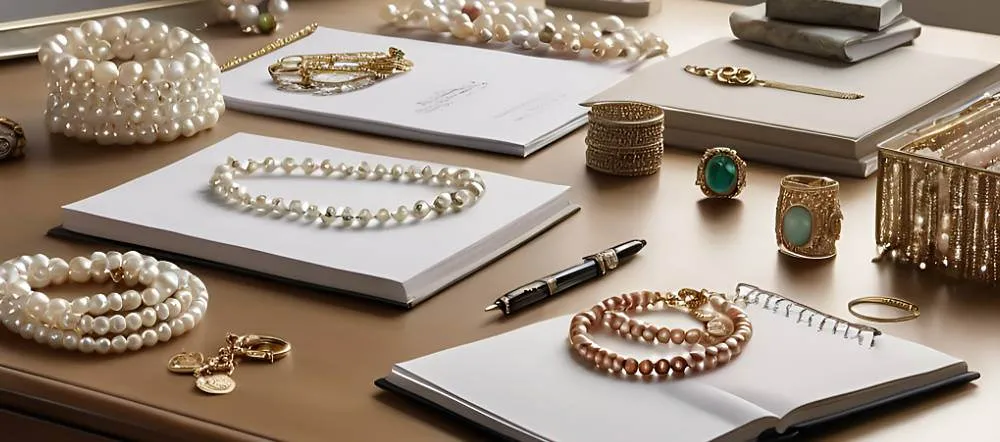

Fake Gemstones vs. Real: How to Tell the Difference
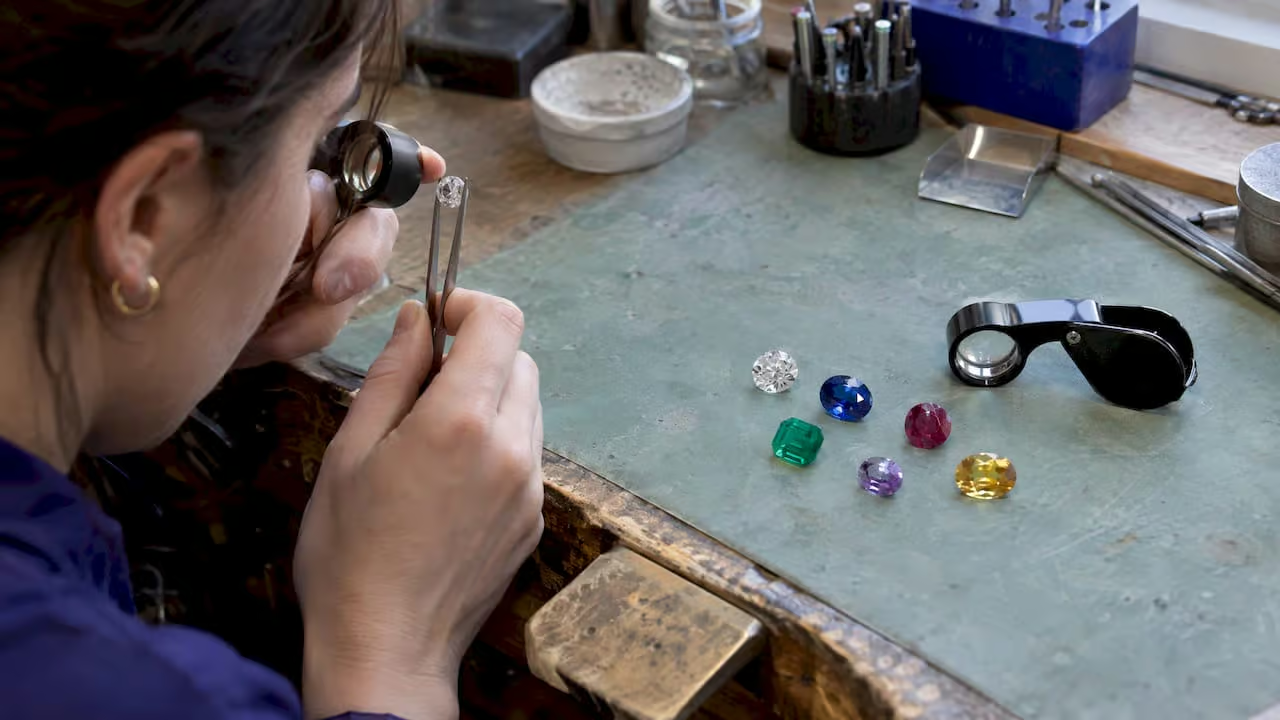
A “fake” gemstone can mean three very different things: a lab-created stone that’s chemically identical to a natural one, an imitation made of glass or plastic, or a real stone that’s been treated.
The FTC explains that natural stones form in the earth, lab-created stones are manufactured to match their chemical and physical properties, and imitations only look like the real thing. Once you know which one you’re holding or buying, the rest gets much easier.
I’ve spent years around pearls, crystals, and gemstone beads, and I’ll walk you through what the words mean, which checks you can try without harming a stone, and which popular “tests” you should skip.
TL;DR:
- Natural stones come from the earth, lab-created stones are real gems made by people, and imitations (simulants) are different materials that only look similar.
- Safe home checks are simple observations: weight, temperature, inclusions under magnification, bubbles, color pooling, and wear.
- Skip scratch, hot-needle, acid, and bleach tests. They can ruin a stone and tell you very little.
- For a diamond, or any stone you can’t identify with confidence, an independent gemological laboratory or trained jeweler is the reliable route.
- Good sellers describe origin and treatment clearly, and your paperwork should record it.
Three Kinds of Stone, Three Different Meanings
People use “fake” as a catch-all, but jewelers draw sharper lines. Each category answers a different question, so it helps to separate them.
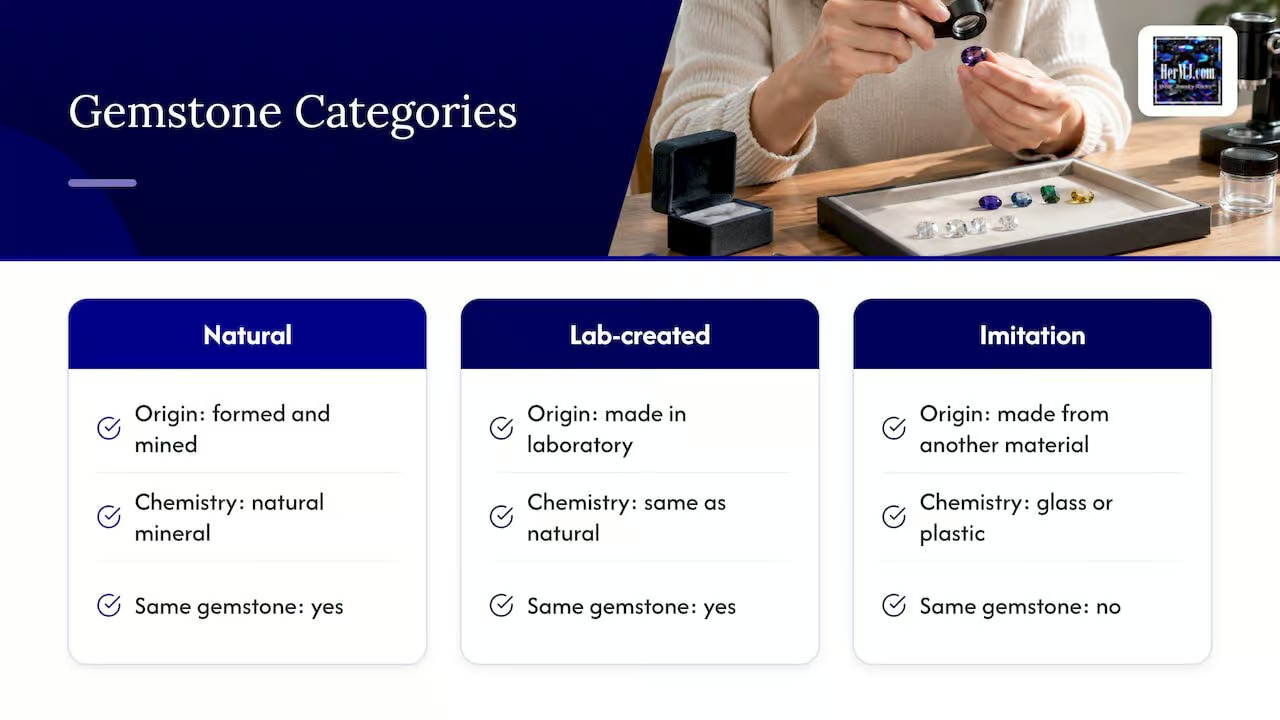
Natural gemstones form in the earth, are mined, then cut and polished. Their rarity and small growth signatures add to their appeal.
Lab-created (synthetic) gemstones are made in a laboratory from the same raw materials as natural gems. The JCRS consumer guide describes them as optically and chemically identical to their natural counterparts. Scientifically speaking, they’re real stones. They simply have a different origin.
Imitations, also called simulants, only resemble a gemstone visually. According to the FTC, they’re made of different, less expensive materials such as glass or plastic. A red glass bead sold as “ruby” is a simulant. A lab-grown ruby is a synthetic. A mined ruby is natural.
There’s one more wrinkle worth knowing. Some materials have no natural twin. The International Gem Society points out that bismuth germanium oxide is a synthetic material with no natural mineral counterpart, so a seller can’t honestly pass it off as a mined mineral.
Why the word “synthetic” confuses people
In everyday speech, “synthetic” sounds like “not real.” In gemology, it doesn’t. A synthetic sapphire is still corundum, the same mineral as a natural sapphire. That’s why a flat claim that lab-created stones are “fake” isn’t accurate, and why a flat claim that they’re “just as valuable” isn’t either. Origin and rarity set them apart.
Are Lab-Created Gemstones Worth Anything?
They’re real gemstones, and they’re often less expensive than natural ones, as the FTC notes. They don’t carry the same rarity, though. The American Gem Society states that laboratory-created gemstones lack the rarity and value of natural-colored gemstones.
That gap is the heart of the real-versus-lab question. If you want a stone because it took millions of years to form, with its own inclusions and color story, choose natural. If you simply want a bright, durable stone at a lower price, a lab-created one can please the eye. Neither choice is wrong. What matters is knowing which one you’re paying for.
Here’s a quick comparison to keep the categories straight.
| Natural | Lab-created | Imitation (simulant) | |
|---|---|---|---|
| Where it comes from | Formed in the earth | Made in a laboratory | Made from another material |
| Chemistry | The mineral itself | Same as the natural mineral | Different material, such as glass or plastic |
| Rarity | Limited by nature | Not rare | Not rare |
| Typical cost | Varies with quality | Often lower than natural | Usually the lowest |
| Can a loupe tell it apart? | Sometimes, for a trained eye | Often not | Sometimes, if bubbles show |
How to Tell if a Gemstone Is Real: Checks That Won’t Hurt It
No single home test proves a gemstone is genuine. You can gather clues, and several pointing the same way are far more convincing than one. Everything below leaves the stone untouched.
Look closely at the interior
A 10x jeweler’s loupe is inexpensive and worth owning. Natural stones usually carry small inclusions, tiny fingerprints of how they grew. A stone that looks flawless, glassy, and perfectly uniform inside deserves a second look, since that’s a classic sign of glass.
Stay humble about this check, though. GIA cautions that a loupe isn’t a conclusive test for consumers. Glass imitations can contain gas bubbles, some real diamonds are flawless, and an untrained eye can mistake reflections or facet junctions for inclusions. Treat what you see as a clue.
Hunt for bubbles and color pooling
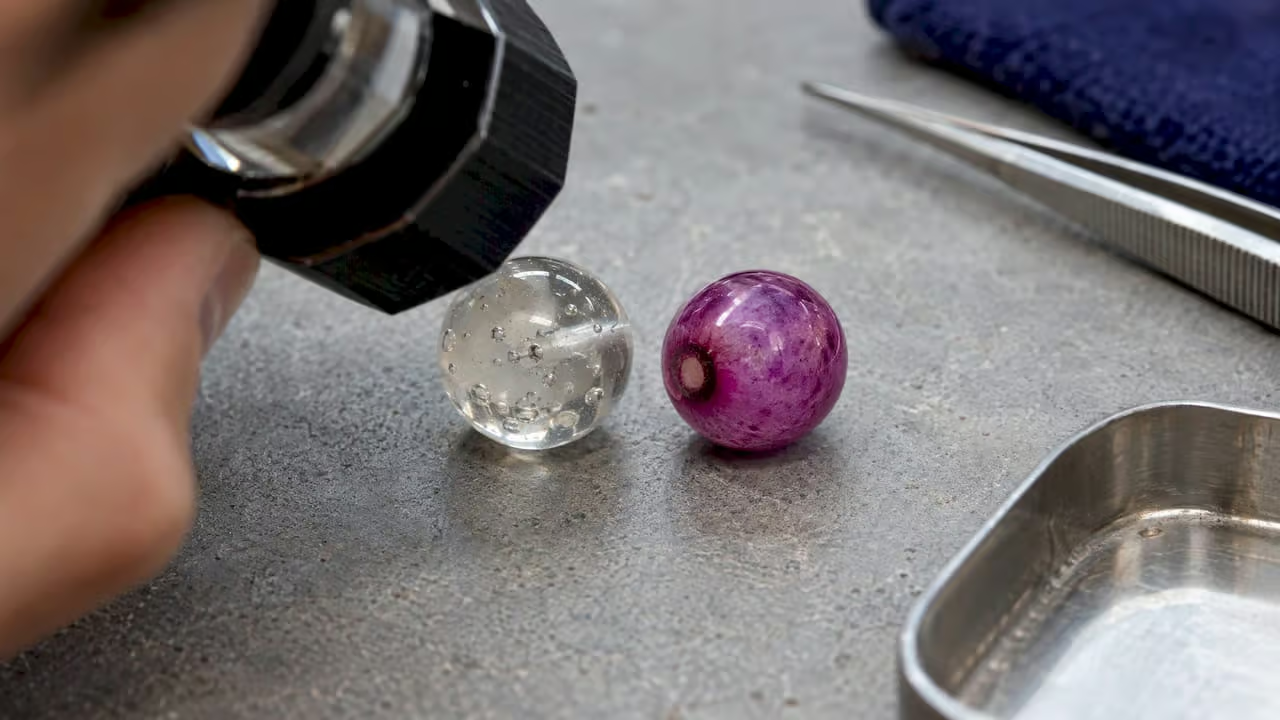
Round bubbles inside a stone suggest glass. In dyed or coated stones, color can gather in cracks and along drill holes in beads, which looks like a thin line of concentrated dye. Natural color usually spreads more softly through the material.
Check the edges and surfaces
Molded imitations can show faint seams where two mold halves met, and their facet edges often look rounded and soft rather than crisp. A real stone worn for years may show small nicks along its edges, while glass tends to show wear differently. Beads strung together should each look a little different. Real stones rarely match perfectly from one to the next.
Notice temperature and weight
Most genuine stones feel cool to the touch and stay cool longer than glass or plastic, which warm up quickly in your hand. Weight can help too, but you need a comparison piece of the same size, and it won’t settle the question on its own.
Read the paperwork
The FTC says your sales paperwork should include details the seller told you, such as origin, weight or size, treatments, and any special-care needs. If a seller says a stone is natural, untreated, or lab-created, you’re entitled to see it in writing. A clear receipt is one of your best tools.
Tests to Skip
The internet is full of dramatic home tests. Most of them put a stone at risk and prove little.
- Scratch tests. GIA warns against sandpaper and similar scratch tests on jewelry. They’re destructive, can abrade the stone and damage the metal, and can reduce value.
- The hot needle. This one permanently damages many stones, particularly those with resin or filler.
- Acid and bleach. They can harm the surface and tell you almost nothing useful.
- The fog or breath test, or tasting a stone. Neither is a reliable gem test, and neither is needed.
Thermal testers deserve a mention, too. The FTC’s business guidance notes that thermal testers used to separate diamonds from cubic zirconia may falsely identify moissanite as a diamond. A gadget can feel scientific and still mislead you.
When Only a Lab Can Answer
Some stones keep their secrets. GIA says you can’t reliably identify synthetic diamonds with a loupe because they share the key properties of natural diamonds. Laboratory testing is what separates them. For any diamond, especially a valuable piece you’re unsure about, a trained jeweler or an independent gemological laboratory is the most dependable way to get an answer.
If you’re spending serious money on a single stone, ask for an independent laboratory report. If it’s a modest piece you just want to understand better, a jeweler can often tell you what you’re looking at in a few minutes.
Which Stones Get Misrepresented Most Often?
Certain materials keep showing up as lookalikes. Turquoise, lapis, amber, and jet are well-known examples, where cheaper versions may be made from crushed material bound with resin or from dyed substitutes. Bright blue, perfectly even “turquoise” with no matrix, or a deep “lapis” with an unnatural uniform shade, are reasons to ask questions about origin and treatment.
Treatment is a separate matter from fakery. Many natural stones are gently heated, oiled, or dyed to bring out their color, and that’s a long-standing part of the trade. What matters is disclosure. Our page on gemstone enhancements explains how color enhancement works, so you can read a description with confidence.
What “Genuine Stone” Really Tells You
The word “genuine” sounds reassuring, but on its own it’s vague. It can describe a natural stone, or a lab-created stone that is the mineral it claims to be. The phrase doesn’t reveal origin.
The FTC’s guidance gives a useful benchmark. Sellers should describe a laboratory-created gemstone with a clear term such as “laboratory-grown” or “laboratory-created,” placed immediately before the gemstone name and just as conspicuous, so you know it isn’t mined. A lab-created stone may be called “cultured” only when the description also states clearly that it isn’t mined. If you see vague wording like “genuine,” “created,” or “precious-look,” look for the specifics in the listing.
Our Perspective
I’ve held thousands of stones, and the thing I’ve learned is that “real” isn’t one question. It’s three: where did this stone come from, has it been treated, and how is it being described?
At HerMJ, we work with genuine freshwater pearls, natural gemstones and crystals, and we believe a piece should feel like a small discovery. A natural stone has character you can see: a touch of banding in malachite, a soft glow in a pearl, an uneven bit of life in a garnet. That’s the beauty we’re designed around, and we want it available at accessible prices.
My advice is to buy from sellers who talk plainly about their materials, and to keep your receipts. Learn the three categories above and you’ll shop with far more confidence, whether you’re choosing for yourself or for someone you love.
Veronique
Reading a Listing Like a Jeweler
When you shop online, the listing is your first test. A few habits make a big difference.
- Look for the material by name. “Natural malachite,” “freshwater pearl,” and “faceted garnet” tell you more than “gemstone-style” or “crystal look.”
- Check for treatment notes. Dyeing, heating, and stabilizing are common, and a transparent seller mentions them.
- Compare photos with the description. Real stones vary. If every bead looks identical, ask why.
- Notice the craftsmanship. Settings and clasps say a lot about a piece. My guide to evaluating handmade setting quality shows what to look at.
- Weigh the marketplace. If you’re browsing several sellers, comparing gemstone jewelry marketplaces helps you spot clear descriptions and fair policies.
Price matters too. A large natural stone at a rock-bottom price is worth a closer look. Reasonable pricing is possible when pieces are made in small batches from carefully sourced beads, and that’s the space we aim to work in.
Precious, semi-precious, and why the labels mislead
The terms “precious” and “semi-precious” are trade conventions, not statements of quality. Some semi-precious stones are stunning and rare in their finest grades. For the full picture, my explanation of semi-precious vs. precious gemstones clarifies what the words do and don’t mean.
Real Gemstone Jewelry You Can Wear Every Day
If you’d like pieces with natural stones and genuine freshwater pearls at fair prices, start with our necklaces, bracelets, and modern drop earrings. Each is handmade, and you can see the natural variation in the stones.
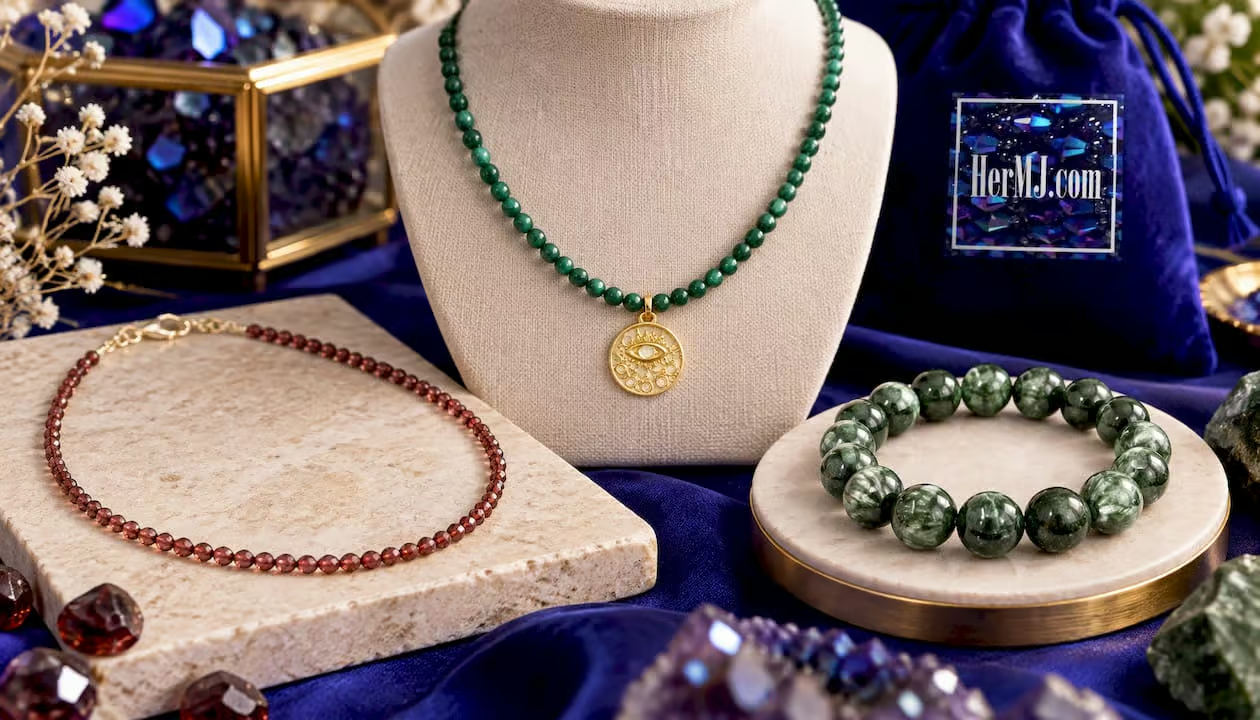
Two favorites for stone lovers: the faceted garnet gemstone necklace and the natural malachite pendant necklace. If you’re looking for a unique way to add charm to your place, the HerMJ room jewelry collection does that through handcrafted gemstone and crystal decor.
U.S. orders ship free with no minimum, and international orders ship free on orders of $150 or more. For anything involving pearls, our pearl care page covers maintenance and storage to keep your pieces lustrous.
FAQ
How can I tell if a gemstone is real at home?
Gather several non-destructive clues rather than relying on one. Look inside with a 10x loupe for natural inclusions, check for bubbles or pooled dye, and notice whether the stone stays cool in your hand. If the stone is valuable or the clues disagree, take it to a trained jeweler or an independent gemological laboratory.
Are lab-created gemstones real?
Yes, in the sense that they have the same chemical, physical, and visual properties as natural gemstones. They’re made in a laboratory instead of mined, and they’re often less expensive. Natural stones carry a rarity that lab-created ones don’t.
What’s the difference between synthetic and imitation stones?
A synthetic stone is the same material as the natural gem, grown by people. An imitation, or simulant, is a different material, such as glass or plastic, made to look like the gem. A lab-grown emerald is an emerald, while green glass sold as emerald is only a lookalike.
Can I scratch a stone to test it?
It’s best not to. GIA warns that scratch tests are destructive, can damage the stone and the metal around it, and can lower the piece’s value. Hot-needle, acid, and bleach tests carry similar risks, so choose observation and professional testing instead.
What does “genuine stone” mean on a product page?
By itself, it doesn’t tell you whether a stone is natural or lab-created. The FTC advises that lab-created stones be described with a clear term such as “laboratory-created” right before the stone’s name. Look for the specific material, origin and any treatments in the description and on your receipt.
Sources
- Buying Gemstones, Diamonds, and Pearls (FTC Consumer Advice)
- In the Loupe: Advertising Diamond, Gemstones and Pearls (FTC)
- How to Tell if a Diamond Is Real (GIA)
- What Are Created Gemstones? (International Gem Society)
- Colored Gemstones: Synthetics and Simulants (JCRS)
- Guide to Buying Jewelry (American Gem Society)
Recommended
- Semi-Precious vs Precious Gemstones
- How to Compare Gemstone Jewelry Online Marketplaces
- Pearl vs Moonstone: Which June Gem Wears Better?
- Types of Gemstone Cuts: A Plain-English Guide