

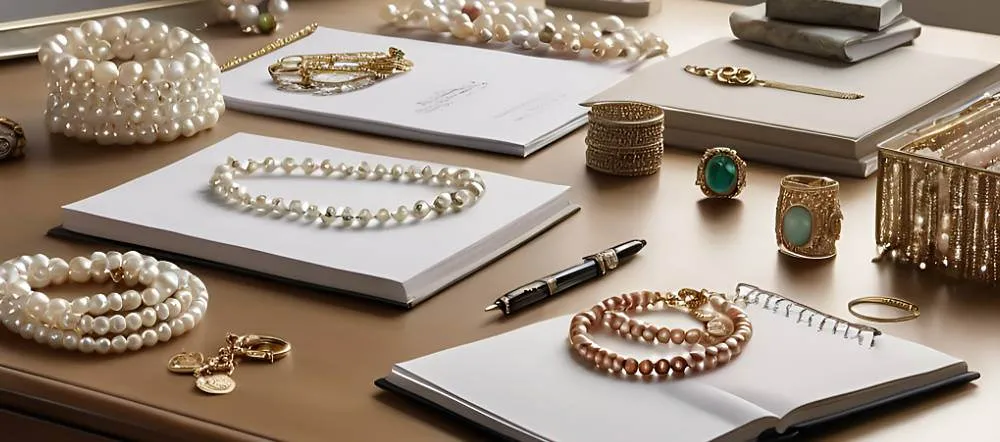

Cuff Bracelet vs. Bangle: How to Choose Yours
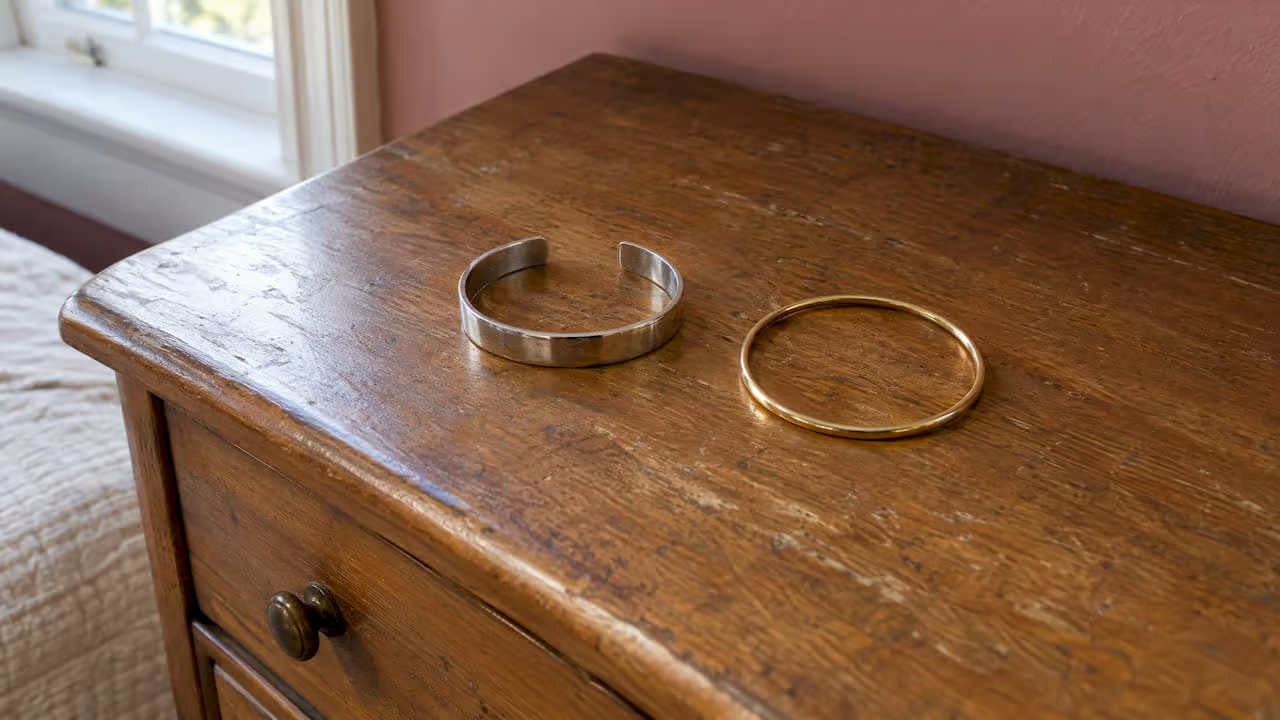
A cuff is an open band with a small gap that slips on from the side, and a bangle is a closed circle that slides over your hand. That one difference decides almost everything else: how each piece fits, how it feels through a workday, how it stacks, and which one makes the better gift. If you want a single statement piece that sits close to the wrist, choose a cuff. If you love a stack of slim bands that chime together, choose bangles.
I’ll go through both styles the way I’d explain them at a jewelry bench: what they are, how to size them, how they wear, and how to match them to your style.
TL;DR
- A cuff is open at one end with no clasp, so you slip it on from the side. A bangle is a closed, rigid circle you slide over your hand.
- Size a cuff to your wrist, and size a bangle to the widest part of your hand as it passes through.
- Cuffs shine as a single statement piece. Bangles shine in stacks of two, three, or more.
- Cuffs are having a strong fashion moment, and bangles remain a timeless everyday classic.
- When you’re unsure which to buy, measure first, then pick the shape that suits how you move through your day.
What is the difference between a cuff and a bangle?
Both are rigid, and both hold their shape rather than draping like a chain. The difference is the opening.
Jewelers Mutual describes a cuff as a structured, open-ended band with no clasp or closure, with a small gap that lets it slip on from the side. A bangle, by contrast, is fully circular, so it has to pass over your hand and settle at your wrist.
That’s why a cuff feels a little more sculptural. The gap gives it a wide, open silhouette, and the band itself can be broad, flat, or shaped like wearable art. A bangle reads as a continuous ring of metal, stone, or beads, which is why it looks so clean in multiples.
A quick comparison helps:
| Cuff bracelet | Bangle | |
|---|---|---|
| Shape | Open, with a gap | Closed circle |
| How it goes on | Slips on from the side | Slides over the hand |
| Fastening | None | None |
| Fit | Sits snug to the wrist, with some give at the gap | Loose, moves along the wrist |
| Best known for | A single bold statement | Stacking and everyday wear |
You may also see a chain bracelet mentioned in the same breath. That’s a different animal: it’s flexible, built from linked pieces, and fastened with a clasp. If you’d like help with that style, our bracelet size guide covers fit across bracelet types.
How each one fits and feels
Fit is where most people decide, so it’s worth slowing down to consider this.
Cuffs sit close and stay put
Because a cuff is made to rest against the wrist, it tends to stay where you place it. Jewelers Mutual’s fit guidance says a cuff should match your wrist measurement exactly, so a 7-inch wrist takes a 7-inch cuff, because the opening counts toward that circumference. Wear it above the wrist bone.
That close fit keeps the cuff secure. It won’t slide down your hand when you reach for a coffee, and it won’t clatter against a desk like a loose bangle can. You can gently adjust the opening by pressing with your thumbs, but do it slowly and sparingly, since repeated bending can stress the metal.
Bangles move with you
Bangles are the loosest-fitting bracelets. The same guide advises leaving at least two fingers of space between your wrist and the bangle. That freedom is the charm: a bangle slides, turns, and catches the light as you move.
The trade-off is size. A bangle has to clear the widest part of your hand, so it will sit looser on a slender wrist than a cuff would. If you have a small wrist and a broad hand, or the reverse, the sizing deserves a closer look (more on that below).
Comfort in daily life
Comfort comes down to how you live:
- Desk work and typing: a cuff that sits above the wrist bone stays out of the way, while a loose bangle can tap the keyboard or table edge.
- Walking, errands and travel: both work well. A cuff never slides off, and a bangle is easy to remove at airport security.
- Sleeves and layers: a cuff can sit snugly over or under a fitted sleeve, while a stack of bangles tends to push cuffs and sleeves upward.
- Dressing and undressing: a cuff slips on from the side without any pulling, and a bangle needs a small tuck of the thumb and palm.
If you want your jewelry to feel nearly invisible, start with a single slim bangle or a snug cuff.
How to size a cuff or a bangle
Both need a measuring tape, and neither takes more than a minute.
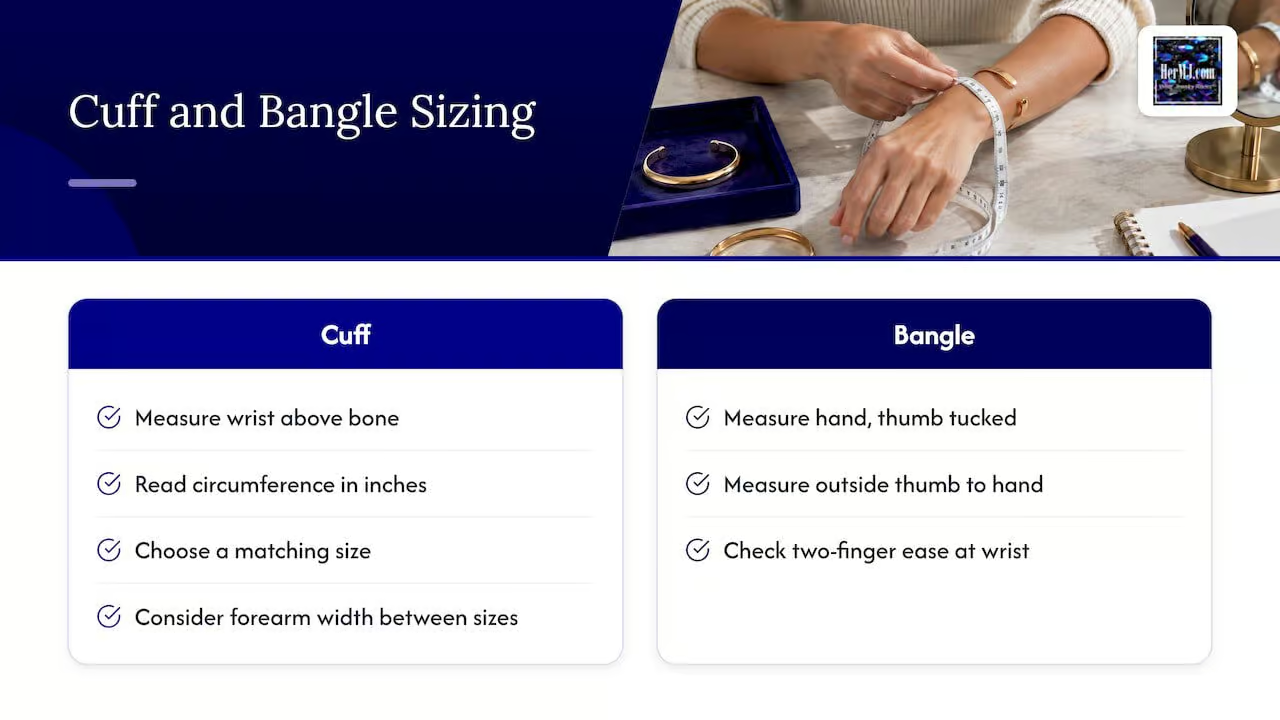
For a cuff: wrap a soft tape measure around your wrist, just above the wrist bone, and read the number in inches. Choose a cuff that matches it. If you’re between sizes, think about whether you’ll wear the cuff higher on the forearm, where the arm is a little wider.
For a bangle: the sizing question is the hand, not the wrist. Jewelers Mutual suggests measuring your hand with the thumb tucked in toward the palm, from the outside of the thumb knuckle across to the outside of the hand, or wrapping the tape around that bunched hand. That measurement tells you what the bangle must clear. Then check that you’d still have the two fingers of ease at the wrist.
When I’m helping someone pick a gift, I suggest the surest method: borrow a bracelet she already wears and measure its inside diameter. For the full walk-through, with charts and tips for different wrist sizes, see my bracelet size guide.
Styling: one bold cuff or a stack of bangles
The two shapes want different treatment.
Wearing a cuff
A cuff works best as the star. Matt Wodenka of Jewelers Mutual suggests treating a single large cuff as the statement and keeping everything else minimal. The same piece advises stylists to wear a cuff over a slim, fitted sleeve or gloves, creating a runway look that suits knitwear, leather, or silk.
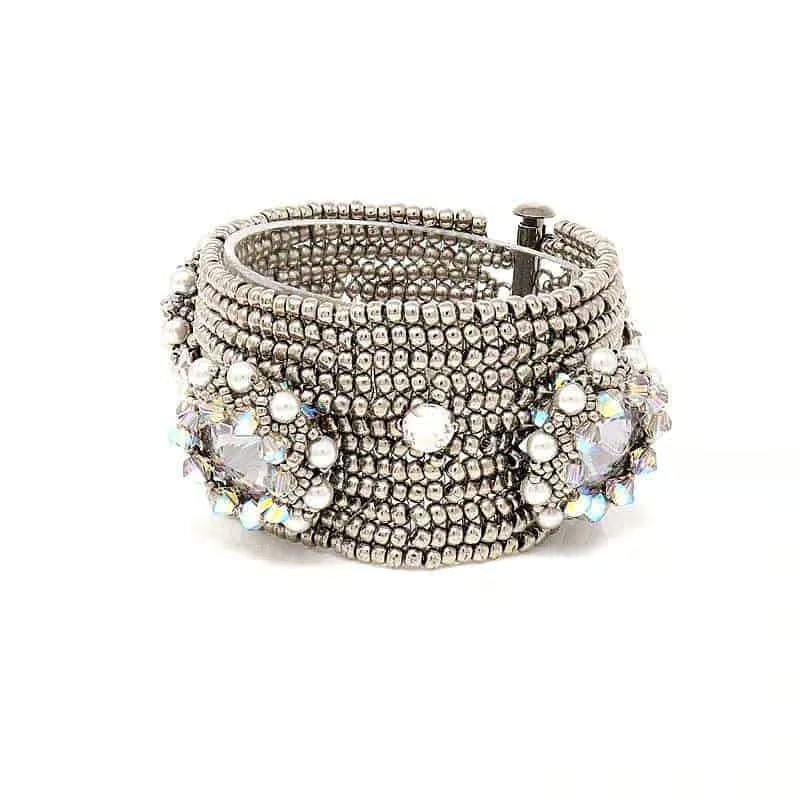
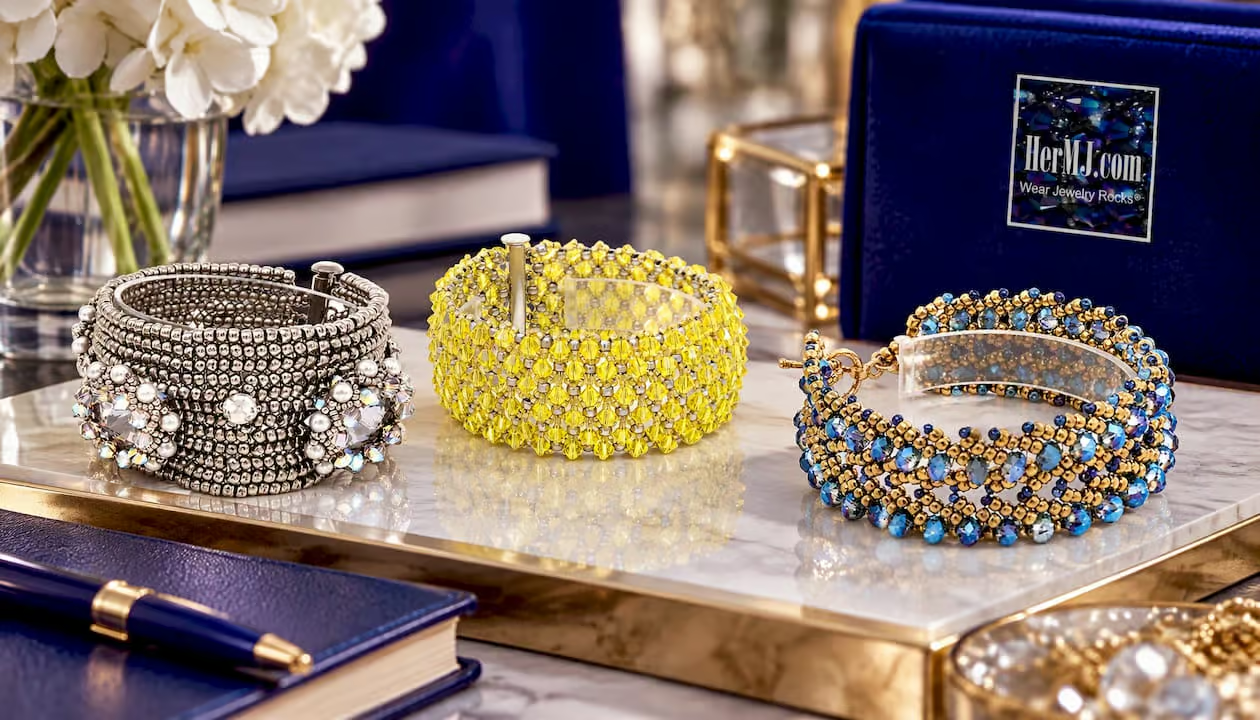
So if you’re wearing a cuff, let your earrings be small and your necklace delicate. A cuff pairs well with a plain white shirt, a simple knit dress or a black turtleneck. Consider The HerMJ Silver Rose Cuff for a floral, sculptural take on the shape.
Wearing bangles
Bangles want company. Three to five slim bands on one wrist make a soft, layered sound and a layered look. You can mix finishes, or keep the stack tonal for a calmer effect. Because they’re closed circles, they stack neatly without awkward gaps.
A good stack mixes widths: one slightly wider band, two or three thin ones, and perhaps one with a gemstone for color. If you’re drawn to gemstones, The HerMJ Citrine Crystal Bracelet adds warm golden tones to a mix of metals, and the Caviar Bracelet brings a deep blue crystal accent.
Which wrist?
It’s a question people ask often, and the answer is simple: wear it on whichever wrist feels natural. Many people choose their non-dominant wrist so the piece isn’t bumped as often, but there’s no rule. If you wear a watch, a cuff or bangle on the other wrist keeps the look balanced.
Are cuff bracelets still in fashion?
Yes, and the shift is easy to see. Grazia USA reports that the cuff is having a major 2026 moment: after years of thin-bangle stacks, the season has settled on a single sculptural band on bare skin. Runway houses have been rebuilding the wrist with bold metal, including gold flower cuffs shown in pairs on the Dior couture runway.
That doesn’t mean bangles have gone out of style. A slim bangle is one of those pieces that never really leaves, because it adapts to any wardrobe. The trend simply gives you a reason to try a more architectural shape if you’ve been wearing stacks for years. For more on that approach, read my guide to what sculptural jewelry is.
Choosing by occasion, wrist and personality
Here’s how I’d match each shape to a real situation.
You want a single standout piece. Choose a cuff. A wide band becomes the focal point of an outfit, much like a bold necklace.
You love texture and sound. Choose bangles. A stack gives you movement, and you can add or remove bands as your mood changes.
You prefer an easy on-and-off. A cuff slips on from the side in one motion, so it’s friendly if you have limited hand mobility or dislike fiddling with clasps.
You have a larger hand than wrist. A cuff is often the more comfortable choice, because it doesn’t need to clear your hand.
You’re shopping for a gift. A cuff offers more forgiveness on exact size, since the gap gives it some flex. A bangle is a lovely choice when you know the recipient’s size or favorite stack.
You’re building a capsule wardrobe. Start with one slim bangle and one cuff. Together they cover office, evening, and weekend looks.
For more ideas on bold pieces that anchor an outfit, our guide to types of statement jewelry walks through the options.
Materials: pearls, gemstones, and metal
Material shapes both comfort and care. Metal cuffs and bangles hold up well to daily wear. Pieces set with gemstones or accented with freshwater pearls call for a gentler touch, since pearls are organic gems and respond to perfume, sweat, and knocks. Take off a pearl cuff before applying lotion or hairspray, and store it on its own. For the details, visit our page on pearl care.
A useful habit: put jewelry on last when you get dressed, and take it off first when you come home. It protects stones, finishes, and the delicate edges of a cuff.
My view on cuffs and bangles
I love both shapes, and don’t think you need to choose just one. A cuff is a piece of wearable sculpture. It gives a plain outfit a point of view the moment it slides on, and it suits the natural stones and bold forms we work with.
A bangle is the piece you forget you’re wearing until someone compliments it. In the designs at HerMJ, I think of the two as partners: the bangle is your everyday ease, and the cuff is your occasion.
If you’re new to either shape, start with a piece in a stone or finish you already reach for. Real gemstones and freshwater pearls bring depth that photographs and fabrics can’t, and a bracelet is one of the easiest places to enjoy them every day.
Veronique
Find your bracelet at HerMJ
When you’re ready to try one, browse our full bracelet collection, where handmade pieces in genuine freshwater pearls, natural gemstones, and crystals sit side by side. HerMJ designs are for both everyday wear and special occasions, at accessible prices.
US orders ship free with no minimum, and international orders ship free on orders of $150 or more. If you’re buying for someone else, that makes a bracelet an easy gift to send straight to her door.
Quick decision guide
If you’re still weighing it, answer these three questions:
- Do you want one bold piece or a layered look? One piece points to a cuff. Layers point to bangles.
- Is your hand much wider than your wrist? If so, a cuff will usually feel more comfortable.
- Do you want something that stays in place? A cuff sits closer, while a bangle slides and chimes.
If you answered “cuff” twice or more, start there. If bangles won two or three, a stack will suit you. And if it’s a tie, get one of each. They look lovely together when the cuff sits on one wrist and the bangles on the other.
FAQ
What is the main difference between a cuff and a bangle?
A cuff is an open band with a small gap that slips on from the side, with no clasp. A bangle is a closed, rigid circle that slides over your hand. The cuff sits closer to the wrist, while the bangle moves freely.
Can you wear a cuff and bangles together?
Yes. The easiest way is to put the cuff on one wrist and the bangles on the other, which keeps the look balanced. On the same wrist, wear a single cuff with one or two slim bangles so the cuff stays the focal point.
Is a cuff or a bangle better for a small wrist?
A snug cuff matched to your wrist measurement is often the most secure option, since it won’t slide down. A bangle can work on a small wrist too, as long as it clears your hand and leaves about two fingers of room at the wrist.
Are cuff bracelets still in style?
Yes. Grazia USA reports a strong 2026 cuff trend centered on a single sculptural band worn on bare skin. Bangles remain a classic, so wearing either is a safe choice.
Sources
- Cuff Bracelets: Guide to Styling and Trends, Jewelers Mutual
- How Should a Bracelet Fit?, Jewelers Mutual
- Cuff bracelets trend 2026, Grazia USA
Recommended
- Bracelet Size Guide: Measure Right, Buy With Confidence
- How to Stack Bracelets: Build a Balanced, Beautiful Wrist
- Magnetic vs Toggle Clasp: Which One Fits Your Life?
- Top 5 Stretch Bracelet Care Tips for Pearls and Elastic