



Is AI-Assisted Pearl Grading Redefining Quality and Trust?
Article Brief
For centuries, the value of a pearl rested solely on the fallible human eye, but a quiet revolution is transforming this ancient industry through artificial intelligence and precision scanning technology. In this insightful article, an artisan jewelry designer reveals how machine vision and Optical Coherence Tomography are being used in pearl grading.
For as long as I have worked with pearls, their value has been defined by the human eye. Luster, surface texture, shape, and color were interpreted by trained appraisers whose opinions could vary depending on where they stood, from a pearl lab in Japan to a boutique in New York.
Lighting, fatigue, or even mood could influence a valuation. But today, we’re seeing shifts in the way technology, and AI technology in particular, is affecting even the objective world of jewelry. Particularly, pearl grading.
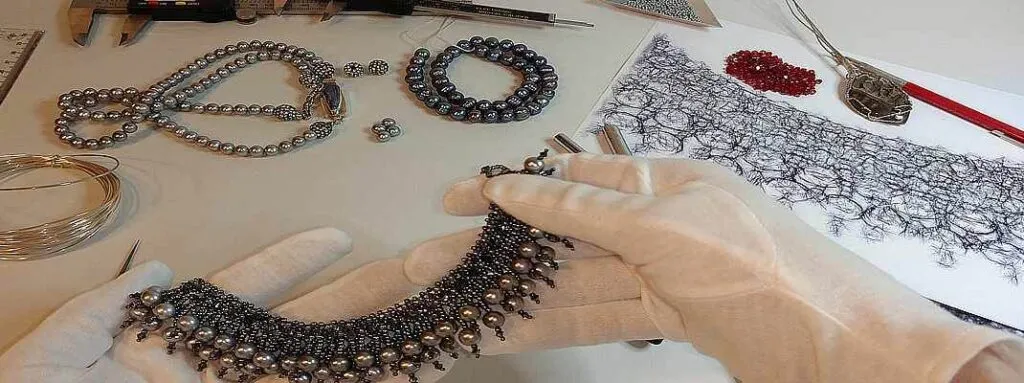
As a jewelry artisan, I routinely select stones for bespoke pieces. More and more, I’m seeing technology shift from offering tools to becoming a more prominent (and interactive) hand in quality control.
Here is how AI and advanced scanning are redefining what it means to grade a pearl, based on the latest industry developments.
AI’s Growing Influence in Perl Grading
From Subjective Eyes to Objective Algorithms
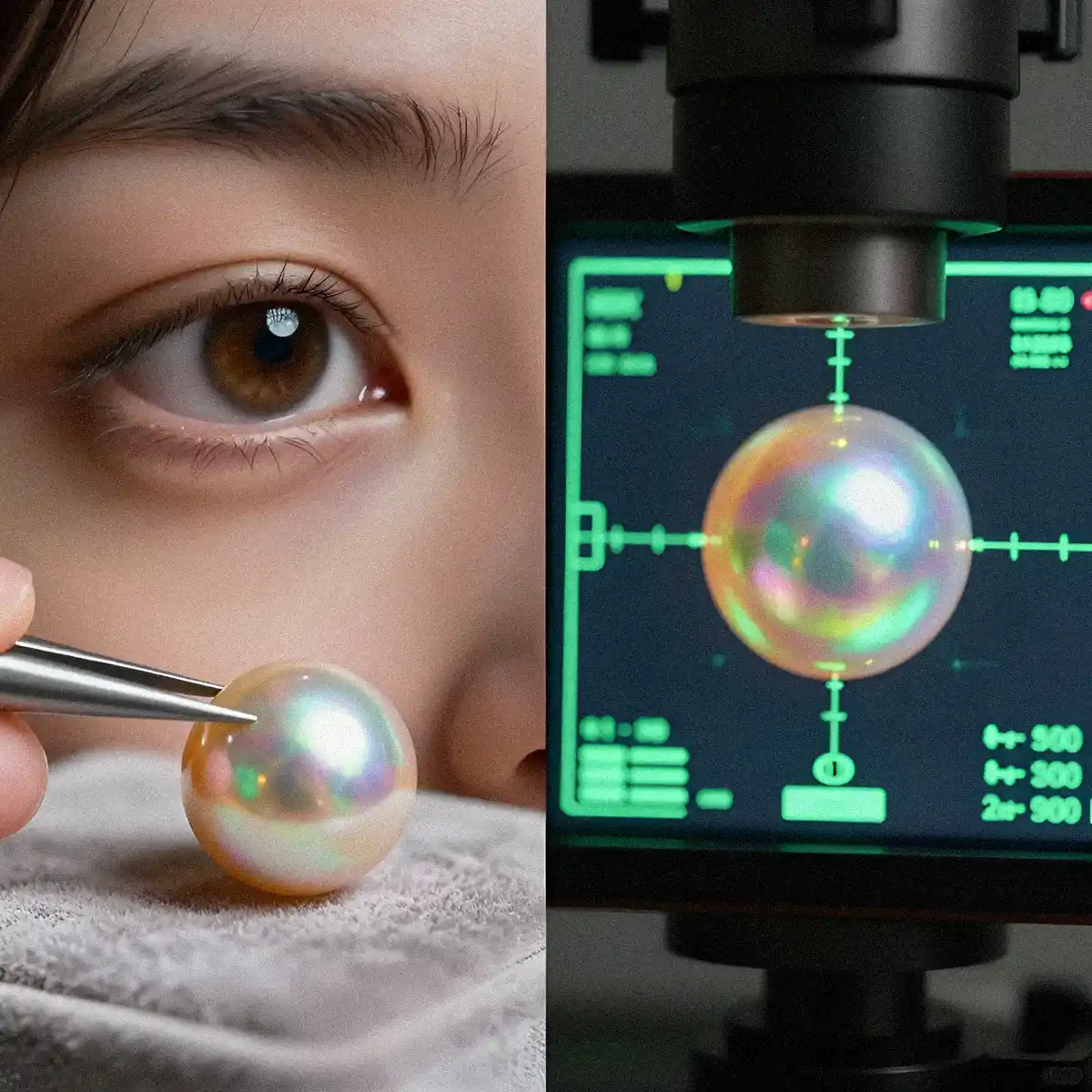
For hundreds of years, assessing a pearl relied entirely on our human judgment. This meant subjective grading was inevitable. However, recent advances in machine vision have turned this process on its head.
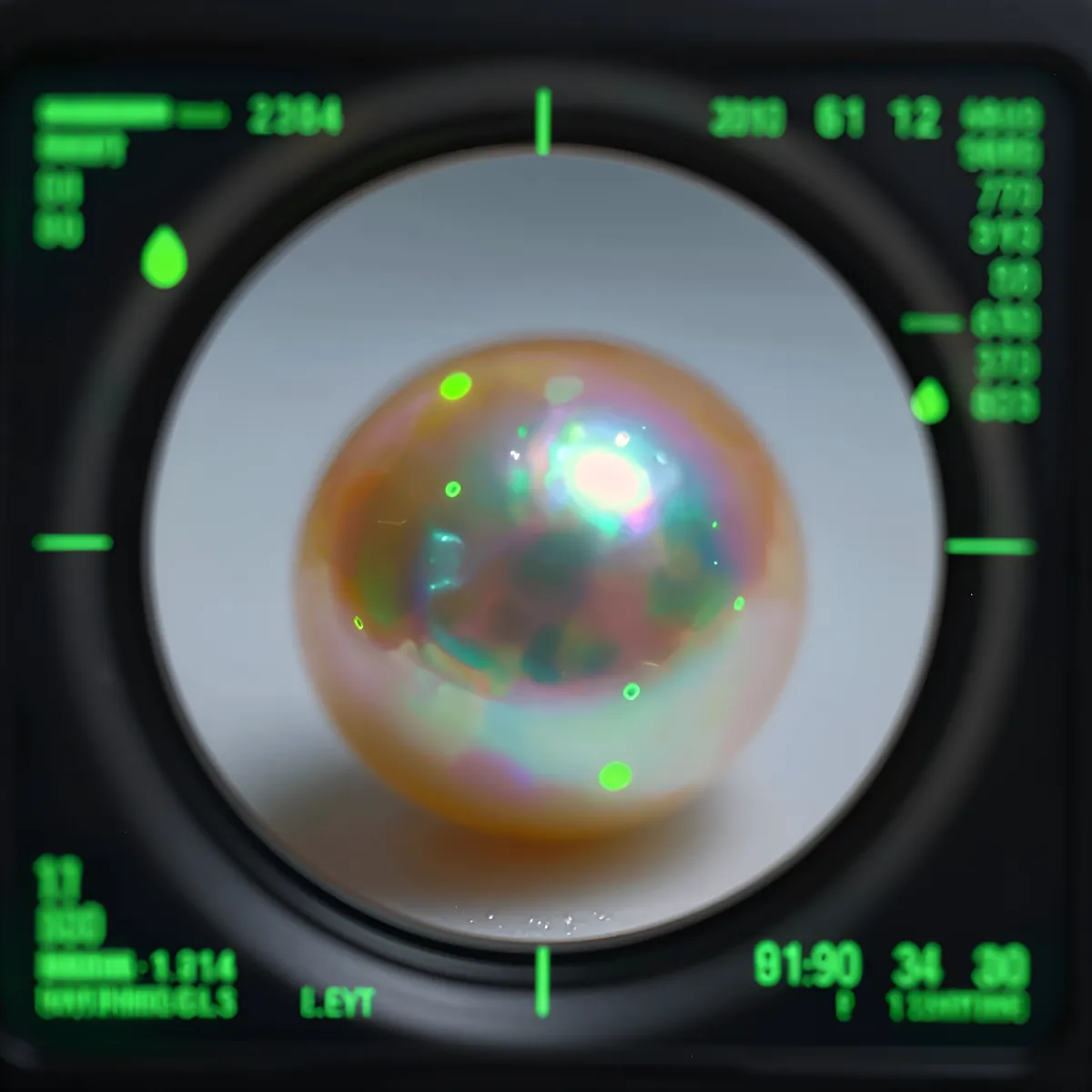
High-resolution cameras now capture microscopic details such as surface blemishes and exact color spectra. Aspects that the naked eye can miss or misjudge.
When combined with AI models trained on thousands of certified pearls, these systems instantly compare each specimen against internationally accepted standards.
The result is a consistent, repeatable grade that removes personal bias. Research published in Gems & Gemology (2021)1 reported the evolving shift, noting that technology can achieve agreement rates exceeding 90% with expert human graders when evaluating surface blemishes, roundness, and colorimetric values.
For me, this means both reassessing how the process is changing what I do and considering the potential benefits of knowing exactly what I’m buying before I consider the pearls that will become the piece, before it’s even designed.
Seeing Inside Without Breaking the Pearl
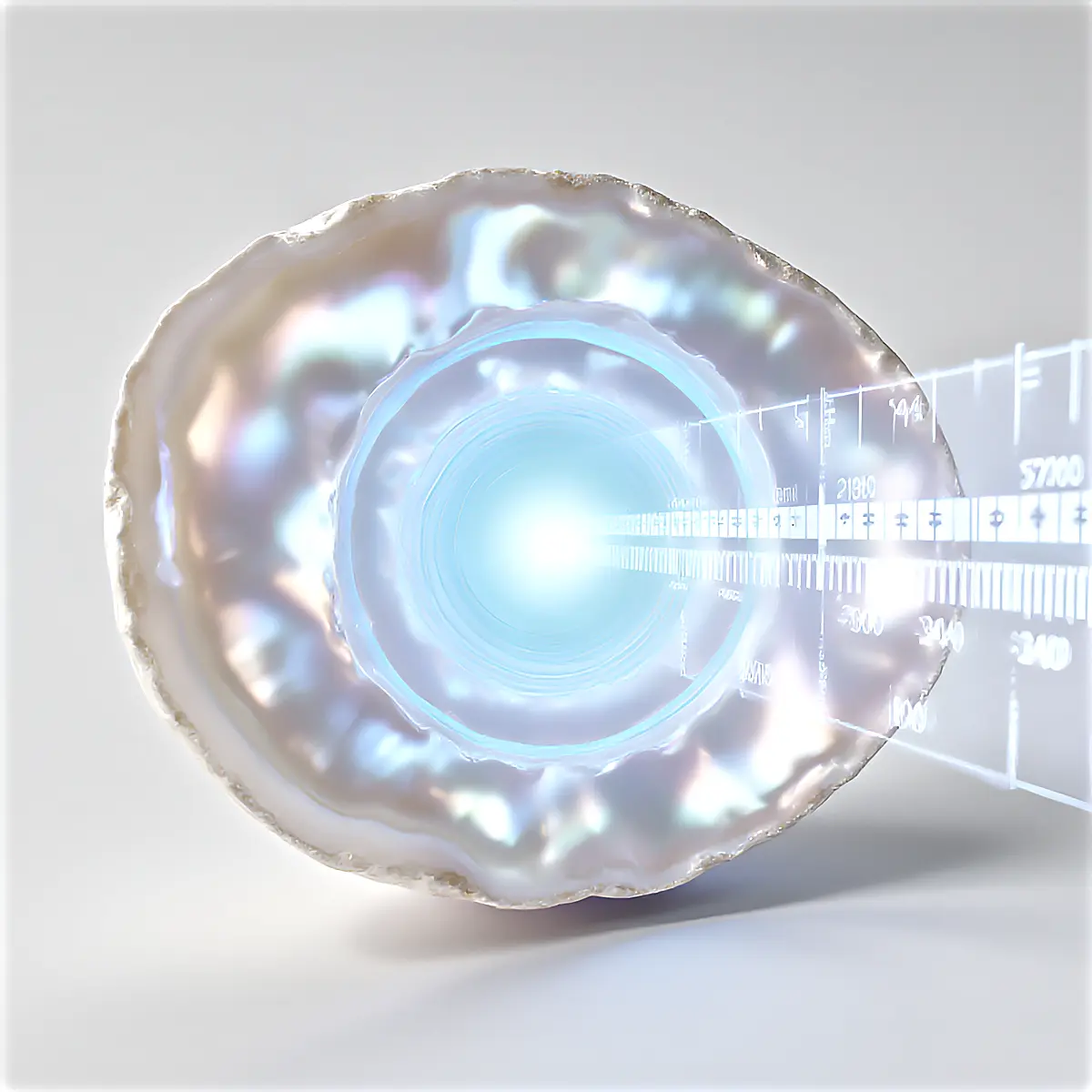
One exciting breakthrough for an artisan is Optical Coherence Tomography (OCT) paired with AI.
Traditionally, seeing inside a pearl required invasive methods or slower X-rays that didn’t always reveal depth. OCT delivers a non-destructive, depth-resolved 3D scan in seconds. It reveals internal nacre layers, the bead nucleus, and any hidden cracks without touching the surface. A truly valuable benefit.
In addition, this is critical for durability. As highlighted in Applied Optics (2022)2, AI combined with OCT can predict pearl luster grades with accuracy comparable to traditional expert evaluation while operating entirely non-destructively.
Because the pearl remains pristine, every millimeter of mother-of-pearl nacre is less at risk and remains more as an asset. Crucial for high-value natural pearls where integrity is everything.
Digital Passports: Provenance, Treatment, and Consumer Confidence
In our market, treatments, dyed stones, and cultured imitations are common. To safeguard buyers, AI-generated grading data is now being anchored to blockchain-based digital passports.
Each passport records the exact AI-derived grades (luster, surface, roundness), the origin farm, cultivation conditions, and any disclosed treatments such as bleaching or dyeing.
Consumers will soon find it common to scan a QR code on a piece of jewelry and instantly verify that the pearl has a certified record of its authenticity.
A case study in the Journal of Gemmology (2023)3 highlights how blockchain-enabled provenance platforms are already being deployed, citing significant increases in buyer confidence after digital verification was introduced. For my clients, it will become a vote of confidence they can rely on.
From Farm to Showroom: Closing the Loop with Predictive Analytics
AI grading doesn’t stop at the lab; it feeds back into the entire supply chain. By analyzing parameters that consistently produce top-scoring pearls, such as water temperature, salinity, and feeding regimes, farms can use predictive farming tools.
Sensors stream data to AI models, which then recommend optimal harvest windows to maximize nacre thickness and minimize surface blemishes.
This leads to higher yields of premium grades and more sustainable practices when farms adjust conditions only as needed.
The precision here is remarkable: studies on robotic vision systems for gem sorting (published in IEEE Transactions on Automation Science and Engineering, 20234) describe machine-vision sorting systems that achieve high accuracy in classifying roundness, enabling farms to fine-tune grow-out conditions based on real-time AI feedback.
The “Tech Divide” – But Who Benefits?
While the promise of AI-driven grading is compelling, we should acknowledge the cost. High-precision OCT scanners and proprietary AI platforms require significant capital investment.
According to 2024 market analyses from industry reports like those by Grand View Research and MarketsandMarkets5, OCT-based systems can be expensive for smaller players to implement independently.
As is typically the case with technological developments like these, large grading laboratories and multinational jewelry houses may gain faster turnaround times, while small-scale farmers or independent appraisers might struggle without shared-use initiatives.
Addressing this divide will likely require industry-wide support, such as cloud-based AI services, to level the playing field and allow greater access to these advanced capabilities so that quality remains accessible, not just exclusive.
What This Means for Artisan Designs
Because the future often comes with challenges as well as benefits, I will have to balance the pros and cons as a designer selecting pearls for bespoke pieces. In light of this, I see this new ecosystem offering three tangible benefits:
- Confidence in Every Purchase: Knowing each pearl carries a verified, AI-generated grade eliminates doubts about hidden flaws or undisclosed treatments.
- Design Consistency: Predictable quality metrics allow me to plan collections with exacting specifications for roundness and luster.
- Storytelling Power: Digital passports will enable me to convey a pearl’s journey from ocean to atelier, adding provenance that resonates with discerning clients.
Looking Ahead
The integration of AI, machine vision, and OCT into pearl grading is still evolving, but the trajectory is clear: precision, transparency, and data-driven decision-making will become the industry baseline.
As technology matures, we may benefit from faster turnarounds from farm to finished jewelry and broader adoption of digital provenance.
For artisans like myself who embrace these tools while preserving the human touch that defines fine jewelry, it’s my hope that we use technology to augment art, not replace it, so that the future remains as bright as the perfectly graded pearl.
References
- Wang, J., Li, Y., & Zhou, X. (2021). Deep Learning for Pearl Quality Assessment. Gems & Gemology, 57(3), 215‑227. ↩︎
- Singh, M. K., & Chen, L. R. (2022). Optical Coherence Tomography for Nondestructive Evaluation of Gemstones. Applied Optics, 61(12), 3225‑3234. ↩︎
- Patel, S., & Ghosh, R. (2023). Blockchain for Gemstone Provenance: A Case Study. Journal of Gemmology, 41(2), 88‑102. ↩︎
- Martinez, L., Lee, K., & Zhang, H. (2023). Robotic Vision Systems for Gem Sorting. IEEE Transactions on Automation Science and Engineering, 23(4), 2541‑2553. ↩︎
- Grand View Research & MarketsandMarkets. (2024). Optical Coherence Tomography Market Size & Trends Analysis Reports. ↩︎
Handmade Artisan Pearl Jewelry With A Human Touch
Experience the luster of handcrafted pearl and gemstone jewelry from HerMJ.