

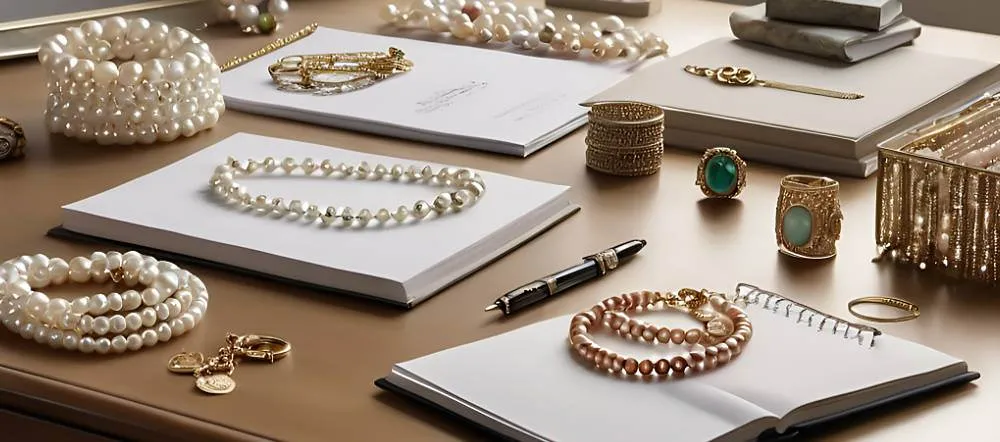

6 Quick At Home Tests Buyers and Heirs Use to Verify Real Pearls
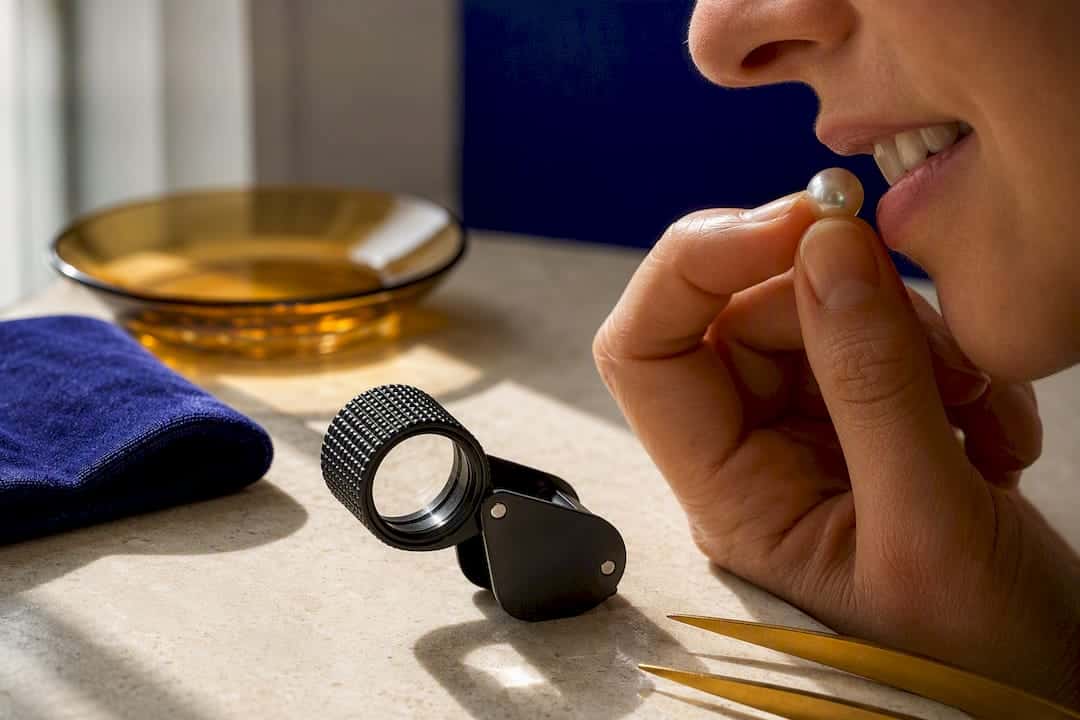
Run your teeth gently across the surface. If it feels gritty, like fine sand, you’re likely holding real pearls; if it glides smooth as glass, be skeptical. Check the drill holes next for coating flakes or peeling, since that’s a classic imitation giveaway.
When the two tests disagree, or the piece has real sentimental or resale value, stop guessing and get it looked at under a microscope or x-ray. And remember, cultured pearls are entirely genuine gems, not fakes, even though they got a little human help to start growing.
The Edit
- The tooth test and drill-hole inspection are the most reliable home methods, as they reveal the nacre structure and layering that fake pearls lack.
- X-ray radiography, microscopy, and refractive index measurements remain the definitive tests used by professionals to distinguish natural or cultured pearls from imitations.
- Most effective confirmation occurs when multiple tests agree, especially the drill-hole’s layered edge and internal structure, rather than relying on feel alone.
- Genuine pearls, whether natural or cultured, typically have slight surface irregularities, a layered glow, and a bit of weight, unlike smooth, perfect-looking fakes.
- Authentic pearl pieces come with transparent provenance, and reputable sellers will answer questions, provide detailed photos, and allow independent appraisals before purchase.
How To Tell Real Pearls From Fake Ones At Home
You don’t need a gemology degree to get a strong read on what you’re holding. You need a few minutes, decent light, and a willingness to trust your senses over what the seller told you.
I’ve walked enough clients through this process to know the order matters. Start with the tests that are hardest to fake, then work toward the ones that need corroboration.
1. The tooth test. Rub a pearl lightly against the edge of your front tooth. Genuine pearls, whether natural or cultured, feel gritty or sandy because their nacre is built from overlapping layers of calcium carbonate crystals.
Imitation pearls, made from glass, plastic, or shell beads dipped in lacquer, feel smooth or slightly waxy, since there’s no crystalline structure to catch on enamel.
2. The rub-together test. Take two pearls from the same strand and rub them against each other over a dark cloth.
Real pearls often shed a faint dusting of powdered nacre, a fine white residue that comes from the outer layers abrading against each other. Fakes rarely produce this, because their coatings are engineered to resist wear, not shed it.
3. Drill-hole inspection. Grab a jeweler’s loupe or even a strong phone camera zoom and look closely at the hole. Genuine pearls show a clean, slightly worn opening with visible layering at the edge, almost like the growth rings on a tiny tree stump. Imitations often reveal chipped or peeling coating right at the hole’s rim, where the bead core underneath shows through, usually a chalky white or gray.
4. Luster and overtone check. Hold the pearl under natural window light, not a lamp, and tilt it slowly. Real pearls throw off a deep, layered glow that seems to come from beneath the surface, with secondary colors (overtones like pink, blue, or green) shifting as you turn them.
Fakes tend to have a flat, surface-level shine, like a coat of varnish, because the light bounces off the coating instead of traveling through translucent layers.
5. Weight and temperature. Real pearls feel cool against your skin for the first second or two, then warm quickly, and they carry a bit more heft than you’d expect for their size.
Here’s the catch: well-made glass imitations, like the coated Majorica-style beads you’ll see online, can mimic both traits closely, so don’t treat this test as decisive on its own.
6. Uniformity and sound. Roll the pearls across a flat surface and watch how they move. Genuine pearls, especially natural ones, usually carry subtle irregularities in shape, surface, and size because they grew inside a living organism, not a mold.
A strand where every single pearl is a perfect, identical sphere is a strong signal you’re looking at manufactured beads.
A few things to avoid while you’re testing:
- Never hold a pearl to a flame to “test” it. That’s an old wives’ tale that can scorch nacre and ruin a genuine pearl for nothing.
- Skip harsh cleaners or alcohol wipes during inspection. They can strip coating on fakes and etch nacre on real pearls, muddying your results either way.
- Don’t rely on a single test. Coated glass fakes can pass the temperature test, and a worn genuine pearl can lose some of its telltale grit over decades of wear.
Pro Tip: Test three or four pearls from different points on the strand, not just one. Clasps and end pearls sometimes get replaced over the years, so the piece might be a mix of real and fake even if it started as one or the other.
What Professionals Use: X-Ray, Microscopy, And Optical Testing
When the stakes are higher, an inherited strand, a piece you’re about to insure, or a purchase running into four figures, home tests are a starting point, not a final answer. Professional labs and experienced jewelers reach for tools that see what your teeth and eyes can’t.
X-ray radiography is the gold standard. It reveals the internal growth structure of a pearl, showing the concentric layering that forms naturally around a nucleus, whether that nucleus is a tiny bead (in cultured pearls) or nothing at all (in natural ones). X-rays reliably separate genuine pearls, natural and cultured, from solid glass or plastic imitations, because fakes simply don’t have that layered internal architecture.
Microscopy works at a smaller scale. Imitations show either a smooth painted layer or a repetitive, almost printed texture, since they’re manufactured rather than grown.
Optical testing, including refractive index measurement, gives labs another data point. Pearls typically read between 1.530 and 1.685, and readings outside that range flag a fake fast.
What should you expect to pay? Costs vary by lab and region, and turnaround runs anywhere from a few days to a couple of weeks for a full written report. A few guidelines for choosing where to send a piece:
- Look for labs affiliated with GIA or jewelers who belong to Jewelers of America.
- Ask if the report separates natural from cultured, not just real from fake, since that distinction affects value significantly.
- Get everything in writing. A verbal opinion won’t help you with insurance or resale later.
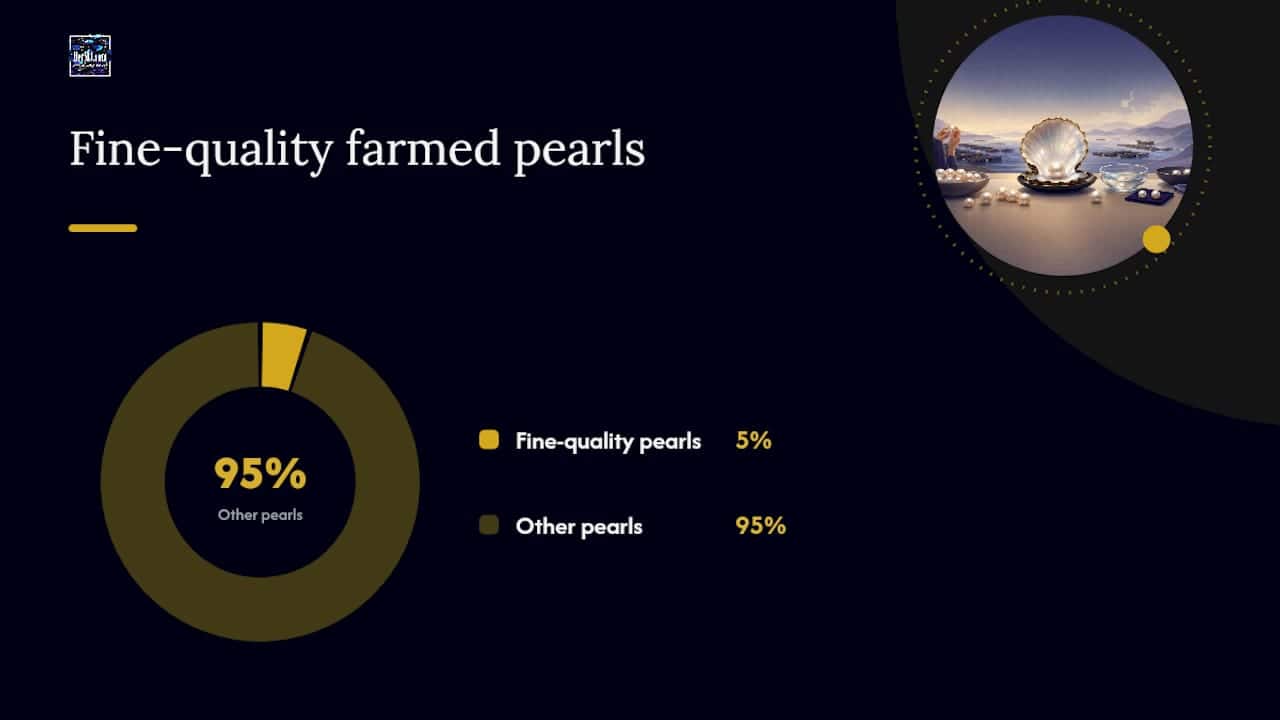
Only a small slice of farmed pearls ever reach the quality tier that’s worth this kind of scrutiny, since roughly 5% of pearls produced in a typical farming cycle meet fine-jewelry standards. That scarcity is exactly why a lab report matters when real money is on the line.
What To Ask Before You Buy Pearls
The best defense against buying a fake is asking direct questions before you pay, not troubleshooting after the box arrives. A seller who’s confident in their inventory will answer all of these without hesitation.
- Ask outright: are these natural, cultured, or imitation, and were any treatments applied to enhance color or luster?
- Request close-up photos of the drill holes and a shot of the full strand laid flat, so you can check for uniformity issues before you commit.
- Ask about the return window and whether an independent appraisal is allowed during that period.
- Use price as your gut check. A genuine freshwater strand rarely sells for the price of a fast-fashion accessory, and if it seems too cheap for the description, trust that instinct.
Watch for a few red flags in particular. Sellers who dodge questions about origin, get vague about returns, or push back hard when you mention getting an independent appraisal are telling you something.
So is a strand where every pearl looks stamped from the same mold, or where product photos conveniently avoid the drill holes altogether. Genuine sellers welcome scrutiny because they have nothing to hide.
Caring For Pearls So They Keep Their Glow
Pearls are organic gems, closer in nature to a living material than a mined stone, and that means they need gentler handling than your other jewelry. Get the care routine wrong and you’ll accelerate exactly the kind of damage that makes a real pearl look tired and fake-adjacent.
- Wipe pearls with a soft, slightly damp cloth after every wear to remove skin oils and perfume residue before they settle into the nacre.
- For deeper dirt, use a drop of mild soap in water, dab gently with a soft cloth, then rinse with a barely damp cloth and lay the strand flat to air-dry.
- Store pearls flat in a soft pouch or a fabric-lined compartment. Hanging them for long stretches can stretch and weaken the silk thread that holds the strand together.
- If you wear a strand often, plan to restring it every couple of years, since silk cord wears faster than you’d think.
Whatever you do, skip the ultrasonic or steam cleaner. Jewelers are unanimous on this because the heat, vibration, and chemical exposure can delaminate coatings, crack nacre, and dissolve silk thread, damage that shows up as dulling, flaking, or a strand that suddenly feels loose.
Pro Tip: If you notice a chalky patch or flaking on a “pearl” you assumed was real, stop wearing it immediately. That’s coating wear, and continued friction will only expose more of the bead core underneath.
How HerMJ Verifies Every Pearl Before It Reaches You
I built HerMJ around a simple frustration: too many people fall in love with a piece, only to wonder later if it’s actually what the listing claimed.
HerMJ pearl bracelets start with genuine freshwater cultured pearls, and we don’t treat “cultured” as a lesser category. It’s a real, biological gem that gets a small nudge from a farmer instead of forming entirely by chance.
Before anything goes up for sale, we run it through the same checks we just walked you through:
- Visual inspection under strong light for surface irregularities and consistent, believable overtones.
- A close look at every drill hole for clean edges and no coating chip, since that’s where fakes usually show their hand first.
- A luster and overtone check across the full strand, not just the clasp pearls, to catch inconsistencies buyers often miss.
If you want more photos of drill holes, clasp construction, or overtone color before you buy, ask us directly, we’re happy to send extras. And because every piece is handmade, we can talk through sizing.
US orders ship free with no minimum, and international orders ship free for orders starting at $150.
There’s a straightforward return window if something doesn’t feel right once it arrives. For a deeper look at how quality gets graded across the industry, our pearl grading guide breaks down luster, surface, and nacre thickness in plain language.
Why Real Pearls Carry So Much History, And Why Fakes Followed Close Behind
Pearls have been treated as a marker of status for thousands of years, from Roman aristocrats who reportedly valued them above nearly any other gem, to Mikimoto’s breakthrough in cultured pearl farming in Japan in the early 20th century, which finally made genuine pearls attainable beyond royal courts and merchant fortunes.
That shift, from wild-harvested rarity to farmed availability, is the single biggest reason pearls show up in everyday jewelry boxes today instead of only museum cases.
Imitation pearls have an almost equally long history, just less glamorous. Venetian glassmakers were producing convincing faux pearls by the 1600s, coating glass beads with fish-scale extract to mimic luster long before plastic existed.
That tradition never really stopped. It just modernized into today’s coated glass and resin beads, sold honestly by some brands as costume jewelry and dishonestly by others as the real thing.
The common uses have diverged accordingly. Real pearls, natural or cultured, tend to anchor heirloom pieces, bridal jewelry, and investment-grade strands meant to last generations.
Imitation pearls fill the fast-fashion and costume jewelry space, priced for trend cycles rather than longevity, and there’s nothing wrong with that as long as the labeling is straight with you.
The Materials Behind Most Fake Pearls On The Market
Not all fakes are created with the same effort, and knowing the tiers helps you calibrate how suspicious to be.
Glass beads sit at the top of the imitation hierarchy. Brands coat a solid glass core with layers of lacquer mixed with fish-scale essence or synthetic pearl essence, building up enough thickness that the bead can feel cool and heavy like a real pearl.
These imitations pass the temperature and weight tests, which is exactly why you need the tooth test and drill-hole check to catch them.
Plastic and resin beads are the cheapest and most common, especially in mass-market costume jewelry. They’re lightweight, warm up almost instantly against skin, and often have a slightly too-perfect shine that reads as plastic even from a few feet away.
Shell-based imitations, sometimes called shell pearls, use crushed mother-of-pearl mixed with an adhesive to form a bead, then coat it.
These sit in a strange middle ground: closer to genuine material than glass or plastic, but still manufactured rather than grown, and still missing the internal layering that x-rays reveal in true nacre.
Majorica-style pearls deserve a specific mention since the name gets thrown around loosely online. These are glass-core beads with a proprietary multi-layer coating, marketed honestly by legitimate brands as fine imitation pearls, not passed off as genuine. The trouble starts when resellers blur that line.
Scams To Watch For When Shopping For Pearls
Most pearl scams don’t rely on convincing fakes. They rely on convincing stories, vague language, and pressure to skip verification. A few patterns show up again and again.
The “estate sale mystery strand” pitch is common on resale marketplaces and social media. A seller claims a strand came from a relative’s collection, uses emotional framing to discourage haggling or questions, and gets vague the moment you ask about origin or testing. Genuine sellers with real provenance are usually eager to share it, not defensive about it.
Watch for listings that use “cultured” and “natural” interchangeably, or that describe glass and shell beads as “genuine pearl” without clarifying they mean the shell material was used to coat a bead, not that you’re getting a whole pearl. That phrasing is technically defensible and practically misleading.
Be wary of urgency tactics: countdown timers, “last one left” messaging, or heavy discounts on pieces described as rare natural pearls, which almost never move that fast in legitimate markets given how scarce top-quality cultured pearls already are.
And always check return policies before buying from an unfamiliar seller. A legitimate business stands behind its descriptions with a real return window; a scam operation makes returns deliberately difficult or nonexistent.
An Editorial Take On Quick, Reliable Pearl Testing
The conventional advice on this topic leans too hard on one test, usually the tooth test, as if it settles the question alone.
It doesn’t.
I’d rather see buyers and heirs run two or three quick checks together and treat agreement between them as the real signal, not any single result.
What’s overrated is the temperature test. It gets repeated constantly because it’s easy to demonstrate, but well-made glass fakes defeat it routinely. What’s underrated is the drill-hole inspection, because it’s the hardest spot for a fake to disguise convincingly, and most sellers photograph everything except that one detail.
If you take one thing from all this, prioritize the tests that examine structure over the ones that rely on feel.
Feel is subjective and fakes have gotten better at mimicking it. Structure, whether it’s the layering at a drill hole or the pattern under magnification, is much harder to fake convincingly.
— Veronique
Verified Freshwater Pearl Pieces Worth Considering
HerMJ exists because good pearls shouldn’t come with guesswork attached, or a price tag that assumes you won’t ask questions. Every piece below started as genuine freshwater cultured pearl, checked by hand before it ever got listed.

The Elegant Freshwater Pearl Necklace is our most versatile everyday piece, with consistent luster and the kind of subtle surface irregularity that tells you it grew, rather than got molded.
The Lustrous Freshwater Pearl Bracelet for Elegance makes a strong gift option, sized comfortably for daily wear without sacrificing the deep overtone glow that separates real nacre from a coated bead.
The Lapis Lazuli Pearl Necklace pairs pearls with rich blue gemstone accents for anyone who wants a statement piece rather than something understated.
| Piece | Best for |
|---|---|
| Elegant Freshwater Pearl Necklace | Everyday wear |
| Lustrous Freshwater Pearl Bracelet for Elegance | Gift giving |
| Lapis Lazuli Pearl Necklace | Statement occasions |
US orders ship free with no minimum, and international orders ship free at $150 or more.
HerMJ specializes in handmade designs, and our return policy gives you room to have a piece appraised after it arrives. If you want extra photos of drill holes or overtone color before you buy, reach out to our team and we’ll send them.
Where To Go For Deeper Authentication
- GIA’s pearl care guide covers cleaning safety and lab-grade testing standards.
- Jewelers of America’s pearl buying guide explains grading and sourcing in plain terms.
- For structural testing, seek out a lab or member jeweler equipped for x-ray radiography and microscopy rather than relying on visual opinion alone.
Sources
- 6 Ways To Tell If Pearls Are Real, According To Experts
- Real vs Fake Pearl — How to tell? (Gemslore)
- Pearl Buying Guide | Jewelers of America
- How to clean pearls without ruining them | GIA
Recommended
- Pearl Grading: What Every Buyer Needs to Know
- The Truth About Pearl Durability: A Designer’s Guide to Care
- What Makes Pearls Valuable: Exploring The Origin of Elegance
- Understanding Pearl Quality: The Beauty Of Real Pearls