

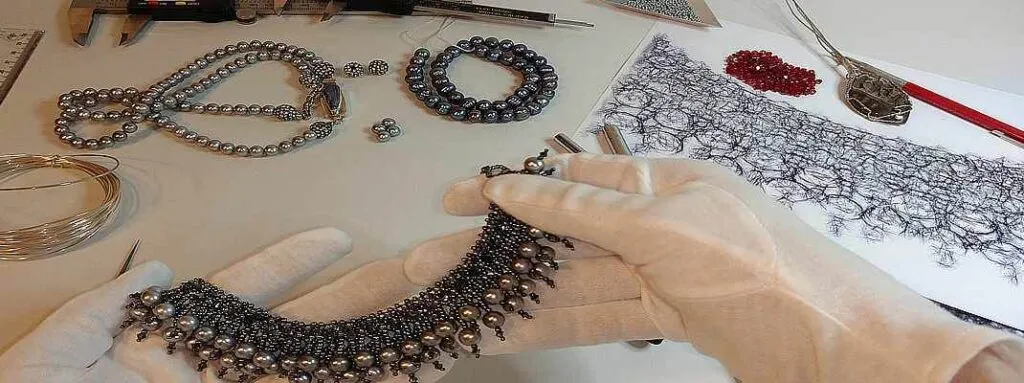




Clean Every 1–3 Months Without Acid: Geode Care for Decorators

A quick pass with a soft brush handles most surface dust, and that’s all a geode usually needs. For a deeper clean, warm water, a few drops of mild dish soap, and a soft nylon brush lift grime without touching the crystal structure.
Save any acid treatment only for stubborn iron stains, wear gloves and eye protection, and never move a geode from cold water straight into heat or sun.
The Edit
- Use dry brushing and compressed air weekly to prevent dust buildup, reserving wet cleaning for every one to three months based on dust levels.
- Avoid strong acids on calcite or soft minerals, and always test chemicals on a hidden spot before applying them broadly to prevent damage.
- Store geodes in shaded, well-ventilated areas with silica gel packs, and avoid rapid temperature changes or direct sunlight to prevent cracks.
- Handle large geodes carefully with two hands, using soft padding, and secure them properly during shipping to avoid chipping or breakage.
- Be cautious of thermal shock from temperature swings and never use household polish or wax, as these can cause long-term damage and discoloration.
Geode Care Guide: Weekly Dusting and Quick Touch-Ups
Most geode damage doesn’t come from a bad cleaning session. It comes from months of dust settling into crevices until it hardens into something that needs a real soak to remove.
An easy, regular routine avoids that situation entirely.
- Dust the surface with a soft-bristle paintbrush or a makeup brush reserved just for this job. Be mindful of pointed tips that may be a bit sharp.
- Use canned compressed air on the tightest crystal points, but be careful to hold the gust a few inches back so the cold blast doesn’t shock the mineral.
- Wipe flat, non-crystalline surfaces with a lint-free microfiber cloth.
- Do a full wet clean every one to three months, depending on how dusty your home gets and where the geode sits.
- For fingerprints or light grime, dampen a cotton swab with water and a drop of soap, then dry the spot immediately with a clean cloth.
Delicate druzy surfaces (the fine, sugar-like crystal coating you see in some agate or chalcedony geodes) deserve extra caution during dry cleaning.
Those tiny points snap or dull under pressure that a solid quartz point would shrug off. If you’re not sure which type you own, treat it like the more fragile option until you’re confident you know otherwise.
Step-By-Step Cleaning: Dry Method, Wet Clean, and Deep Clean
Work from the gentlest option to the most aggressive one, and stop as soon as the geode looks clean.
The sequence protects fragile interiors from unnecessary chemical exposure, a principle that shows up consistently in rockhounding cleaning guides.
Dry method. A soft brush and compressed air remove loose dust and debris without moisture. This is the only method safe for geodes with visible cracks, loose crystal fragments, or a matrix that feels chalky or soft to the touch.
Routine wet clean. Mix warm water with a few drops of mild dish soap. Scrub gently with a soft nylon brush, working into crevices without forcing bristles against crystal tips.
Rinse with distilled water rather than tap water to avoid leaving mineral spots behind, and let the geode air-dry completely before returning it to display.
Deep clean options, reserved for stains that soap and water won’t touch. But only in cases of the most resilient stains :
- Oxalic acid or a commercial rust remover like Iron Out dissolves iron oxide staining, and dilute solutions with limited soak times do the job with far less risk than a strong, undiluted acid.
- Wood bleach (sodium hydroxide and hydrogen peroxide) targets organic and mineral staining but behaves very differently from household chlorine bleach, so don’t substitute one for the other.
- A soft-bristle denture cleaner tablet, dissolved in warm water, scrubs out packed grit from crevices without any physical abrasion.
Pro Tip: Before any chemical treatment, test it on a small, hidden spot or a spare specimen first, and write down the concentration and soak time you used. That note is the difference between repeating a success and guessing next time.
Skip acids altogether if you’re working with calcite, selenite, or another soft, acid-reactive mineral. When in doubt, cross-reference the specimen against a mineral database like Mindat before you reach for anything stronger than ordinary dish soap.
How Do You Remove Rust and Calcium Stains From a Geode?
Iron staining shows up as an orange or reddish tint bleeding across quartz points, usually from groundwater minerals trapped during formation. A short soak in a diluted oxalic acid solution or a product like Iron Out breaks that stain down without the extended exposure time that riskier acids demand.
- Mix the oxalic acid per the product’s dilution instructions in a plastic or glass container, never metal.
- Soak the stained section for the minimum recommended time first, checking every 15 to 20 minutes rather than walking away for hours.
- Rinse thoroughly with distilled water and neutralize any residue with a baking soda rinse before the final rinse.
- For calcium scale buildup, a diluted vinegar soak can work, but only on quartz. Test a hidden spot first.
PPE (Personal Protective Equipment) checklist: rubber gloves, safety glasses, and a well-ventilated space, ideally outdoors or near an open window.
Oxalic acid is toxic if ingested and irritating to skin and eyes on contact, so treat it with the same respect you’d give any household chemical with a warning label.
Dispose of spent solution according to your local hazardous waste guidelines rather than pouring it down a drain.
Drying and Long-Term Storage That Prevent Damage
Air-dry a cleaned geode in a shaded, well-ventilated spot rather than rushing the process with a hair dryer or direct sun. Sudden temperature swings crack or split minerals that just absorbed water, so let it come back to room temperature gradually.
- Skip sealers and mineral oil unless you want a permanent wet-look shine. Both can trap moisture against the stone and yellow over time.
- If you display in an enclosed case, a small silica gel packet controls humidity and prevents mineral bloom.
- Avoid storing geodes in damp basements, near HVAC vents, or on windowsills that get blasting summer sun.
- Wrap unused specimens in acid-free tissue rather than newspaper, which can transfer ink onto porous surfaces.
Where and How Should You Display a Geode?
Bright, indirect light shows off crystal facets far better than a spotlight ever will, and it spares the specimen from the slow fading and heat stress that come with hours of direct sun.
A stable wooden or metal table, sized to the geode’s base, keeps it from tipping and chips edges far less often than propping it against a shelf lip.
- Check monthly for loose crystal fragments or a faint rattle when you lift the piece; both signal internal cracking.
- Dust weekly, deep clean seasonally, and never grab a geode by a thin or pointed edge.
- When moving or shipping one, wrap it in bubble wrap with the heaviest side down and pad the box so nothing shifts in transit.
Pro Tip: Treat a large geode the way you’d treat a piece of glass art: two hands, a soft surface underneath, and no quick grabs by the rim (and careful of those spiked crystal terminations within the geode’s hollows).
What Ruins a Geode Faster Than Anything Else?
Most geode damage traces back to a handful of avoidable habits.
- Thermal shock: moving a wet or cold geode into hot water or direct sun cracks it from the inside out.
- Undiluted acids on calcite: strong or full-strength chemicals dissolve calcite and other soft carbonates almost on contact.
- Ultrasonic cleaners and rock tumblers: both shake loose or shatter fine druzy crystal points, which is why most hobbyists avoid them for finished display pieces.
- Household polish or wax: these products often yellow over months and seal moisture against the stone rather than protecting it.
How Do You Identify Different Geode Types Before Cleaning?
Not every geode reacts to cleaning the same way, and guessing the mineral inside is how good intentions turn into a ruined specimen.
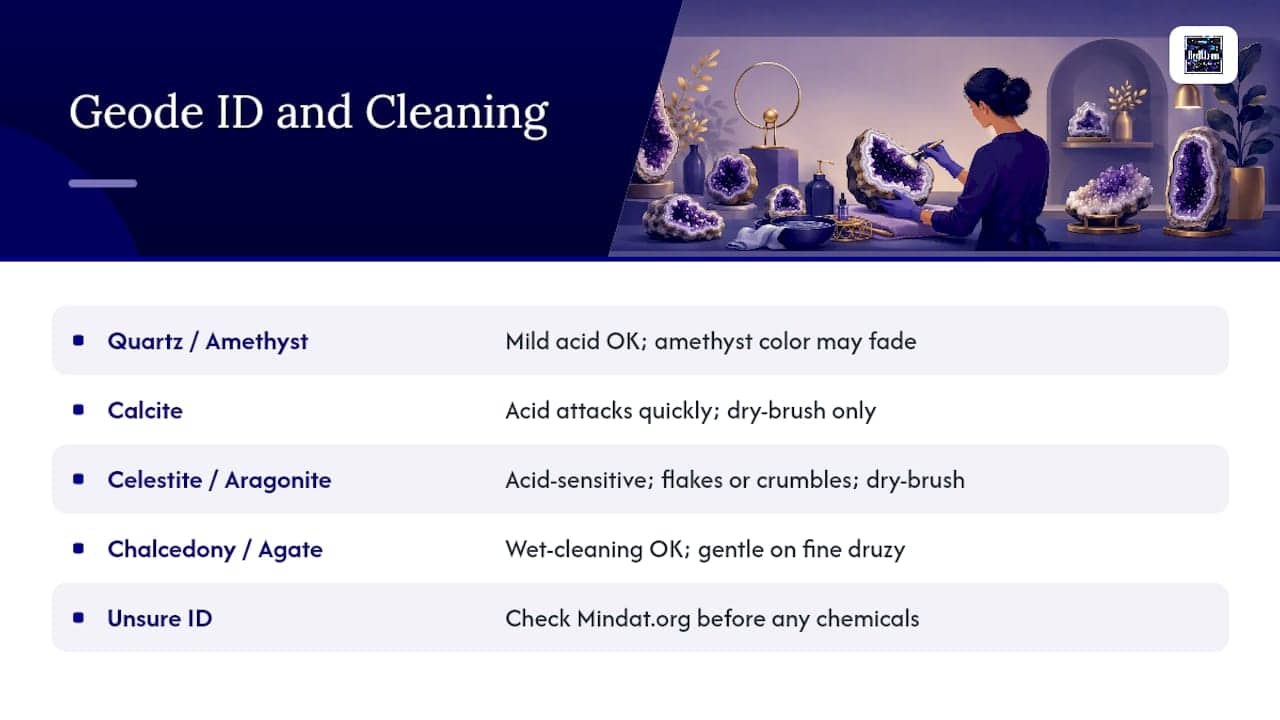
Quartz-lined geodes, the most common type sold for decor, tolerate mild acids and firmer brushing.
Amethyst geodes are chemically quartz too, but their purple color comes from iron and irradiation, so extended acid soaks can fade that color even though the crystal itself survives fine.
Calcite geodes are the ones to watch closely. Calcite is soft (a 3 on the Mohs scale, compared to quartz’s 7) and reacts visibly to any acid, fizzing and pitting within minutes.
Celestite and aragonite geodes carry similar acid sensitivity and often flake or crumble under aggressive scrubbing, so they’re strictly dry-brush candidates.
Chalcedony and agate geodes usually show a banded, waxy exterior with a druzy quartz interior. The combination handles routine wet cleaning well but needs the gentler dry method on the fine crystal coating itself.
If you’re not sure what you’re holding, again, a mineral reference like Mindat.org lets you match color, hardness, and crystal habit to a likely identification before any chemical touches the stone.
That five-minute check saves specimens far more often than any cleaning product does.
What Are the Warning Signs a Geode Is Deteriorating?
A geode that’s losing its structural integrity usually gives warning before it fails outright.
Fine white or gray dust collecting at the base, separate from normal household dust, often means crystals are shedding tiny fragments from internal stress or a slow chemical reaction.
A hairline crack that wasn’t there last month, especially one that seems to be lengthening, points to thermal stress from repeated temperature swings near a window or vent.
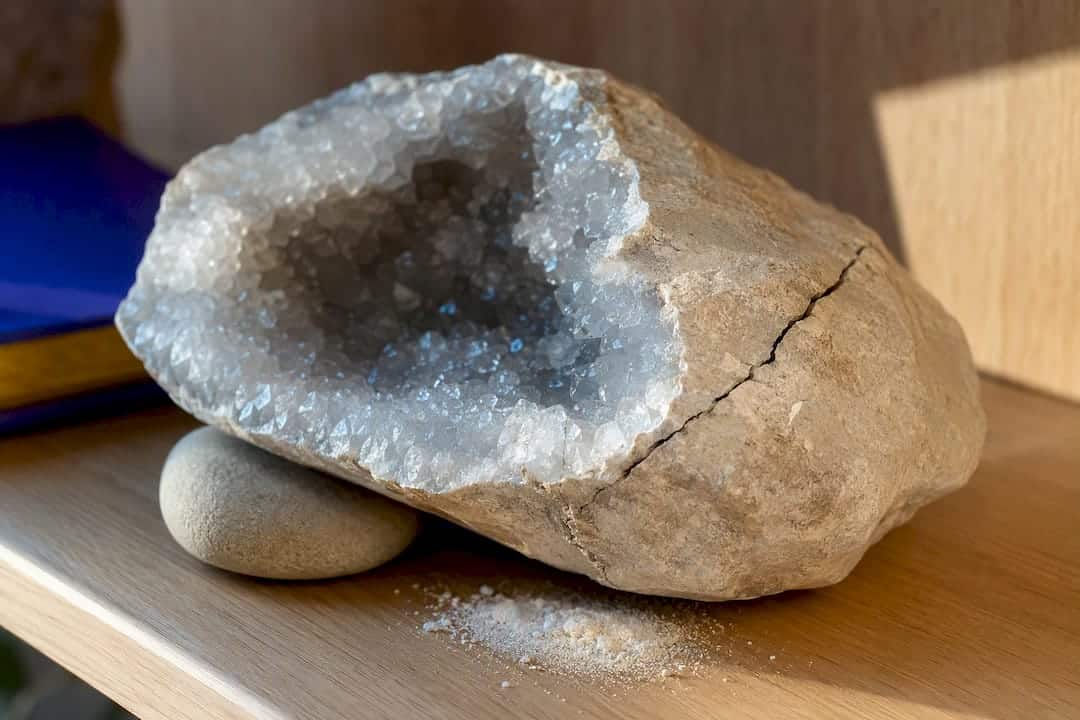
Cloudy or dull patches on quartz points that used to sparkle can indicate mineral deposits from tap water use during cleaning, or in rarer cases, acid etching from a treatment left on too long.
A faint rattle when you pick the piece up, even a subtle one, means something has broken loose inside the cavity, and continued handling will only worsen it.
If you catch a crack early, stop cleaning that geode with water entirely and switch to dry dusting only until you can assess whether the fracture is cosmetic or structural.
For flaking or crumbling on soft minerals like calcite, handling less rather than more is the only real fix.
There’s no reliable repair method that restores a geode to its original strength once it’s compromised internally, so prevention through gentle handling and the right cleaning sequence matters more than any fix after the fact.
Author’s Take: Why the Sequence Matters More Than the Product
The advice floating around online treats geode cleaning like a single recipe: soak it, brush it, done.
That’s backwards. What actually protects a geode is the order you try things in, not which product you reach for first.
Most of the damage I see traced back to owners skipping straight to the strongest option because it promised a faster result.
Oxalic acid and diluted muriatic acid work, but they work on quartz, and calcite doesn’t get a vote in that decision unless you’ve identified it first.
The habit worth building isn’t a shopping list of chemicals. It’s the discipline to try dry brushing, then soap and water, and only then consider anything stronger, testing every step on a small spot before committing the whole piece.
The other blind spot is storage. People obsess over the cleaning moment and then park a freshly cleaned geode on a sunny windowsill, undoing the careful work in a season.
Prioritize placement as seriously as you prioritize the soap you personally use.
— Veronique
How HerMJ’s Room Jewelry Pairs With a Geode Display
A geode holds a room’s attention on its own, but a well-chosen piece of room jewelry or gemstone decor gives it context instead of leaving it stranded on a shelf.
The brand offers handmade pieces made from freshwater pearls and natural gemstones, reflecting a philosophy of accessible pricing that extends into styling a mineral collection.
A faceted garnet necklace draped near an amethyst geode picks up its color story without competing with it, while a quartz crystal necklace echoes a clear geode’s clarity.

If you’re building out a full crystal shelf, a tiger eye bracelet or an onyx beads bracelet draped over a stand adds warmth between larger stone pieces, and a terahertz bracelet brings a cooler, metallic tone into the mix.
For anyone drawn to unusual banded minerals, an incredible seraphinite bracelet mirrors the striated look you get in agate or chalcedony geodes.
HerMJ’s pieces are handmade, and US orders ship free with no minimum, while international orders ship free at $150 or more.
Browse the Room Jewelry collection to find a piece that complements the specimens you already own.
Sources
- How To Clean Geodes & Thundereggs (A Simple Guide)
- How To CLEAN GEODES And Thundereggs (The EASY Way!) – Rock Seeker
- 3 Ways to Clean Geodes – wikiHow
- Mindat
FAQ
What Can I Soak Geodes In to Clean Them?
Warm water with a few drops of mild dish soap handles most dirt safely. For iron staining specifically, a dilute oxalic acid solution or a product like Iron Out works well with a short, monitored soak rather than an extended one.
Is a Geode Worth Anything?
Value depends on the mineral inside, the size, and how symmetrical the crystal formation is, with large amethyst or citrine geodes commanding the most interest. Most decor-grade geodes sold for home styling are valued for their look rather than as investment pieces, so buy one because you love it on your shelf.
Why Won’t My Geode Break Open?
Some geodes have exceptionally hard or thick outer shells, and household tools like hammers often just bounce off or shatter the interior crystals instead of splitting the shell cleanly. A rock saw or a professional lapidary service gets a cleaner break without destroying the crystal cavity inside.
What Should I Do With Opened Geodes?
Clean them using the dry-to-wet sequence described above, matched to the mineral type inside, then display them on a stable stand away from direct sun and heat vents.
Quite a few owners pair an opened geode with complementary decor, like a crystal room decor arrangement, to give it a finished look on a shelf or mantel.
Recommended
- Crystal Decoration Ideas: 5 Tips To Master Healthy Home Decor
- What Is Gemstone Home Decor? A Stylist’s Guide
- Why Gemstones Are The Rage In Interior Decorating
- Don’t Paint Your Walls: Use These Crystal Decoration Ideas