


What Is Wearable Art Jewelry? A Guide to Artistic Style
The Edit
- Wearable art jewelry is conceptual, handmade jewelry that functions as an artistic statement and sculpture. It differs from commercial jewelry by emphasizing narrative and unique materials over mass production and practicality. Appreciation involves handling pieces physically, considering their wearability, and understanding the maker’s intent.
Wearable art jewelry is an artistic creation designed to be worn on the body, serving as both personal adornment and an artistic statement.
Different from conventional jewelry, it prioritizes concept, narrative, and sculptural form over routine practicality. The term “art jewelry” is the recognized industry standard for this category, though I feel that “wearable art jewelry” captures its essential quality: it’s artwork you can actually wear. If you’ve ever been drawn to a piece that stopped you mid-step because it felt more like sculpture than accessory, you’ve already experienced it firsthand.
What is wearable art jewelry, and how is it defined?
Wearable art jewelry is artwork created to be worn rather than hung on a wall, drawing attention through its presence on the body. The piece doesn’t just sit on your skin. It communicates something, tells a story, or challenges the way you think about beauty and form.
Dame Suzie Moncrieff, founder of the World of WearableArt competition in New Zealand, describes this quality precisely: the body becomes part of the artwork’s meaning, and movement activates the piece in ways a gallery wall never could.
Art jewelry sits at the intersection of craft, fashion, and fine art. It’s concept-driven and unique, typically handmade or produced in very limited runs, and it’s rarely designed for daily wear. A pearl necklace worn every day is jewelry.
A sculptural collar constructed from oxidized copper wire and freshwater pearls, made in an edition of three, is art jewelry. The distinction lives in intent, process, and the ideas behind the object.
How did wearable art jewelry originate and evolve?
The roots of wearable art jewelry reach back to the early 20th century, when artists began questioning the boundary between fine art and applied craft.
Movements like Bauhaus in Germany and Surrealism in Europe pushed artists to treat the body as a canvas and everyday objects as potential art forms. Jewelry was a natural extension of that thinking.
The wearable art movement gained real traction in the 1960s and 1970s, driven by craft revivals and counterculture energy. Artists rejected mass production and embraced handwork, fiber arts, and experimental materials. The term “wearable art” emerged specifically to distinguish these worn works from traditional gallery art and performance art.
Key milestones in that evolution include:
- Early 20th century: Bauhaus and Surrealist artists treat jewelry as a sculptural form rather than simply for decoration.
- 1930s–1960s: Modern wearable art movements take shape, influenced by craft traditions and fine art crossovers.
- 1960s–1970s: Counterculture and fiber art movements push artists toward handmade, concept-driven pieces made with unconventional materials.
- 1980s–2000s: Art jewelry enters galleries and museum collections, gaining recognition as a legitimate fine art category.
- 2010s–present: A modern revival brings wearable art jewelry to wider audiences through independent designers, online platforms, and artisan markets.
The modern revival is particularly interesting because it provides democratized access. You no longer need to attend a gallery opening to find a piece with genuine artistic intent.
What materials and techniques are used in wearable art jewelry?
Wearable art jewelry uses diverse materials to push boundaries of form and movement, far beyond the gold, silver, and gemstones of conventional jewelry. This freedom is one of the category’s defining characteristics. A designer might combine natural freshwater pearls with reclaimed wood, or set a garnet inside a resin form that mimics a geological cross-section.
Common material categories include:
- Natural organics: Freshwater pearls, shells, bone, wood, seeds, and fiber
- Metals: Sterling silver, copper, brass, and oxidized or patinated finishes that age deliberately
- Recycled and found materials: Reclaimed plastics, glass, industrial components, and repurposed objects
- Innovative materials: 3D-printed forms, resin, light-reactive coatings, and mixed media composites
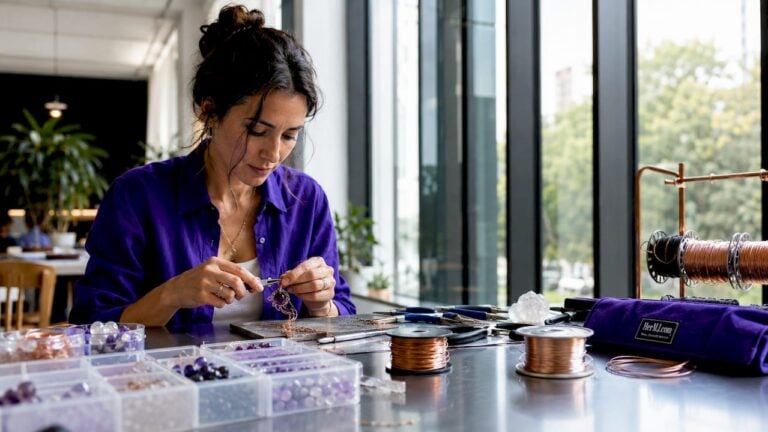
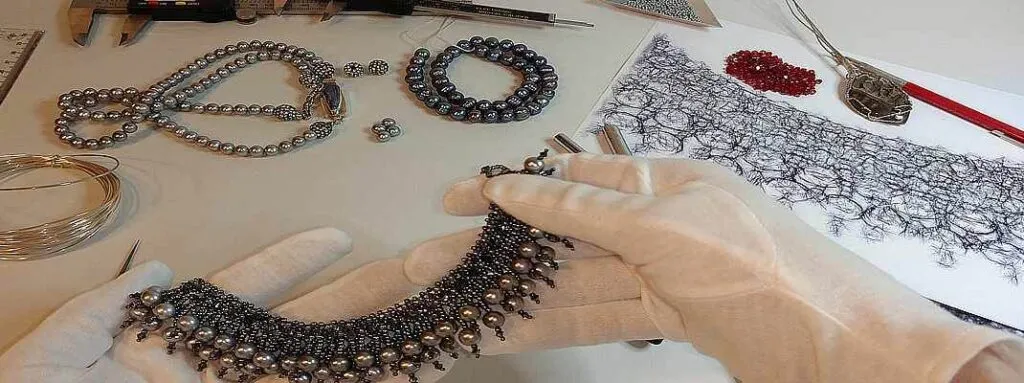
Technique matters as much as material. Handmade production is the norm in art jewelry, not the exception. Fabrication, forging, cold connections, and hand-setting stones all appear regularly. The maker’s hand is visible in the finished piece, and that visibility is intentional.
Wearability is a genuine design constraint, not an afterthought. Fastening, weight distribution, and body fit must all be resolved before a sculptural piece can function as jewelry rather than just sculpture. A necklace that pulls uncomfortably or a brooch that damages fabric fails as wearable art, regardless of its visual impact.
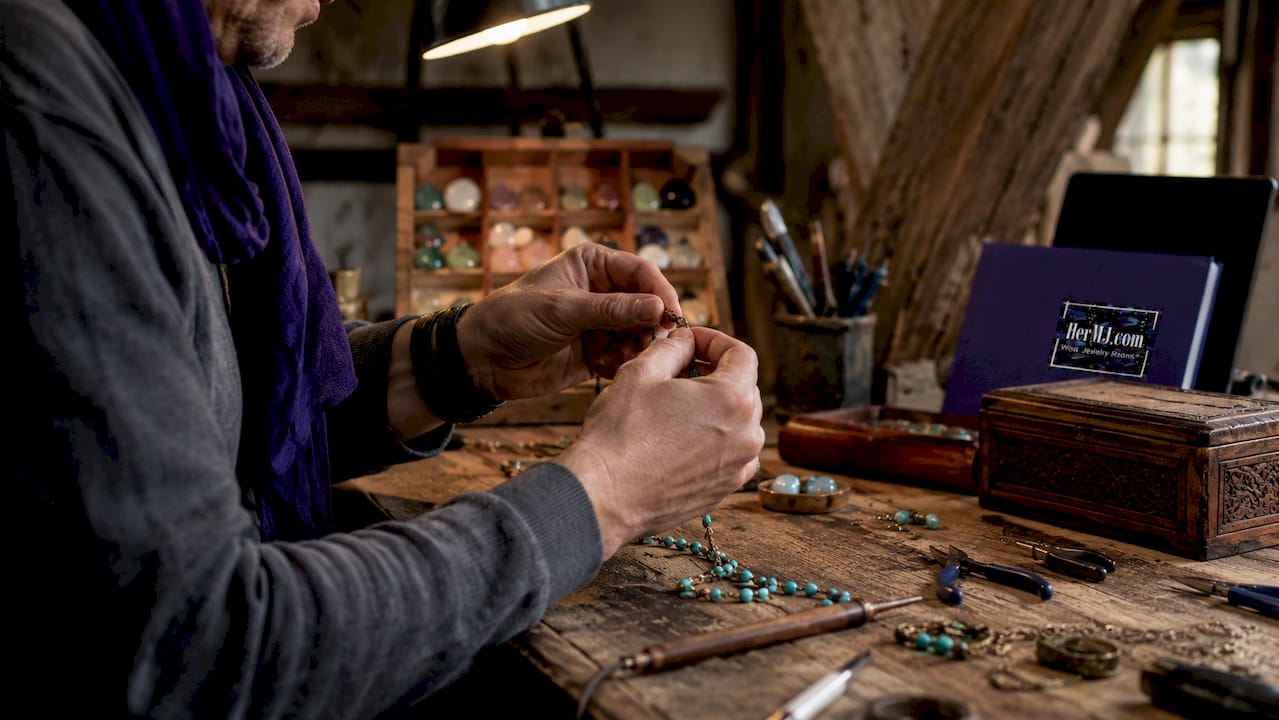
Pro Tip: When evaluating a wearable art piece, turn it over and examine the back. The quality of closures, the weight balance, and the finish on hidden surfaces reveal whether the maker treated wearability as a core design value or an afterthought.
How does wearable art jewelry differ from commercial or fashion jewelry?
The clearest distinction is intent. Wearable art is meant for exhibition and conceptual expression, not mass production or daily convenience. Commercial jewelry is designed to sell at scale, appeal broadly, and survive everyday wear. Art jewelry is designed to say something specific, even if that means it’s fragile, unusual, or difficult to style.
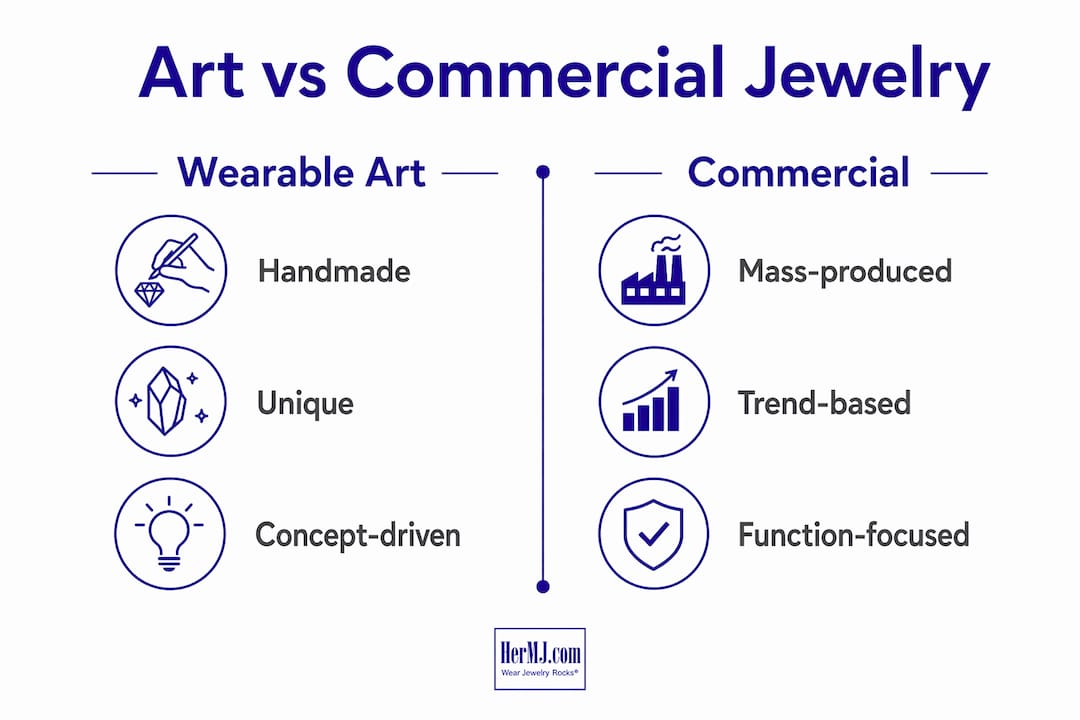
| Feature | Wearable art jewelry | Commercial jewelry |
|---|---|---|
| Production | Handmade, one-of-a-kind or limited run | Mass-produced, factory made |
| Primary intent | Artistic statement, narrative, concept | Fashion accessory, daily adornment |
| Materials | Unconventional, experimental, mixed media | Standard metals, gemstones, plated alloys |
| Pricing basis | Artistic value, maker’s time, rarity | Material cost, market demand |
| Where it appears | Galleries, exhibitions, curated collections | Retail stores, e-commerce, fast fashion |
| Wearability | Designed for specific occasions or events | Designed for everyday use |
Fashion jewelry occupies a middle ground. It’s trend-driven and often visually bold, but it’s still produced for mass appeal. A statement necklace from a fast-fashion retailer might look dramatic, but it lacks an artistic concept. Art jewelry carries the maker’s ideas in every decision, from material choice to surface finish to the way it sits against the body.
Learning to identify truly handcrafted pieces is one of the most useful skills for anyone drawn to this category. The differences are visible once you know what to look for.
How to appreciate and style wearable art jewelry
Appreciating art jewelry starts with understanding that jewelry’s meaning changes when worn. A piece sitting in a display case is an object. The same piece worn against your collarbone, catching light as you move, becomes something alive. Proximity to skin, angle, and movement all shift how the work reads.
Styling wearable art jewelry well means letting the piece lead. Here’s how to approach it:
- Simplify everything else. A sculptural necklace reads best against a plain, solid-color garment. Competing patterns or busy textures fight the piece for attention.
- Consider the body as context. Art jewelry interacts with the body in ways static display can’t replicate. Move in the piece before committing to it. Does it swing, catch light, or shift in ways that add to its effect?
- Wear one statement piece at a time. Art jewelry is meant as a statement, not a collection of competing voices. One strong piece carries more impact than three layered together.
- Match the occasion to the piece. Some art jewelry is designed for gallery openings or formal events. Others translate beautifully to everyday wear. Know which category your piece belongs to.
- Learn the maker’s intent. Understanding what a piece is about deepens your experience of wearing it. A necklace referencing ocean geology means something different when you know the story.
Understanding what makes a piece a true statement piece helps you choose art jewelry that genuinely reflects your identity rather than just filling a visual role.
Pro Tip: Most people choose wearable art jewelry for how it looks in a photo or on a display stand. The better question is how it feels and moves when you’re actually wearing it. Try it on, walk around, and see if it still excites you after five minutes of real wear.
Key Takeaways
Wearable art jewelry is concept-driven, handmade or limited-run jewelry that functions as an artistic statement, prioritizing narrative and sculptural form over everyday practicality.
| Point | Details |
|---|---|
| Core definition | Art jewelry is artwork designed to be worn, not just a decorative adornment. |
| Historical roots | The movement emerged in the mid-20th century, gaining momentum through 1960s–1970s craft and counterculture movements. |
| Material freedom | Designers use everything from freshwater pearls to recycled plastics and 3D-printed forms. |
| Key distinction | Art jewelry is concept-led and handmade; commercial jewelry is mass-produced and trend-driven. |
| Styling principle | Let the piece lead by keeping the rest of your look simple and understanding the maker’s intent. |
Why wearable art jewelry changed how I think about self-expression
I’ve spent years around jewelry, and the moment I truly understood art jewelry was when I first held a piece and was drawn to its innovation. It was a brooch constructed from oxidized silver and a single baroque freshwater pearl, and it looked… different. Too asymmetrical. Too heavy on one side. Then I pinned it on and everything fell into place. The weight was deliberate. The asymmetry is balanced against the body. It was designed to be worn, not admired from a distance.
That experience highlighted something most jewelry conversations skip entirely: the best art jewelry doesn’t make sense until it’s on a person.
The maker’s decisions only reveal themselves through wear. That’s a completely different relationship than you have with a commercial piece, where the value is visible the moment you see it in a case.
My recommendation is to pay attention to the craftsmanship details that separate a genuinely artistic piece from a decorative one, which is something that designers put their heart and soul into. When you learn to appreciate this, you’ll find a piece that surprises you when worn; that’s the one worth owning.
— Veronique
Artisan jewelry that carries genuine artistic intent
If wearable art jewelry appeals to you, the place to start is with pieces made by hand from real materials, where the maker’s choices are visible in every detail.
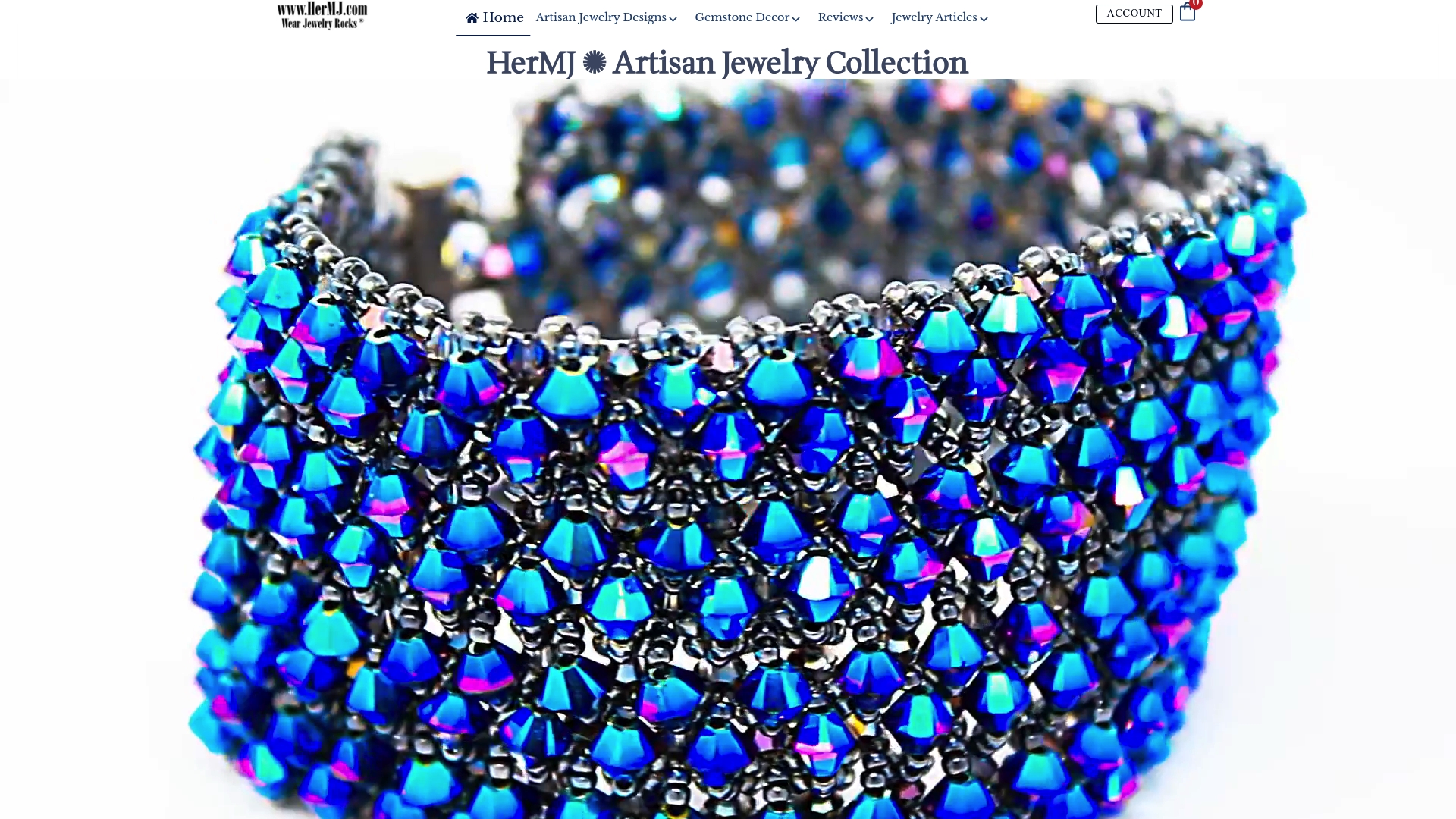
HerMJ creates artisan jewelry from genuine freshwater pearls and natural gemstones, handcrafted in limited quantities with attention to how each piece wears and moves.
The Elegant Freshwater Pearl Necklace and the Pearl and Aquamarine Necklace both reflect the qualities that define art jewelry: real materials, handmade construction, and a design sensibility that goes beyond trend.
For those drawn to color and gemstone character, the Faceted Garnet Gemstone Necklace offers a striking example of how natural stone can carry genuine artistic weight. US orders ship free with no minimum, and international orders ship free for orders of $150 and above.
FAQ
What is the definition of wearable art jewelry?
Wearable art jewelry is an artistic creation designed to be worn on the body, prioritizing concept, narrative, and sculptural form over everyday function. It’s typically handmade or produced in very limited runs and serves as an artistic statement rather than a fashion accessory.
How does art jewelry differ from fashion jewelry?
Art jewelry is concept-driven, handmade, and often exhibited in galleries, while fashion jewelry is mass-produced and trend-focused. The core difference is intent: art jewelry communicates ideas; fashion jewelry follows market demand.
What materials are used in wearable art jewelry?
Designers use a wide range of materials, including freshwater pearls, natural gemstones, oxidized metals, recycled plastics, resin, fiber, and even 3D-printed forms. The choice of material is part of the artistic concept, not just an aesthetic preference.
Can wearable art jewelry be worn every day?
Some pieces are designed for everyday wear, while others are created for specific occasions or exhibitions. The maker’s intent and the piece’s construction, including its weight, fastening, and durability, determine whether it suits daily use.
How do I know if a piece is genuine art jewelry?
Genuine art jewelry shows visible handwork, intentional material choices, and a concept behind the design. Examining the back of a piece, the quality of closures, and the balance of weight reveals whether wearability was treated as a serious design requirement.
Recommended
- What Is Art Deco Jewelry Style? A Design Guide
- What Is Gemstone Cluster Jewelry: Style Guide 2026
- What Is Avant Garde Jewelry? A Collector’s Guide