


4 Quick Checks to Tell a Geode From a Cluster for Home Decor Buyers
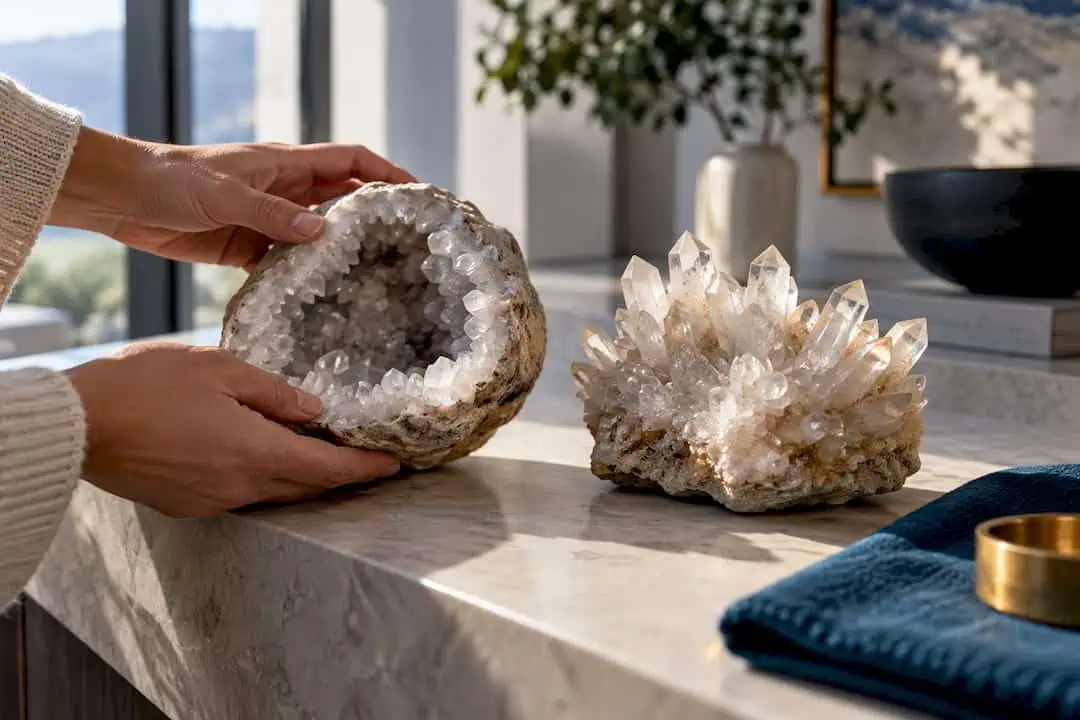
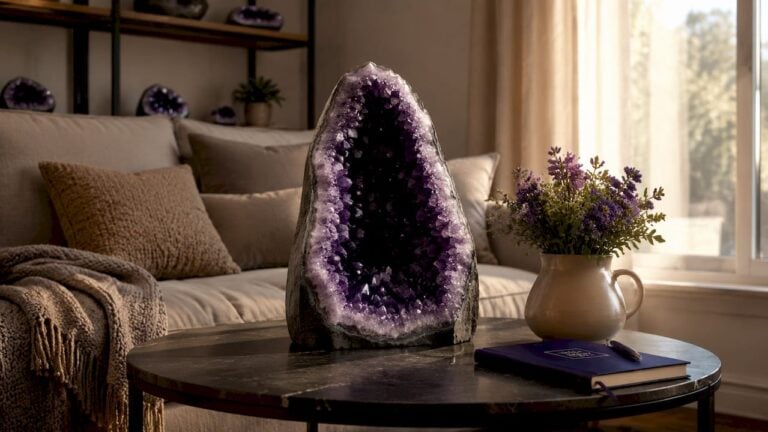
A geode is a hollow, roughly spherical rock lined with crystals that point inward, toward an empty center.
A cluster is an open group of crystals that grew together from a shared base, with points reaching outward into open space.
The overlap that confuses most people: crack open a geode, and you’ll often find a cluster growing on its inner wall.
TL;DR:
- Geodes typically have a hollow interior lined with inward-pointing crystals, while clusters are solid crystal formations radiating outward from a shared base.
- Geodes form in cavities such as gas bubbles or dissolved pockets, often in volcanic or sedimentary rocks, taking thousands to millions of years to develop.
- Clusters grow from open veins with multiple nucleation points, resulting in outward-facing crystal points and variable sizes from small tabletop pieces to large formations.
- Visual clues include geodes having a bumpy chalcedony exterior and a hollow interior, while clusters lack a shell and have outward-facing crystal points.
- Handling tips suggest geodes are lighter and rattling can indicate a hollow interior, whereas dense clusters feel solid and do not rattle.
Geode vs Cluster: Definitions and Common Minerals
Geologists define a geode as a discrete, often globular body with a distinct outer shell and a hollow or partially hollow interior.
The shell is typically chalcedony, and hollow specimens tend to be lighter and show better crystal formation than filled ones, according to the Illinois State Geological Survey.
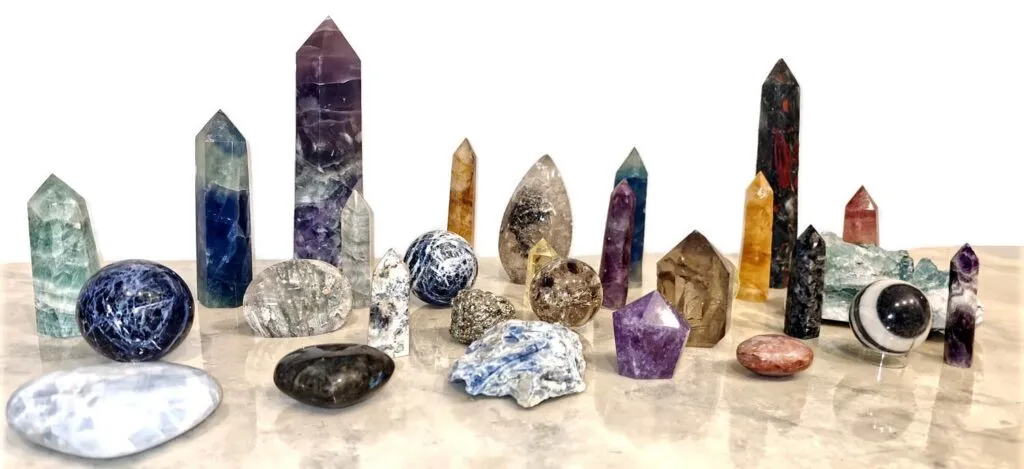
A cluster, by contrast, describes a crystal habit rather than a rock body: a group of crystals sharing a common base and radiating outward as they compete for space, a growth pattern common in amethyst, quartz, and pyrite, according to Crystal Almanac.
Here’s where casual language muddies things.
A geode can absolutely contain a crystal cluster inside its cavity. Gems Lore puts it plainly: the geode refers to the host rock’s shape, while the cluster refers to what’s growing inside it. So a specimen can be both, technically speaking, depending on which feature you’re describing.
Minerals you’ll see most often in each form:
- Amethyst: forms stunning cathedral geodes and also grows as freestanding clusters.
- Clear quartz: common in both, though clusters show more visible individual points.
- Calcite: frequently lines the interiors of geodes with soft, translucent crystals.
- Celestite: almost always found as a geode fill, rarely sold as a standalone cluster.
How Geodes and Clusters Actually Form
The two formations originate from completely different geological conditions, which is why they look so different on your shelf.
- Geodes begin as empty space. A gas bubble trapped in cooling basalt, or a dissolved pocket in sedimentary rock, leaves behind a cavity. Mineral-rich groundwater seeps in over thousands of years, depositing crystal layers inward, working from the shell toward the center, per Rockhounding.
- Clusters grow from an open surface. Instead of a single enclosed cavity, mineral solutions fill a void or vein with multiple nucleation sites simultaneously. Each point competes for room as it grows, which is why cluster crystals often show flattened or distorted faces where neighbors crowded them out.
- Location shapes size. Geodes turn up in volcanic basalt flows and in sedimentary limestone, often ranging from fist-sized to the multi-foot “cathedral” geodes sold whole. Clusters form in open veins and pockets in a wide variety of host rock, and specimen sizes range from tabletop pieces to large formations weighing well over 50 pounds.
Both processes can take thousands to millions of years, and the mineral content of the surrounding rock determines whether you end up with amethyst, quartz, or something rarer.
Visual and Structural Clues Worth Checking
Before you buy, a few seconds of inspection tells you far more than a product label ever will.
- The shell. Geodes usually show a bumpy, chalky chalcedony rind on the outside. Clusters have no shell at all; you’re looking directly at crystal faces and a rough attachment point where they broke from the host rock.
- Crystal direction. This is the fastest tell. Geode crystals point inward toward a hollow core. Cluster crystals point outward and up, radiating from a shared base like a tiny mountain range.
- Weight and the rattle test. Pick it up. A hollow geode often feels lighter than it appears, and gently rocking a broken half can sometimes reveal loose fragments inside. A cluster, being solid crystal from base to tip, feels dense and doesn’t rattle.
- Wet-surface inspection. Rockhounds sometimes wet a geode’s exterior to check for faint banding, a trick also used to distinguish true geodes from thundereggs, which are typically solid and heavier, according to Rockhounding.org.
Look for exceptions. Filled geodes don’t have a hollow center, and thundereggs are constantly mistaken for geodes, despite forming in rhyolitic volcanic ash rather than in a true cavity, according to Rockhounding’s geode comparison guide.
How to Identify a Geode or Cluster in Hand
Follow this sequence next time you’re holding an unlabeled specimen or standing in front of a shop bin.
- Check for a hollow cavity. Look at any broken or cut face. If you see crystals lining an empty center, you’ve got a geode. If the whole piece is solid crystal, you’re looking at a cluster.
- Inspect the base. A cluster typically shows a rough, uneven growth point where it detached from the host rock. A geode’s exterior is a continuous shell all the way around.
- Try the weight test, carefully. A gentle shake can reveal a hollow, sometimes rattling interior in a geode, but skip this step with delicate calcite or celestite specimens; their crystal points snap easily, and a rattle might indicate loose, broken fragments rather than a true cavity.
- Consider hardness and cleavage. Softer minerals like calcite (a 3 on the Mohs scale) cleave along flat planes and can flake if mishandled, which throws off tactile tests. When in doubt, especially with a pricier piece, ask the seller for the specimen’s provenance and locality.
Where Each One Shines in Home Decor
Geodes and clusters serve different decorative purposes. Knowing which one you’re buying helps you avoid overspending on the wrong effect.
Decor specialists tend to reach for geodes when a room needs a quieter, more architectural statement, since a sliced amethyst cathedral reads as sculpture. Clusters get chosen when you want visible, radiating points as a tactile centerpiece or a conversation-starting focal object.
- Small geode halves and compact clusters work well on shelves, bookcases, or a bathroom vanity.
- Large cathedral geodes and sizable clusters need floor space or a sturdy pedestal; they’re too heavy and dramatic for a crowded shelf.
- Pair crystal pieces with matte wood or brass stands to let the mineral do the visual work.
- Keep light-sensitive varieties like amethyst out of direct sunlight, as prolonged exposure fades their purple color over time.
Our crystal room decor guide walks through more pairing ideas if you’re furnishing an entire shelf or console table with mineral pieces.
Caring for Geodes and Clusters Without Damaging Them
Not every mineral tolerates the same handling. Amethyst and most quartz varieties hold up well but still fade over time in direct sunlight, so indirect light is the safer bet for display.
Calcite and celestite are softer and more brittle. Both can chip or cleave along flat planes if bumped or dropped, so they deserve a stable spot away from foot traffic or curious pets.
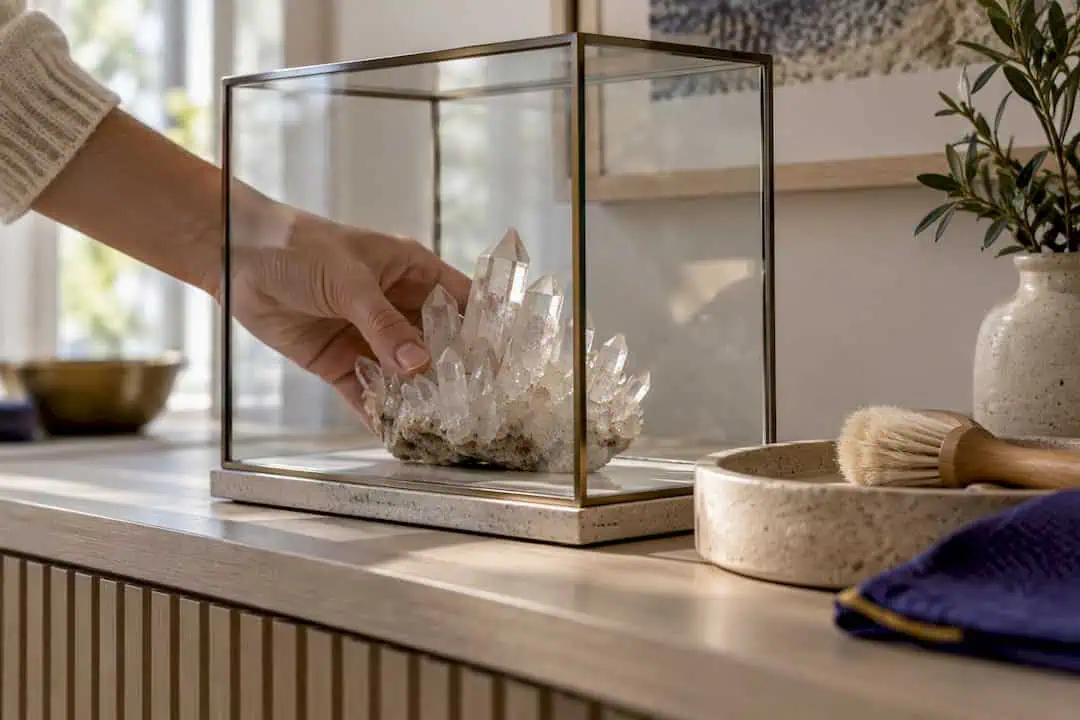
Dust with a soft, dry brush rather than water on delicate clusters, since moisture can seep into microfractures on softer minerals.
Quartz and amethyst tolerate an occasional gentle rinse better than calcite or celestite ever will.
Pro Tip: If a cluster has thin, easily chipped points, a small glass display case does more to protect it than any amount of careful dusting ever will.
Choosing Between a Geode and a Cluster
Match the specimen to what you actually want the piece to do. Want architectural depth and a subtler, sliced-open reveal? A geode fits.
Want exposed, radiating points that catch the eye immediately? Go with a cluster; beginners often find clusters easier to examine and appreciate since the growth pattern is right there on the surface.
- Budget scales with crystal clarity and size; a small druzy cluster costs far less than a large, well-formed cathedral geode.
- Ask sellers whether a geode was cut and polished (most are) and whether any cluster has been repaired or stabilized with adhesive.
- For everyday decorating, our guide on which crystal works best for home display breaks down options by room and light exposure.
About This Guide and Its Author
This guide comes from Veronique, whose work on HerMJ’s decor and jewelry guides covers everything from amethyst cluster styling to seasonal gemstone trends.
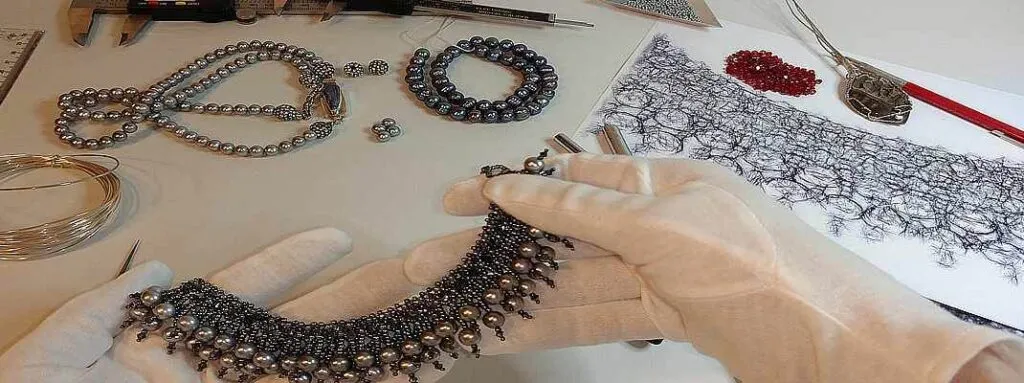
The catalog of artisan pearl and gemstone jewelry, along with a Room Jewelry decor line, reflects close attention to material quality that shapes the identification advice above.
Customer feedback on these pieces consistently points to craftsmanship and material authenticity as strong signals.
Which One Belongs in Your Home?
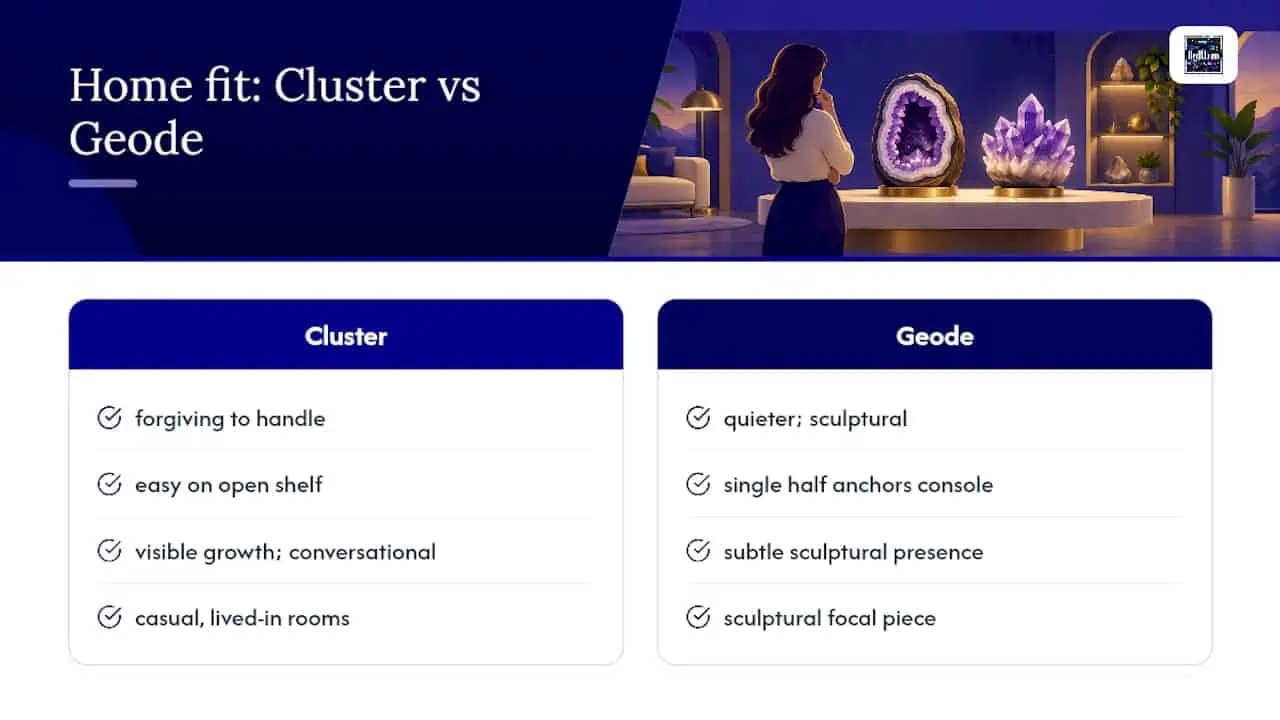
For most people furnishing a real, lived-in room, I’d lean toward clusters. They’re forgiving to handle, easy to place on an open shelf, and the visible growth pattern makes a great conversation piece even if you know nothing about geology.
Geodes earn their keep when you want something quieter and more sculptural, like a single amethyst half anchoring a console table.
Either way, don’t overthink the decision. Buy the piece that catches your eye in person, since photos rarely capture how crystal catches light. If you want a starting point, HerMJ’s Room Jewelry collection is a good place to browse pieces that pair well with both formations.
— Veronique
Bring the Crystal Look Home, Wearable or on a Shelf
You don’t have to choose between decor and jewelry to enjoy the look of natural crystal formations.
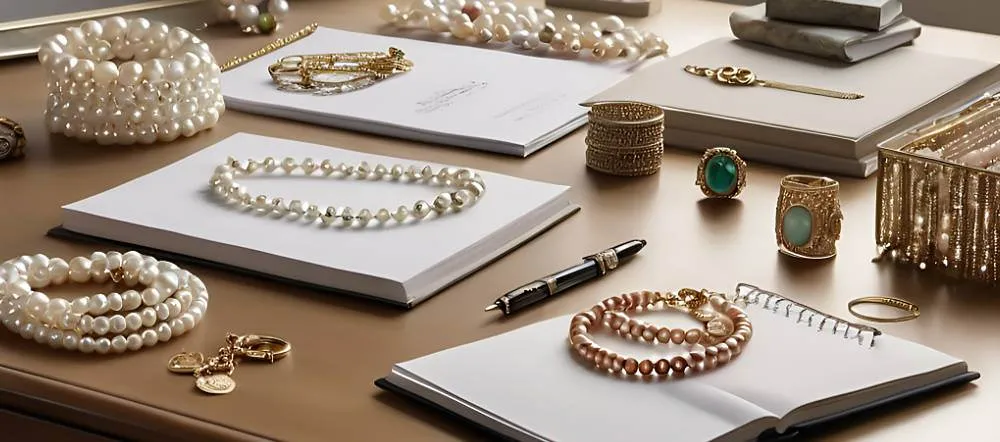
HerMJ handmade pearl and gemstone pieces are high-quality and affordable. They avoid the marked-up prices of specialty crystal boutiques, so you can build a collection that spans your shelf and your jewelry box without blowing a decor budget on one cathedral geode.
If a chunky amethyst cluster caught your eye in this guide, the Quartz Crystal Necklace translates that same faceted, raw-stone look into something you can wear daily. Prefer warm, earthy tones instead?
The Tiger Eye Bracelet and the Strawberry Quartz Gemstone Bracelet both bring mineral color into everyday wear. For gifting, the Faceted Garnet Gemstone Necklace and Pearl and Aquamarine Necklace pair gemstone character with the same pearls HerMJ built its name on.
US orders ship free with no minimum, and international orders ship free at $150 or more. Browse the full Room Jewelry category if you’re ready to add a shelf piece alongside your jewelry.
Sources
For more on formation science and field identification, see the Illinois State Geological Survey’s geode geobit and Rockhounding.org’s guide to distinguishing geodes from thundereggs.
- Rockhounding
- Geobit 3 — Illinois State Geological Survey
- Crystal shapes guide — Crystal Almanac
- Crystal clusters: meaning and placement — Gems Lore
FAQ
How can I tell the difference between a geode and a crystal cluster?
Cut or check the interior: a geode has a hollow center lined with inward-pointing crystals, while a cluster is solid crystal with points growing outward from a shared base. If the specimen has an outer shell around a cavity, it’s a geode; if you’re looking straight at exposed crystal points, it’s a cluster.
What is a group of crystals growing together called?
A group of crystals that grew together from one base is called a cluster. Clusters form when multiple crystals start growing from nearby points in an open cavity or vein, and they’re common in amethyst, quartz, and pyrite.
What crystal should not be in the bedroom?
This comes down to personal preference more than any geological rule, since it’s rooted in metaphysical tradition rather than science. Some decorators avoid high-energy stones like clear quartz clusters in the bedroom and favor calmer minerals like amethyst instead, though there’s no scientific basis for either claim.
How can I tell if a specimen is a real geode?
Look for a distinct outer shell, often with a bumpy or chalky texture, surrounding a hollow or crystal-lined cavity. Weight helps too: hollow geodes tend to feel lighter than solid rocks of the same size, and a faint rattle can indicate loose interior fragments, though you should skip aggressive shaking on delicate specimens.
Recommended
- Gentle Geode Care Guide: Clean Without Acid Every 1-3 Months
- What Is Gemstone Cluster Jewelry: Style Guide 2026
- What Is Gemstone Home Decor? A Stylist’s Guide
- Crystal Decoration Ideas: 5 Tips To Master Healthy Home Decor