


Black Onyx Meaning: Protection, ID Checks and a 4-Step Buyer Checklist
Black onyx’s meaning centers on protection, grounding, and self-mastery. It’s the stone people reach for when they need to hold a boundary, steady their nerves, or stop reacting on impulse. The healing claims tied to it are belief-based rather than medical, and worth understanding that way. This guide covers where that symbolism came from, how to spot treated stone, and how to wear and care for it.
The Edit
- Most black onyx jewelry is dyed, with natural uniform black chalcedony being rare and usually identifiable by faint banding.
- The stone is often used for protection and grounding but offers no scientifically proven medical healing effects.
- Historically, onyx symbolized mourning in Victorian times, contrasting with its modern association with strength and self-control.
- Proper care involves gentle cleaning, avoiding heat or chemicals, and preventing scratches from harder stones, due to its Mohs hardness of 6.5 to 7.
- Distinguishing onyx from similar stones like tourmaline or obsidian relies on banding and structure, not just color.
What Does Black Onyx Symbolize?
Onyx symbolism centers on four recurring ideas: protection, boundaries, grounding, and self-discipline.
Across modern crystal practice, people wear it when they want to stop absorbing other people’s moods, hold a difficult conversation without losing composure, or break a habit that keeps creeping back. That thread of “steadying yourself” runs through nearly every source on the stone.
The history isn’t uniformly positive, though. In some folklore traditions, onyx was associated with sadness, misfortune, or mourning, particularly in Victorian-era customs, where black gemstones symbolized grief rather than strength.
That contrast matters. Black onyx symbolism shifted depending on who was wearing it and why, and the International Gem Society’s account of onyx folklore shows both threads existing side by side for centuries.
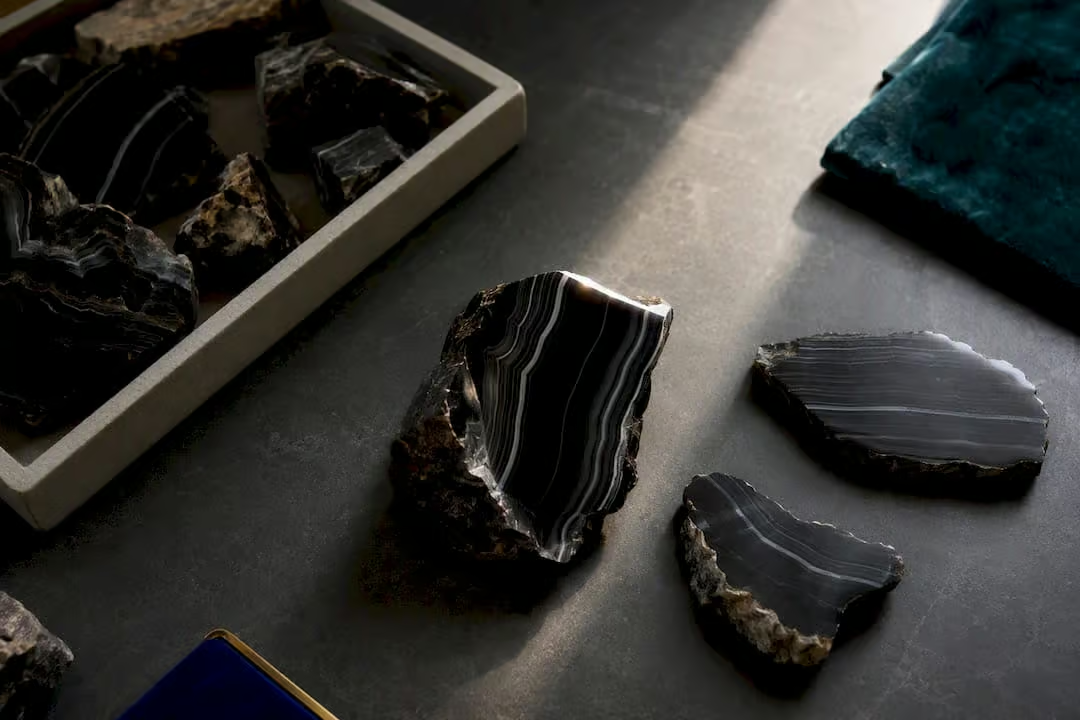
Appearance plays a role, too. A stone with visible banding, alternating black and white or gray layers, tends to read as decorative and carved, historically used for cameos.
A uniform, glossy black bead reads as protective and modern. Here’s what black onyx meaning tends to cluster around today:
- Protection: a buffer against negative energy or overwhelming environments
- Grounding: a felt sense of being anchored rather than scattered
- Strength: resilience through hard conversations or transitions
- Self-mastery: discipline around habits, temper, or impulsive decisions
What Are the Healing Properties of Black Onyx?
Crystal practitioners describe black onyx as a grounding stone, one that absorbs negative energy and steadies emotional swings.
Common claims include easing anxiety in the moment, supporting focus during stressful stretches, and helping people hold emotional boundaries with difficult family members or coworkers.
Modern crystal traditions consistently link onyx to grounding, self-control, and symbolic protection, and that framing has stayed remarkably stable across sources.
None of that is a medical claim, and it shouldn’t be treated as one.
Black onyx has no established medical healing effect. Claims that it treats anxiety, depression, chronic pain, or any diagnosable condition aren’t backed by reliable scientific evidence, and the stone should never replace medical care.
That distinction, drawn directly from Psychic Source’s overview of onyx’s spiritual meaning, is worth repeating because so much online content blurs it.
The psychological mechanism behind the reported benefits is plausible: holding a physical object tied to an intention gives your brain a concrete anchor that can genuinely help with focus or calm.
That’s a behavioral effect, not a mineral one.
Where Does Black Onyx Come From Historically?
Ancient carvers prized onyx for one practical reason: its layered structure let them cut contrasting designs into a single stone. Britannica notes that onyx has a long decorative history in beads, vessels, seals, cameos, and intaglios, because the banding creates a natural light-on-dark canvas that no single-color gem can match.
Roman and Egyptian artisans used it for signet rings and religious carvings, and its density made it durable enough to survive intact for millennia.
The meaning shifted hard in the 19th century. Victorian mourning jewelry adopted black onyx and jet almost as a uniform, worn to signal grief after a death in the family. That’s a very different emotional register than the modern “protection and strength” framing, and it shows how much cultural context can reshape a single stone’s meaning.
Folklore adds more texture:
- Some European traditions linked onyx to nightmares or restless sleep when worn incorrectly
- Other accounts treated it as a talisman against enemies or ill intent
- Middle Eastern and South Asian traditions often paired it with courage in battle or trade
Is Your Black Onyx Real or Treated?
Onyx is a variety of chalcedony, a microcrystalline quartz that shows up in dozens of forms across every U.S. state, according to USGS data. “Onyx marble,” sometimes sold in home decor, is a completely different material: banded calcite or carbonate stone, softer and chemically unrelated to true gemstone onyx.
Confusing the two leads to bad expectations about durability and value.
Most commercial black onyx jewelry is dyed. Naturally uniform, jet-black chalcedony is uncommon, so sellers routinely enhance lighter or grayish material to achieve that deep black finish, according to Jewelers Mutual’s onyx guide.
That’s not a red flag by itself. It only becomes a problem when a seller doesn’t disclose it.
Before buying, run through this short checklist:
- Ask directly whether the color is natural or enhanced
- Look for banding, since fully uniform black often signals treatment
- Compare the price against similar treated versus natural pieces
- Confirm the material is genuine chalcedony, not onyx marble or glass
Pro Tip: Reputable jewelers, per the GIA’s treatment guidance, disclose color enhancement upfront. A seller who won’t answer a direct question about dye is a bigger warning sign than the dye itself.
Black onyx has a Mohs hardness of 6.5 to 7, sturdy enough for daily wear but soft enough to require reasonable care, which I’ll cover below.
How Do You Use Black Onyx for Protection and Focus?
The stone works best paired with a repeatable action rather than left to sit passively in a drawer. Hold a pendant for two to five minutes while breathing slowly and naming what you want to release or hold steady. That pairing of object and action is what actually reinforces the intention, not the mineral itself.
A few ways to build that in:
- Wear a pendant when you need a visible reminder of a boundary you’re holding that day
- Keep a bracelet on for daily grounding since it stays in view during stressful moments
- Choose bold, dark accent pieces for masculine or gender-neutral styling, a common use in handcrafted men’s jewelry
- Journal for a minute after holding the stone, naming one thing you’re grounding yourself against
Pair it with other grounding stones if you like, but don’t treat onyx as a stand-in for therapy or professional support during genuine crisis. It’s a cue, not a treatment.
How Do You Care for Black Onyx Jewelry?
That 6.5 to 7 hardness rating means onyx resists everyday scuffing but isn’t immune, especially when stored next to harder gems like quartz or sapphire in a jewelry box.
Dyed pieces need extra caution, since heat and harsh chemicals can fade the color over time.
Here’s a simple care routine:
- Wipe the stone with a soft, slightly damp cloth after wearing it
- Avoid ultrasonic cleaners on dyed onyx, since heat and vibration can affect the color
- Skip household chemicals, perfume, and lotion contact when possible
- Store pieces separately in a soft pouch to avoid scratches from harder stones
- Remove onyx jewelry before swimming, showering, or heavy manual work
For a more complete routine, HerMJ’s guide to caring for handmade gemstone jewelry covers cleaning methods that won’t strip the color or shine from polished stones like onyx.
Who Wrote This Guide?
This article was written by Veronique for HerMJ, a studio that specializes in handcrafted jewelry made from genuine pearls and gemstones.
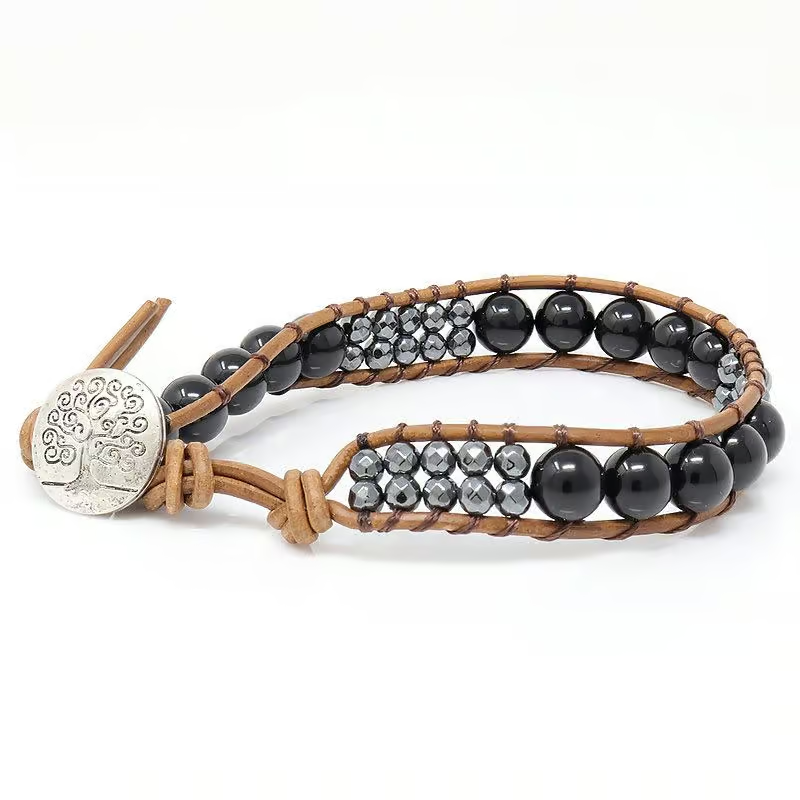
HerMJ’s product pages describe materials and care plainly, the same standard applied throughout this guide. The Onyx Beads Bracelet is a direct example: a simple, wearable piece built for the grounding and boundary-setting practices covered above, described honestly rather than oversold.
How Do You Tell Black Onyx Apart From Similar Stones?
Black onyx gets confused with several other dark stones, and the differences matter more for care and price than most buyers realize.
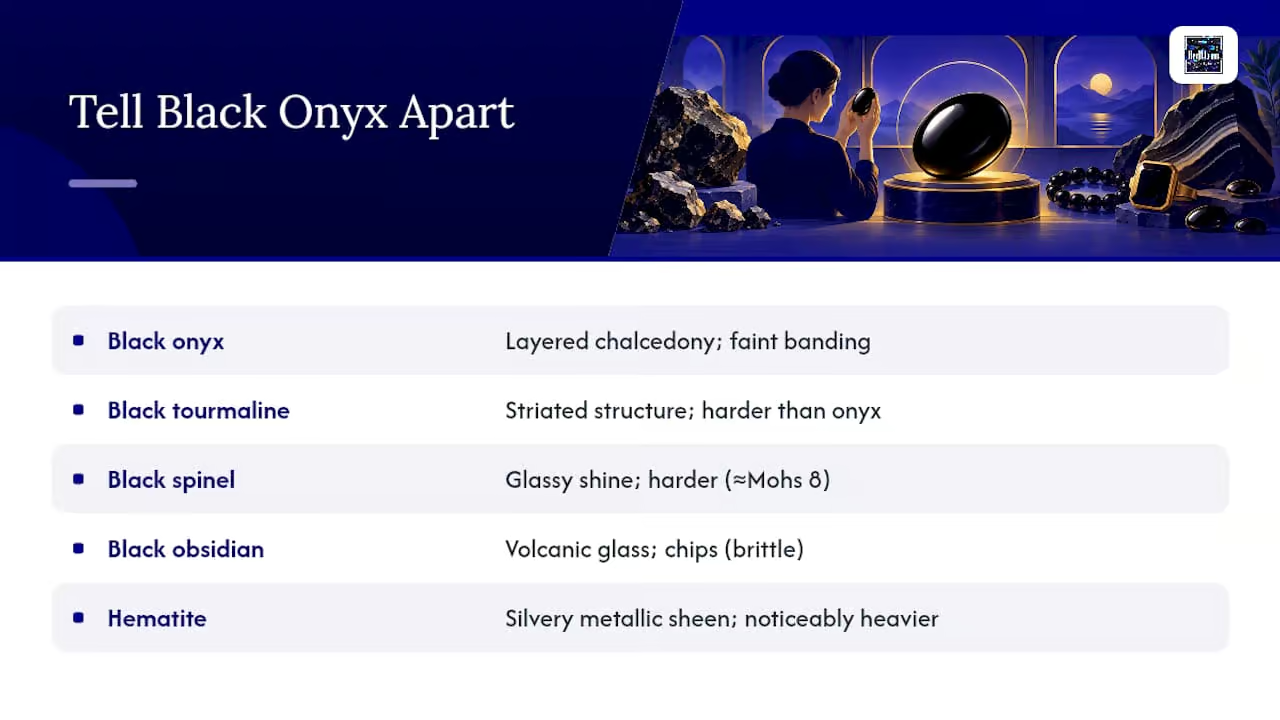
Black tourmaline looks similar at a glance but has a different structure entirely, striated rather than smooth, and it’s often marketed for protection in overlapping ways. It’s harder than onyx, so it holds up slightly better to daily knocks.
Black spinel is a natural gem, not treated chalcedony, and it has a glassier shine than onyx’s slightly softer luster. Spinel also runs harder on the Mohs scale, closer to 8, making it more scratch-resistant.
Black obsidian is volcanic glass, not a mineral in the same family as chalcedony. It has a glossier, almost wet-looking shine and is notably more brittle. Obsidian chips rather than scratches, which is the fastest way to tell the two apart if a piece takes a hard knock.
Hematite shares the dark, almost metallic look but has a distinct silvery sheen under light and is significantly heavier for its size, since it’s an iron oxide rather than a silica mineral.
The simplest field test: banding. True onyx often shows faint parallel bands under strong light, even when dyed uniformly black, because the underlying chalcedony structure doesn’t fully disappear under treatment.
None of the other stones above share that layered structure. If a seller can’t tell you which of these you’re looking at, that’s worth asking about before you buy, not after.
What Misconceptions Exist About Black Onyx?
The biggest misconception is that black onyx and onyx marble are the same material.
They’re not.
One is a gemstone chalcedony variety; the other is a banded carbonate stone used mostly in decor, softer and chemically unrelated. Buying one thinking it’s the other leads to real disappointment when a “gemstone” chips like the countertop material it actually is.
A second common myth: that dyed onyx is fake or lesser. Dyed chalcedony is still genuine chalcedony. Treatment changes color, not identity, and it’s standard practice across the gem trade when disclosed honestly.
Third, people often assume onyx is universally described as “bad luck” or “good luck” across history, when the record actually shows both, depending on era and region.
Victorian mourning customs and older folklore associated it with grief and misfortune, while other traditions regarded it as protective. Neither version is more “correct.” They’re both real, just from different cultural moments.
Finally, there’s a belief that wearing black onyx guarantees emotional results, that it will fix anxiety or force calm on its own. It won’t.
The stone works as a physical cue paired with intention and action, not as a passive fix. Anyone selling it as a cure for a medical condition is overstating what any gemstone can do.
A Personal Note on Wearing Onyx Responsibly
I recommend pairing intention with informed buying, always. Ask your seller whether the stone is treated, and care for the piece once you own it. Symbolism means more when it’s paired with honesty about what you’re actually wearing, not less.
— Veronique
Find Your Grounding Piece at HerMJ
If black onyx’s meaning speaks to you, wearing it daily is the easiest way to put that symbolism into practice.
HerMJ’s Onyx Beads Bracelet is built exactly for that: simple, wearable, and made from genuine gemstone material rather than plastic or resin dressed up to look like the real thing.
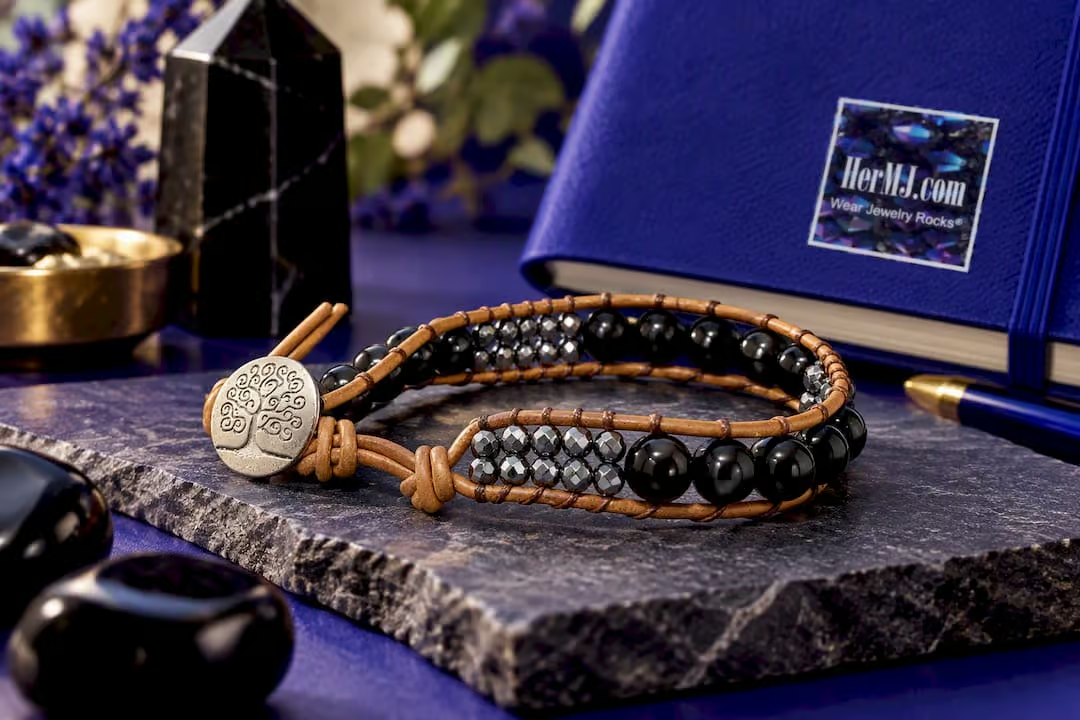
HerMJ focuses on handcrafted pieces at prices that don’t punish you for wanting something unique, with materials described plainly on every product page.
And browse the necklaces category for a pendant you can hold while taking a grounding breath, or check out the full gemstone and pearl collection for something that fits your everyday rotation.
US orders ship free with no minimum, and international orders ship free on orders of $150 or more. Pick a piece, read the material notes on the product page, and add it to your cart when you’re ready.
Sources
This guide draws on gemological references from the GIA Gem Encyclopedia for treatment and identification standards, Britannica for onyx’s carving history, USGS for chalcedony geology, and Psychic Source for belief-based spiritual context. Each source is linked at the point it supports a specific claim above.
- Black Onyx spiritual meaning | Psychic Source
- Onyx | Britannica
- Gem treatment | GIA
- Chalcedony | USGS
FAQ
What Does Black Onyx Mean Spiritually?
Black onyx is spiritually associated with protection, grounding, and self-discipline, and is used as a symbolic cue to stay calm and maintain boundaries. These meanings are belief-based rather than clinically proven, so treat them as personal practice rather than established fact.
Who Should Not Wear Onyx Stone?
Anyone relying on onyx as a substitute for medical or mental health treatment shouldn’t wear it in place of that care, since it has no established clinical effect. People with sensitive skin should also confirm whether a piece is dyed before regular wear, since some dyes can react with sweat or lotion over time.
What Are the Benefits of Wearing Black Onyx?
The reported benefits are grounding, focus, emotional steadiness, and a stronger sense of personal boundaries, all tied to belief-based crystal practice rather than medical evidence. Holding a piece paired with a short breathing or journaling practice appears to help people reinforce intentions, a behavioral effect rather than a mineral one.
What Signs Should Wear Black Onyx?
There’s no astrological or scientific rule restricting who can wear black onyx. Some traditions associate it with certain zodiac signs for grounding energy, but any reader drawn to its symbolism of protection and strength can wear it regardless of sign.
Recommended
- Amethyst Meaning: An Artisan Buying Checklist
- How to Compare Gemstone Jewelry Online Marketplaces
- Pearl Grading: What Every Buyer Needs to Know
- Real vs Fake Pearls: 6 Quick At Home Tests Buyers Use