


Are Magnetic Clasps Safe? A Wearer’s Guide
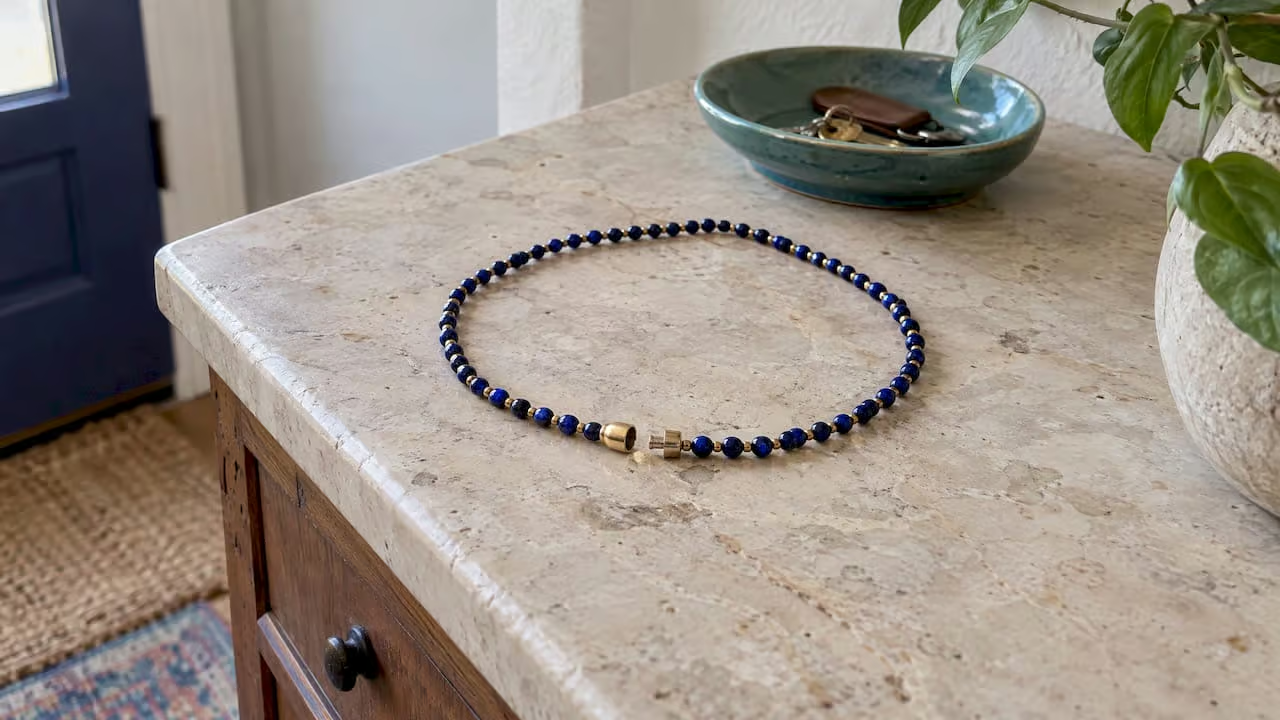
For most people, a magnetic clasp is a safe, convenient way to close a necklace or bracelet. Three situations call for care: you have an implanted heart device or similar medical implant, you’re heading into an MRI, or small children and pets are nearby. A fourth is practical rather than medical: a clasp that’s too light for the piece can let go at the wrong moment. I’ll walk you through each one, so you can wear your jewelry with confidence and choose pieces that suit your life.
TL;DR
- If you have a pacemaker or defibrillator, keep magnetic closures at least 6 inches (15 cm) from the device, and ask your cardiologist before wearing one.
- Remove magnetic jewelry before an MRI, and tell the technician you wear it.
- Small loose magnets are a serious hazard if swallowed, so keep clasps and spare magnets away from young children.
- A secure clasp has a design that resists sideways pull, not just a strong magnet. Check the closure when you put a piece on.
- If a magnetic clasp doesn’t fit your needs, a toggle or lobster-style closure is an easy alternative to compare.
What a magnetic clasp actually does
A magnetic clasp is two small halves, each holding a magnet, that snap together when you bring them close. There’s no spring to wear out and no tiny lever to fumble, which is why people with sore hands, arthritis or a busy morning routine love them. You can even close a bracelet one-handed while holding a coffee with little effort.
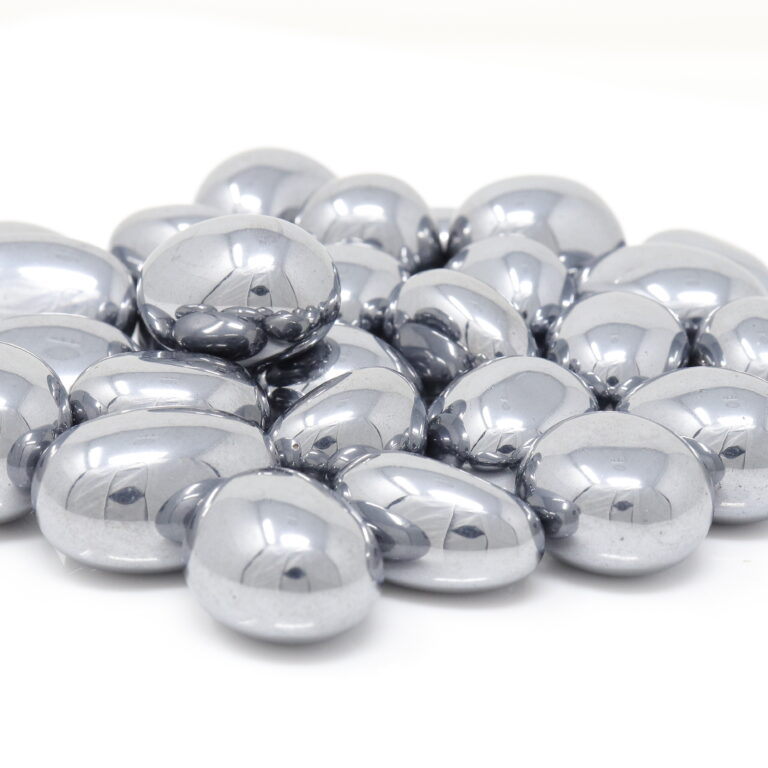
The magnets inside jewelry are usually small, but small doesn’t mean weak. Many modern clasps use neodymium, a rare-earth magnet that packs a strong field into a tiny space. That strength keeps your necklace closed. It’s also the reason the safety guidance below exists.
Are magnetic clasps safe for healthy wearers?
Yes. Magnetic jewelry has been studied mostly in the context of magnets used for pain relief, and the National Center for Complementary and Integrative Health reports that static magnets appear safe, with minimal or no negative side effects in the studies it reviews. The same page lists the exceptions I’m about to cover: pacemakers, insulin pumps, MRI scans and small magnets within reach of children.
If none of those apply to you, a magnetic clasp against your neck or wrist isn’t a health concern. The remaining question is whether it holds, and I’ll get to that.
Pacemakers, defibrillators and other implants
This is the one safety point every wearer should know, and it’s the first thing I’d tell a friend who asked about a magnetic closure.
Why magnets affect heart devices
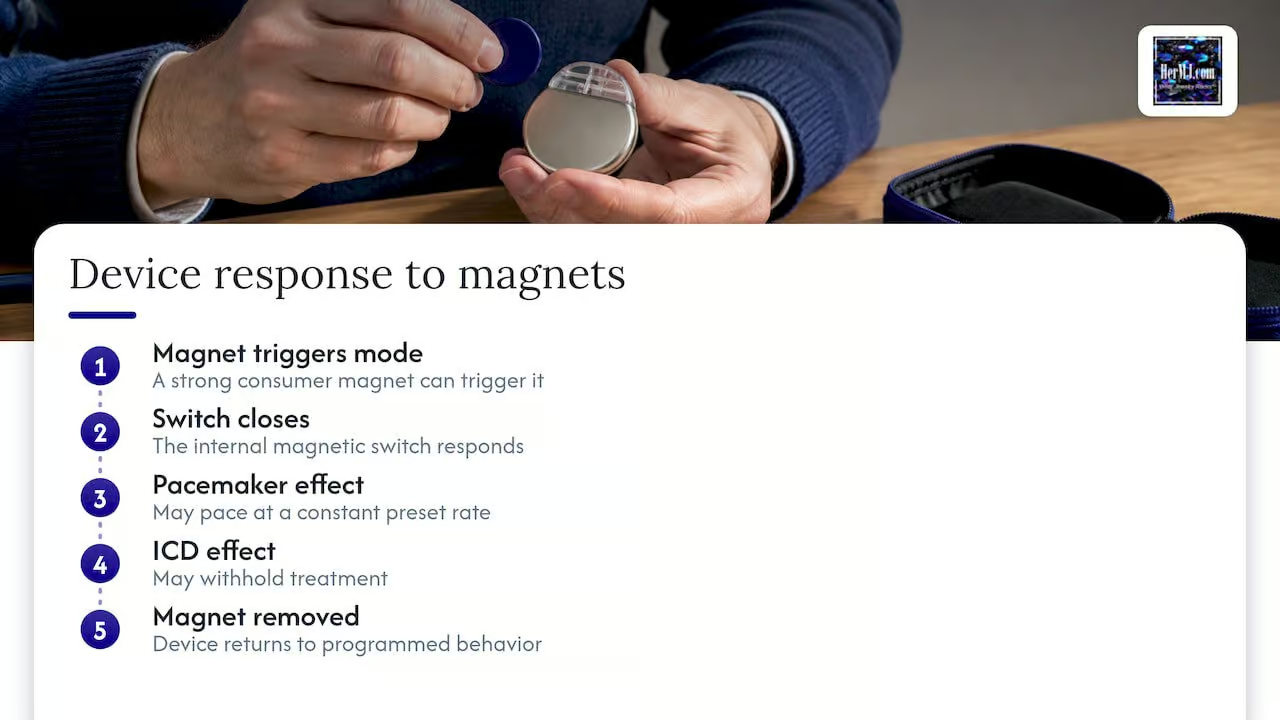
Pacemakers and implantable cardioverter-defibrillators (ICDs, which deliver a shock to correct a dangerous heart rhythm) are built with a deliberate “magnet mode.” Doctors use it during certain procedures, and the FDA explains that a strong enough consumer magnet can trigger the same mode by accident.
The device then pauses its normal work until the magnet moves away. The FDA considers the risk low and says it isn’t aware of adverse events tied to it, but it still advises a gap of at least six inches (15 cm) and not carrying magnetic items in a pocket over the device.
A magnetic switch inside the device is what responds. When a magnet closes it, a pacemaker may pace at a constant preset rate, and a defibrillator may withhold treatment. Once the magnet is removed, the device returns to its programmed behavior.
The 6-inch rule for jewelry
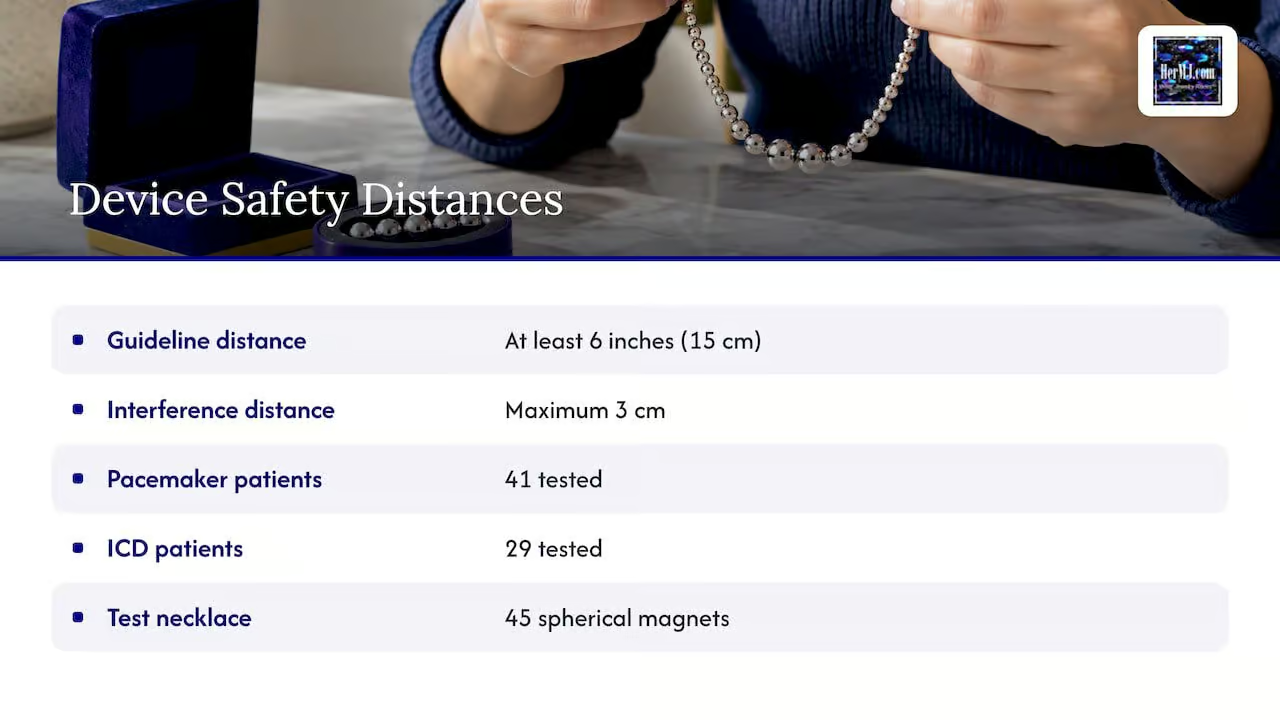
For jewelry specifically, Medtronic, a pacemaker manufacturer, advises keeping magnetic closures at least 6 inches (15 cm) from the heart device. Think about where the clasp sits. A necklace clasp at the back of the neck is usually far from a chest implant, but a short necklace that shifts to the front, a pendant on a magnetic closure, or a bracelet resting against your chest when you sleep may not be.
A small clinical study of 41 pacemaker patients and 29 ICD patients tested small neodymium magnets, including a necklace made of 45 spherical magnets. Interference showed up in every patient, at a maximum distance of 3 cm. That’s well inside the 6-inch guideline, which is why the guideline has a generous margin.
If you wear an implanted device, the right next step is a quick question to your cardiologist or the clinic that manages your device. They know your specific model and settings. Until you’ve asked, choose a closure without a magnet, such as a toggle or a lobster clasp. My guide to magnetic versus toggle clasps lays out how they compare in daily wear.
Other implants
The same caution applies to insulin pumps, according to the NIH page above. For cerebrospinal fluid shunts, the type of implant used to treat hydrocephalus, the FDA reports that common magnetic sources are safe when kept two inches or more from the valve site. If you have any implant I haven’t named, ask the doctor who manages it. That’s a two-minute conversation, and it settles the question for good.
Before an MRI
Take magnetic jewelry off before any MRI scan. The NIH page lists this as a standard precaution. Strong scanner magnets can pull on metal and heat it, and a clasp with magnets inside is no exception. Most imaging centers ask you to remove all jewelry anyway, so the habit is easy to build: leave your magnetic pieces at home on scan day, and be sure to mention it if you forgot to.
Children, pets and swallowed magnets
This is the other serious risk, and it’s about swallowing, not wearing. The U.S. Consumer Product Safety Commission found that when a child swallows more than one magnet, the magnets can attract each other through body tissue and cause severe injury. Its Safety Standard for Magnets took effect on October 21, 2022.
It covers jewelry, including children’s jewelry, and requires each loose or separable magnet small enough to fit its small-parts cylinder to have a flux index (a measure of magnetic strength) below 50 kG²mm².
That limit isn’t a guarantee of zero risk. In a September 2024 letter, CPSC staff described a 10-year-old who swallowed 17 small magnets that fell under the limit and still needed removal by colonoscopy, and they asked the industry standards body to consider a stricter limit. The practical lessons are simple:
- Keep magnetic clasps, loose magnetic beads and spare closures out of reach of young children.
- Don’t let toddlers mouth or play with a necklace, magnetic or not.
- If a clasp half or magnet goes missing and a child may have swallowed it, treat it as an emergency and go to the ER right away.
- Store jewelry where pets can’t reach it. My guide to storing necklaces without tangling shows a tidy setup that keeps pieces off the floor and out of small hands.
If you’re buying a gift for a child, a clasp with no loose magnets is the best choice.
Will it stay closed? Magnetic clasp security
Safety also means not losing a pearl strand on the sidewalk. A magnet holds well when you pull straight apart, but a sideways twist or a snag on a sweater can slide the halves off each other. A U.S. patent on magnetic clasp design says exactly that: standard designs can disengage because nothing but magnetic force resists opposing forces.
The inventors propose interlocking surfaces, a longer magnet that resists pull-through, steel tubing to redirect the magnetic field, and neodymium magnets for strength.
Some designs add a second layer. An older patent describes a magnetic closure with a pivoting wire safety clasp that has to be released before the magnetic halves can separate. You’ll see this idea in the market as fold-over or safety-latch magnetic closures.
Here’s how I’d judge any magnetic clasp in your hands:
- Look for an interlock. Halves that sit in a recess, tube or lip hold against a sideways tug better than two flat discs.
- Match the clasp to the weight. A heavy strand of large gemstones puts constant strain on a closure. A feather-light chain places very little stress on it.
- Give it a gentle sideways test. When you first put a piece on, slide the halves a little. They shouldn’t let go with light pressure.
- Think about your day. A bracelet you wear while typing, carrying bags or hugging people will get bumped more than a necklace worn to dinner.
- Add a safety option for valuable pieces. A secondary latch or chain gives you a backup for a favorite strand.
Other things worth knowing
Skin sensitivity
Magnetic clasps are often plated metal. If you’ve reacted to jewelry before, the finish matters as much as the closure. My guide to nickel-free jewelry explains what to ask about materials, and my look at micron gold plating shows how plating thickness affects wear.
Sleep, showers and phones
Magnets can affect devices, so keep a magnetic bracelet from resting directly on a medical implant while you sleep. Water is a separate question: clasps can corrode, and my guide on jewelry and water covers shower, pool and ocean habits. Pearls have their own needs, and our pearl care page has everything about cleaning and storing them.
Buying with confidence
If you’re shopping online, a seller should be able to tell you what kind of closure a piece has. My online jewelry shopping tips show what to look for in listings and reviews.
Which closure suits you?
| Your situation | Closure to lean toward |
|---|---|
| Arthritis or limited grip, no implants | Magnetic with interlocking design |
| Pacemaker, ICD or insulin pump | Toggle or lobster clasp, after asking your doctor |
| Young children or pets at home | Non-magnetic closure, or keep jewelry stored out of reach |
| Heavy pearl or gemstone strand | Secure closure with a safety latch or chain |
| Frequent MRI or medical imaging | Closure with no magnets to remove |
Pearl and gemstone pieces made to be worn
At HerMJ, we make handmade necklaces, bracelets and earrings from genuine freshwater pearls, natural gemstones and crystals.
Browse our necklaces and bracelets to find a style you love, or start with the Pearl Diver Necklace. US orders ship free with no minimum, and international orders ship free for orders of $150 or more.
My view on safe, beautiful jewelry
I’ve always thought a piece of jewelry should make you feel at ease before it makes you feel dressed up. Pearls are living gems, and they deserve the same thoughtfulness we’d give a fine piece of art. That includes how they close.
When we design with genuine freshwater pearls and natural gemstones, we think about how a piece will actually live: on a busy morning, at a wedding, in a gift box passed to someone you love. A clasp that suits one person can be wrong for another, and the best choice is the one that matches your health, your habits and the weight of the strand.
My golden rule: Ask the question once, get the answer, and then enjoy what you’re wearing without second-guessing it. If you’ve got a medical device, ask your doctor. If you’ve got toddlers, store your pieces up high. Everything else is about loving what you wear.
Veronique
FAQ
Are magnetic clasps safe to wear every day?
For most people, yes. NIH reviews of magnets worn on the body report minimal or no negative side effects. The main exceptions are people with pacemakers, defibrillators or insulin pumps, and anyone about to have an MRI. Keep magnetic items away from small children too.
How far should a magnetic clasp be from a pacemaker?
At least 6 inches (15 cm), according to pacemaker maker guidance and FDA advice on magnets near implants. A necklace clasp at the back of the neck is usually farther than that, but a front-resting pendant or a bracelet held against the chest may not be. Your cardiologist can confirm what’s right for your device.
Can a magnetic clasp open by accident?
It can, especially with a sideways pull or a heavy piece. Designs with interlocking halves, a longer magnet or a secondary safety latch resist that much better. Test a new piece with a gentle slide when you first put it on, and choose a stronger closure for heavy strands.
Are magnetic clasps a danger to children?
The danger comes from swallowing. Multiple small magnets can attract each other inside the body and cause serious injury, which is why a federal safety standard covers magnets in jewelry. Keep loose clasps and magnets away from young children. If one may have been swallowed, go to the ER immediately.
Sources
- Magnets For Pain: What You Need To Know, NCCIH
- Magnets in Cell Phones and Smart Watches May Affect Pacemakers, FDA
- Can someone with a heart device wear jewelry with magnetic closures, Medtronic
- Potential interference of small neodymium magnets with pacemakers and ICDs, PubMed
- Magnetic Field Interference with Programmable CSF Shunts, FDA
- Safety Standard for Magnets, Federal Register, September 21, 2022
- CPSC letter to ASTM on a magnet incident, September 27, 2024
- U.S. Patent 7,207,091, Magnetic clasp apparatus
- U.S. Patent 5,197,168, Magnetic jewelry closures with wire safety
Recommended
- Magnetic vs Toggle Clasp: Which One Fits Your Life?
- Avoid Losing Pearls: Match Pearl Necklace Clasps to Strand Weight
- 6 Steps to Untangle a Necklace Safely, and When Not To!