
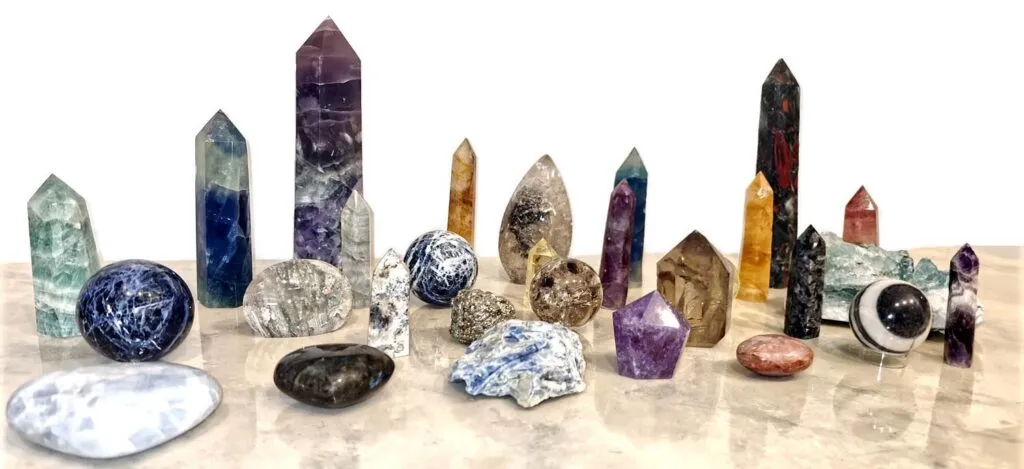

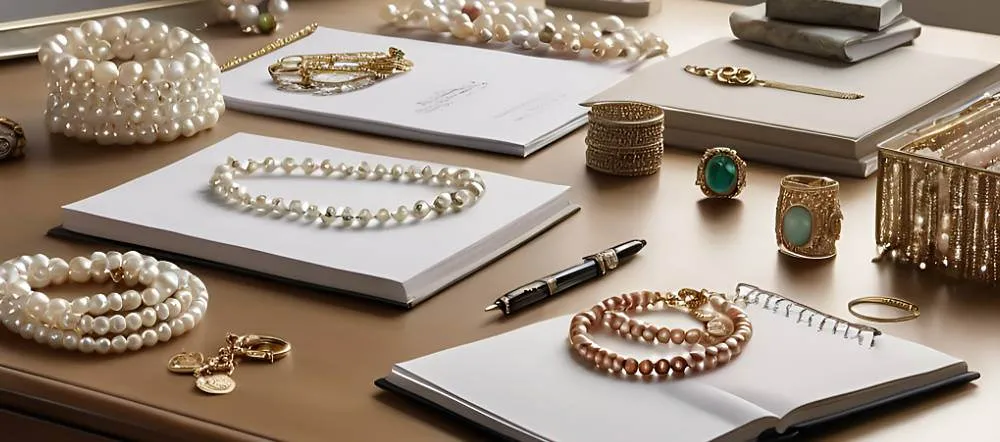

Raw vs Polished Crystals: How to Choose the Right Finish
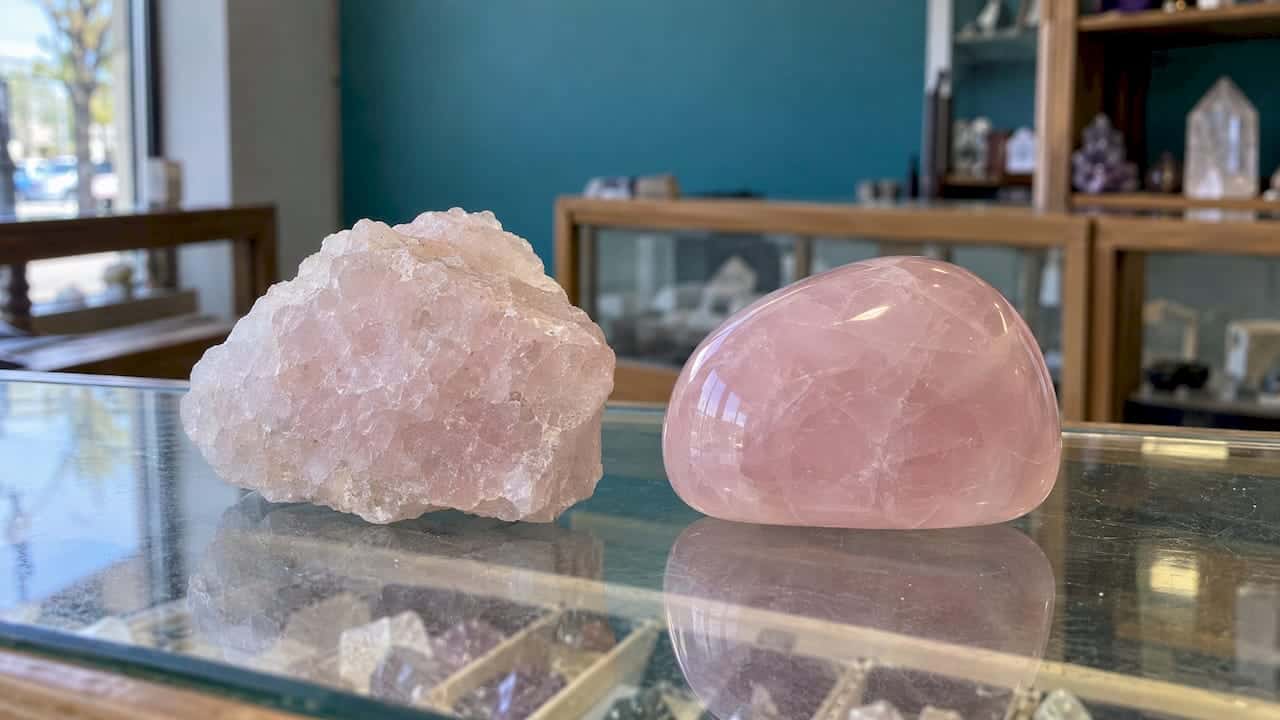
Raw crystals keep the shape the earth gave them, with rough faces, sharp points and natural texture.
Polished crystals have been ground and buffed smooth, so they show deeper color and feel soft in your hand. If you’re wearing a stone, carrying it daily or giving it as a gift, polished is usually the better choice. If you’re styling a shelf, a windowsill or a centerpiece, raw is hard to beat. Most homes end up wanting both, and I’ll show you how to decide piece by piece.
TL;DR
- Raw (also called rough or natural) crystals are unshaped: textured, irregular and dramatic. They’re best as display pieces.
- Polished crystals are ground and buffed smooth. Tumbled stones, palm stones, spheres and beads all fall in this group, and they’re best for touching, carrying and wearing.
- Polishing is a mechanical finish. It changes how a stone looks and feels, not what the stone is.
- Hardness matters more than finish for durability: a soft raw mineral can scratch or crumble however it’s displayed.
- For jewelry, choose polished. For decor, choose raw, or mix the two for contrast.
What “raw” and “polished” actually mean
The terms get used loosely, so let’s pin them down.
A raw crystal is a mineral specimen that hasn’t been cut, ground or shaped. You might see a quartz cluster with dozens of tiny points, an amethyst geode half, or a lump of rose quartz with a dull, frosty surface. “Rough” and “natural” mean the same thing in most shops. Raw doesn’t mean dirty or unfinished in a bad sense. It simply means the stone is shown as it came out of the ground, usually after a rinse to remove clay and dust.
A polished crystal has been shaped and smoothed. The surface is ground with progressively finer abrasives, then buffed until it gleams. Polishing is a mechanical process, so no chemicals are required to get that glassy look. Polished stones come in several forms:
- Tumbled stones: small, rounded, irregular pebbles with a smooth, glossy surface.
- Palm stones and worry stones: larger, flatter pieces made to fit your hand.
- Spheres, eggs and towers: shaped by a lapidary, which is a person or machine that cuts and polishes stone.
- Beads and cabochons: the smooth, rounded stones used in bracelets, necklaces and earrings.
That last group is the one jewelry lovers care about. Nearly every gemstone bead on a bracelet is a polished stone.
The other query people type, “raw crystals vs tumbled,” is really the same question. A tumbled stone is just one common kind of polished crystal, the pocket-size one.
How they differ at a glance
| Feature | Raw crystals | Polished crystals |
|---|---|---|
| Look | Matte or glassy faces, points, clusters, natural color variation | Deeper, more even color; glossy, mirror-like surface |
| Feel | Rough, sometimes sharp | Smooth and cool, pleasant to hold |
| Best use | Display, centerpieces, shelf styling | Wearing, carrying, gifting, desk and bedside |
| Durability | Points and edges can chip; delicate clusters can shed | Rounded shapes resist chipping |
| Cleaning | Crevices collect dust | Wipes clean quickly |
| Uniqueness | Every specimen is one of a kind in shape | Shape is controlled; pattern and color stay natural |
| Typical cost | Varies widely with size and specimen quality | Varies with stone and the labor of shaping |
It’s best to treat that table as a starting point. A gorgeous raw amethyst cluster can cost much more than a basic tumbled stone, and a hand-finished sphere can cost more than a rough chunk of the same mineral.
Look and color: why polishing changes what you see
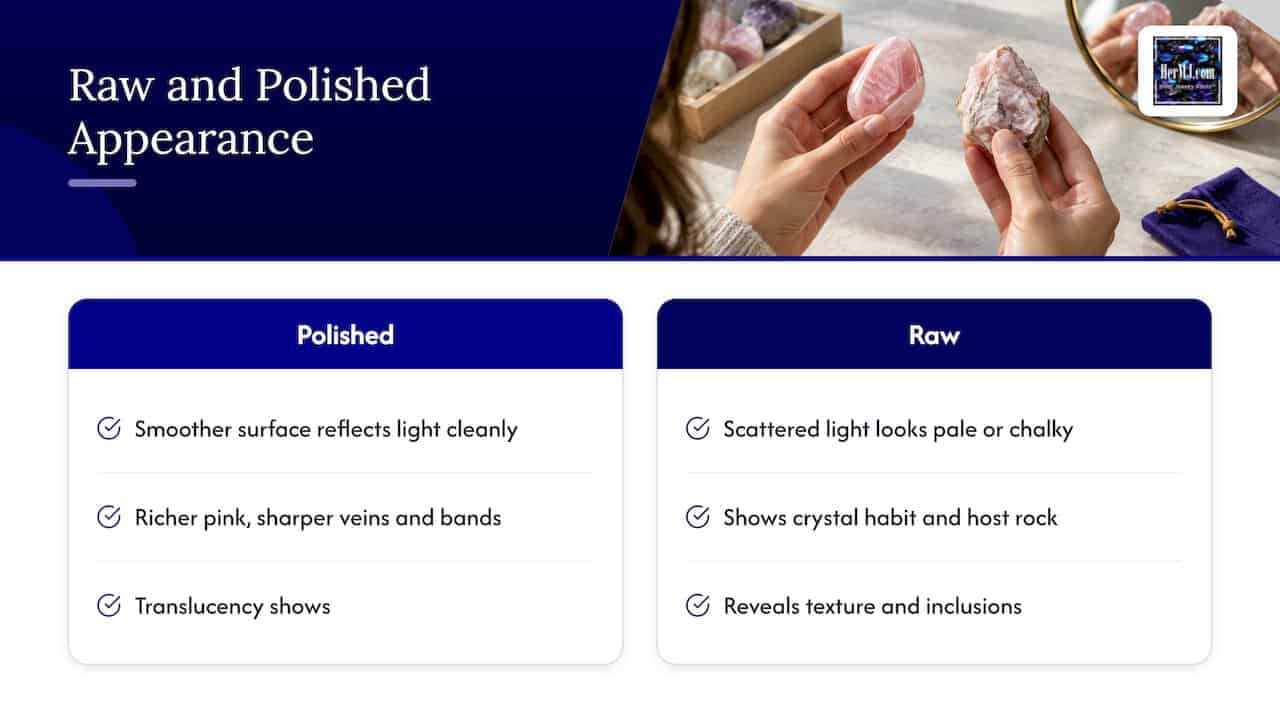
When I hold a raw piece of rose quartz next to a polished one, there’s a big difference. The raw stone frequently looks pale, cloudy or chalky, because a rough surface scatters light. Polishing smooths that surface, so light passes in and reflects back out cleanly. The pink looks richer, the veins and bands look sharper, and any translucency shows up.
This is so many feel polished stones look more “finished” and consistent. Raw stones tell a different story. You see crystal habit, which is the natural geometric form a mineral grows in, plus the host rock it formed on and the odd inclusion. A raw citrine point or a druzy (a surface blanketed in tiny sparkling crystals) has a drama that polishing would erase.
So ask yourself what you want to see. If it’s color and glow, go polished. If it’s geology and texture, go raw.
Durability: hardness decides more than finish
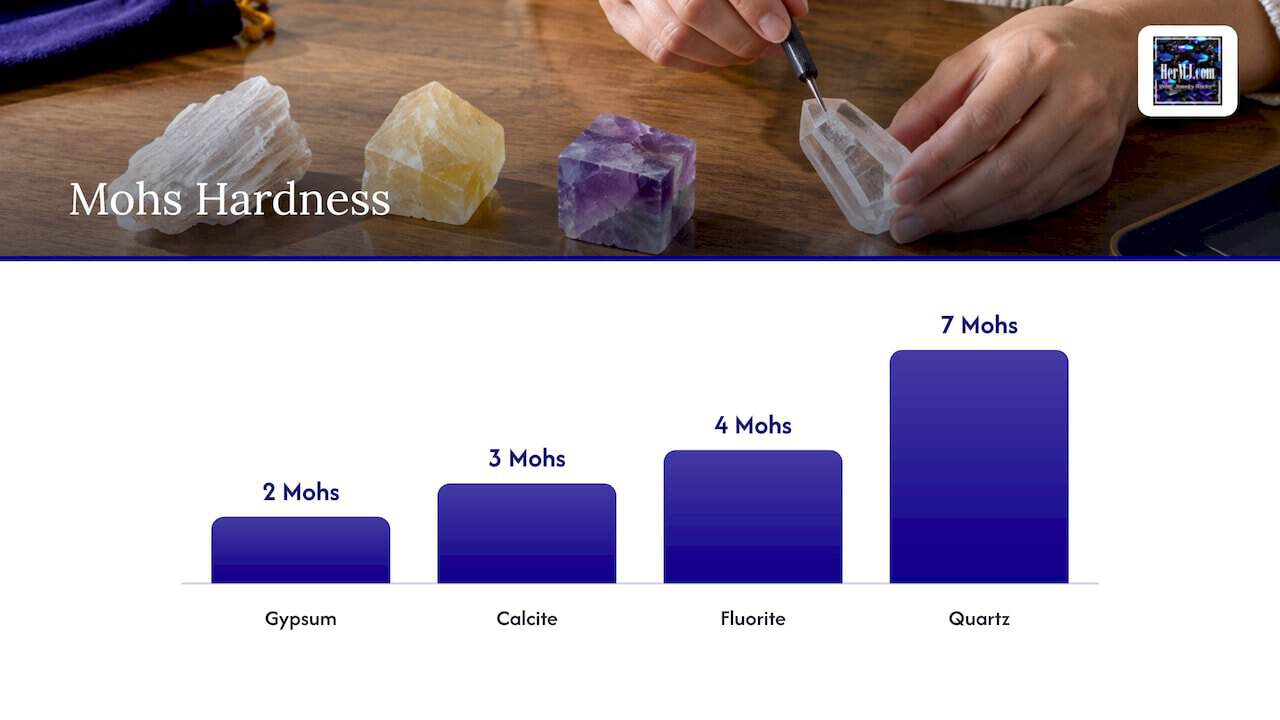
People often assume polished means tougher. That’s not quite right. Polishing doesn’t make a stone harder. It removes the roughest edges, which helps with chipping, but the mineral’s built-in hardness stays the same.
Gemologists measure scratch resistance on the Mohs scale of mineral hardness, which runs from 1 to 10. On it, gypsum (the mineral behind selenite) sits at 2, calcite at 3, fluorite at 4 and quartz at 7. That gap explains a lot:
- Quartz family stones (clear quartz, rose quartz, amethyst, citrine) are hard enough for daily handling in either finish, and they’re the best choice for everyday jewelry.
- Softer minerals like selenite, calcite and fluorite scratch easily. Polished, they look lovely on a shelf but are better left off a bracelet you’d wear to the office and the gym.
- Raw clusters of any hardness have fragile points. Knock a cluster against a countertop and a point may snap off or tiny crystals may fall away.
So before choosing the finish, check the stone. A polished soft stone is still a soft stone, and a raw quartz point is tougher than a polished piece of a delicate mineral.
Wearing crystals: why polished wins for jewelry
Jewelry gets knocked, brushed against sleeves, tucked under scarves and caught on hair. Smooth, rounded stones handle that well. Raw stones with sharp edges can snag knits, scratch skin and chip at the points that stick out.
There’s also comfort to consider. A bracelet of smooth beads slides over your wrist and settles against your skin. A necklace pendant with a soft, rounded profile lies flat against your collarbone. Even a rough-looking, natural-style design generally relies on polished or lightly shaped stones so you can wear it comfortably all day.
If you want a piece with that organic, earthy character, look for stones with natural patterning, such as the banding in agate or the feathery green swirls in seraphinite, shaped smooth for wearing.
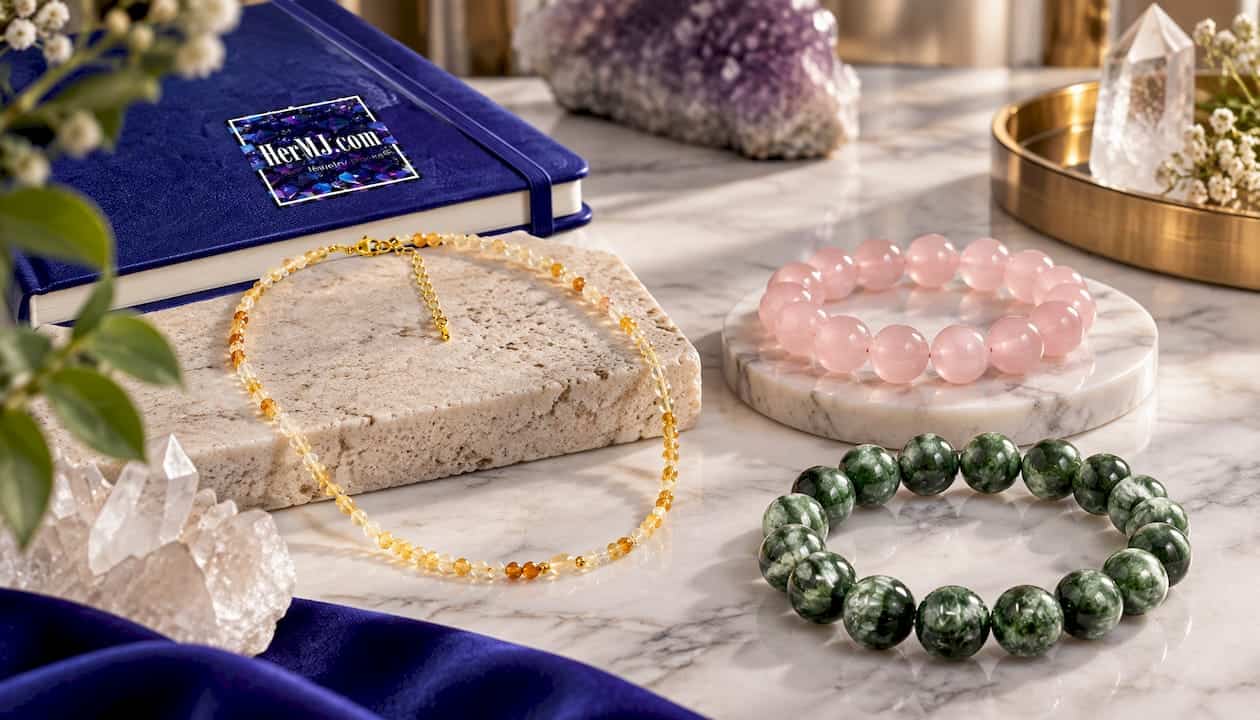
Pieces like the Incredible Seraphinite Bracelet and the Pink Rose Quartz Bracelet show how much character a smooth stone can hold. For a pendant look, the Quartz Crystal Necklace is a good example of a clear stone that catches light.
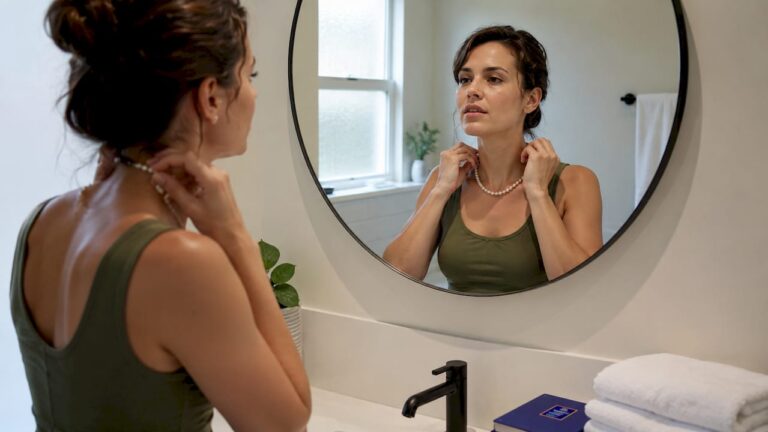
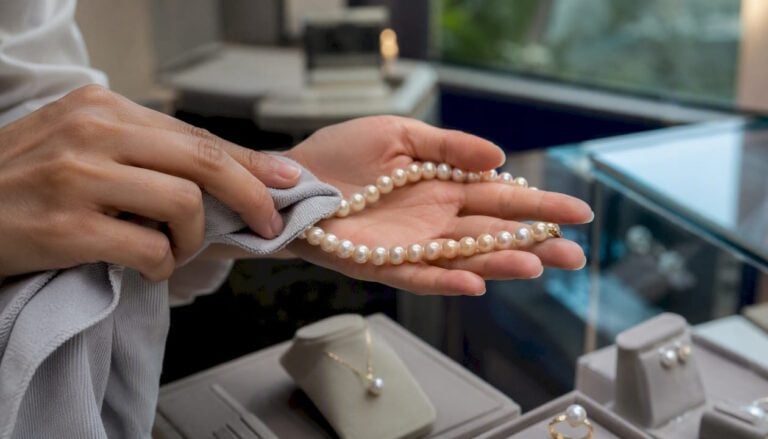
Pearls follow the same logic, by the way. They’re organic gems with a naturally smooth surface, which makes them gentle against skin. If you wear them, our guide to pearl care covers how to keep that luster for years.
Decor: where raw crystals shine
Decor flips the answer. Nobody’s rubbing a mantel piece against a sweater, so raw crystals’ rough edges become a strength. A few ways I like to use them:
- Shelves and bookcases: a single raw cluster gives a visual anchor. Group odd numbers, three or five, at different heights.
- Coffee tables and centerpieces: a raw geode half sitting on a tray, with a polished sphere beside it, creates texture contrast that looks designed rather than collected.
- Windowsills: raw, translucent stones like quartz catch daylight and throw it around the room. Keep soft or color-sensitive stones out of strong direct sun for long stretches, since some stones like amethyst can fade with prolonged exposure.
- Entryways and bathrooms: polished stones tolerate more handling, so they suit the places where hands pass often. In humid rooms, make sure the stone suits moisture before you place it there.
If you’re building a room around gemstones, our crystal room decor guide and the types of crystals for home decor style guide walk through palettes and placement. For tables and entertaining, take a look at these crystal centerpiece ideas.
Meaning and energy: does the finish matter?
Many shops claim that raw crystals carry a bolder, more earthy energy while polished ones offer something gentler. Whether you hold that belief or you simply love stones for their color, the choice is personal, and nothing says you have to pick one side.
If you enjoy the idea of a raw piece as a grounding presence on your desk and a polished stone as a calm companion in your pocket, that’s a perfectly good way to build a collection. I’d only ask that you let your own eye and hand guide you: the stone you reach for most should be the one that best appeals to you on both a visual and emotional level.
For a wider look at the ways people bring stones into daily life, from decor to ritual, my guide to crystal uses is a good companion read.
Tumbled vs raw: choosing for a specific purpose
Here’s how I’d match the finish to the moment.
For a pocket or purse: tumbled. It’s smooth and won’t poke holes in a lining or chip.
For a nightstand dish or desk: tumbled or a palm stone. You’ll pick it up without thinking.
For a shelf statement: raw cluster or geode. Size and silhouette matter here more than polish.
For a gift to a friend who loves jewelry: polished beads in a bracelet or a pendant. It’s something they can wear right away.
For a gift to someone who loves their home: a raw piece paired with a polished sphere or tower, or a set of gemstone room accents.
For a first crystal: a polished quartz-family stone. It’s durable, easy to care for and lovely in either hand or on a shelf.
How to tell what you’re buying
When you shop online, descriptions can be vague. Here’s what I look for.
- Stone name and form. The listing should say what the stone is (amethyst, not “purple crystal”) and whether it’s raw, tumbled, polished or a bead.
- Size. Dimensions or weight tell you what you’ll actually receive. Raw pieces vary, so the photo should show the actual piece or a close representation.
- Surface description. Words like “druzy,” “natural face,” “high polish” or “matte finish” tell you what the surface looks like.
- Hardness. If you plan to wear it, check that the mineral suits daily use.
- Return and shipping terms. Rough stones are shipped carefully, and a clear policy helps if a piece arrives different from what you expected. US orders at HerMJ ship free with no minimum.
One common worry is whether a stone is real. A polished surface doesn’t make a crystal fake, and a rough one doesn’t make it genuine. Look at the whole picture: natural variation in color, tiny inclusions, a weight that feels right for the size, and a seller who names the stone and describes it plainly. Perfectly uniform, bubble-free color at a very low price deserves a second look, since glass and dyed stones are sold under crystal names.
Caring for each finish
Raw and polished stones need slightly different handling, and the rule of thumb is gentleness. Dust raw clusters with a soft brush, since crevices hold lint. Wipe polished stones with a soft, dry cloth to keep the shine. Keep soft minerals away from water, because some dissolve or cloud when wet. For a full walkthrough, see our guide to cleansing crystals safely at home.
Store pieces so they don’t rub together. A harder stone will scratch a softer one, and a raw point can mar a polished surface. A lined box or separate soft pouches solve the problem.
Our perspective on raw and polished
I design with stones every day, and I’ll tell you what I tell my friends: the question isn’t which finish is better, it’s where the stone will live.
We think of polished stones as the ones made for closeness. When a gemstone is going to rest against your skin, we want it smooth, comfortable and bright, so its color is the first thing anyone notices. That’s why our handcrafted bracelets, necklaces and earrings are built around genuine gemstones and freshwater pearls, finished to feel as good as they look.
Raw stones have their own place, and it’s usually on a shelf where their shape can take center stage. In our room pieces, we look for gemstones that bring that natural beauty into a home at a price that doesn’t feel out of reach.
My golden rule: wear it smooth, display it wild, and let your own eye decide the rest.
Veronique
Shop pieces made to be worn and displayed
If you’re ready to see how polished gemstones look in finished jewelry, browse HerMJ’s bracelets and necklaces, or explore the Room Jewelry collection for handcrafted gemstone accents for your home. Everything is made by hand from genuine pearls, natural gemstones and crystals, and US orders ship free with no minimum. International orders ship free on orders of $150 or more.
You can also see the full range of pearl and gemstone jewelry on our home page.
FAQ
Are raw or polished crystals better?
Neither wins outright. Polished crystals are better for wearing, carrying and handling because they’re smooth and resist chipping. Raw crystals are better for display, where their natural points and textures make a strong visual statement. Choose by use.
Is a tumbled stone the same as a polished stone?
Tumbled stones are one kind of polished stone. They’re small, rounded pieces smoothed and glossed until they feel like river pebbles. Polished stones also include spheres, palm stones, towers and the beads used in jewelry, so “polished” is the broader term.
Do polished crystals lose their natural properties?
No. Polishing is a mechanical finish that smooths the surface, and the stone underneath is the same mineral. Color often looks richer after polishing, and the stone’s hardness doesn’t change.
How can you tell if a crystal is real?
Look for natural variation: slight color shifts, tiny inclusions and a weight that suits the size. Glass-like perfection at a bargain price is a signal to look closer. Choose sellers who name the stone and describe its finish clearly.
Which finish is best for a first crystal?
A polished quartz-family stone, such as rose quartz or clear quartz. It’s hard enough for everyday handling, easy to keep looking good and beautiful in a pocket, a dish or a bracelet.