


Jewelry and Water: What’s Safe in the Shower, Pool and Ocean
Short answer: A little clean water rarely ruins a piece, but soap, chlorine, salt, and the daily habit of wearing jewelry wet slowly dull almost every kind of jewelry.
The safest routine is to take your pieces off before the shower, the pool, the hot tub, and the ocean. I’m a jewelry designer, and below I’ll walk you through what each material tolerates, what to do when a piece gets wet by accident, and how to build a simple habit that keeps your favorites looking new.
TL;DR:
- Jewelers of America advises removing jewelry before showering because soap, lotion, and sunscreen leave a film that makes pieces look dull.
- Pools, hot tubs, and salt water are harder on jewelry than a quick rinse. Chlorine and salt can discolor metals and slowly wear down gemstone polish.
- Silver and gold-filled pieces tolerate water less well than people hope, and pearls are the most sensitive of all.
- When a piece does get wet, rinse off any soap, dry it fully, and store it somewhere dry.
- HerMJ ships free to US addresses with no minimum, so refreshing your everyday rotation is easy.
Why water is rarely the only culprit
People usually blame water when a necklace looks cloudy. In my experience, the real trouble comes from what’s dissolved or floating in it. Jewelers of America says the dull, dingy look comes from a film left by sunscreen, lotions, and shower products, and it recommends taking jewelry off before you apply them or step into the shower.
GIA, the Gemological Institute of America, makes a similar point. Its guidance says chemicals can damage or discolor precious metals and may harm colored gems. It adds that cosmetics can permanently damage pearls and other delicate or porous stones.
So think of water as the delivery system. Plain tap water on a solid, well-made piece does little in a single exposure. Shampoo, body wash, hair spray, chlorine, and salt do the work, and they do it a little more each time.
Wet jewelry also slips. Soap makes earring backs and clasps slick, and a bracelet can slide off over a wet hand before you notice. A drain doesn’t forgive that mistake.
Can you shower with jewelry?
You can, but I wouldn’t. The professional advice is clear: Jewelers of America lists the shower among the moments to remove your jewelry. A single hurried shower won’t ruin anything, but film builds up over weeks, and you’ll notice it as a loss of sparkle.
Here’s how I think about it by piece type.
Solid gold. It’s the most forgiving metal. Gold doesn’t tarnish, and a jeweler quoted by Reviewed explains that the dullness people notice comes from a surface layer that builds up and that a jeweler can clean and polish away. The soap film is the part you’ll notice first.
Silver. It reacts to moisture and to sulfur compounds in the air, and that’s what tarnish is. A steamy bathroom is a poor place to wear it and an even worse place to keep it. Frequent moisture speeds the darkening, so I treat the shower as a no-silver zone.
Gemstones. Many are tougher than the metal around them, but porous or treated stones can react to soap and heat. Cosmetics and cleaning products are the usual offenders, which is why GIA cautions against exposing delicate stones to them.
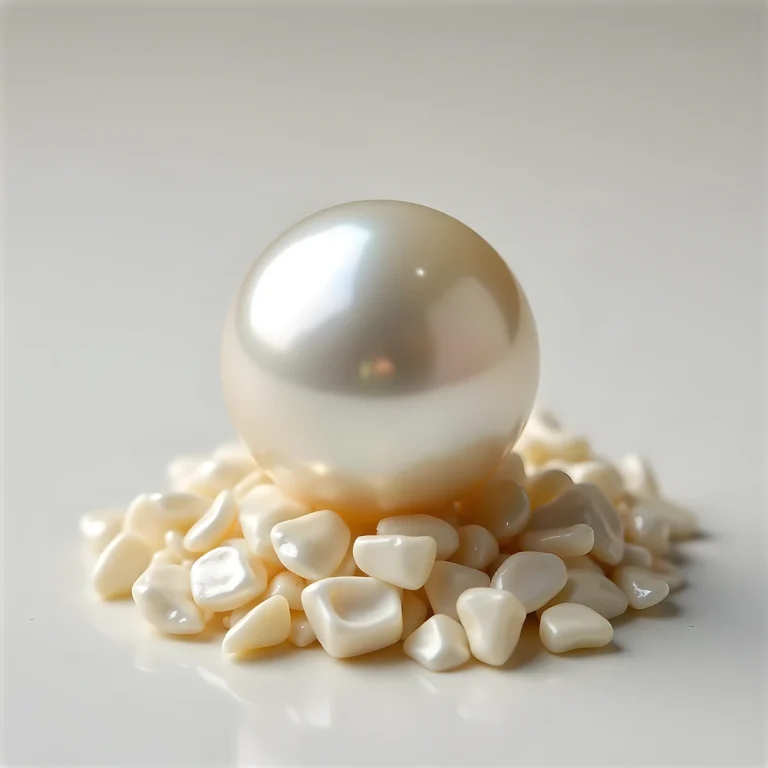
Pearls. They’re organic, which is why you’ll consistently see me refer to them as “living” gems. Soap, hot water, and steam don’t suit them, and the silk or thread they’re strung on suffers too. If you’re wondering how pearls fare, I wrote a full piece on whether pearls can get wet.
Gold-filled and gold-plated: how much water can they take?
People ask this one constantly, and the answer depends on what the label really means.
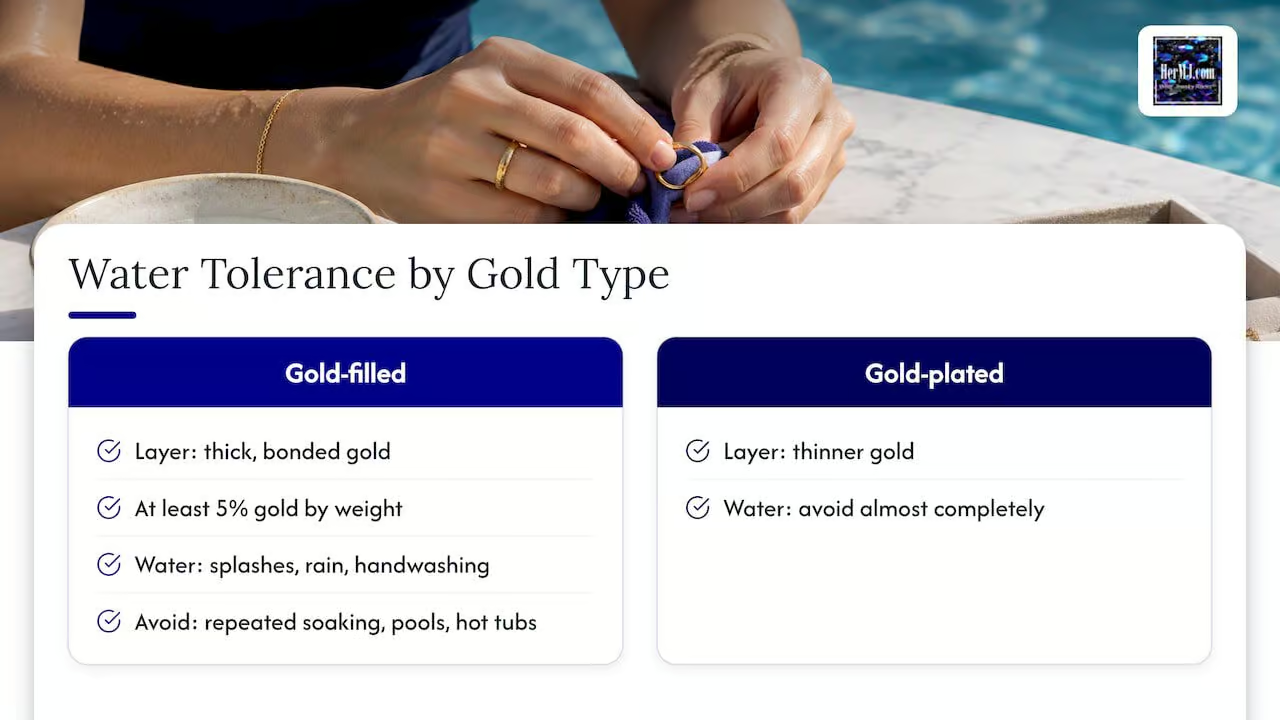
Gold-filled jewelry has a base metal, often copper or brass, with a thick layer of gold bonded to it using heat. According to Jewelers of America, a piece needs gold to make up at least 5% of its weight to qualify as gold-filled. That layer is much thicker than plating, which is why gold-filled usually outlasts it.
Thicker doesn’t mean immune, though. A gold-filled piece can handle a splash of water, a rainy walk or washing your hands. Repeated soaking in soapy water, chlorinated pools or hot tubs is another matter. Over time, those exposures can wear at the edges of the gold layer, where the base metal sits closest to the surface.
For plated pieces, the layer is thinner still, so I’d keep them away from water almost completely. A good rule: the thinner the gold, the shorter the list of situations where water is acceptable.
The simple takeaway for gold-filled is to enjoy it at the sink and the desk, then take it off for showers, workouts, and swims.
Silver and water: the tarnish question
Tarnish isn’t dirt. It’s a chemical change on the surface, and it’s why a silver chain can darken in a damp drawer without ever touching your skin.
Two points matter for care. First, humidity speeds the process, so storage counts as much as wear. A dry drawer or a small sealed pouch beats the bathroom counter every time.
Second, aggressive cleaning has a cost. The Canadian Conservation Institute notes that each time tarnish is removed from silver, some of the silver underneath goes too. Preventing tarnish is gentler than polishing it off again and again. That’s the best argument I know for keeping silver out of the shower in the first place.
If silver does get wet, rinse away any soap, pat it dry with a soft cloth, and let it air out before you put it away.
Swimming with jewelry: pools, hot tubs and the ocean
This is where I’m firmest. Jewelers of America advises removing all jewelry before a hot tub, a swimming pool, or salt water, and it reminds us that chlorine and salt water can damage or discolor metals such as gold and platinum. It also warns that these exposures can slowly erode gemstone finishes. GIA adds that fine jewelry should come off before you get into a chlorinated pool.
Hot tubs combine heat, chemicals, and long soaking times, so they’re the hardest on pieces. The ocean adds salt crystals, sand, and cold water, which shrink fingers and wrists and loosen bracelets and earrings. Many beach-day losses happen this way, and no care routine can bring a piece back from the sea floor.
A few habits make beach and pool days easy:
- Take your jewelry off at home, or at the hotel, before you go.
- Carry a small zip pouch for anything you decide to bring along.
- Put your pieces back on last, after sunscreen, lotion, and bug spray have dried and you’ve dried off.
- After a beach vacation, have a jeweler check your favorite pieces. Jewelers of America recommends this for fine jewelry that’s seen salt water.
What to do when jewelry gets wet by accident
It happens. You forget to take off your bracelet, or you notice your earrings after a swim. Don’t panic. The next ten minutes matter more than the exposure itself.
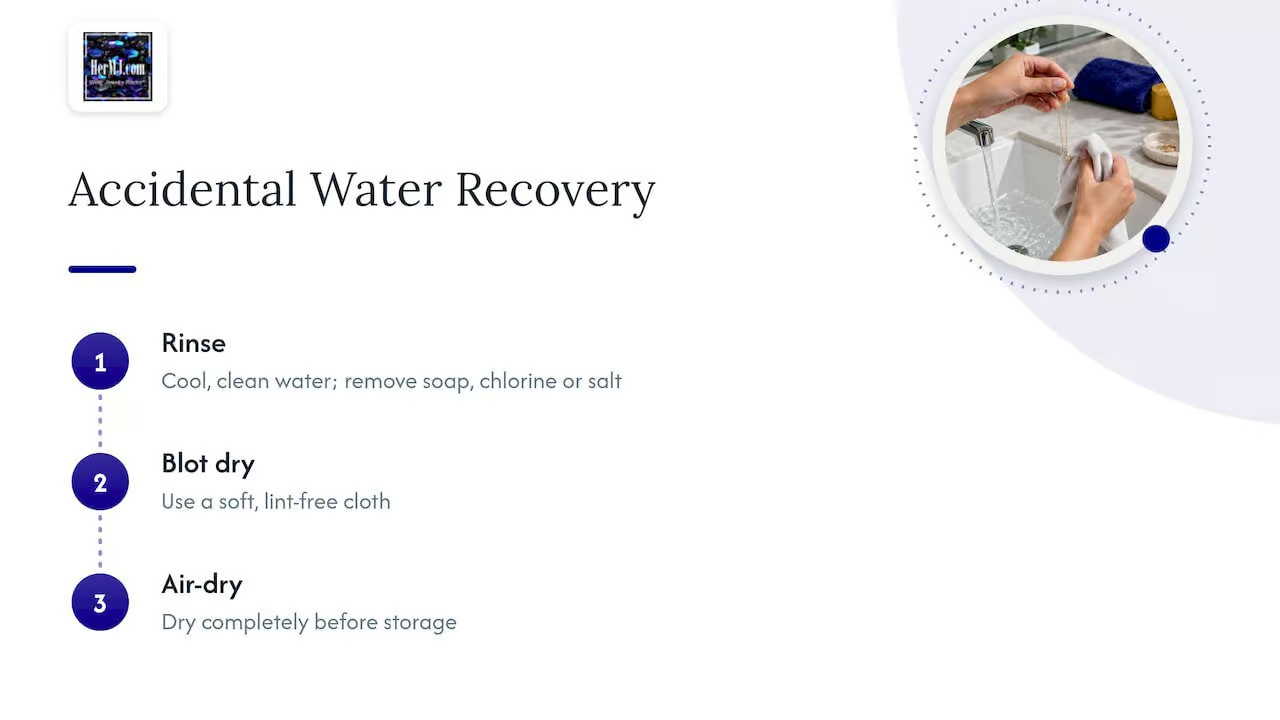
Rinse, then dry. If it met soap, chlorine, or salt, run the piece briefly under cool, clean water, then blot it with a soft, lint-free cloth. Let it air-dry completely before putting it in a pouch or box. Trapped moisture can turn a small mishap into tarnish.
Use mild cleaning only when needed. For most colored gems, GIA suggests warm water, mild dish soap (not detergent), and a soft brush, followed by a rinse in a glass of water. It says ultrasonic and steam cleaners aren’t suitable for pearls.
Treat pearls separately. They need a gentler routine than other stones. My full steps live in how to clean pearls safely, and I’d rather you follow that guide than a general rule. Yellowing is a separate concern, and I cover it in fixing yellowed pearls.
Check the stringing. On pearl strands and stretch bracelets, the cord can stay damp long after the surface feels dry. My stretch bracelet care tips explain how to keep elastic strong.
A simple quick reference by material
| Material | Splash or handwashing | Shower | Pool, hot tub or ocean |
|---|---|---|---|
| Solid gold | Fine | Better off | Remove |
| Gold-filled | Fine | Better off | Remove |
| Gold-plated | Avoid when possible | Remove | Remove |
| Sterling silver | Dry right away | Remove | Remove |
| Colored gemstones | Fine, then dry | Remove | Remove |
| Pearls | Dry right away | Remove | Remove |
Notice how the pattern repeats. The more chemicals and the longer the soak, the stronger the case for removing pieces. This table reflects the general guidance from Jewelers of America and GIA, and your own jeweler can advise on any specific piece.
Perspective: why I design for daily wear and care
We make HerMJ pieces from genuine freshwater pearls, natural gemstones and crystals, and we build them to be worn, not kept in a box. Pearls, in particular, are living gems with a soft glow that reflects how you treat them.
My Golden Rule is simple: jewelry goes on last and comes off first. Your pieces finish your look after the hair spray, perfume and lotion have dried, and they come off before the shower, the gym or the pool. That one habit protects luster better than any product on a shelf.
We want our jewelry to feel affordable and look elevated, and we believe good care is part of that value. A strand that’s rinsed, dried and stored properly can stay part of your life for years. Our guide to pearl care shows you how, and every piece we make is designed with that long relationship in mind.
Veronique
Build a water-smart jewelry routine
You don’t need a complicated system. You need a few places for your jewelry to land. And a rhythm.

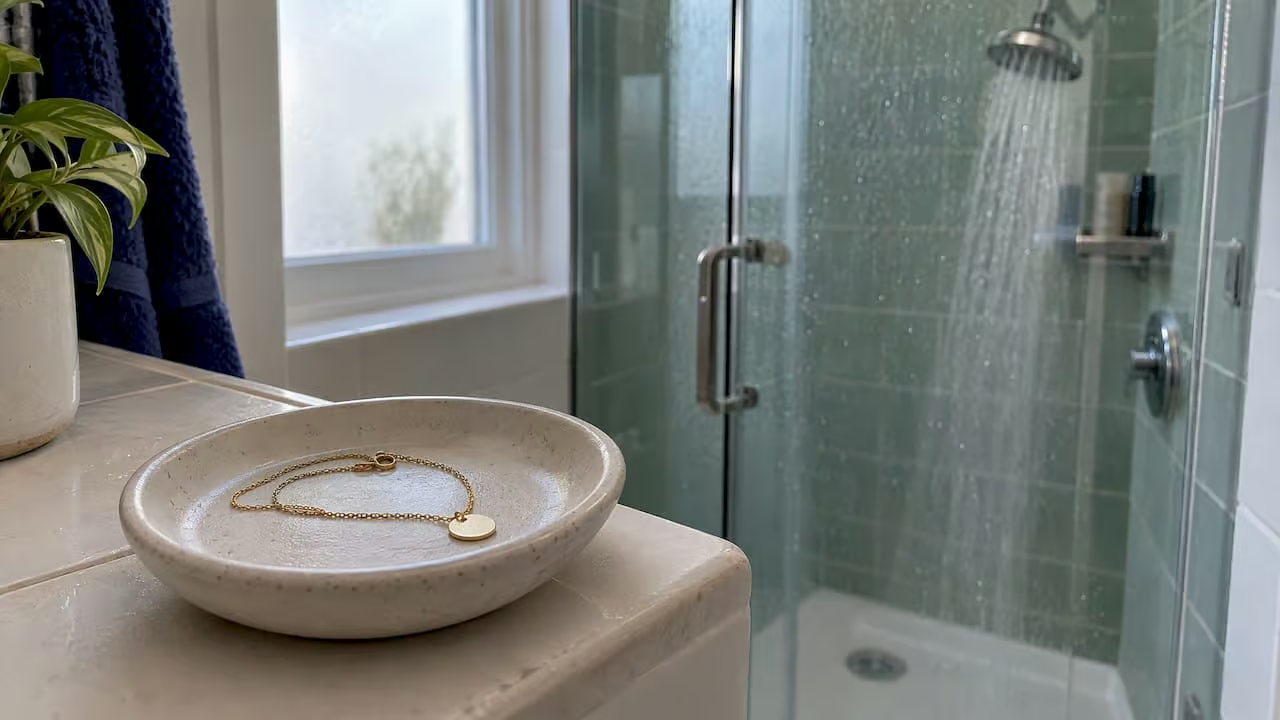
Keep a small dish by the bathroom door, not on the sink where steam and splashes reach it. Drop your earrings and necklace in it before you step in, and pick them up after you’ve dried your hair and applied your products.
At night, give each piece a quick wipe and let it dry before storing it. Separate pouches stop pieces from scratching one another. A dry bedroom drawer is far kinder than a bathroom shelf.
Finally, rotate. When you alternate between several pieces, each one spends more time resting and less time exposed. That’s practical for everyday wear, and it’s the best reason I know to own a small capsule of favorites rather than a single go-to.
Shop pieces made for everyday wear
If you’re looking to refresh your rotation, we’ve designed pearl and gemstone jewelry to move easily from morning to evening. Browse our pearl and gemstone jewelry, or go straight to a category: necklaces, bracelets and modern drop earrings.
If you like a sparkling look, our European crystal jewelry is another place to start.
US orders ship free with no minimum. International orders ship free on orders of $150 or more.
Gemstone pieces aren’t only for wearing. Our room jewelry brings the same stones into your home as decor. Because it lives on a counter or a shelf, not in the shower, it only needs a dry spot and occasional dusting.
FAQ
Can you shower with jewelry on?
You can, but it isn’t the best habit. Jewelers of America advises removing jewelry in the shower because soap and body-care products leave a film that makes pieces look dull. Taking it off takes only a few seconds and helps protect the shine.
Can gold-filled jewelry get wet?
Brief contact with clean water, like handwashing, is usually fine for gold-filled pieces. Long soaks, soapy water, chlorine, and salt are harder on them, so I’d take them off for showers and swims. Dry them well afterward.
Is it okay to wear silver in the shower?
I’d avoid it. Moisture speeds tarnishing, and soap residue makes silver look cloudy. If a piece does get wet, rinse off any soap, dry it completely with a soft cloth, and store it somewhere dry rather than in a humid bathroom.
Can you swim with jewelry on?
It’s best not to. Jewelers of America recommends removing all jewelry before pools, hot tubs and salt water, since chlorine and salt can discolor metals and wear down gemstone finishes. Slippery skin and cold water also make losing a piece far more likely.
Sources
- Jewelry Care, Jewelers of America
- Tips on Caring for Jewelry, GIA
- Gold Jewelry, Jewelers of America
- Silver: Care and Tarnish Removal, Canadian Conservation Institute
- Is jewelry sweatproof? Gold, silver, and more, Reviewed
Recommended
- Can Pearls Get Wet? 4 Real Life Fixes From a Designer
- Jewelry Tarnish – How To Prevent Jewelry From Tarnishing