



Baroque vs Round Pearls: How to Choose Your Shape
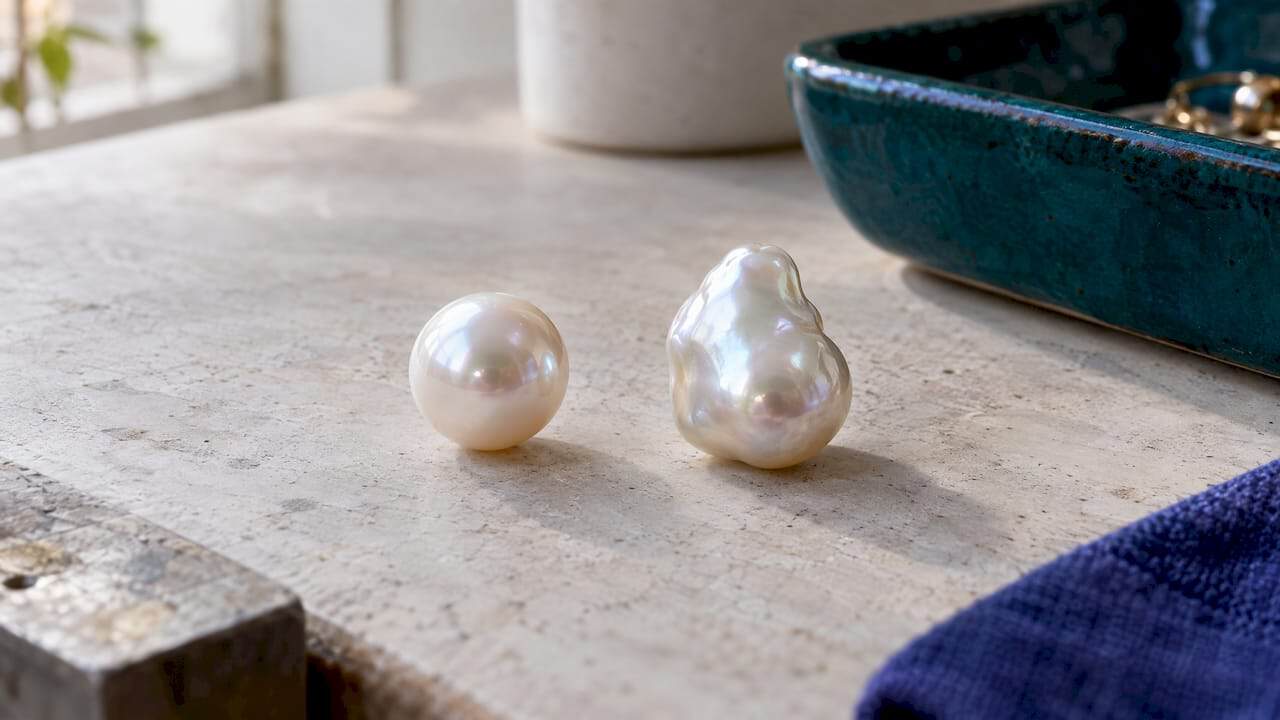
Round pearls are the classic: symmetrical, balanced, and traditionally the most prized. Baroque pearls are the free spirits: irregular, one-of-a-kind, and full of personality.
Neither is better in every case. Round suits a polished, traditional look, while baroque suits a wearer who wants a piece that looks like no one else’s. And usually a bit more modern. I’ll walk you through how each shape forms, what sets their value apart, and how to pick the one you’ll reach for again and again.
TL;DR
- Round pearls are the hardest shape to produce, which makes them the rarest and, all else being equal, the most valuable. Baroque pearls are naturally irregular and generally cost less.
- Shape is only one of seven value factors. A baroque pearl with brilliant luster and clean skin can outshine a dull round one.
- Choose round for a formal, uniform look, and baroque for texture, movement, and a handmade feel.
- Check luster and nacre (the shimmering layer that coats a pearl) before you worry about shape.
- Both shapes can be real freshwater pearls, so shape tells you nothing about authenticity.
What Makes a Pearl Round or Baroque
As a pearl begins inside the mollusk, it grows layer by layer, and its shape depends on the nucleus at its center and whether it shifted as it grew. An irregular nucleus or a pearl that moves around leads to a baroque shape, which is also why most natural pearls aren’t perfectly round.
That single idea explains the whole debate. A round pearl results from everything going right: a well-placed nucleus, steady coating, and a pearl that stayed put. A baroque pearl is what happens when growth takes its own path. Think of the difference between a machine-polished marble and a river stone. Both are beautiful, but they appeal to different tastes.
The word “baroque” is a catch-all. It covers ripples, knobs, twists, crinkled surfaces, and long, wandering shapes. No two are alike, so a strand of baroque pearls is a little like a handwritten letter: the variation is the charm.
How Gemologists Classify Pearl Shapes
The Gemological Institute of America (GIA), the nonprofit lab that sets the grading language most U.S. jewelers use, sorts pearl shape into three main categories: spherical, symmetrical, and asymmetrical. Within those, GIA’s pearl classification guide lists seven basic shapes: round, near-round, button, drop, oval, semi-baroque and baroque. Semi-baroque and baroque sit in the asymmetrical group.
There’s a practical detail in that same guide. Round and near-round pearls are measured by a single diameter in millimeters, while other shapes are measured by length and width, or by depth. So if you’re shopping for a baroque pearl, expect two measurements, and expect the pearl to look larger or smaller than the number suggests depending on its shape.
Semi-baroque is worth knowing as a middle path. These pearls are slightly off-symmetry, often with a gentle bulge or a softly uneven outline, so they give you character without the dramatic shapes of a fully baroque pearl. If you love the idea of baroque but worry a strand will feel less traditional, semi-baroque can be your comfortable first step.
Round vs Baroque: Side-by-Side
Here’s how the two shapes compare on the points shoppers ask about most.
| Feature | Round pearls | Baroque pearls |
|---|---|---|
| Shape | Spherical and symmetrical | Irregular, free-form, unique |
| Rarity | Hardest shape to culture | Common, shapes vary widely |
| Typical value | Generally highest, all else equal | Generally lower, all else equal |
| Look | Classic, polished, uniform | Artistic, organic, contemporary |
| Matching a strand | Easier to make uniform | Variety is part of the design |
| Best for | Formal wear, heirloom-style pieces | Everyday wear, statement pieces |
Why Round Pearls Cost More
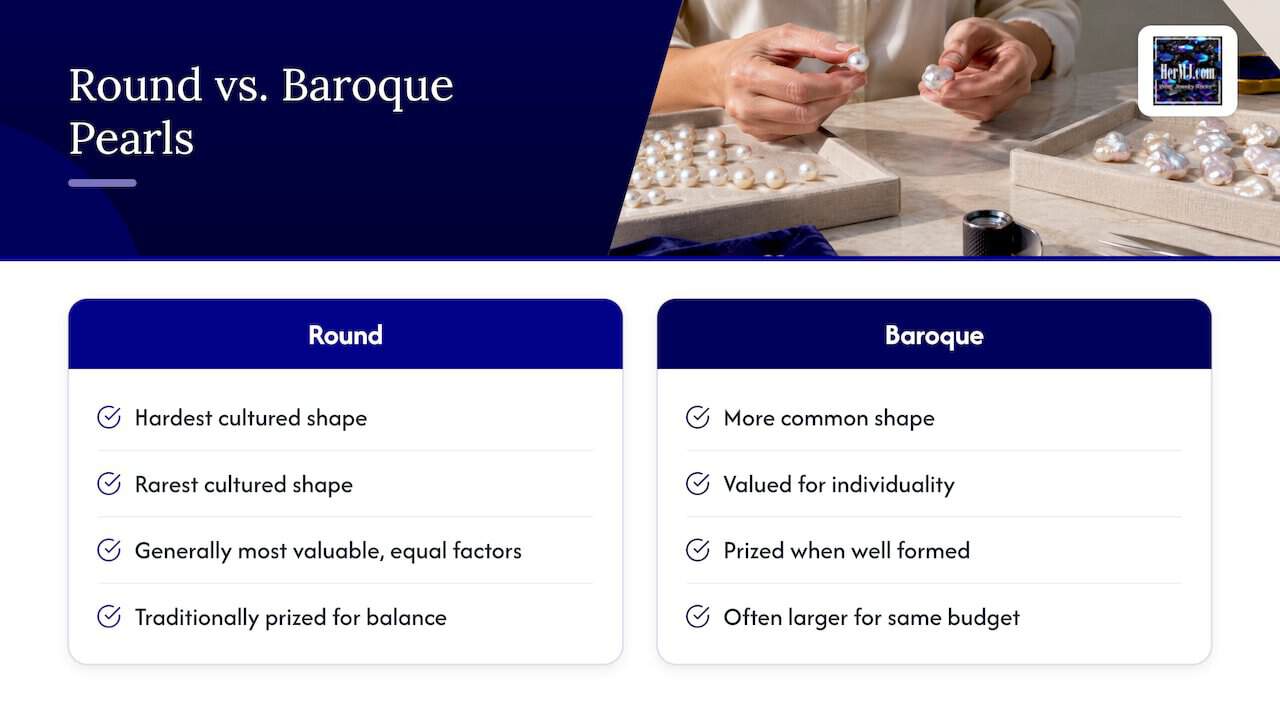
It comes down to difficulty. GIA’s pearl quality factors explain that round is the hardest shape to culture, making it the rarest cultured pearl shape and, if every other factor is equal, generally the most valuable. The same page notes that well-formed pear, oval, and baroque pearls are also prized, so baroque isn’t a lesser category. It’s just more common.
GIA’s overview of pearl types puts the contrast neatly: round pearls are the most symmetrical and traditionally the most prized for their balanced look, while baroque pearls are valued for their individuality in artistic and contemporary jewelry.
For you as a shopper, that rarity works out in your favor if you love the baroque look. You can often choose a larger, more dramatic baroque pearl for the budget that would buy a smaller round one. That’s a big part of how artisan jewelry stays elegant and affordable at the same time.
Shape Is One Factor of Seven
Here’s where I see some first-time buyers go wrong: they treat shape as the entire story. GIA’s pearl buyer’s guide lists seven value factors: size, shape, color, luster, surface quality, nacre quality and, for jewelry with two or more pearls, matching. GIA’s quality factors page calls luster the most important of the seven.
In other words, a round pearl with a chalky, flat finish can be worth less to the eye, and often to the market, than a baroque pearl with a mirror-like glow. Our guide to pearl grading shows how these factors fit together, and the seven GIA value factors article walks through each one in the context of cultured and natural pearls.
Luster and nacre
Luster is the intensity of light reflected from a pearl’s surface. Excellent luster shows sharp, bright reflections, and you can see it for yourself: hold the pearl near a window and look at how crisply it mirrors the frame. Nacre is the layered coating that creates that glow. If you can see the nucleus through the nacre, or the pearl looks dull and chalky, the nacre is thin, and both beauty and durability suffer. That’s true whether the pearl is round or baroque. If you’d like to understand how the two terms differ, I explain luster versus nacre in a short read.
Baroque shapes can actually be a lovely canvas for luster. Curves and ridges catch light from several angles, so the surface seems to shift as you move. A round pearl gives one smooth, even reflection, which is serene and elegant. Both are lovely, just different moods.
Surface quality
GIA grades surface on a four-step scale: Clean, Lightly Spotted, Moderately Spotted and Heavily Spotted. Numerous or severe surface characteristics can affect durability and lower value considerably. On a baroque pearl, small ridges and dimples are part of the shape and not flaws, but you still want the skin to look healthy, without deep pits or flaking.
Matching
Matching matters whenever you’re buying more than one pearl: a strand, a pair of earrings, a bracelet. For most multi-pearl jewelry, GIA says the pearls should match in all the quality factors. With baroque pearls, it means a harmonious feel: similar luster, color and weight, even though each shape is different. For earrings, I always look at whether the pair feels balanced when worn, since two baroque pearls will never be identical twins.
Both Shapes Can Be Real
A common myth is that round pearls are the “cultured” ones and baroque pearls are the “natural” ones. Shape doesn’t tell you that. Both can be natural or cultured, and both can be freshwater pearls. Cultured simply means people gave the mollusk a start in the process by placing the nucleus or tissue, and the mollusk did the rest of the work.
If you want to confirm a pearl is genuine, shape isn’t the clue to look for. A GIA Identification Report confirms whether a pearl is natural or cultured and not a simulant, and it also describes detectable treatments, size, shape and color. For everyday shopping, my guide to tests that separate real pearls from shell pearls gives you simple checks you can do at home.
How to Style Round and Baroque Pearls
This is the fun part, and it’s where shape matters most.
Round pearls: the polished classic
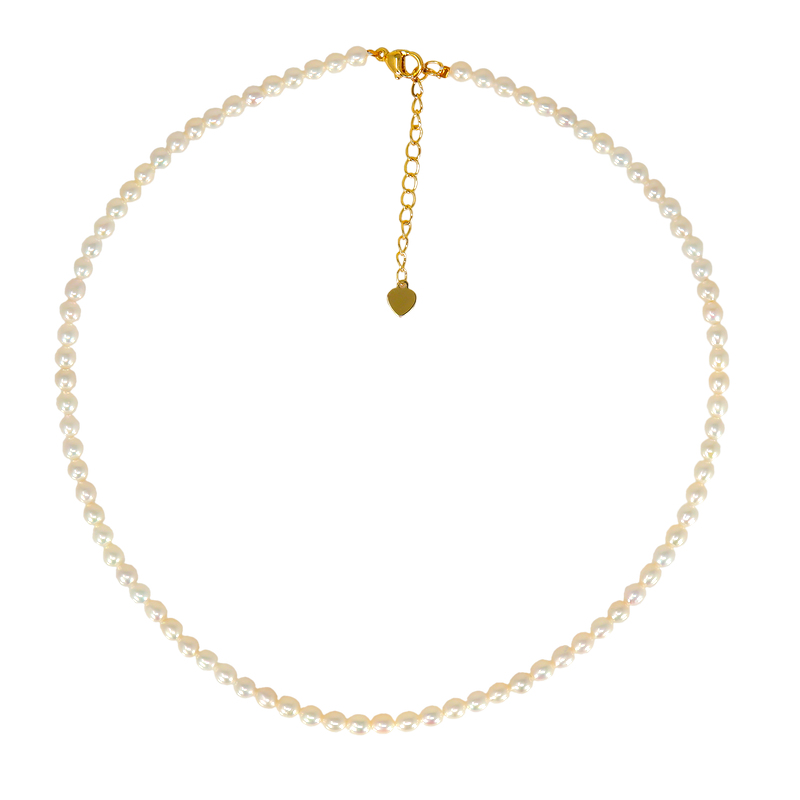
Round pearls give you symmetry, and symmetry reads as refined. A single strand at the collarbone works with a white shirt, a black dress or a blazer. Matching round studs finish a look without competing with anything. If you’re buying for a graduation, a wedding or a milestone gift, round is the traditional language people recognize right away.
Baroque pearls: texture with attitude
Baroque pearls make a casual outfit feel considered. Try a strand over a plain tee and jeans, or a single baroque pendant on a simple chain. Their uneven outlines look modern next to clean lines, and they pair beautifully with gemstones: a baroque pearl beside a faceted stone creates a lovely play of smooth against sparkling.

Mixing the two
There’s no rule against wearing both. A round pearl necklace layered with a baroque bracelet looks deliberate, as long as the colors and luster feel related. Designers mix shapes on purpose, and the result is a look that feels collected over time instead of bought in a set.
A quick way to decide
Ask yourself three questions. Will you wear it to formal events more than casual ones? Do you prefer symmetry or character? Is your budget better spent on size, or on a higher-quality round pearl? Formal and symmetrical points to round. Casual and characterful points to baroque. If you’re torn, a semi-baroque piece can break the tie.
Size Changes How Each Shape Looks
Size reads differently on each shape. A 7 mm round pearl looks petite and tidy. A baroque pearl of similar measurement can look broader or longer because of its outline. If you’re not sure which size flatters you, my pearl sizes guide explains how to pick by neckline, wrist and face shape. For baroque in particular, the HerMJ guide to choosing baroque pearls that hold their value covers freshwater and Tahitian options in more detail.
Which Shape Should You Choose?
Choose round if you want a timeless, formal strand, you like symmetry, or you’re buying a classic gift and want it to feel traditional.
Choose baroque if you love one-of-a-kind texture, you want a statement piece that’s affordable, or you wear jewelry daily and want it to feel personal.
Choose semi-baroque if you want a hint of distinction without losing a sense of order.
Whichever you choose, put luster and nacre first, then surface and matching, and let shape be the final, personal decision. Pearls are organic, so a little thoughtful pearl care will keep either shape glowing for years.
Shop Pearl and Gemstone Jewelry at HerMJ
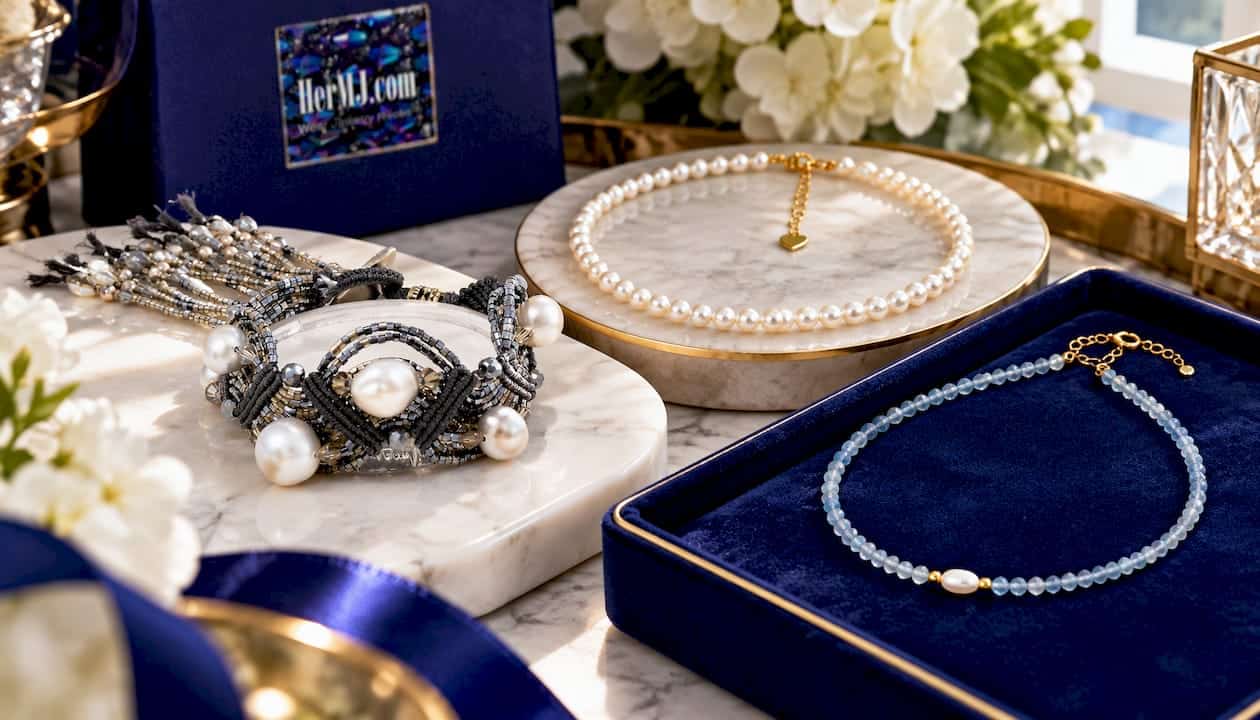
If you’re ready to see these shapes in person, browse our handmade pearl and gemstone jewelry. Each piece is made with genuine freshwater pearls, natural gemstones or crystals, and you’ll find necklaces, bracelets and modern drop earrings for both everyday wear and special occasions. You might start with the HerMJ elegant freshwater pearl necklace or the pearl and aquamarine necklace.
U.S. orders ship free with no minimum. International orders ship free on orders of $150 or more.
Perspective on Shape at HerMJ
We love both shapes, and we’d never ask you to pick a side based on a rule. Round pearls have a calm perfection that’s hard to beat, and baroque pearls have a spirit that no machine could plan.
Our approach to artisan jewelry is built on superior craftsmanship at accessible pricing. Baroque pearls fit that idea beautifully: you can enjoy genuine freshwater pearls with real character, in pieces designed for everyday life and special occasions alike.
When you look at a pearl, look at the glow first. Shape comes next, and personality is the tiebreaker. A pearl that makes you smile when you put it on is the right one.
Veronique
FAQ
Are baroque pearls real pearls?
Yes. Baroque describes shape only, not authenticity. Baroque pearls can be natural or cultured, and freshwater pearls are very often baroque. A genuine pearl is judged by its origin and nacre, not by whether it’s perfectly round.
Are baroque pearls cheaper than round pearls?
Technically, it can be; wwhen everything else is equal. GIA explains that round is the hardest shape to culture and therefore the rarest and most valuable. Luster, size, color and surface quality still change the price a great deal, so a high-quality baroque pearl can cost more than a mediocre round one.
Which shape is better for everyday wear?
Either works, but many people find baroque pearls easier to wear daily because their relaxed, textured look suits casual outfits. Round pearls shine at formal events and in classic strands. Matching your shape to your routine matters more than any rule.
Can I mix baroque and round pearls in one outfit?
Absolutely. Keep the colors and luster in the same family so the pieces feel related, and let one shape lead. A round pearl necklace with baroque earrings or a baroque bracelet is a polished, modern combination.
Sources
- University of Texas at Austin: Pearl gem notes
- GIA: Pearl Quality 101, how GIA examines and classifies pearls
- GIA: Pearl quality factors
- GIA: Pearl buyer’s guide
Recommended
- Freshwater or Tahitian: Choose Baroque Pearls That Hold Their Value
- How I Choose The Perfect Pearl Necklace: A Practical Guide
- Different Types of Pearls: Your Complete Visual Guide
- Akoya vs Freshwater Pearls: How to Choose Yours