




Leverback vs Fishhook Earrings: Which Style Should You Wear?
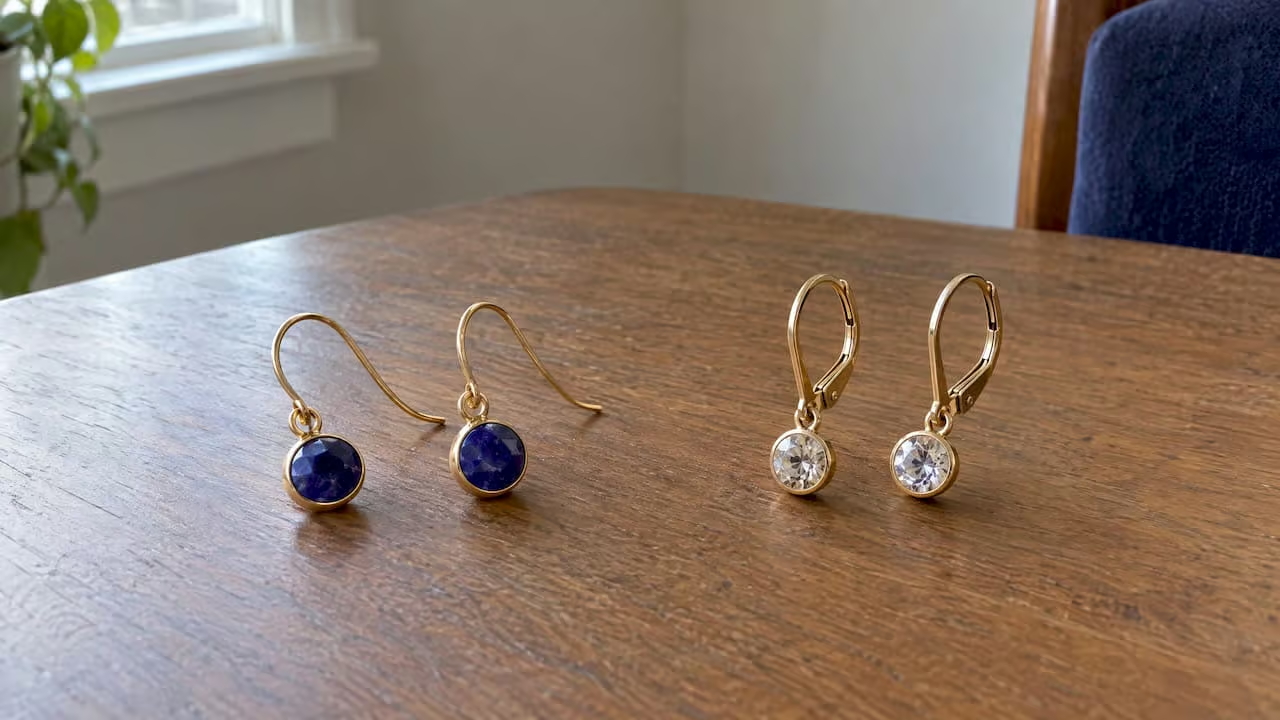
Choose a leverback when you want an earring to stay quitely in place, and a fishhook (also called a French hook) when you want the lightest feel and the quickest on-and-off. Leverbacks close with a small hinged arm behind the lobe. Fishhooks are an open curve of wire that hangs by its own weight. Everything else, from pearl drops to sleeping in your earrings, follows from that one difference.
I’ve spent a lot of time thinking about how a drop earring should hang, because the closure decides whether you enjoy a pair or spend the evening touching your ear to check it’s still there. Here’s how to pick the right one for you.
TL;DR
- A leverback has a hinged arm that snaps shut behind the earlobe, so it’s the more secure choice for heavier drops, active days and long wear.
- A fishhook is an open wire with no lock, so it’s light, simple to put on and take off, and it moves nicely with long, swinging styles.
- Fishhooks can slip forward with scarves, turtlenecks or hair, and a small rubber stopper helps hold them in place.
- Sensitive ears care more about the metal than the style: look for titanium, surgical stainless steel, gold, platinum or niobium.
- Light everyday drops suit fishhooks. Pieces you’d hate to lose suit leverbacks.
- Leverback vs Fishhook Earrings: Which Style Should You Wear?
- TL;DR
- How each style actually works
- Leverback vs fishhook at a glance
- Security: which one stays in?
- Comfort and ease of wear
- Weight matters more than style
- Which one for which moment?
- Sensitive ears: it’s the metal, not the shape
- Looking after your earrings
- Common mistakes to avoid
- My perspective on closures and pearl drops
- Find your pair
- FAQ
- Sources
- Recommended
How each style actually works
The fishhook (French hook)
A fishhook is a J-shaped or C-shaped length of wire. You slide the short end through your piercing from the front, and the curve rests in the hole while the earring hangs below. Nothing locks it. According to a findings guide from a jewelry-supply company, the wire is usually about 20 to 22 gauge, which describes thickness, with the lower number being the thicker wire and the sturdier option for heavier pendants.
You’ll also hear the term shepherd’s hook. In everyday shopping it’s used for the same open-wire idea, so a listing that says “French hook,” “fishhook” or “shepherd’s hook” is describing a wire that depends on its shape rather than a latch.
The leverback
A leverback is also a curved ear wire, but the end is attached to a small hinged lever. You swing the lever open, slip the wire through your piercing, then press the lever closed so it clicks against the back of the lobe. That closed loop is what keeps the earring from sliding out. Jewelers Mutual lists a secure closing mechanism and an elegant look among the pros of this style, along with the way it helps disguise the weight of an earring on your ear lobe.
From the front, a leverback looks very much like a fishhook. The difference is hiding behind your ear.
Leverback vs fishhook at a glance
| Fishhook (French hook) | Leverback | |
|---|---|---|
| Closure | Open wire, no lock | Hinged lever clicks shut |
| Security | Moderate; can slip out | High |
| Putting on | Fastest, one motion | Slightly slower, needs the lever opened and closed |
| Feel | Lightest | A touch more hardware behind the lobe |
| Best for | Light drops, everyday wear, casual and semi-formal looks | Heavier drops, travel, active days, special pieces |
| Watch out for | Slipping forward with hair, scarves and collars | Lever can be fiddly, and it can catch on clothing |
Security: which one stays in?
The leverback wins this round, and it isn’t even close. A closed lever means the earring can’t simply slide back out of your ear, which is why you’ll see me using it on heavier and dangle-style pieces. A fishhook relies on gravity and a snug fit. If it’s nudged forward by a hood or a high collar, it can work its way out.
wikiHow’s guide to earring backs sums up the trade-off in similar terms: leverbacks are very secure and can carry heavy earrings, while shepherd’s hooks are light and comfortable but less secure and not suited to very heavy earrings.
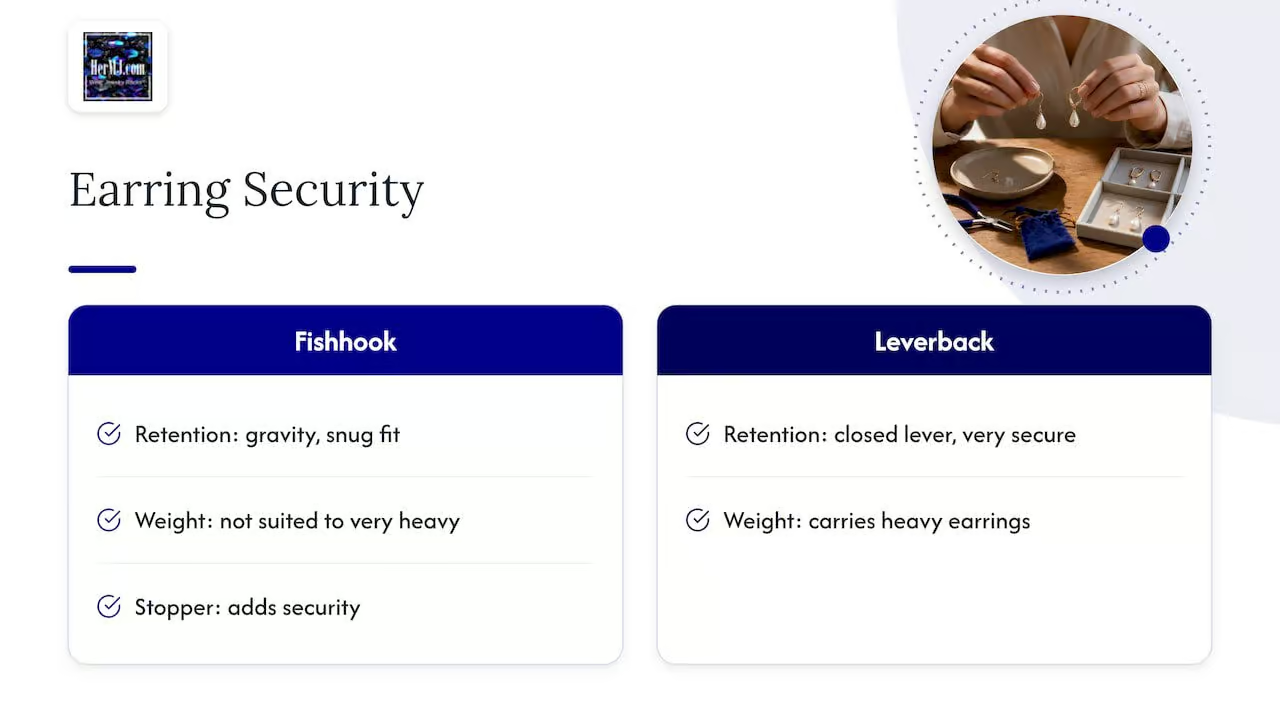
If you do love the look of an open hook, you can add a bit of insurance. Jewelers Mutual notes that a rubber back stopper works in a pinch to secure any earring type, fishhooks included. A small rubber or silicone stopper slides onto the wire behind your ear and keeps it from drifting forward. It’s an inexpensive but effective fix, and I’d reach for it before giving up on your favorite pair of open backs.
Comfort and ease of wear
Comfort is where fishhooks shine. With no hinge or lever, there’s less hardware against your skin, and the earring swings freely. That freedom is a big part of why long, fluid drops look so graceful on a hook.
Leverbacks are comfortable too, particularly for long wear, but they ask a little more of your fingers the fasten them. The same guide that praises their security also mentions that some wearers find them tricky to fasten, that the lever offers limited adjustability and that it can snag. Most people get used to the click within a few wears. If you’ve got long nails, arthritis or simply don’t enjoy fine motor tasks first thing in the morning, a fishhook is a bit kinder.
Here’s the quick test I give friends. Put the earring on while looking in a mirror, then without looking. If the leverback is a struggle either way, it isn’t the one to put into your daily rotation.
Weight matters more than style
An earring’s weight changes everything. A tiny, lightweight pearl drop hangs happily on a fishhook all day. A larger statement piece pulls on the lobe, and a leverback helps spread that feeling of heaviness by anchoring the earring behind the ear.
Pearls add their own weight. Freshwater pearls are solid nacre, so a cluster of them or a long strand adds up faster than you’d expect from a similar-sized bead. If you’re picking a bigger pearl drop, I’d lean toward a closure that locks. If you’re shopping for easy-wearing pieces, my guide to lightweight statement earrings shows how to get presence without the pull.
Jewelers Mutual’s guide gives five things to weigh when choosing an earring back, and they map neatly onto this decision:
- How comfortable it is for extended wear.
- The earring style, with heavier dangles pairing better with leverbacks.
- Your lifestyle, since active wearers need a more secure back.
- How easy it is to use.
- Your skin’s sensitivity.
If you’re still deciding between dangling and close-to-the-ear styles, HerMJ’s comparison of dangle vs stud earrings covers that choice.
Which one for which moment?
Everyday wear
For light pearl drops you slip in on the way out the door, a fishhook is hard to beat. It’s quick, comfortable and unfussy. Add a stopper if you wear scarves or high collars often, or if you’re someone who tucks hair behind your ears constantly.
Weddings, parties and travel
This is leverback territory. You’ll be hugging people, dancing, pulling sweaters over your head and passing through airports. A locked closure means you can enjoy the evening without checking your ears. For something sentimental, such as pearls you’ve inherited or been given, I always want the extra security.
Workouts and sleep
I’d skip both for sleep, honestly, but if you want to wear earrings during the day’s activity, a leverback is the better fit. Arun-style fishhooks are often described as easier to lose in active wear, so they’re better saved for calmer hours.
Gifts
If you’re buying for someone else and aren’t sure how they wear earrings, consider their habits. A busy, on-the-go wearer will love the security of a leverback. Someone who changes earrings often will likely prefer the speed of a hook.
Sensitive ears: it’s the metal, not the shape
People often blame the closure when their ears get irritated, but the culprit is usually the metal. Jewelers Mutual points out hypoallergenic materials such as titanium, surgical stainless steel, gold, platinum or niobium for sensitive ears. Both leverbacks and fishhooks can be made from any of them, so check the material before you worry about the style.
I’ve put together a guide to hypoallergenic earrings for sensitive ears and kids if that’s your main concern. For a wider look at posts, clutches and other closures, see my complete guide to earring back types.
Looking after your earrings
Whichever closure you choose, give your earrings a home of their own. A small box with a soft lining keeps hooks from tangling and stops levers from catching on other jewelry. An eco jewelry box for earrings and pendants is a neat, compact option, and it works well when you’re gifting a pair, too.
Pearls are organic and sensitive to perfume, hairspray and moisture, so put them on last and take them off first. For storage and upkeep, my pearl care page covers it in full.
Common mistakes to avoid
Bending the wire to fit. Reshaping a fishhook weakens the metal, and a bent hook is more likely to let go. If a hook feels loose, a stopper is the better answer.
Choosing by looks alone. Since the two styles look so alike from the front, it’s easy to forget the back. Check the closure in the product details before you buy, especially for heavy pieces.
Forcing the lever. If a leverback is stiff, don’t pry it with a nail. Press gently along the hinge, and if it won’t close cleanly, stop wearing the pair until it’s fixed.
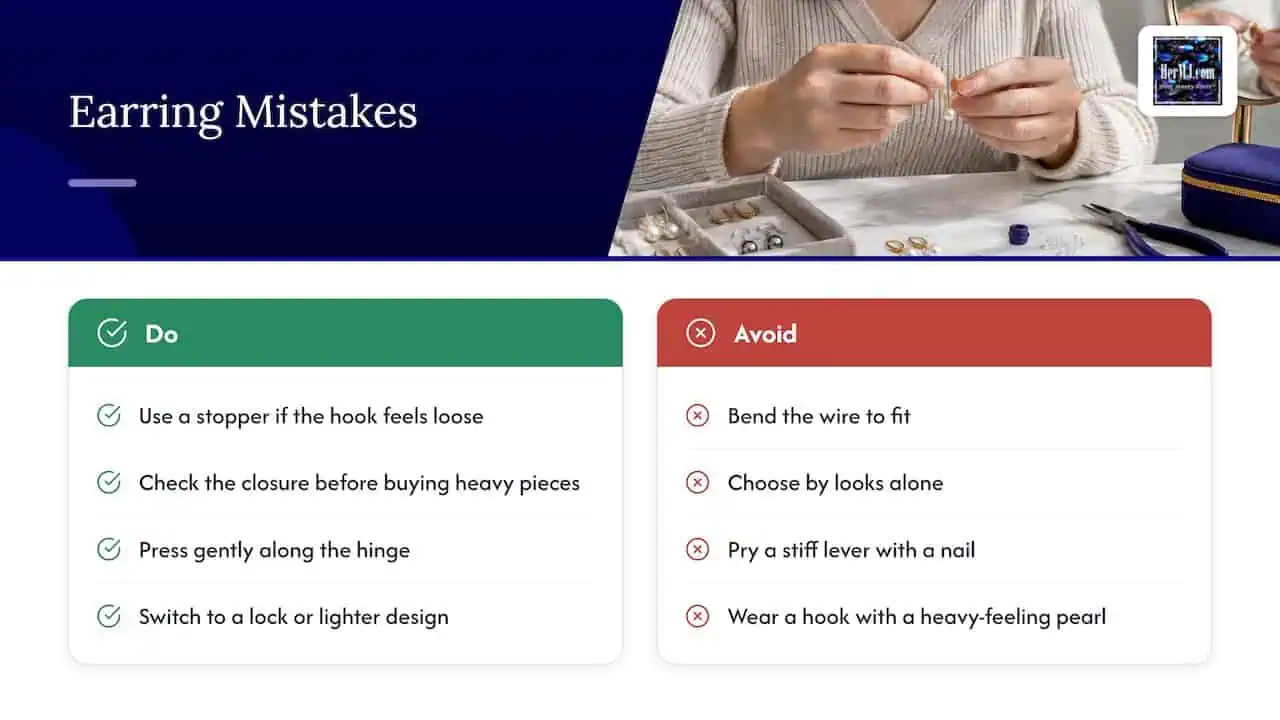
Wearing a lightweight hook with a heavy-feeling pearl. If an earring tugs at your lobe by lunchtime, it’s telling you something. Switch to a lock or a lighter design.
My perspective on closures and pearl drops
A drop earring is a small piece of architecture. The pearl or gemstone is the part everyone sees, but the closure decides how it feels at hour six.
We design with the wearer’s whole day in mind: the way a pearl catches window light at a morning meeting, the way it swings when you socializing over dinner. Freshwater pearls are genuine and solid. It gives them a lovely presence, which is why I encourage you to think about weight and closure together rather than separately.
Our belief is that beautiful, handmade pearl and gemstone jewelry should be within reach, and a good choice at the closure level is part of enjoying it for years. When you shop, ask yourself how you’ll wear a pair, and let that guide you to the earring that suits your lifestyle.
Veronique
Find your pair
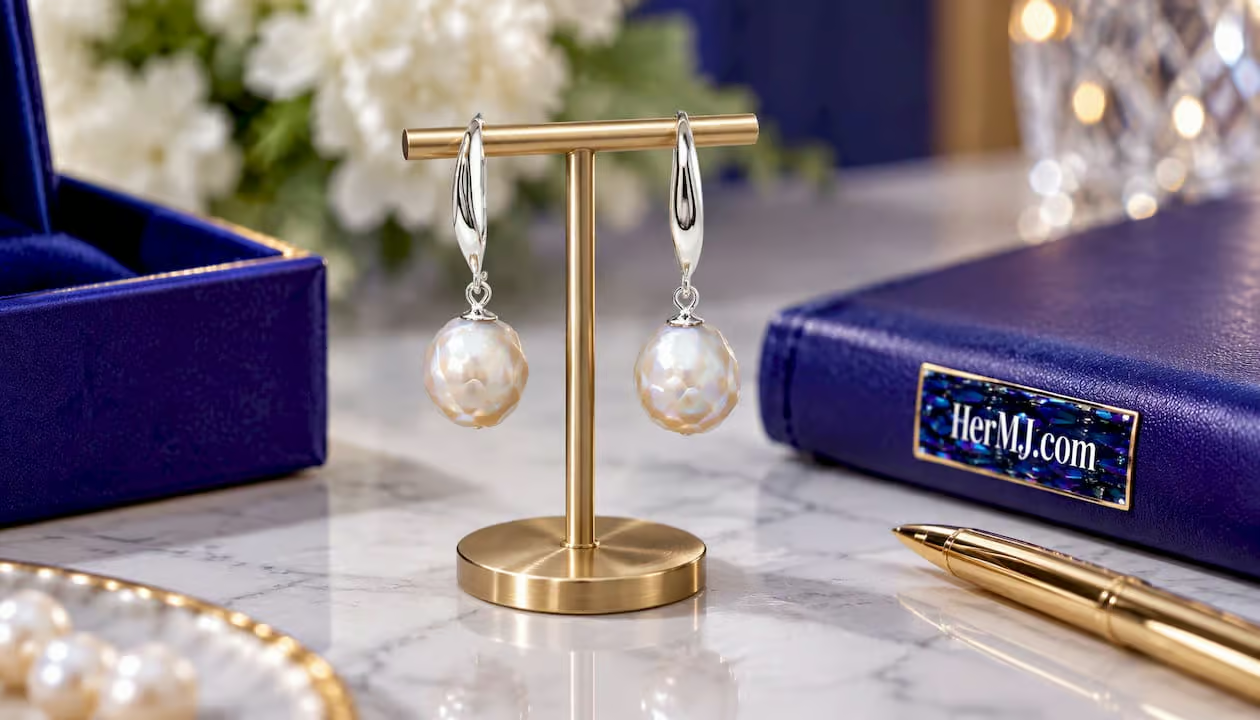
If you’re drawn to graceful drops, our Modern Drop Earrings collection brings together handmade pieces in genuine freshwater pearls, natural gemstones and crystals. Our Modern Drop Pearl Earrings are a good place to start if you want a classic pearl look.
Orders within the US ship free with no minimum, and international orders ship free for orders of $150 or more. You can browse everything at https://www.HerMJ.com, from earrings to necklaces and bracelets.
FAQ
Are leverback earrings good?
Yes, particularly for heavier or dangling styles. The hinged lever closes behind the lobe, so the earring is much less likely to slip out. Some people find them a little fiddly to fasten, but most adapt quickly.
What’s the difference between a French hook and a leverback?
A French hook is an open, curved wire with no lock, which makes it light and fast to wear. A leverback adds a hinged lever that snaps shut behind your ear. Wire gauge is typically similar on both, so the main difference is that closed loop.
Which earring backs are best?
It depends on what you’re wearing and where. Leverbacks are a strong choice for heavy drops and special occasions, fishhooks suit light everyday pairs, and a rubber stopper adds a measure of security to hooks. Your skin matters too, so look for titanium, surgical stainless steel, gold, platinum or niobium if your ears are sensitive.
What’s the most secure earring backing?
Among the styles in this comparison, the leverback is the most secure, since its closed lever can’t slide back out through the piercing. Screw-style closures are also very secure, and you can read about those in my earring backs guide.
Can I add a stopper to a fishhook earring?
Yes. A small rubber or silicone stopper slides onto the wire behind your ear and stops it from drifting forward. It’s an easy way to keep a favorite hook pair in place.
Sources
- Earring findings types: a complete guide
- 11 different types of earring backs and how they work
- Types of earring backs: a guide to the most common styles
- Silver ear wires: lever-back vs fish hook
Recommended
- Dangle vs Stud Earrings: How to Choose the Pair for You
- Earring Backs Types: A Complete Guide to Every Style
- Pearl Earring Styles: When to Wear 4–12mm Studs, Drops, and Hoops
- Choose The Best Lightweight Statement Earrings