


Blue Gemstones List: Light, Dark and Everything Between
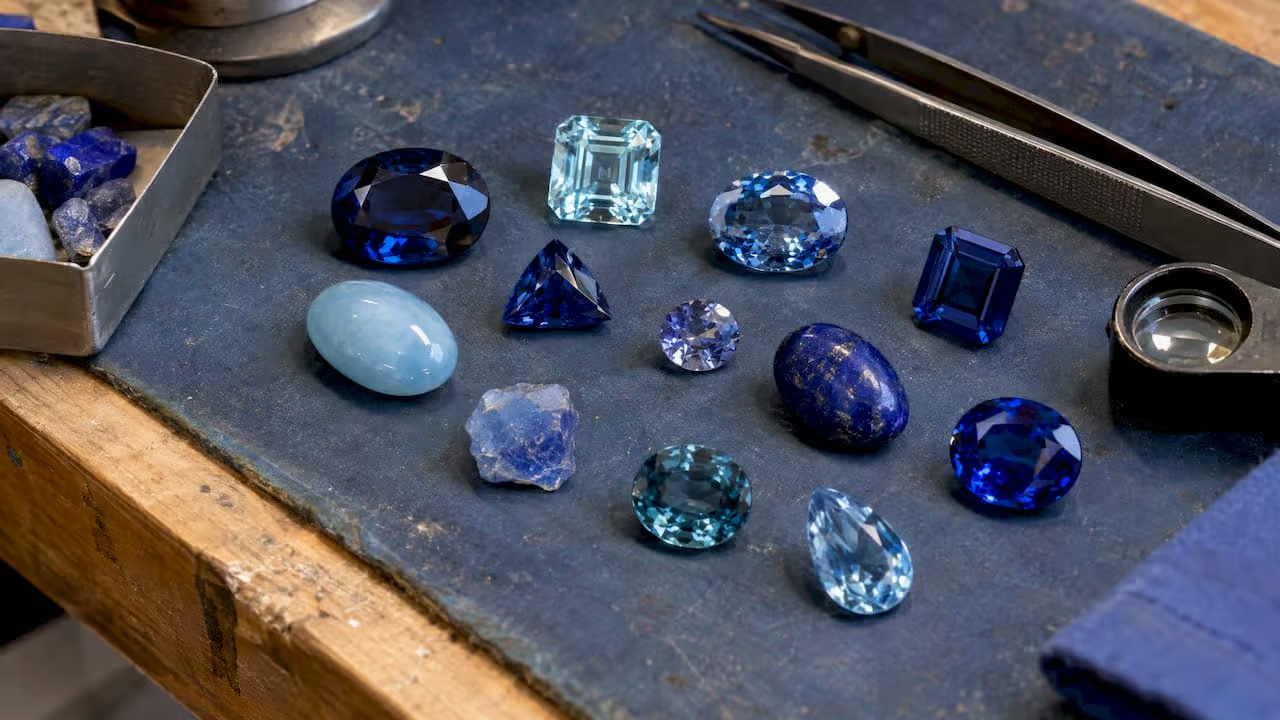
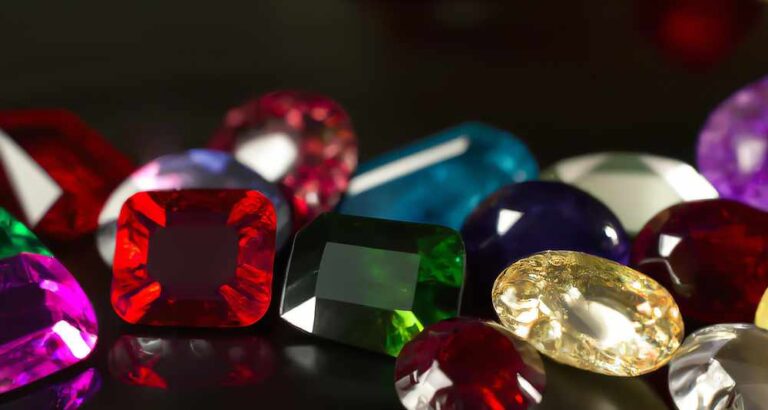
Blue is the most loved gemstone color, and the family is bigger than most people expect. The International Gem Society’s guide alone covers 37 blue varieties, from sapphire, aquamarine and blue topaz to tanzanite, turquoise, lapis lazuli, iolite and kyanite.
I’m going to sort them the way I do when I design: by shade first (light, dark, or blue-green and violet-blue), then by how well each stone suits the jewelry you’ll wear.
TL;DR:
- Light blues: aquamarine, blue topaz (Sky and Swiss Blue), zircon, and chalcedony give you a watery, airy look.
- Dark blues: sapphire, spinel, kyanite, lapis lazuli and London Blue topaz bring depth and drama.
- Between the shades: tanzanite and iolite lean violet, while apatite, fluorite and Paraíba tourmaline lean blue-green.
- For daily wear: hardness matters. Sapphire, aquamarine, blue tourmaline, spinel and blue diamond all rate 6.5 or higher on the Mohs scale.
- Before you buy: ask whether a stone is natural, heated, treated or lab-grown. Heating is common and accepted, but it should always be disclosed.
How to read a blue gemstone
Two words explain most of the differences you’ll see: tone and saturation. Tone is how light or dark the stone is. Saturation is how pure and intense the blue looks.
According to the International Gem Society, blue reaches its highest saturation at medium-dark tones, around 85% on the tone scale. Vivid saturation is the most eye-catching. Go too dark and a stone turns inky or steely, hiding the blue. Go too light and it can look washed out or grayish.
That’s why a pale stone isn’t automatically a lesser one. Light blues are valued for a different reason: they feel calm, clear, and easy to wear with almost anything. Dark blues are valued for richness. Neither is better. They simply suit different moods and wardrobes.
Light blue gemstones
Light blue is the shade people search for most, and it’s where you’ll find some of the most wearable stones.
Aquamarine
Aquamarine is the gem-quality form of beryl. Geology.com notes that it ranges from greenish blue to blue, and that most aquamarine is very light in color. Rich-blue stones are the rarest and most valuable. Its Mohs hardness is 7.5 to 8, which makes it a durable choice for bracelets and earrings.
The International Gem Society adds that aquamarine captures watery blues and blue-greens but never reaches the dark tones or high saturation of sapphire. Most aquamarine is heat-treated to reduce green and give a purer blue, while some stones keep a natural sea-foam blue-green. It’s the March birthstone.
Blue topaz
Blue topaz comes in three popular shades. The International Gem Society’s December birthstone guide lists London Blue as deep and inky, Swiss Blue as a vibrant medium-light blue, and Sky Blue as a light aqua. It also notes that natural blue topaz is sometimes mistaken for aquamarine because the colors can look so similar.
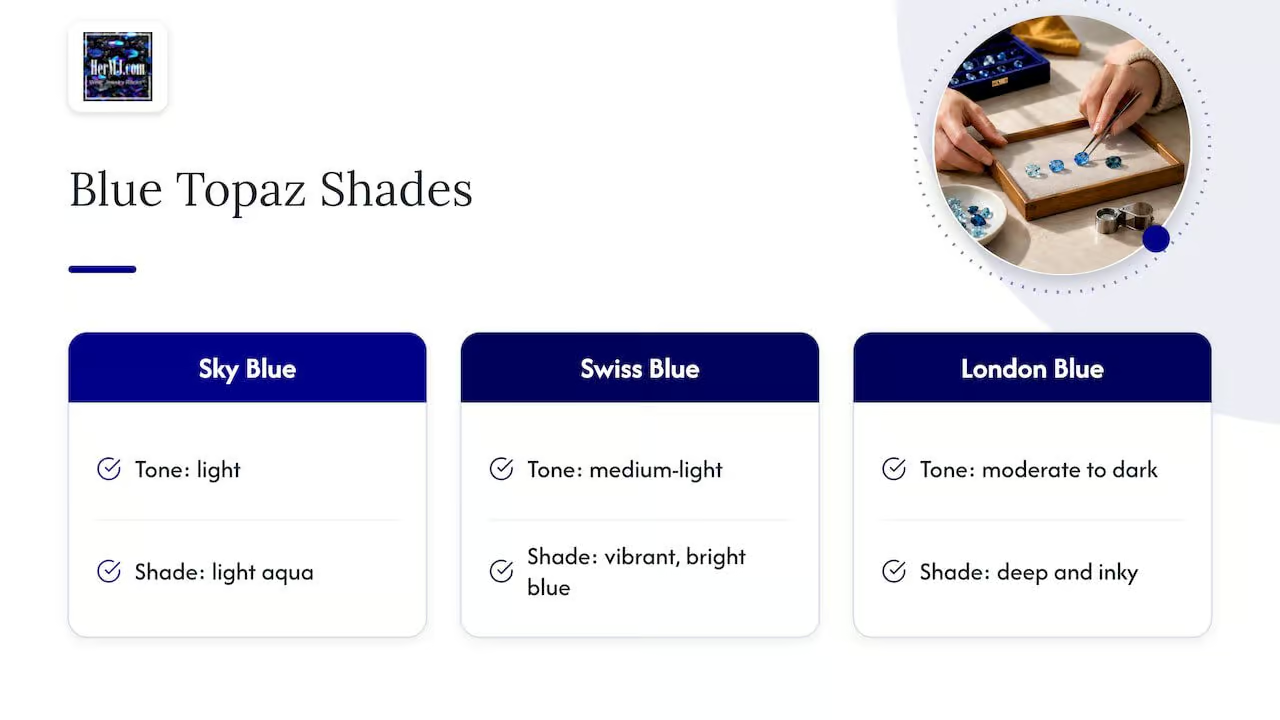
So blue topaz is really a light-to-dark range in one gem. Geology.com describes Swiss Blue as bright with a light tone, and London Blue as dark with a moderate to dark tone.
Blue zircon, chalcedony and others
The International Gem Testing Laboratory & Research Center places topaz, zircon and aquamarine among the lighter blues. Blue zircon is a December birthstone, which answers a question many readers ask. Blue chalcedony is a soft, milky, opaque light blue that suits beaded bracelets and pendants well.
Dark blue gemstones
Dark blue stones anchor an outfit. They look best in statement necklaces, bold bracelets, and evening earrings.
Blue sapphire
Sapphire is the classic blue gemstone. It belongs to the corundum family, and the International Gem Society explains that its blue-to-violet hues come from trace amounts of titanium and iron in the crystal.
Most sapphires are heat-treated to improve color and clarity. It’s the traditional September birthstone, and our guide to the September birthstone, blue sapphire goes further into its story.
Color drives value. GIA says the most valued sapphires are velvety blue to violetish blue in medium to medium-dark tones, and that sapphires that look grayish, too light, or too dark are worth less.
Blue spinel and kyanite
The IGTLRC points out that deeply saturated blue also occurs in spinel and kyanite. Both are lovely alternatives when you want sapphire-like depth with a different personality. Kyanite has a layered, almost shimmering look that I find hard to resist. You can see it in our Blue kyanite gemstone bracelet.
Lapis lazuli
Lapis lazuli delivers dark blue shades often flecked with gold pyrite, which gives each piece a night-sky character. It’s opaque, so it reads more like a polished piece of art than a sparkling faceted gem.
Blue diamond and blue tourmaline
Blue diamonds are among the rarest and most expensive blue gems, and their color comes from trace amounts of boron, according to HowStuffWorks.
The same source says blue tourmaline, called indicolite, runs from pale to deep blue. Paraíba tourmaline shows electric blue and bluish-green tones and is extremely rare.
Violet-blue and blue-green stones
Some stones sit between blue and a neighboring color. They’re often the most distinctive picks on a list.
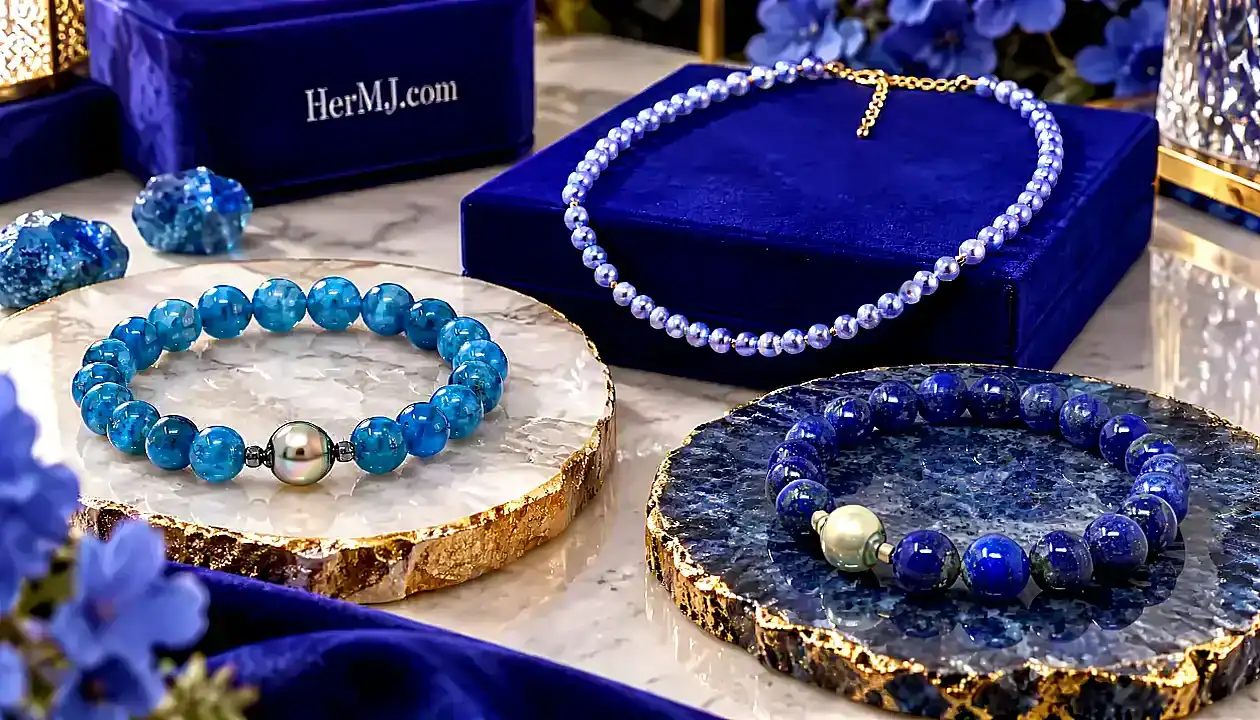
The IGTLRC groups tanzanite and iolite as more violet-blue. Paraíba tourmaline, apatite, and fluorite tend toward blue-green. If you love a teal or sea-glass look, apatite is a fine place to start. The HerMJ Blue apatite bracelet with a Tahitian pearl enchase pairs its cool color with a pearl’s soft glow.

Turquoise, which the International Gem Society also lists among its blue varieties, is an opaque stone that carries a sky-to-robin’s-egg color. Blue tiger eye is a different kind of stone, with a chatoyant, silky shimmer. It looks striking set in sterling silver, as in the HerMJ Blue tiger eye sterling silver bracelet.
Quick reference table
| Stone | Typical shade | Notes |
|---|---|---|
| Aquamarine | Light, greenish blue to blue | Mohs 7.5 to 8; March birthstone |
| Blue topaz (Sky, Swiss) | Light aqua to medium-light blue | December birthstone |
| Blue topaz (London Blue) | Deep, inky blue | Dark and bold |
| Blue zircon | Light to medium blue | December birthstone |
| Blue sapphire | Medium to dark blue | September birthstone; corundum |
| Spinel | Deeply saturated blue | Strong everyday option |
| Kyanite | Deeply saturated blue | Layered, shimmering look |
| Lapis lazuli | Dark blue, gold flecks | Opaque |
| Tanzanite, iolite | Violet blue | Cool, purple-leaning |
| Apatite, fluorite, Paraíba tourmaline | Blue-green | Teal and sea-glass tones |
Choosing blue stones for jewelry
Start with how you’ll wear the piece. The International Gem Society recommends blue sapphire, blue tourmaline, aquamarine, blue spinel and blue diamond for daily wear, since each has at least 6.5 Mohs hardness and excellent toughness against scratches and knocks.
Softer or opaque stones such as lapis, turquoise and chalcedony still make beautiful jewelry. They simply reward a little more thought. Necklaces, earrings and pendants take fewer bumps than a bracelet that brushes desks and doorframes, so they’re a natural home for gentler stones.
Keep pearls and softer gems separate when you store them, and see my pearl care page for how.
Then consider your skin tone and wardrobe. Cool, pale blues like aquamarine and Sky Blue topaz sit well with white, denim, and soft neutrals. Deep blues such as sapphire and lapis suit black, camel, and jewel tones. Blue-green stones pop against warm colors.
Pearls pair beautifully with blue stones. A white or cream freshwater pearl softens dark blue, and a pearl’s luster gives pale blue a glow. The HerMJ Blueberry Gelato freshwater pearl necklace shows how well that mix works.
If you’re buying for someone else, gemstone meaning for gifts can help you choose a stone with intent. And if the birthstone doesn’t match their taste, alternative birthstones by month open up more options.
Natural, treated, lab-grown, or imitation
The word “genuine” covers more than one thing in blue gemstones, so it helps to know the vocabulary.
- Natural and untreated: formed in the earth, with no color change added by people.
- Heat-treated: very common. Gems Lore notes that a heated natural sapphire remains a natural sapphire, while diffusion treatment changes color by introducing other elements.
- Lab-grown: the same material made in a laboratory.
- Imitation: glass, synthetic spinel, cubic zirconia, and other blue materials that look like sapphire but aren’t corundum.
For blue diamonds, GIA explains that treated stones get their color through irradiation and HPHT treatments, and lab-grown stones are made by HPHT or CVD methods. GIA also stresses that reputable jewelers always disclose whether a diamond is laboratory-grown or treated, and that a report from a recognized laboratory can help verify identity.
Identifying a stone with certainty is a laboratory job. GIA researchers have shown that synthetic blue beryl can be told from natural aquamarine through growth patterns, inclusions, and infrared spectroscopy.
A 2025 peer-reviewed study found that infrared spectra give distinct fingerprints for different categories and treatments of rubies and sapphires.
As a shopper, you don’t need a spectrometer. You need clear labeling. Look for descriptions that name the stone and say how its color is achieved. My guides on fake gemstones versus real ones, gemstone enhancements, and how gemstones get their color walk through each idea in plain language.
Blue birthstones at a glance
Blue shows up in several months, which gives you plenty of gift ideas:
- March: aquamarine, in light watery blues.
- September: blue sapphire, the traditional choice.
- December: blue topaz, blue zircon and tanzanite, all listed in the International Gem Society’s December guide.
If the traditional stone is out of budget, a different blue with a similar shade can carry the same sentiment. A kyanite bracelet, for instance, offers a sapphire-like depth for someone born in September. My guide to affordable gemstone jewelry that looks expensive shows how to achieve a high-end look without the high-end price.
Perspective
When I sort blue stones, I don’t ask which one is “best.” I ask where it will live. A dark lapis lazuli pendant belongs near the collarbone, where it catches the light without taking knocks. A pale aquamarine drop earring belongs anywhere you want a little air around your face.
We design with the idea that gemstone jewelry should feel special without feeling out of reach. That’s why we pair natural gemstones with freshwater pearls, and why we aim to offer artisan, handmade pieces at accessible prices. Blue is the easiest color to wear across seasons, and a single blue stone can change how an entire outfit feels.
My own golden rule is to choose the shade you reach for twice. If you keep going back to a stone, you’ll wear it, and a piece that gets worn is worth far more than one that stays in a box.
Veronique
Shop blue gemstones and pearls at HerMJ
If this list has you leaning toward a particular shade, you can browse HerMJ handmade bracelets, necklaces, and modern drop earrings, all made with genuine freshwater pearls and natural gemstones. For a sparkling look, HerMJ European crystal jewelry is worth a visit too.
Shipping is free on every US order with no minimum. International orders ship free on orders of $150 or more. Start at https://www.HerMJ.com and look for the blues.
Blue stones aren’t only for wearing, either. HerMJ room jewelry brings gemstone color to a shelf, desk, or countertop.
FAQ
What are the most popular types of blue gemstones?
The classics are sapphire, aquamarine, blue topaz, tanzanite, blue spinel, blue zircon, turquoise, lapis lazuli, iolite, and kyanite. Sapphire is the benchmark for deep blue, and aquamarine and topaz cover the lighter side.
Is blue zircon a December birthstone?
Yes. Blue zircon is one of the modern December birthstones, alongside blue topaz and tanzanite, according to the International Gem Society. That gives December babies several blue options.
Which blue gemstones are the most durable for everyday jewelry?
Sapphire, blue tourmaline, aquamarine, spinel, and blue diamond all rate at least 6.5 on the Mohs scale and resist scratches well. Softer stones like lapis and turquoise are lovely too, and they do best in pieces that don’t take many knocks.
Are blue gemstones that have been heated still real?
Yes. Heat treatment is standard for many sapphires and aquamarines, and a heated natural stone is still natural. What matters is that the seller tells you. Stones with added elements or color from other processes should be labeled as treated.
What’s the difference between light blue and dark blue stones?
It comes down to tone. Light blues such as aquamarine and Sky Blue topaz look soft and airy. Dark blues like sapphire, lapis, and London Blue topaz look rich and dramatic. Saturation, or color purity, is the other factor that sets great stones apart.
Sources
- Blue Gemstones: 37 Varieties, Properties & Care Guide, International Gem Society
- December Birthstones: Blue Topaz, Blue Zircon, Tanzanite, International Gem Society
- Sapphire Quality Factors, GIA
- Aquamarine: the blue gemstone and March birthstone, Geology.com
- Blue Topaz: London Blue and Swiss Blue, Geology.com
- Gemstones by Color, International Gem Testing Laboratory & Research Center
- 15 Blue Gemstones, HowStuffWorks
- Blue Diamond Buying Guide, GIA
- Real vs Fake Sapphire: 9 Reliable Tests, Gems Lore
- Aquamarine, Maxixe-Type Beryl and Hydrothermal Synthetic Blue Beryl, GIA
- Fingerprinting of ruby and sapphire gemstones, European Journal of Mineralogy
Recommended
- Black Gemstones, Mohs Wearability and Care
- White Gemstones List: 18 Stones and How to Wear Them
- Gemstone Colors And Names — How Do They Get Their Color?