



Buyers: 5 Checks to Spot Ethical Pearl Farming Before You Buy
Yes, cultured pearls can be produced ethically, but only under specific conditions: low-intensity farming, traceable origins, and either independent certification or transparent farm-level reporting.
Not every pearl on the market meets that bar. Before you buy, check for three things: third-party certification or a published sustainability report, a farm or region with a clear species, and evidence that the operation runs at a scale small enough to manage responsibly.
The Edit
- Ethical pearl farming relies on low-intensity practices, traceable origins, and transparency, with only certain farms meeting the standards.
- Well-managed farms can improve water clarity, boost local biodiversity, and sequester significant amounts of carbon, but poor siting and overcrowding negate these benefits.
- Oysters used for pearls may survive or be killed during harvest, depending on the species and farming methods, and responsible farms prioritize oyster survival and handling protocols.
- Certification like MSC indicates environmental management but does not automatically guarantee fair labor practices or social conditions; independent verification is necessary.
- Buying from small-scale, transparent farms with detailed origin and growth information often results in higher-cost pearls, reflecting slower, more responsible production.
What Is Ethical Pearl Farming, and How Does It Affect the Ocean?
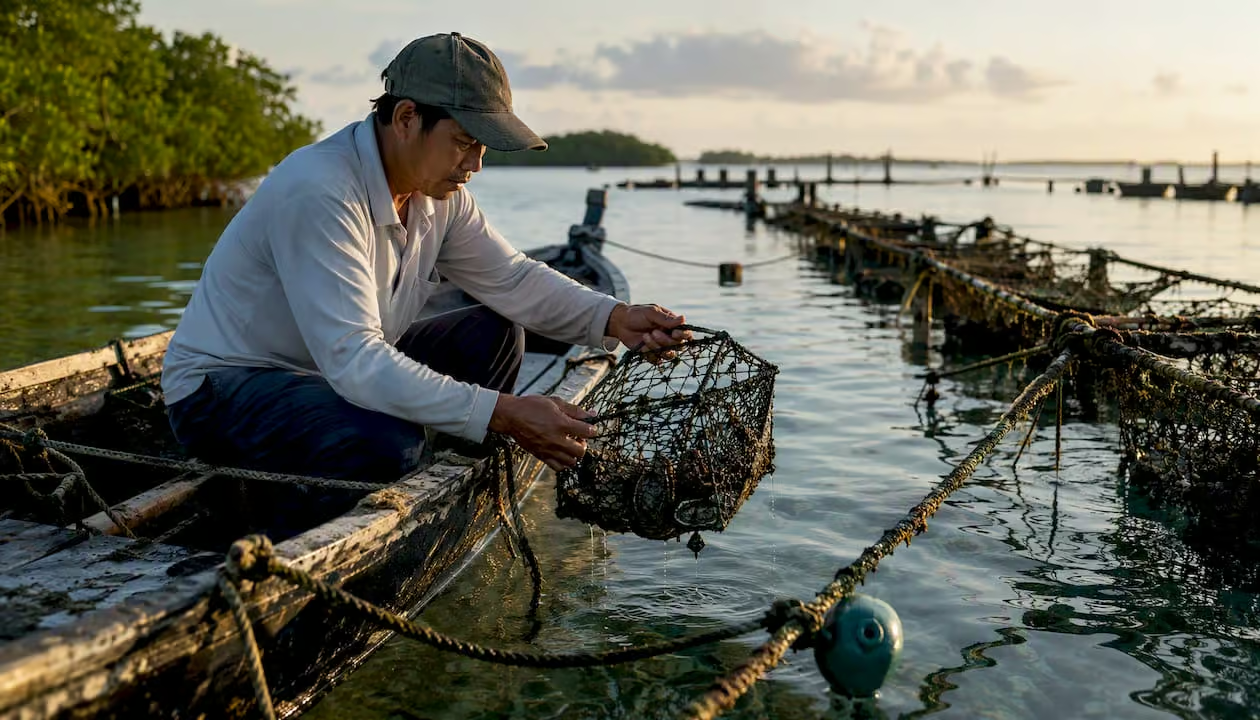
A pearl farm is, functionally, an oyster farm. That distinction matters more than most buyers realize, because oysters are filter feeders, and a well-run farm is like a beneficial living water treatment system rather than a negative drain on its marine resources.
Each oyster pulls plankton and organic particles from the water column, a process that can measurably improve water clarity around a farm site.
The Nature Conservancy’s research on marine pearl farming found that well-managed operations function almost like suspended reefs, increasing local biodiversity by giving fish, crustaceans, and smaller marine life something to colonize and to take shelter in.
That’s the upside. The Nature Conservancy’s pearl farming case study also notes that these same benefits depend entirely on active management, because biofouling (the buildup of algae, barnacles, and other organisms on farm structures) has to be controlled or it smothers the oysters and stresses the surrounding ecosystem.
There’s also a carbon angle few buyers know about.
A single cultured pearl farm running 400,000 shells sequestered 47.5 tonnes of carbon over four years, according to research compiled by CIBJO, the international jewelry industry confederation.
That’s a meaningful bioextraction effect, not a marketing footnote.
The farms that get this right tend to share a few habits:
- Lower stocking density, which reduces disease pressure and waste buildup
- Site-specific water quality monitoring rather than one-size-fits-all placement
- Co-culture with seaweed, turning biofouling into a manageable, sometimes profitable, byproduct
- Published environmental data or a life cycle assessment, rather than vague sustainability language
Poor siting, overcrowded lines, and no monitoring flip the equation. The same biology that makes pearl farms a potential environmental asset makes a badly run one a nutrient-loading problem.
Are Oysters Killed to Harvest Pearls?
Sometimes, and it depends entirely on the farming method. This is probably the single most misunderstood part of the industry, so it’s worth walking through slowly.
A pearl starts when a technician inserts a small graft, often a bead nucleus, into the oyster’s tissue.
The mollusk responds by coating the irritant in nacre, the same material that lines its shell, and over months or years that coating becomes a pearl.
Freshwater mussels can be seeded with multiple grafts per shell and, depending on the operation and the species, they can survive the process and be reseeded for a second or third growth cycle.
Saltwater oysters used for Akoya or South Sea pearls are more commonly harvested once the pearl reaches size, which typically means the animal doesn’t survive extraction.
Neither approach is inherently “the ethical one.” A farm that reseeds oysters is stretching more pearls from fewer animals, but only if survival rates and stocking density support it responsibly.
A single-harvest system isn’t automatically worse if the farm operates at low intensity with strong environmental management.
If oysters feel pain in the way vertebrates do remains genuinely unsettled among researchers, and I say that plainly rather than pretend the science is settled either way.
What buyers can reasonably ask for instead:
- Survival rates after seeding and after harvest
- Whether technicians are trained and handling protocols are documented
- Typical stocking density per line or raft
Do Pearl Farms Support Fair Labor and Local Communities?
Pearl farming can be a genuine economic lifeline in coastal regions where few other industries generate steady wages.
When a farm depends on clean water to produce good pearls, it has a direct financial reason to protect the same reefs and lagoons that local fishing communities rely on.
The alignment between farm and ecosystem is one of the more underappreciated arguments for aquaculture done the right way.
Community-led pearl projects in the Pacific are good examples of this.
Initiatives in Raja Ampat, Indonesia, pair pearl aquaculture with watershed and governance measures, showing how farming can support biodiversity and community resilience at the same time, rather than treating conservation and income as competing goals.
That model echoes a pattern that does well beyond pearls: local, small-scale production tends to keep more money circulating in the community that supports it.
Not every operation lives up to the ideal. Labor risks in aquaculture frquently include low wages, rigid organizational pecking orders between technicians and farm owners, and thin safety oversight on the water.
Signs worth asking about:
- Locally owned or majority-local-staffed operations
- Published labor or safety policies, not just marketing copy
- Gender-responsive hiring, since much of the world’s pearl seeding and sorting labor is done by women
What Do Pearl Certifications Like MSC Actually Mean?
The Marine Stewardship Council has certified at least one pearl fishery, and that certification is worth understanding rather than just spotting the label.
MSC’s process is a rigorous, third-party environmental assessment measured against global best-practice standards for fishery management, stock health, and ecosystem impact.
Here’s what it doesn’t automatically cover:
Social conditions. MSC’s standard is environmental, so it says little about wages, safety, or working hours on a given farm.
Every farm in a region. Certification typically applies to a specific fishery or operation, not the entire industry in that country.
Freshwater aquaculture broadly. Most certification activity to date has centered on saltwater fisheries rather than the freshwater mussel farms that produce most affordable cultured pearls.
The strongest signal isn’t any single label. Its certification paired with named origin, a published environmental assessment or life cycle study, and a farm willing to answer specific questions instead of gesturing at “sustainable sourcing.”
How Do I Know If the Pearls I’m Buying Are Ethically Sourced?
Retailers use “sustainably sourced” as a catchphrase more often than they back it with detail. Here’s a working checklist for cutting through that:
- Ask for the species (Akoya, South Sea, freshwater mussel) and the specific farm or region of origin.
- Ask how long that pearl took to grow. Rushed timelines often signal higher-intensity, higher-density farming.
- Ask whether the farm reseeds its oysters or harvests once, and why they chose that model.
- Ask about stocking density, or whether the farm publishes any sustainability report or environmental data.
- Ask for survival rate figures if the retailer or farm tracks them.
Red flags run in the opposite direction: a seller who can’t name the country of origin, generic “eco-friendly pearl” language with no farm specifics behind it, or pearls priced so low they imply an assembly-line production pace.
Pro Tip: Price is actually a decent, if imperfect, proxy here. Small-scale, slower-grown freshwater pearls tend to cost more per piece than mass-produced ones, because low stocking density and longer growth cycles mean fewer pearls per harvest cycle. If a strand looks suspiciously cheap for its size and luster, ask why before you ask for a discount.
Does the Type of Pearl I Buy Change Its Environmental Footprint?
Freshwater and saltwater farming are genuinely different systems, not just different price points.
Freshwater mussels, the kind used for most affordable cultured pearls, are typically farmed in ponds or rivers at lower individual value but can be seeded with multiple grafts and sometimes reseeded, spreading impact across more pearls per animal.
Saltwater species tell a different story depending on which one:
- Pinctada maxima (South Sea pearls) needs warm, clean tropical water and produces large pearls slowly.
- Akoya oysters grow in cooler coastal waters and produce classic round pearls over a shorter cycle, generally under two years.
- Pāua and other mollusks used for specialty pearls are farmed at much smaller scale, often with more individualized handling.
Warmer water tends to speed nacre deposition. Cooler water builds thicker, sometimes higher-quality nacre over a longer timeline. That trade-off between speed and quality is worth knowing when a “quick turnaround” pearl seems too good to be true.
What Are the Biggest Controversies in Pearl Farming Today?
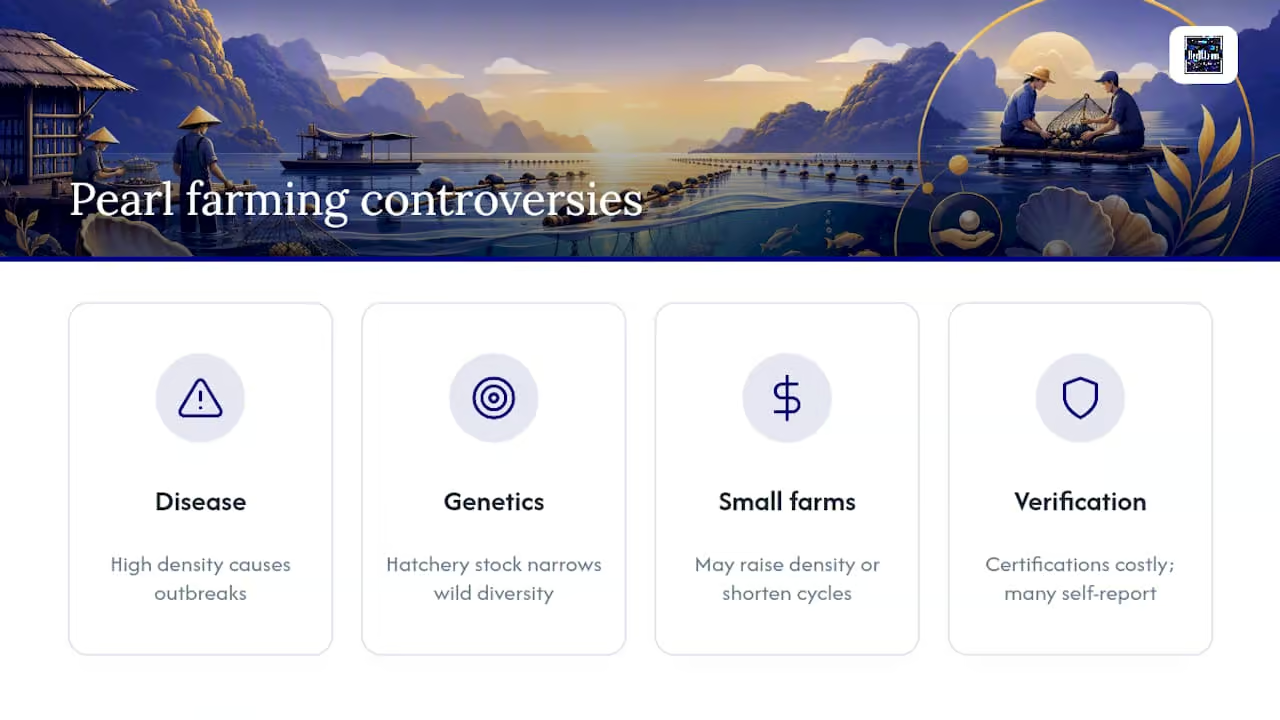
The industry’s ethical debates rarely have a clear villain. Disease is the sharpest example: pearl oysters farmed at high density are more vulnerable to outbreaks, and a disease event can wipe out a season’s stock or spread to wild populations nearby.
The risk is exactly why stocking density keeps coming up as the quiet variable that separates a responsible farm from a risky one.
Genetic impact is a related, less-discussed issue. Farms that rely on hatchery-raised stock for consistent pearl quality can, over generations, narrow the genetic diversity of local oyster populations if wild broodstock isn’t periodically reintroduced.
Escaped or discarded farm stock can also compete with or interbreed with wild mollusks in ways researchers are still working to quantify.
The farmers themselves face real dilemmas here, not just PR problems.
A small operation trying to compete on price faces pressure to increase density or speed up harvest cycles, exactly the choices that erode welfare and environmental outcomes.
Certification and audits help, but they cost money and time that many small, family-run farms don’t have, which is part of why so much of the industry runs on self-reported claims rather than verified ones.
None of this means pearl farming is quietly hiding a bad situation. It means the gap between “can be ethical” and “is ethical” comes down to specific, checkable choices a farm makes every season, not a blanket promise stamped on the whole industry.
Why HerMJ Takes a Different Approach to Sourcing
I’ve spent enough time studying pearl farming to know that “sustainably sourced” is one of the most overused, underexplained phrases in this industry.
That’s part of why HerMJ leans on educational resources like our pearl grading guide and our piece on cultured pearl misconceptions, rather than a single vague claim.
Our approach to vetting freshwater pearl suppliers follows the same checklist we just walked you through: we ask about origin, species, and growth timeline, and we favor smaller, place-based suppliers over industrial-scale operations.
If you have specific sourcing questions about a piece you’re considering, reach out before you buy. And if you’re ordering within the US, shipping is free with no minimum.
— Veronique
Freshwater Pearl Pieces Built Around This Same Standard
The pieces that make the most sense against everything above are the ones where the pearl itself, not just the setting, does the talking.
Our freshwater collection is built on the low-intensity, traceable model this article has walked through: smaller farms, slower growth, and pearls whose origin and species we can actually describe to you, rather than a generic “ethically sourced” sticker.

The Elegant Freshwater Pearl Necklace is a good starting point if you want a single piece that reflects that slower-grown, small-batch approach.
For everyday wear, the Lustrous Freshwater Pearl Bracelet pairs the same sourcing philosophy with a lighter, more casual silhouette.
And if you want pearls paired with color, the Pearl and Aquamarine Necklace combines freshwater pearls with natural gemstone accents in one artisan-made design.
We don’t claim third-party certification on these specific pieces, and we won’t pretend otherwise.
What we will do is answer your sourcing questions directly before you buy, and stand behind every piece with our standard return policy.
Browse the freshwater collection, and if something catches your eye, message us first if you want more detail on where it came from.
Sources
- Social, Environmental and Economic Impact of Natural and Cultured Pearls (CIBJO)
- The world’s first certified sustainable pearl fishery | Marine Stewardship Council
- Marine Pearl Farming (Nature Conservancy case study)
- Pearl farming in Raja Ampat supports nature-based solutions (Mongabay)
FAQ
Can Pearls Be Harvested Humanely?
Some farms reseed oysters after a first harvest, allowing the animal to survive and grow additional pearls, while others harvest once and the oyster doesn’t survive. Neither method is automatically more humane; survival rates, stocking density, and handling protocols matter more than which model a farm uses.
Are There Ethically Sourced Pearls Available to Buy?
Yes, pearls from farms that publish sustainability data, disclose species and origin, and operate at low stocking density meet a reasonable ethical standard. Freshwater pieces including the Elegant Freshwater Pearl Necklace reflect a small-scale, traceable sourcing approach.
Are Oysters Killed When Pearls Are Harvested?
In saltwater pearl farming, harvest usually ends the oyster’s life, since the pearl typically has to be removed from the tissue. Freshwater mussel farming more often allows reseeding, so the animal can survive to produce another pearl.
Do Pearl Farmers Make a Lot of Money?
Most pearl farmers, especially small-scale and family-run operations, earn modest incomes tied to slow production cycles and market prices that fluctuate by species and quality.
Large industrial operations and traders further down the supply chain tend to capture a bigger share of the final retail price than the farmers themselves.
Recommended
- Real vs Fake Pearls: 6 Quick At Home Tests Buyers Use
- Pearl Grading: What Every Buyer Needs to Know
- Stop Calling Cultured Pearls “Fake”: Wild Pearls Hidden Cost
- 7 GIA Value Factors That Matter in Cultured vs Natural Pearls