


Pearl Stringing Materials: Silk, Nylon and Findings
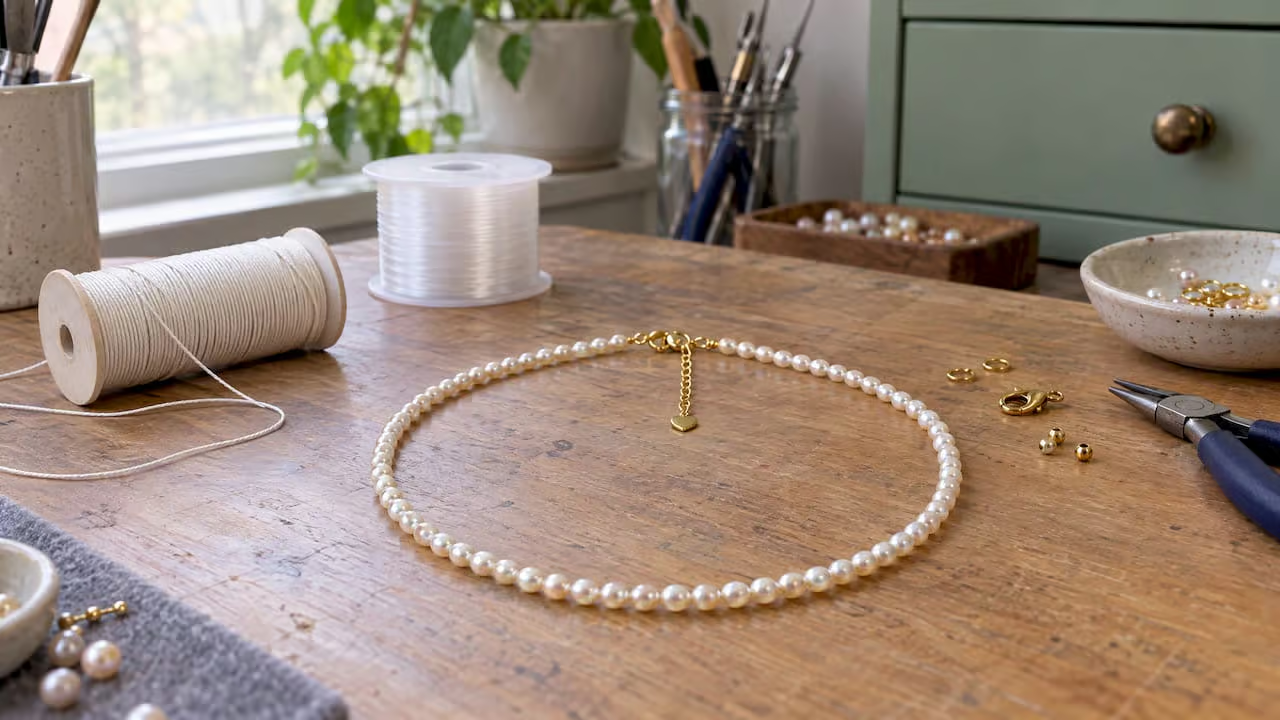
With advances in technology, pearl stringing materials have evolved over the years. Earlier, and for most strands, it was silk cord, knotted between every pearl and finished with French wire and a secure clasp. For this reason, silk has been the obvious choice because of its softness against the pearl, its drape, and its easy knotting. Today, new formulations like Soft Flex beading wire offer real strengths for certain designs. Below, I’ll walk you through each material, what the small metal parts do, and how to size everything, so you can read a pearl listing like a jeweler and wear your strand with confidence.
If you’re shopping for freshwater pearl necklaces at HerMJ, this is the knowledge that helps you see what makes a strand comfortable, long-lasting, and graceful.
TL;DR
- Silk has long been the traditional de facto pearl cord because it’s flexible, hangs naturally, and knots well for pearl necklaces and bracelets.
- Nylon is more durable but can cut into the pearl at the hole, so it works best where pearls aren’t the whole design.
- French wire (also called bullion) and bead tips protect the cord where it meets the clasp, which is where wear happens fastest.
- Thread thickness must match the pearl’s drill hole, and the knots must be big enough that they can’t slip back through.
- Knotted silk strands slowly stretch and wear out, so watch for gaps between pearls and plan on costs to replace the silk over time.
- Soft Flex beading wire (nylon-coated stainless steel) is exceptionally strong, waterproof, and stretch-resistant, making it ideal for heavy or mixed-bead pearl designs secured with crimp beads rather than traditional knots.
- Pearl Stringing Materials: Silk, Nylon and Findings
- TL;DR
- Why the cord matters as much as the pearls
- Silk: the traditional choice
- Nylon: durable, with a trade-off
- Soft Flex beading wire
- Other cords you’ll run into
- The small parts that protect the strand
- Why separations between pearls matter
- Reading the signs your silk is tired
- Buying pearls with the stringing in mind
- Perspective
- Find your pearls at HerMJ
- FAQ
- Sources
- Recommended
Why the cord matters as much as the pearls
A pearl strand is only as good as the thread running through it. Every pearl has a tiny drilled hole, and the cord passes through it thousands of times as you put the necklace on, take it off, and wear it against your skin. The cord has to be smooth enough not to scratch the pearl, strong enough to carry the weight, and fine enough to fit the hole.
Modern cord technology protects the pearl and your investment by keeping the strand intact and preventing loss from fraying or broken strands.
Pearls are organic gems, built in layers of nacre (the shimmering coating that gives pearls their luster). That layered surface is lovely and a little delicate, so what touches it at the drill hole matters. Think of it like framing a piece of art: the frame shouldn’t damage what it holds.
Silk: the traditional choice
Silk has long been the traditional material for pearl stringing. A bench jeweler’s step-by-step restringing guide credits its flexibility and natural drape, which let the pearls move comfortably around your neck, and notes that silk knots easily, which gives the classic look people expect from a traditionally strung strand. The same flexibility is also where your attention should remain. Over time, silk softens and stretches; if ignored, fraying and breakage can lead to lost pearls.
Three qualities explain why silk has lasted so long in pearl making:
- Softness at the hole. Silk is gentle on nacre, so it’s the usual pick for strands that are all pearl or mostly pearl.
- Drape. A silk-strung strand falls in a soft curve because of silk’s flexibility.
- Knot control. Silk forms easy, firm knots between pearls.
Importantly, silk ages. Body oils, cosmetics, and the friction of daily wear gradually weaken and stretch it, and the knots loosen over time. That’s the natural rhythm of a silk-strung necklace, and it’s why you’ll notice small gaps between pearls and knots after heavy wear. Alternatively, newer stringing materials require greater strength and longevity.
Silk also shows dirt, since it picks up oils from hands and skin. That’s another reason a good strand needs proper pearl care when you’re not wearing it.
Cord sizes and what they mean
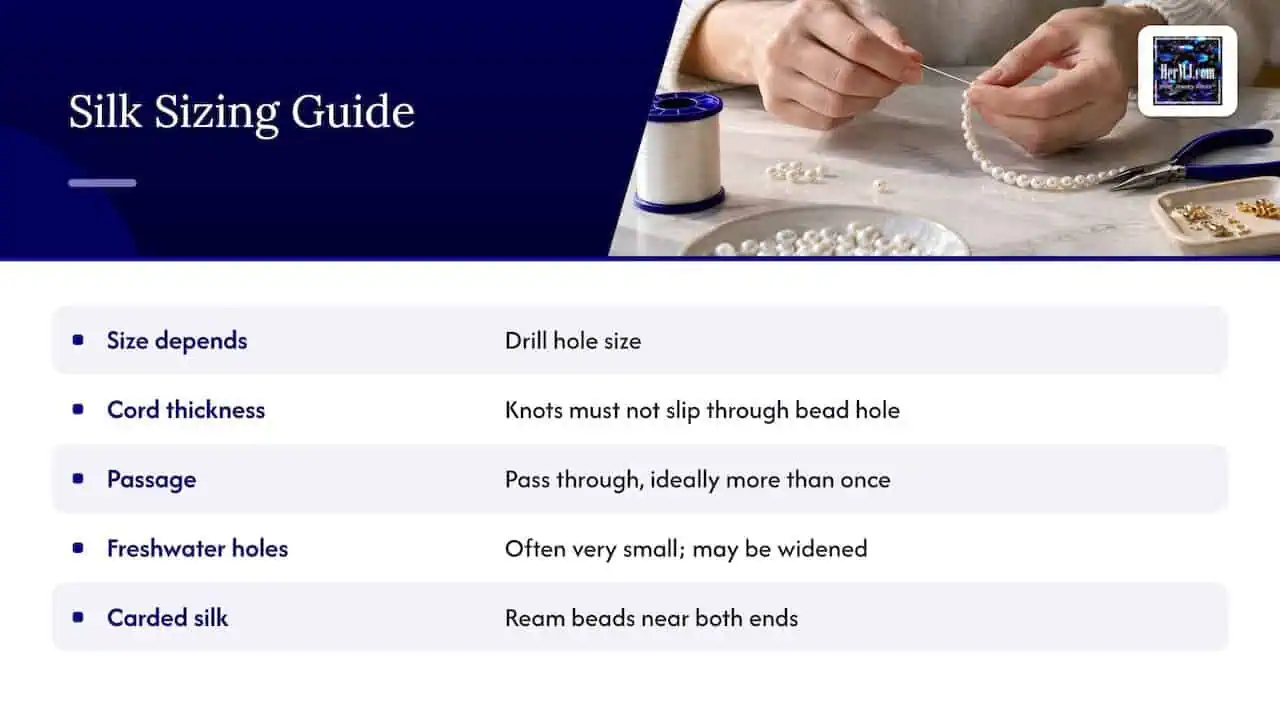
Cord comes in numbered or lettered sizes, and the right one depends on the drill hole in your pearls. The goal is a cord thick enough to provide strength but thin enough to pass through. Interweave’s guide on knotting pearls with silk stresses this point: choose a thickness that lets you tie knots large enough not to slip back through the bead hole.
Freshwater pearls often have very small holes, so jewelers sometimes widen them slightly with a fine reamer. The same Interweave guide notes that carded silk, which is pre-cut and has the thread closed off at both ends, means reaming several beads near each end so the doubled cord can pass through.
Nylon: durable, with a trade-off
Nylon cord is strong and doesn’t degrade the way silk does. Warren Feld’s pearl knotting handout considers silk for pearl projects.
So when someone asks about silk versus nylon string, here’s how I’d put it:
| Property | Silk | Nylon |
|---|---|---|
| Feel at the pearl hole | Soft and gentle | Firmer |
| Drape | Flexible, natural curve | Varies by cord type |
| Knotting | Knots neatly and firmly | Knots well in soft spun forms |
| Aging | Stretches and weakens with wear | Holds up longer |
| Best for | Classic knotted pearl strands | Designs where pearls are mixed with other materials |
Soft Flex beading wire
I’ve found that Soft Flex improves the design experience by making it easy to focus primarily on the design and the wide range of material choices (pearls and gemstones) the cord supports. Its water and cleaning-solution resistance makes it a good candidate for completing a strand, and it’s more resilient than the pearls themselves.
Separating each pearl with crimp bead spacers adds uniqueness and protects the pearls. It also lets you add gemstones to the same design without compromising the pearl’s nacre coating. These are the benefits of this approach:
| Benefit | Result |
|---|---|
| Mixing pearls and gemstones | Gemstones, crystals, glass, and metal spacers often have sharp drill holes that will quickly fray or slice through silk. Soft Flex’s stainless steel core resists abrasion. |
| Multi-Strand necklace designs | Large baroque pearls, chunky focal pieces, or heavy pendants can stretch and sag silk over time. Beading wire holds its length without stretching. |
| No-knots to coordinate in designs | Securing the ends with crimp beads is much quicker than hand-knotting between every pearl, and you don’t have to worry about matching knot size to the pearl’s drill hole. |
| The “floating” or illusion style design | Soft Flex can hold pearls spaced apart using crimp beads, something silk can’t do cleanly. |
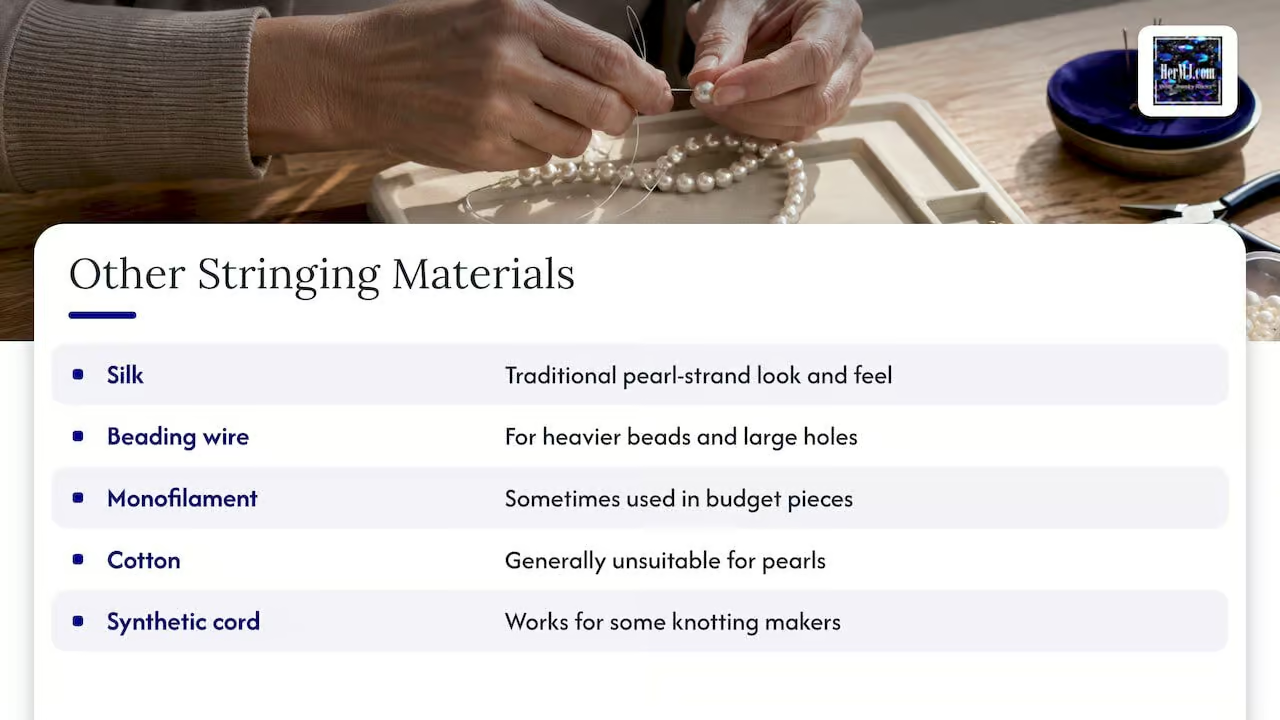
Pearl listings and craft guides mention other options. Monofilament fishing-style line sometimes appears in budget pieces. Cotton thread is generally considered unsuitable for pearls.
Other cords you’ll run into
The small parts that protect the strand
The cord only tells half the story. A few tiny metal parts decide how well the ends of your necklace hold up.
French wire
French wire (also called bullion or gimp) is a very fine coil of wire that wraps the cord where it meets the clasp. According to that bench jeweler’s guide, it acts as a protective bridge between the strand and the clasp, shielding the cord from wear and friction where movement happens most. If you ever notice a necklace fraying first near the clasp, this is the part meant to prevent it.
Bead tips
A bead tip is a small, cup-shaped metal piece with a loop. A findings glossary describes it as a concave piece attached to a metal loop that connects thread to a clasp: the knot sits inside the cup, and the loop hooks to the clasp. It gives you a neat, enclosed finish.
Clasps
The same glossary describes a bead clasp as a closure hidden inside a bead or pearl. A graceful option for pearl strands. Whichever style you wear, the clasp should match the strand’s weight. I’ve written about how to match pearl necklace clasps to strand weight if you’d like to see what works for light and heavy strands.
Needles, awls and adhesive
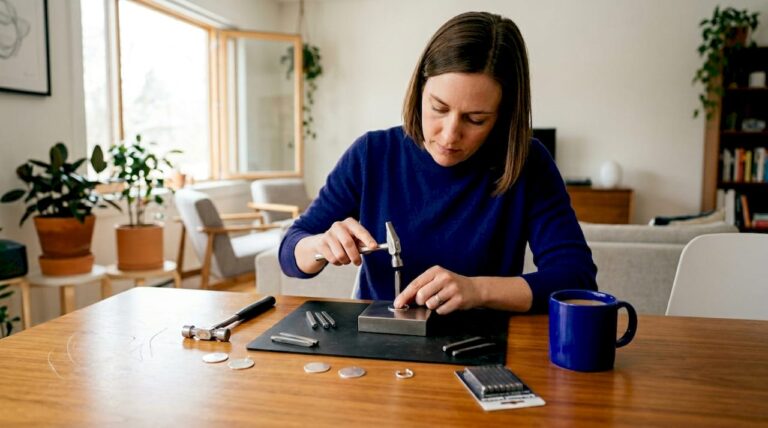
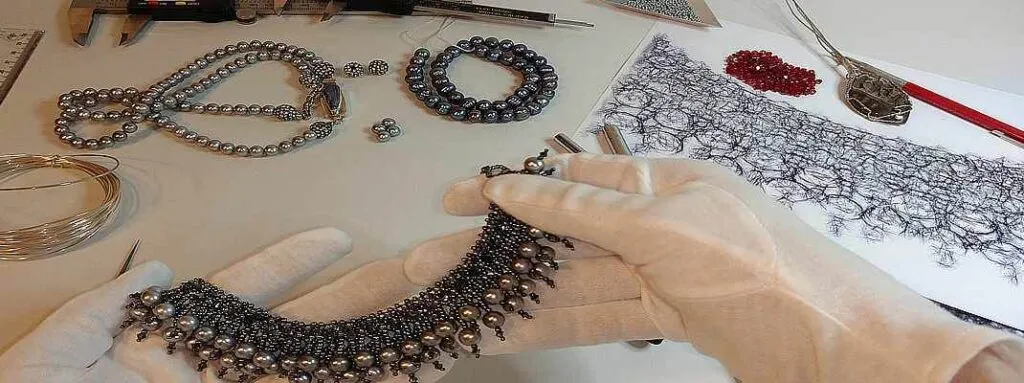
Stringing uses very thin, long beading needles; fine-point tweezers or an awl to slide each knot snug against its pearl; sharp scissors; and pearl-safe cement to secure the final knots. These are the same tools artisans keep at the bench, and you can read about them in our maker’s guide to pearl jewelry tools.
Why separations between pearls matter
Knotting or separations between pearls is a hallmark of a well-made strand, and it does real work:
- It keeps pearls from rubbing against each other, which protects the nacre.
- It gives the necklace a graceful, even spacing.
Knots are also why length changes. A knotted necklace can come back a little shorter after restringing because tight knots take up room, and converting an unknotted strand to knotted typically adds length. If you’re particular about how a strand sits at your collarbone, keep that in mind.
Knots are tied snugly on purpose. The weight of the strand, plus body heat and moisture, gives the string a little stretch after a few wears, so a new strand may look slightly tight at first and then relax into its proper drape.
How much cord a strand takes
Makers cut far more cord than the finished necklace length because of knotting and doubling. That bench jeweler’s guide suggests silk cut to about nine times the strand length, while other makers use different multiples depending on their cord and technique. The takeaway: a lot of cord disappears into knots.
Reading the signs your silk is tired
A hanging strand tells you what you need to know. Hold it up and look for:
- Thread showing between pearls and their knots
- Pearls that slide where they once sat firmly
- Silk that’s gone gray, brown, or frayed near the clasp
- A necklace that sits lower than it used to
How often this happens depends on how often you wear the strand. My guide on how often to restring pearls and the signs to watch covers the rhythm in detail, and if you’re curious about budgeting for it, see what restringing costs per inch.
Buying pearls with the stringing in mind
When you shop for a pearl necklace or bracelet, a few questions shape how happy you’ll be a year from now:
- Are the pearls separated individually? Knots or spacers between pearls give protection and a polished look.
- How does the end finish look? Tidy bead tips or French wire at the clasp show attention to wear points.
- Does the clasp suit the strand? A secure clasp matters most on longer or heavier necklaces.
- Do irregular shapes change the design? Baroque pearls, with their organic, uneven shapes, string differently than round pearls. A baroque pearl necklace in citrine shows how irregular pearls and gemstone accents can share a strand.
Gemstone beads are a separate case. Harder, sharper-edged stones and metal beads can fray silk, so mixed designs work best with a solution like Soft Flex cord rather than an all-pearl strand.
Perspective
When I design a pearl piece, I think about how it’ll feel on the tenth wear and the hundredth, not just how it looks in a photo. The cord and the little metal finishes are what make a strand comfortable, and that’s why we care about them.
We believe real freshwater pearls and natural gemstones belong in everyday life, not locked away for special occasions. Handmade artisan jewelry should be beautiful and within reach, so we focus on superior craftsmanship at accessible pricing. Our customers’ reviews often mention quality and the beauty of each piece, and that’s what keeps us making them by hand.
My advice if you’re new to pearls: learn what a good strand looks like, wear it often, and enjoy it. Pearls like skin contact, and they reward being loved.
Veronique
Find your pearls at HerMJ
If you’re ready to wear what you’ve just learned, explore HerMJ’s handmade pearl and gemstone jewelry, from freshwater pearl necklaces and bracelets to modern drop earrings. We craft artisan pieces from genuine freshwater pearls, natural gemstones, and crystals, and we ship US orders free with no minimum. International orders ship free on orders of $150 or more.
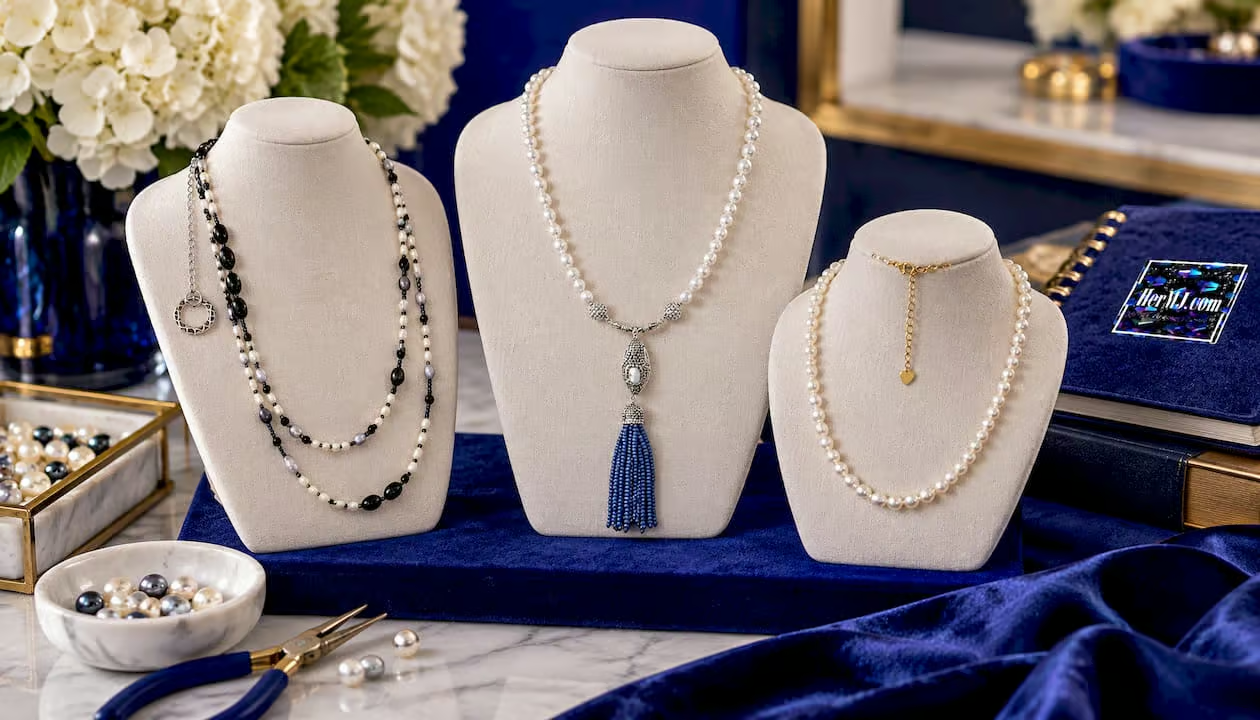
Prefer to start with a favorite? Try the freshwater pearl necklace on a sterling silver chain, or browse our bracelets for a gift.
FAQ
Is silk, nylon, or Soft Flex better for stringing pearls?
For strands that are mostly or entirely pearls, silk is the traditional pick. It’s soft at the drill hole, drapes naturally, and knots neatly. Nylon lasts longer, and Soft Flex is stronger, so it suits mixed designs better.
What is French wire for?
French wire is a tiny coil that covers the cord where it joins the clasp. It protects the thread from friction at the spot that moves the most, which helps the strand last longer between restringings.
Why are pearls knotted individually, or spaced apart?
A knot between each pearl, or a spacer between the gemstones, keeps the pearls from rubbing together and spaces them evenly. With silk, it also means a break in the cord doesn’t send every pearl rolling away, since each one is held in place by its own knots.
How do I know my pearl necklace needs new silk?
Look for gaps between pearls and knots, pearls that slide, as well as dirty, gray, or frayed silk, or a strand that hangs lower than before. Frequent wear speeds this up. To understand the management needed for silk, my guide to when to restring pearls walks through the timing.
Sources
- Bench Jeweler: How to Restring a Pearl Necklace, step-by-step guide
- Tips for Knotting Gemstones, Pearls and Coral Beads with Silk, Interweave
- Findings glossary, What’s in a Name?
- Pearl knotting handout with Warren Feld
Recommended
- Pearl Restringing Cost: What You’ll Pay Per Inch
- Avoid Losing Pearls: Match Pearl Necklace Clasps to Strand Weight
- Tools Artisans Use for Pearl Jewelry: A Maker’s Guide