


The Meaning of Lapis Lazuli Stone Jewelry
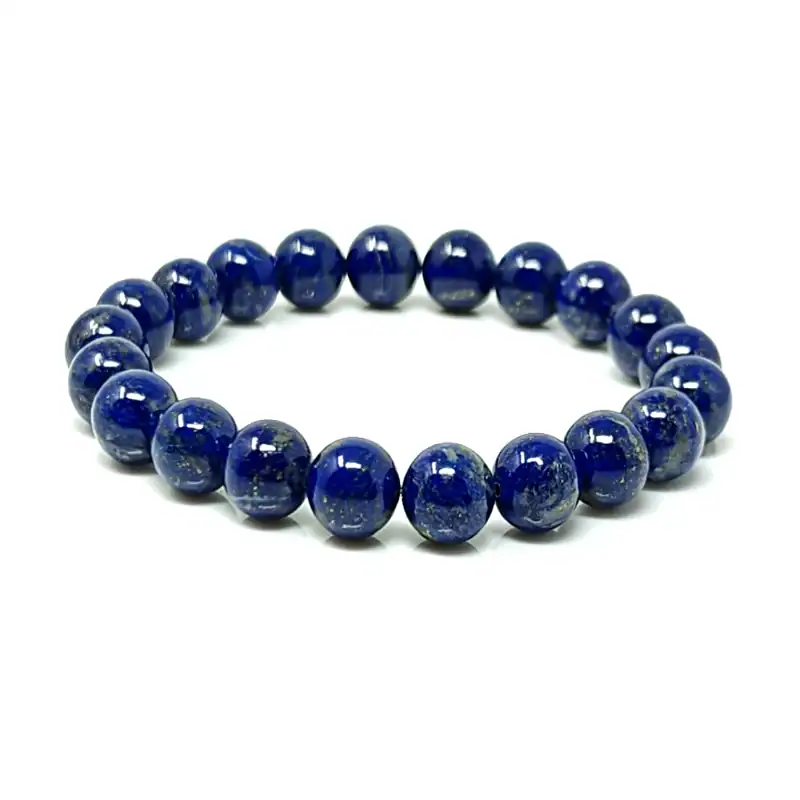
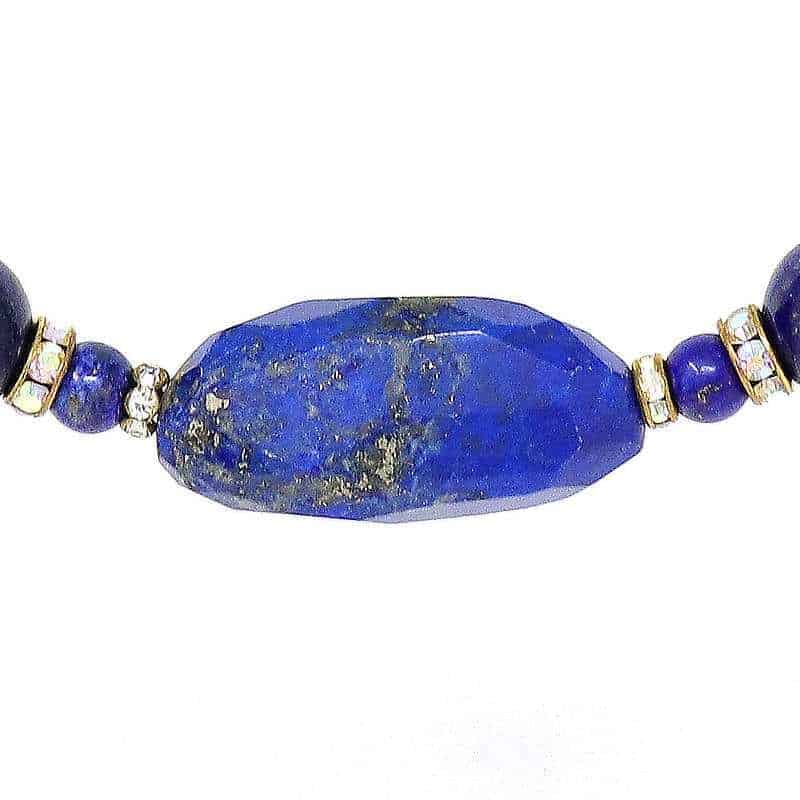
Prized for its deep blue color and distinctive gold flecks, lapis lazuli stone jewelry has enjoyed popularity for thousands of years.
The distinctive deep-blue gemstone has been valued for more than its aesthetic beauty. Along with its beauty and rarity, lapis is also known for its symbolic properties.
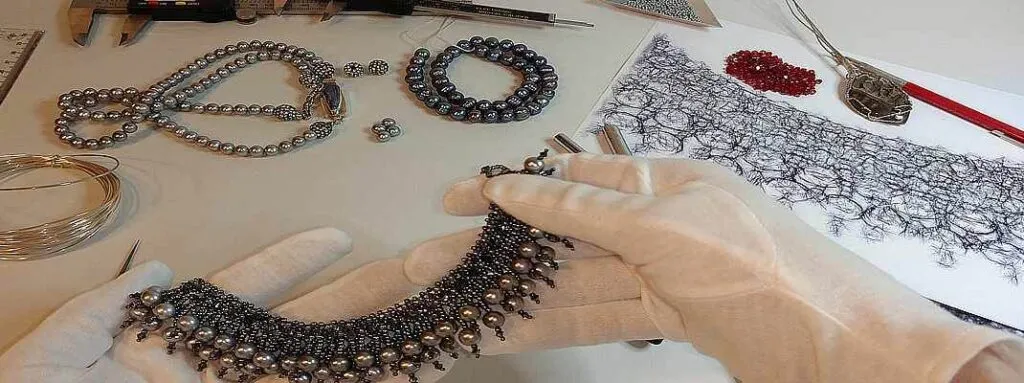
As a jewelry designer specializing in artisan pieces, I often encounter clients drawn to lapis lazuli for its unique character and the emotional qualities it evokes.
To understand why, we need to examine the history of the gemstone to provide context for its enduring appeal in modern jewelry design.
Geological Composition and Origin
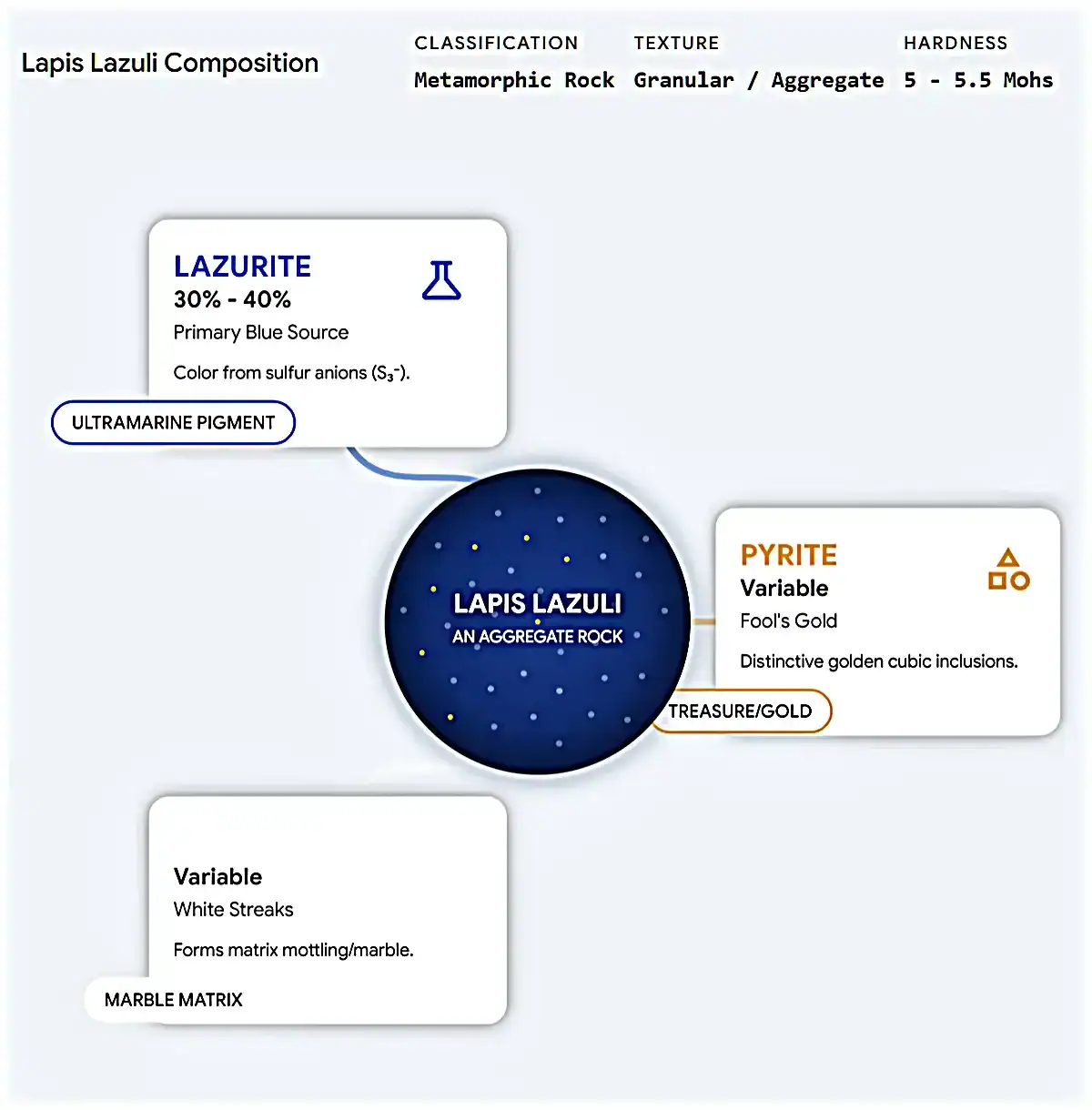
Lapis lazuli is technically a metamorphic rock rather than a single mineral.
It is primarily composed of the blue mineral lazurite, along with calcite (which appears as white veins), pyrite (gold-colored flecks), and sometimes sodalite or hauyne.
The presence of pyrite gives lapis its characteristic metallic speckles, which are often mistaken for gold inclusions but are actually iron sulfide.
The most historically significant source of lapis lazuli is the Sar-e-Sang mines located in the Badakhshan province of Afghanistan.
Mining operations at this site date back to approximately 6000 BCE during the Neolithic period.
While deposits exist in other regions, including Chile, Russia, and Pakistan, Afghan lapis has remained the benchmark for quality due to its intense blue hue and minimal calcite content.
Ancient Civilizations and Early Usage
Mesopotamia and the Indus Valley
Lapis lazuli was highly valued by Sumerian civilizations around 4000 BCE, where its color was associated with the heavens.
It was highly valued by the people of ancient Mesopotamia (modern-day Iraq), where it was used extensively in cylinder seals, which were carved with intricate designs to stamp clay tablets for record-keeping. Specifically, the stone’s durability made it ideally suited for the task.
Lapis artifacts have been discovered at archaeological sites such as Harappa and Mohenjo-daro from their use during the Indus Valley Civilization (c. 3300–1300 BCE).
These findings demonstrate the existence of a trade network that transported the stone from Afghanistan to South Asia thousands of years ago.
Ancient Egypt
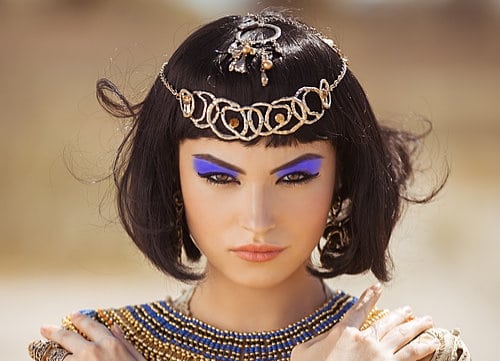
In ancient Egypt, lapis lazuli stone jewelry held profound religious and cultural significance. It was associated with the sky gods Ra and Horus.
The Egyptians even used ground lapis lazuli as an ingredient in kohl, the dark eye makeup worn by both men and women to protect against the sun’s glare and believed to ward off evil spirits.
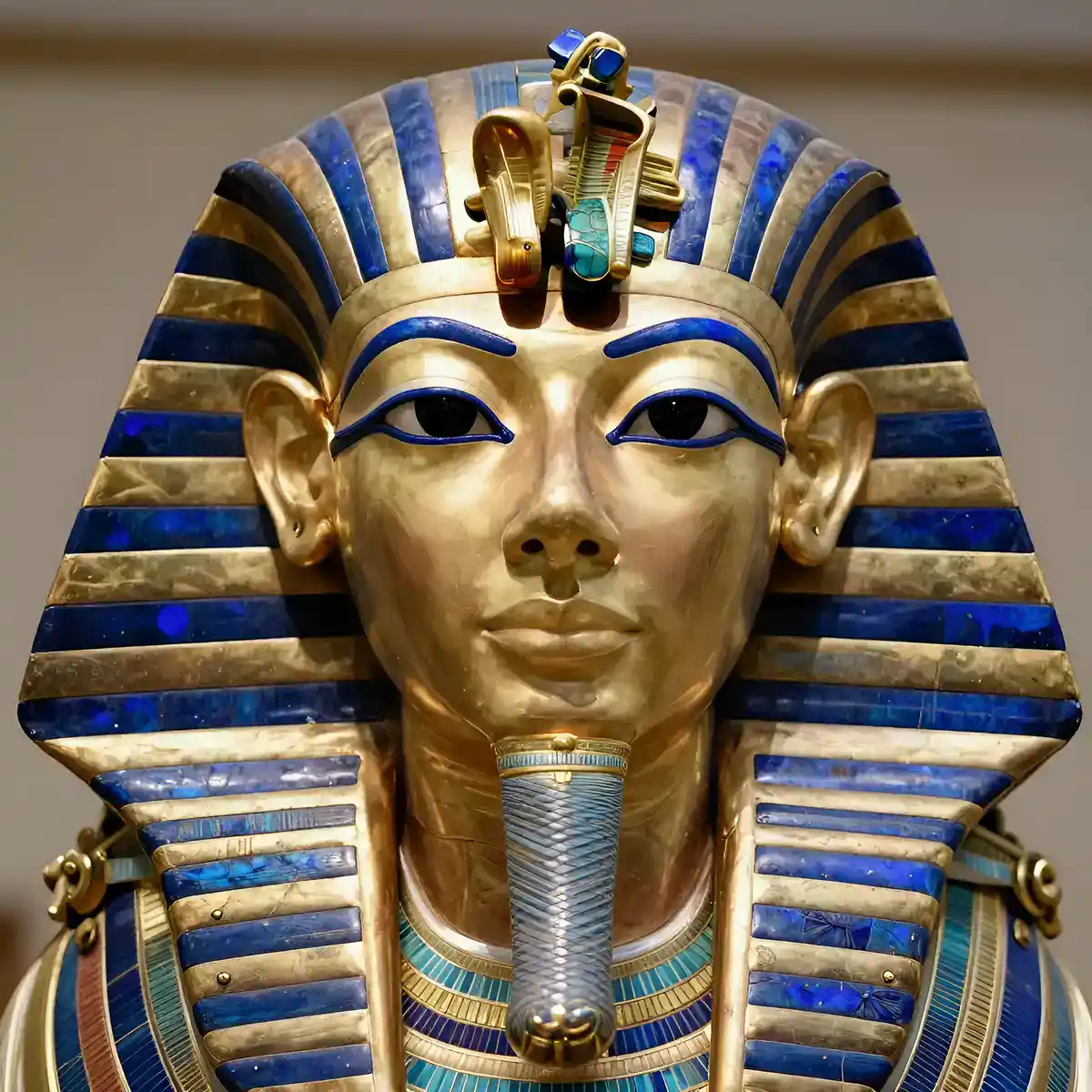
The stone’s primary use as a material for jewelry and amulets is popularly known for its notable display in the funerary mask of Tutankhamun (c. 1323 BCE), which features inlays of lapis lazuli around the eyes and forehead.
This is one of many examples of the stone’s revered uses, underscoring its connection to royalty, divinity, and the afterlife.
The Renaissance and Ultramarine Pigment
During the Middle Ages and the Renaissance period in Europe, lapis lazuli achieved a status that rivaled gold.
The stone was ground into a fine powder to create the pigment ultramarine. It was one of the most expensive colors available to artists at the time, although less costly synthetic alternatives are more readily available today.
The original lapis-derived pigment still fetches upwards of $65 per ounce.
The Meaning Of Lapis Lazuli Ultramarine Color
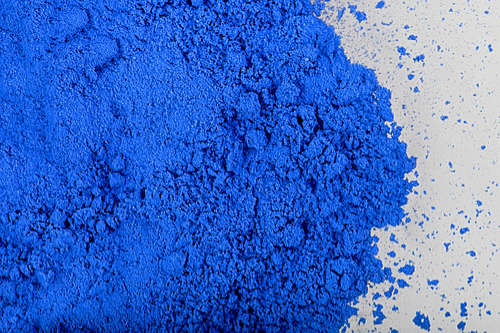
The term “ultramarine” literally means “beyond the sea,” referring to the fact that the raw material had to be imported from Asia via maritime trade routes.
Because of its cost and rarity, ultramarine was often reserved for depicting the Virgin Mary’s robes in religious paintings. Artists such as Jan van Eyck and Michelangelo utilized this pigment in their masterworks.
This artistic application elevated lapis lazuli’s reputation beyond mere ornamentation to a material of immense economic value.
Trade Routes and Cultural Exchange
The movement of lapis lazuli supported significant cultural exchange along the Silk Road.
Merchants transported the stone from Afghanistan through Persia and into Europe, where it was traded for silver, textiles, and other goods.
The etymology of the name reflects this journey; “lapis lazuli” derives from the Latin lapis (stone) and lazulum, which itself comes from the Arabic lāzaward and Persian lāzhward.
Modern Sourcing and Treatments
In Tibetan Buddhism, lapis lazuli has been used for centuries in religious art and jewelry.
It’s often associated with truth and compassion. Statues of deities are frequently adorned with lapis beads or inlays, signifying spiritual purity.
Today, the lapis lazuli mining landscape is complex. The primary source remains Afghanistan, though political instability has periodically disrupted supply chains.
Chilean lapis is also commercially available; it typically exhibits a lighter blue color and often contains more calcite than Afghan specimens.
It is important for buyers to understand that many lapis stones on the market have undergone treatment. Common practices include:
- Dyeing: To enhance or even out the blue color.
- Stabilization: Resin may be injected into cracks to improve durability and appearance.
- Waxing: A surface coating is sometimes applied to increase luster.
Reputable jewelers disclose these treatments because they affect the stone’s value and longevity. Natural, untreated lapis with minimal calcite and vibrant blue color remains the most sought-after variety for high-end jewelry.
Care and Maintenance
Lapis lazuli is a relatively soft gemstone compared to diamonds or sapphires, ranking approximately 5 to 5.5 on the Mohs scale of hardness. It is also porous, meaning it can absorb oils and chemicals.
Things to consider to maintain its appearance:
- Avoid exposure to harsh chemicals, including household cleaners and perfumes.
- Clean with a soft, damp cloth rather than ultrasonic cleaners or steamers.
- Store separately from harder gemstones to prevent scratching.
In Short
The history and meaning of lapis lazuli stone jewelry indicate its enduring value across centuries.
From the burial masks of pharaohs to the robes of Renaissance paintings and contemporary artisan jewelry, this lapis has consistently symbolized luxury, spirituality, and artistic excellence.
For modern collectors and designers, lapis lazuli offers a tangible connection to ancient trade routes and cultural traditions while providing a unique aesthetic that stands apart from other blue gemstones, including sapphire and tanzanite.
Understanding the geological reality and historical context of lapis lazuli allows for an appreciation of its true worth, ensuring that it is valued not just as a decorative element but as a piece of Earth’s physical history.
Spectacular
Lapis Lazuli Gemstones
Discover the incredible beauty of handcrafted Lapis Lazuli Gemstone Jewelry