


Amethyst Cluster Decor: What It Is and How to Use It
The Edit
- Amethyst cluster decor features naturally formed purple quartz growths used as calming sculptural elements in homes. Its open, outward-growing structure provides a distinctive visual and emotional contrast to polished stones, making it versatile and lasting. Placement and style choices enhance its grounding qualities, fostering a serene environment across various interior styles.
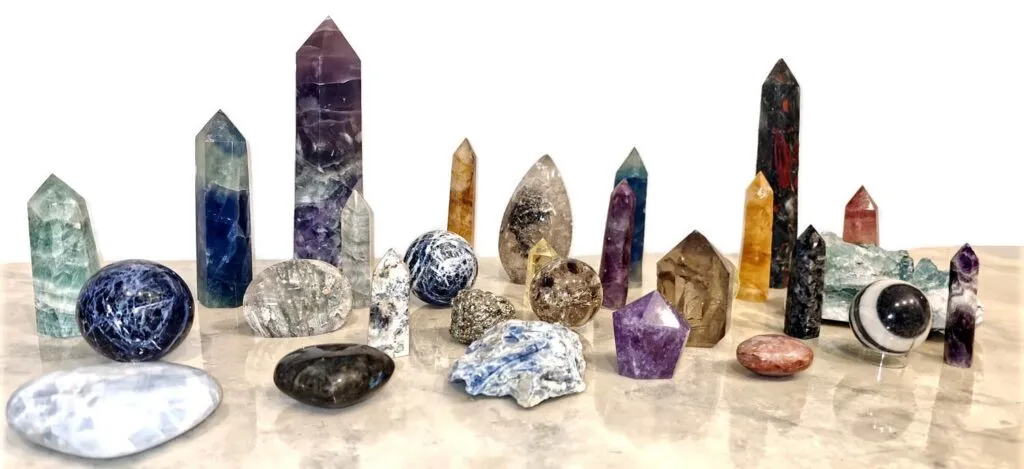
Amethyst cluster decor is a naturally formed grouping of purple quartz crystals that grows outward from a shared mineral base, used as a sculptural and calming element in home interiors.
Unlike polished gemstones or mass-produced decorative objects, an amethyst cluster is entirely unaltered by human hands beyond extraction and cleaning. Clusters range from small 2–3 lb specimens suited for a bedside table to large floor-display pieces exceeding 75 lbs. That size range makes amethyst cluster home decor one of the most adaptable natural materials in contemporary interior design.
What is amethyst cluster decor, and how does it differ from other crystal decor?
Amethyst clusters are architecturally distinct from other crystal decor because of their open, outward-growing structure. A geode hides its crystals inside a hollow cavity. A cluster exposes them fully, presenting every faceted point to the room. That difference changes how light interacts with the piece and how it reads from across a space.
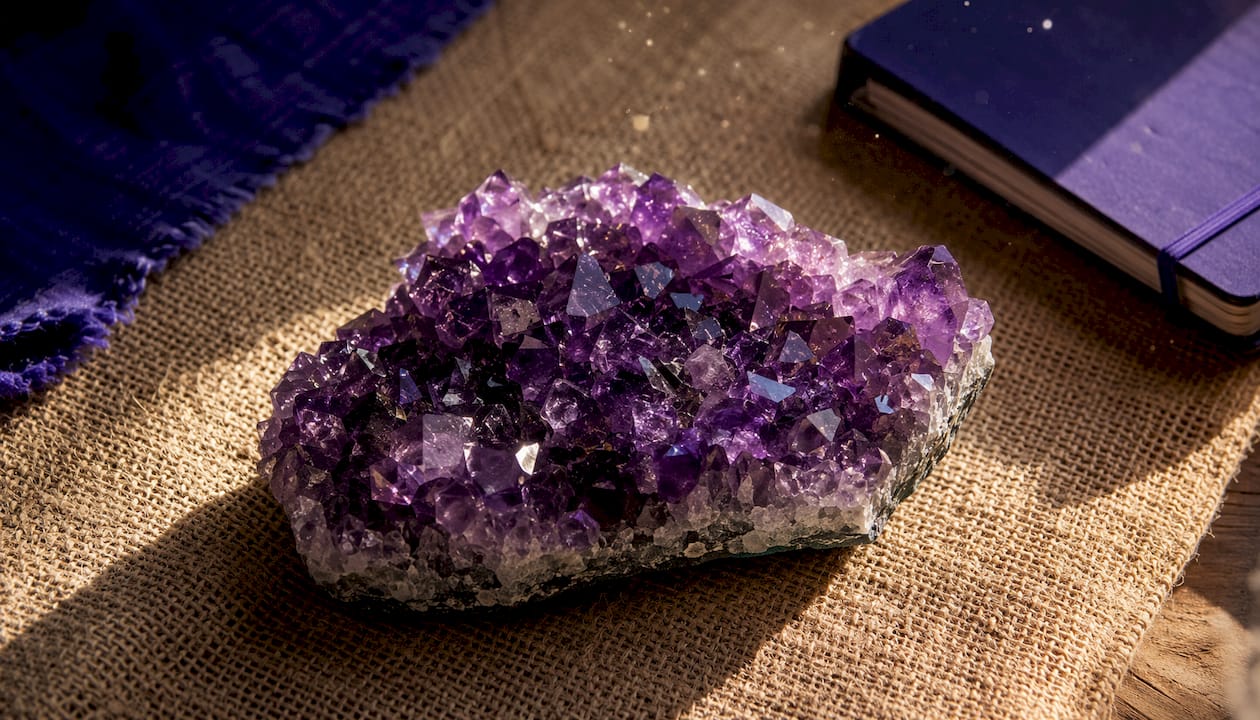
The tension between rough exterior and luminous interior is what gives clusters their emotional authority. The outer surface is raw, gray, and mineral. The inner crystal points are violet, translucent, and geometrically precise. Designers treat that contrast as the core visual differentiator from typical home decor objects. No painted vase or ceramic sculpture produces the same effect.
Color saturation and crystal clarity define the visual impact of any individual piece. AAA-grade Uruguayan amethyst is considered the benchmark for deep violet hue and crystal transparency.
Museum-quality specimens from this origin are now treated as luxury design assets with collector value, partly because Uruguayan deposits are depleting. That scarcity makes a well-chosen cluster more than decor. It’s a long-term investment in natural beauty.
Pro Tip: When comparing clusters in person or online, look at the crystal tips rather than the base. Sharp, undamaged points with consistent violet saturation indicate a higher-quality specimen.
Polished stones and tumbled crystals read as accessories. An amethyst cluster reads as an object with presence, closer in spirit to a piece of sculpture than to a decorative accent. For anyone interested in gemstone cluster jewelry and home decor, understanding this distinction shapes every purchase decision.
What are the benefits of using amethyst clusters as home decor?
The primary benefit of amethyst cluster decor is its dual function. It delivers visual weight and sculptural interest while also contributing a calming, grounding quality to the spaces it occupies. That combination is rare in home decor objects.
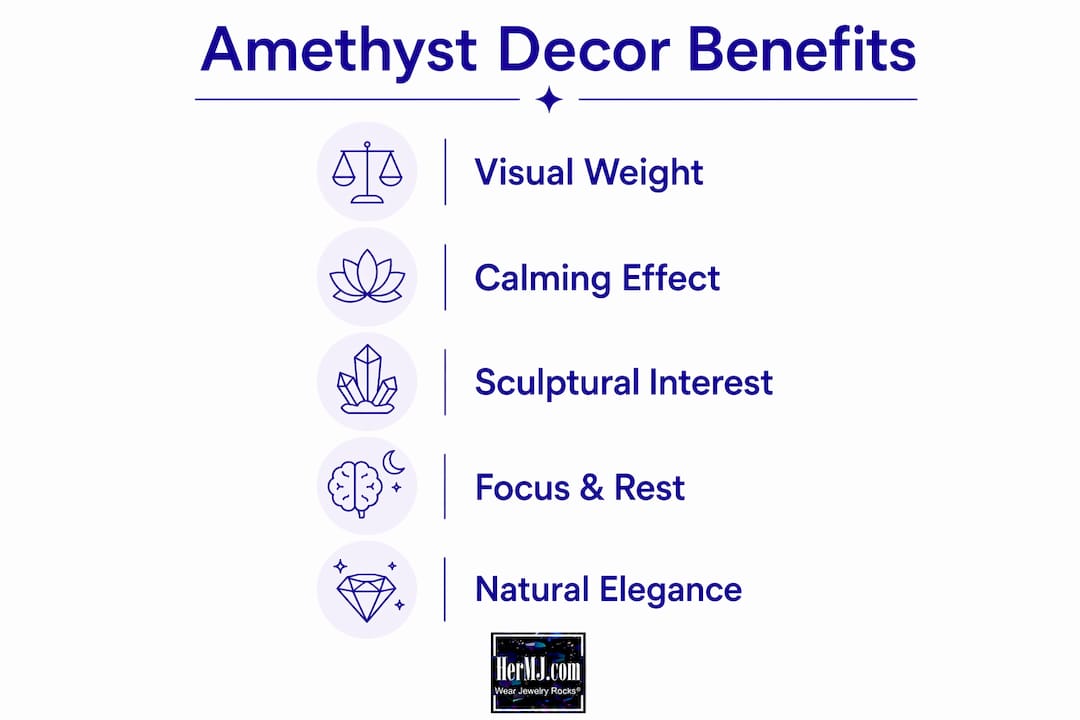
Amethyst quiets the environment rather than energizes it, reducing cognitive tension over time with consistent placement. This makes it particularly well suited to bedrooms, home offices, and meditation corners where mental clarity matters.
The effect is subtle and cumulative, not immediate. Think of it less like a mood switch and more like the influence of a well-chosen paint color.
The color itself is a practical design asset. Purple sits between warm and cool on the spectrum, which means it harmonizes with neutral palettes, warm wood tones, and natural linen textures without competing.
A cluster placed against a white wall or on a walnut shelf reads as intentional and grounded, not decorative for decoration’s sake.
Amethyst clusters also outlast trends. Unlike seasonal textiles or trend-driven ceramics, a quality cluster doesn’t age out of style. Its form is fixed by geology, not fashion.
You can carry the same piece through a Scandinavian-minimal phase, a warmer maximalist period, and back again without it ever feeling out of place.
- Calming presence: Consistent placement in restful areas like bedrooms and offices reduces ambient cognitive tension over time.
- Natural focal point: The cluster’s sculptural form draws the eye without competing with furniture or art.
- Color versatility: Purple harmonizes with neutrals, wood, and natural textures across seasons and decor styles.
- Longevity: A quality cluster doesn’t date. It adapts to changing interiors without replacement.
- Dual function: One object serves as both a sculptural statement and a source of grounding energy.
Pro Tip: Place your cluster in a room you use daily for focused work or rest. The calming effect compounds with consistent exposure, not occasional display.
How do you select and place amethyst clusters in your home?
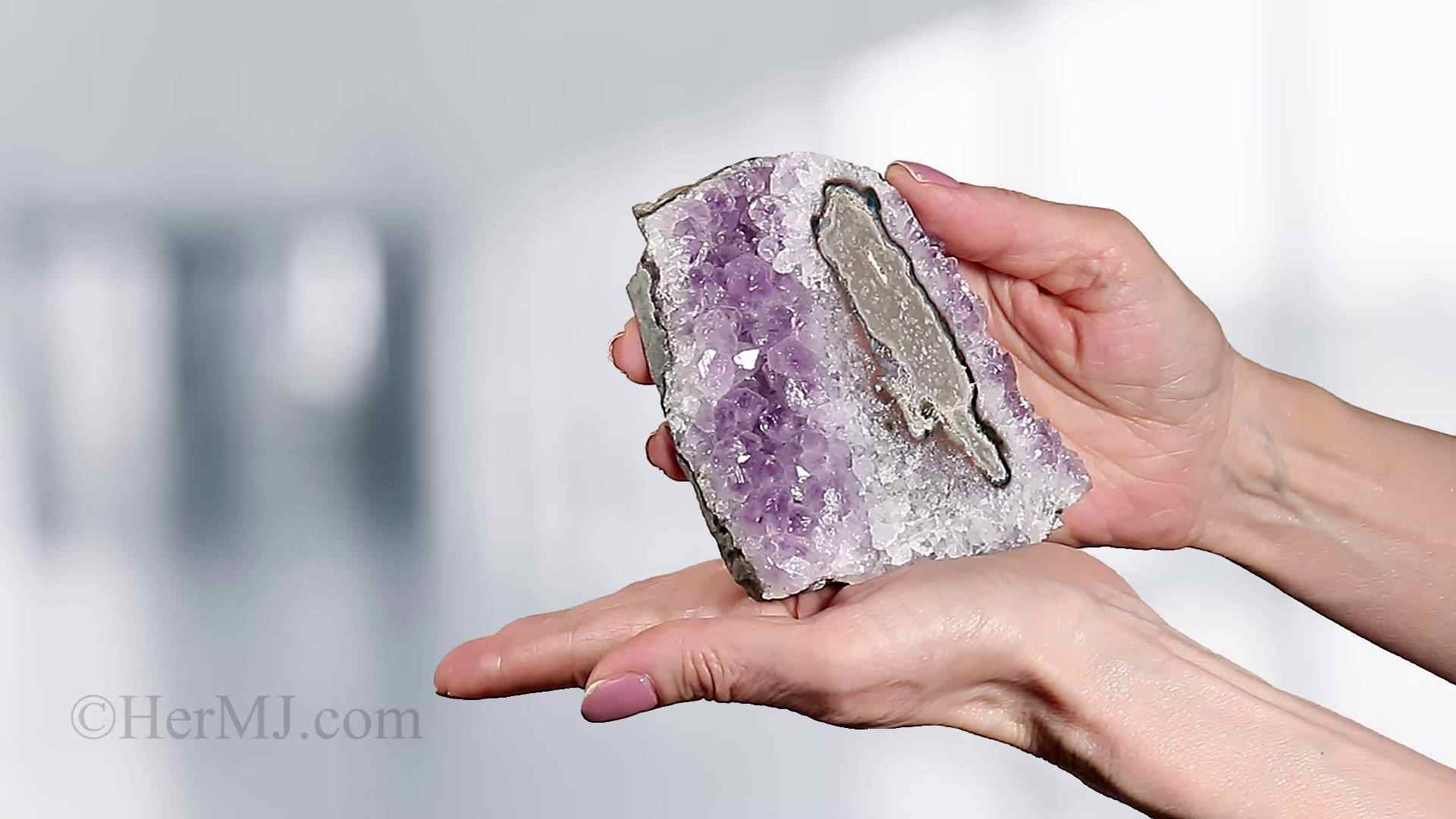
Selecting the right cluster starts with scale. Weight is a more reliable guide than height because hand-size clusters of 2–3 lbs work well on desks and nightstands, while large specimens of 10 lbs or more function as statement floor pieces. A cluster that’s too small for its surface disappears. One that’s too large overwhelms the furniture beneath it.
Placement determines how much of the cluster’s calming quality you actually experience. The most effective position is slightly outside your direct line of sight, not centered in front of you but present in your peripheral field. That placement provides the grounding effect without pulling focus away from your work or rest.
Here are four placement approaches that consistently work well:
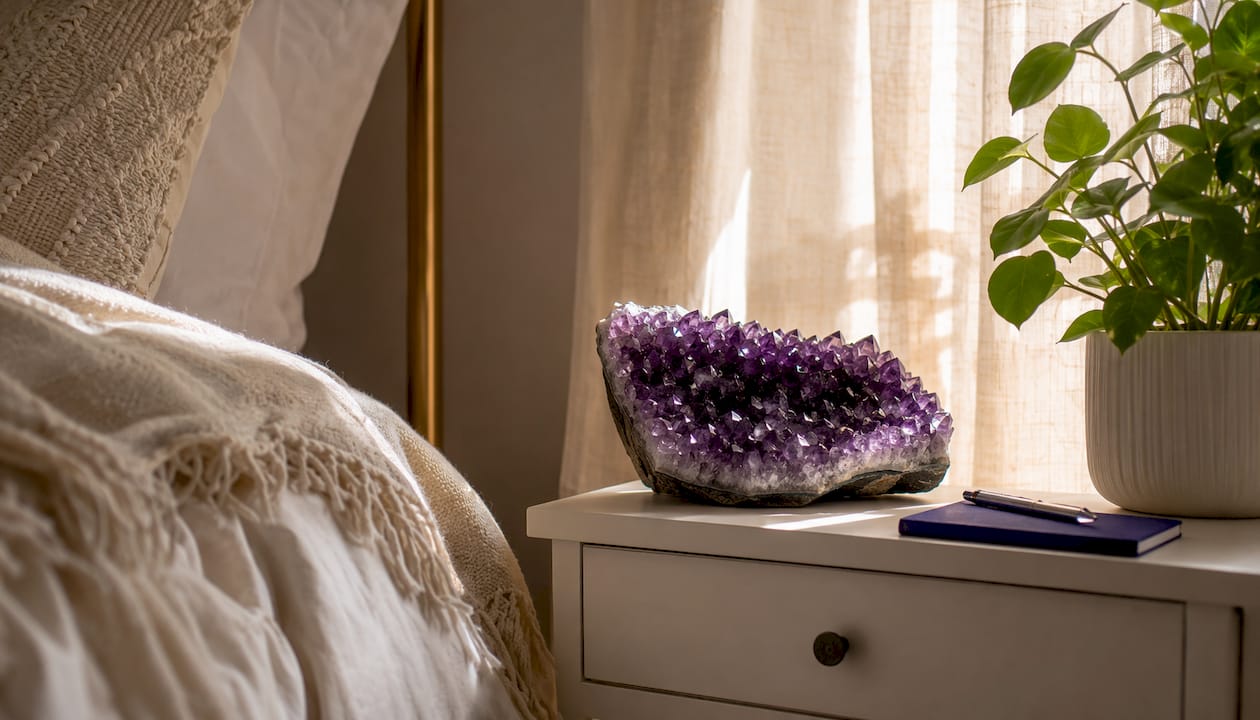
- Bedroom nightstand: A 2–3 lb cluster on a nightstand brings the calming purple tone into your resting environment without dominating the surface. Keep the nightstand otherwise clear so the cluster has room to breathe.
- Desk periphery: Position a small to medium cluster at the back corner of your desk, just outside your primary sightline. Natural light enhances crystal depth, so a desk near a window is ideal.
- Living room console or shelf: A medium cluster on a console table or open shelf acts as a natural anchor for the surrounding objects. Pair it with one or two complementary items and leave the rest of the surface open.
- Floor display: Large clusters of 10 lbs or more work as floor-level focal points beside a sofa or in a reading corner. Reinforce the furniture or surface beneath them before placement.
Lighting is the variable most decorators underestimate. Direct natural light brings out the internal violet depth of the crystal points in a way that artificial light rarely replicates.
If natural light isn’t available, a warm-toned spotlight positioned above and slightly behind the cluster creates a similar effect.
Negative space is the other critical factor. Avoid overcrowding the area around a cluster with competing objects. The sculptural form needs room to register. One cluster with two or three carefully chosen companions reads as intentional. Five objects on the same surface read as clutter.
How do you style amethyst clusters with other materials and across seasons?
Amethyst clusters pair best with natural, tactile materials that contrast their crystalline surface without competing for attention.
Wood, linen, and unglazed ceramic are the three most reliable companions. A cluster on a raw oak tray, beside a linen-covered book and against a matte ceramic vase, creates a composition that feels grounded and considered.
The color palette around your cluster matters as much as the materials. Warm whites, oatmeal, charcoal, and dusty sage all let the purple read clearly. Avoid placing clusters against busy patterns or saturated competing colors. The crystal’s violet tone is specific enough that it needs a quiet background to register properly.
Seasonal styling doesn’t require buying new pieces. Repositioning one versatile amethyst cluster to harmonize with changing decor is far more effective than swapping pieces in and out.
In winter, surround the cluster with heavy linen, candles, and dark wood for a warm, grounded composition.
In spring, move it to a lighter surface and pair it with dried botanicals or pale ceramic. The cluster itself doesn’t change. The context around it does.
A few styling mistakes consistently undermine the effect of even a beautiful cluster:
- Placing it in a high-traffic entryway where protective stones are traditionally preferred and where foot traffic creates visual noise.
- Surrounding it with too many objects of similar visual weight, which flattens the composition.
- Choosing a cluster that’s too small for the surface makes it read as an afterthought rather than a considered choice.
- Ignoring the base. A cluster on a raw wood slice or a simple stone slab looks intentional. A cluster directly on a glass shelf looks like it hasn’t found its home yet.
For readers who want to extend the crystal aesthetic beyond the home, gemstone jewelry for every season offers a natural bridge between interior styling and personal adornment.
Key Takeaways
Amethyst cluster decor works because its open crystal structure, natural color, and sculptural weight give it a presence that polished stones and manufactured objects can’t replicate.
| Point | Details |
|---|---|
| Definition matters | An amethyst cluster is an unaltered mineral formation, not a polished or shaped stone. |
| Scale drives impact | Match cluster weight to surface size; 2–3 lbs for desks, 10+ lbs for floor displays. |
| Placement is peripheral | Position clusters slightly outside your direct sightline for maximum calming effect. |
| Negative space is required | Leave room around the cluster so its sculptural form can register clearly. |
| Seasonal styling is repositioning | Move one quality piece to suit seasonal decor rather than buying new pieces each time. |
What living with amethyst clusters has taught me
I’ve kept a medium amethyst cluster on the corner of my work desk for several years now. What surprised me wasn’t the immediate visual effect. It was how the room’s cognitive tempo shifted over weeks of consistent presence.
The cluster doesn’t announce itself. It settles into the space and quietly changes how the room feels to work in.
The piece I chose isn’t the most dramatic specimen I’ve seen. It’s not the largest or the deepest violet. But it resonated with me the moment I saw it, and that personal connection has made it a fixture rather than a phase.
I think that’s the real selection criterion most guides skip. Technical quality matters, but a cluster you feel drawn to will stay in your home far longer than one you choose on specification alone.
My practical advice: resist the urge to style the cluster immediately. Place it somewhere with good natural light and live with it for a week before deciding on its permanent home. The right position usually reveals itself through daily use, not through planning.
Amethyst sits at an interesting intersection of raw nature and refined interior design. It doesn’t ask to be the center of attention. It earns its place quietly, and that’s exactly what makes it worth choosing. You can also explore amethyst crystal decor options that bring this same quality into a curated home setting.
— Veronique
HerMJ’s amethyst pieces for home and personal style
HerMJ brings the same care it applies to artisan jewelry to its selection of amethyst pieces designed for home styling and personal wear. Whether you’re building a crystal-centered corner in your bedroom or looking for a piece that carries the aesthetic beyond your walls, HerMJ’s collection offers quality and craftsmanship at accessible prices.
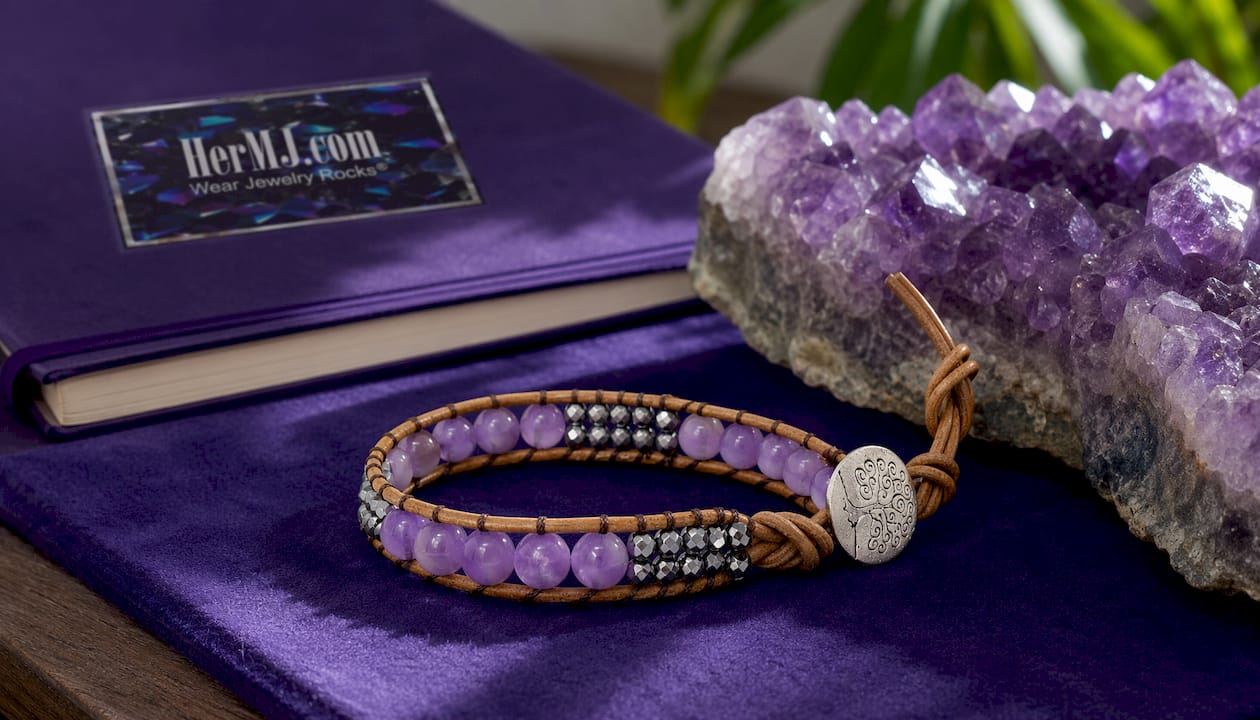
The Amethyst Stone Bracelet from HerMJ is a natural companion to cluster decor, letting you carry the grounding quality of amethyst with you through the day. Each piece is handmade from genuine gemstones, with the same attention to color and form that makes a well-chosen cluster so compelling.
US orders ship free with no minimum, and international orders ship free on orders of $150 or more.
FAQ
What are amethyst clusters made of?
Amethyst clusters are natural formations of purple quartz crystals growing outward from a shared mineral base. They’re unpolished and unaltered beyond cleaning, which is what gives them their raw, sculptural quality.
Where is the best place to put an amethyst cluster at home?
Bedrooms, home offices, and living room shelves are the most effective places. Position the cluster slightly outside your direct line of sight for a calming effect without distraction.
How big should an amethyst cluster be for a desk or nightstand?
A 2–3 lb cluster is the right scale for a desk or nightstand. Larger specimens of 10 lbs or more work better as floor-level statement pieces beside furniture.
Do amethyst clusters need special care?
Keep clusters away from prolonged direct sunlight, which can fade the violet color over time. Gently dust them with a soft brush and avoid harsh cleaning products on the crystal surface.
Can amethyst cluster decor work in modern interiors?
Amethyst clusters work across most interior styles because their natural color and form complement neutral palettes, wood tones, and natural textures. The key is to pair with natural materials and leave negative space around the piece.
Recommended
- What Is Gemstone Cluster Jewelry: Style Guide 2026
- Types of Crystals for Home Decor: Your Style Guide
- Room Jewelry – Lavender Amethyst Stalactite ✺ HerMJ
- Why Gemstones Are The Rage In Interior Decorating