


Jasper Meaning: Why the Name and the Stone Are Unrelated
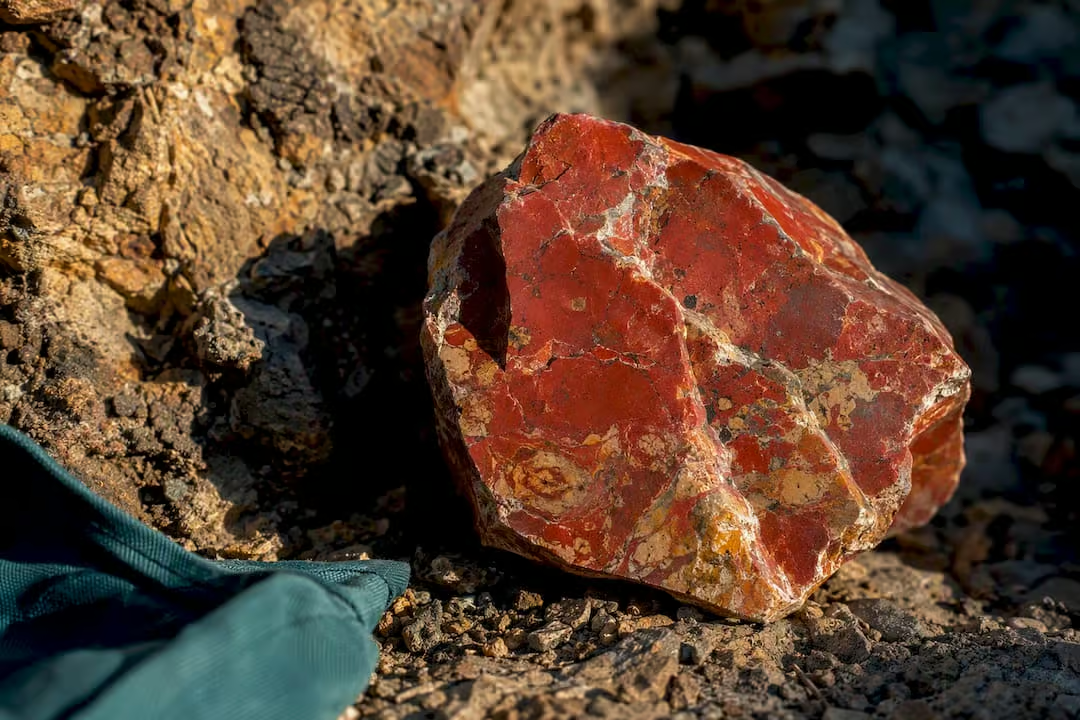
Jasper is an opaque, microcrystalline quartz prized as a gemstone for its earthy colors and patterns, formed largely through silicification.
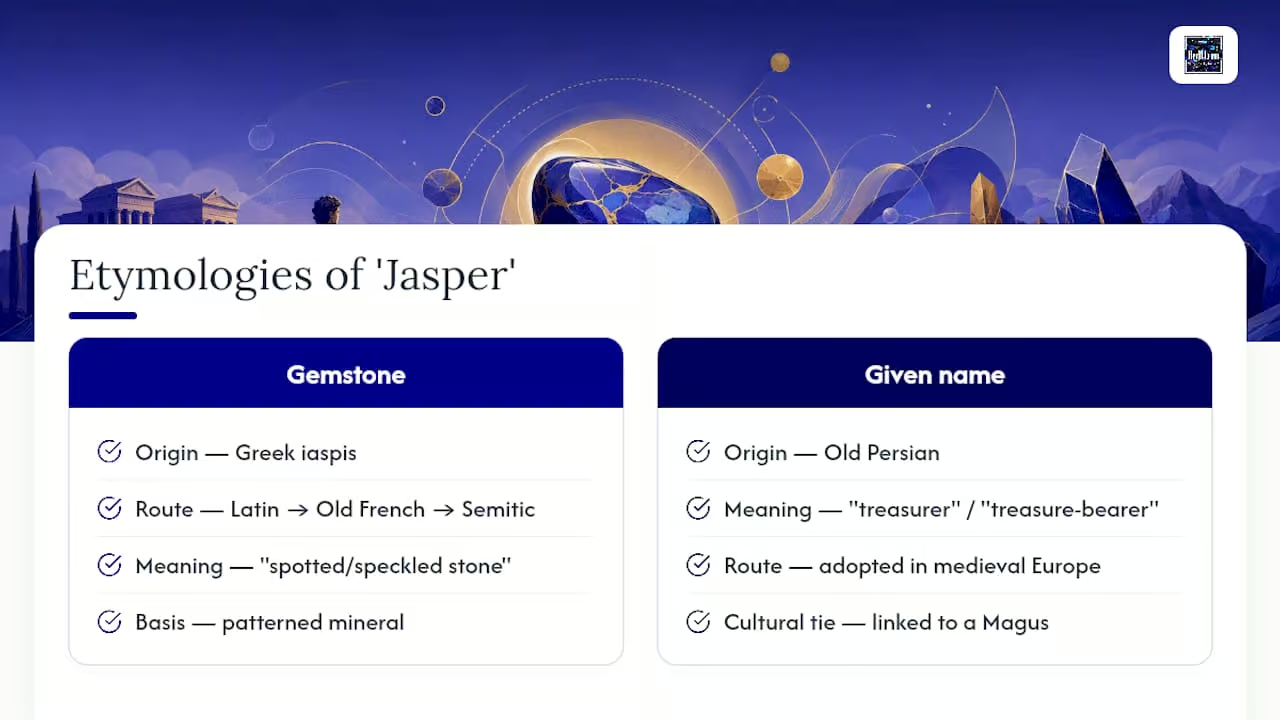
The given name Jasper comes from an unrelated Old Persian root meaning “treasurer,” later linked to one of the Magi in medieval tradition. Both meanings share a spelling, but nothing else, and understanding each on its own terms is the fastest way to grasp what “jasper” actually stands for.
TL;DR:
- Most jasper pieces are durable enough for daily wear, with a hardness of roughly 6.5 to 7 on the Mohs scale, and it can be polished to a long-lasting finish.
- Genuine jasper typically displays irregular patterns and natural variations, making uniform saturation or overly perfect appearances suspicious of dyeing or artificial treatment.
- The name jasper is derived from Greek and Latin roots describing a spotted stone, unrelated to the Old Persian given name meaning “treasurer” or “bearer of treasure.”
- Historically, jasper has symbolized protection, grounding, and strength, especially in red varieties linked to vitality, but modern spiritual claims are beliefs rather than verified properties.
- Jewelry crafted from jasper are mainly cabochons, beads, or carved pieces, requiring gentle cleaning with mild soap and avoiding prolonged exposure to sunlight or extreme heat to preserve color and pattern.
What Is Jasper, Geologically Speaking?
Jasper belongs to the chalcedony family, a group of quartz varieties too fine grained to show individual crystals to the naked eye. What separates jasper from its cousin agate is opacity: agate lets light pass through in bands, while jasper stays solid and opaque all the way through, according to Wikipedia’s entry on the mineral.
That opacity comes from how the stone forms. Silica rich fluids replace organic or sedimentary material over long stretches of time, a process called silicification, and later mineral diffusion adds the swirls, bands, and dendritic patterns collectors chase. Iron oxides are usually responsible for jasper’s reddish and brownish tones.
A few numbers matter if you’re evaluating a piece:
- Hardness: roughly 6.5 to 7 on the Mohs scale, tough enough for daily wear.
- Density: jasper typically has a density in the range expected for microcrystalline quartz, depending on mineral content.
- Structure: microcrystalline quartz, meaning it takes an excellent polish despite its opacity.
I always tell customers this is why jasper feels substantial in the hand. It’s not fragile like some softer gem materials, and it holds a cabochon polish beautifully for years.
Jasper Colors and Named Varieties Worth Knowing
Color in jasper comes down to what got trapped in the silica as it formed. Iron oxides push toward red, brown, and yellow. Clay minerals mute things toward gray and olive green. Manganese and other trace elements occasionally add purples or blacks.
Trade names for jasper often describe what you see rather than a strict mineral classification, and that’s worth knowing before you shop:
- Bloodstone: dark green with red iron oxide flecks, historically tied to protection.
- Picture jasper: brown and tan bands that resemble desert landscapes.
- Leopard skin jasper: rosette patterns that echo big cat markings.
- Picasso jasper: cream and black abstract patterning, named for its resemblance to modern art.
- Mookaite: a colorful Australian variety with reds, yellows, and creams in swirling patterns.
Some of these, like mookaite, are strongly associated with a single source region, while others such as bloodstone are more commonly sourced from India, per the Gem Society’s overview of jasper. If a piece looks suspiciously uniform or unusually saturated, ask whether it’s been dyed. Genuine jasper almost always shows some irregularity in its pattern, since nature rarely repeats itself exactly.
Where the Word ‘Jasper’ Actually Comes From
The gemstone’s name and the personal name Jasper share nothing but spelling, and that surprises a lot of people who assume one grew out of the other.
The mineral name traveled a long linguistic road: from Greek iaspis, through Latin, into Old French, and ultimately back to Semitic roots meaning “spotted or speckled stone,” a fitting description for a material defined by its patterns, according to Wikipedia.
The given name follows an entirely separate path. It descends from Old Persian and means “treasurer” or “bearer of treasure.”
Medieval European tradition later attached the name to one of the biblical Magi, the wise men who brought gifts to the infant Jesus, though the name itself never appears in scripture, as noted in Wikipedia’s entry on the given name.
That medieval association is likely why Jasper still carries a faint air of gift giving and generosity today, even though the etymology has nothing to do with gemstones or treasure chests in any literal sense.
What Jasper Has Symbolized Across History
Jasper shows up in some of the oldest artifacts we have. Ancient Egyptian and Mesopotamian artisans carved it into seals and amulets, and its use stretches back thousands of years across cultures that had no contact with one another, a pattern documented by GemFYI’s research on jasper’s history.
Native American traditions in parts of North America also worked jasper into tools and ornamental pieces, valuing its durability as much as its appearance.
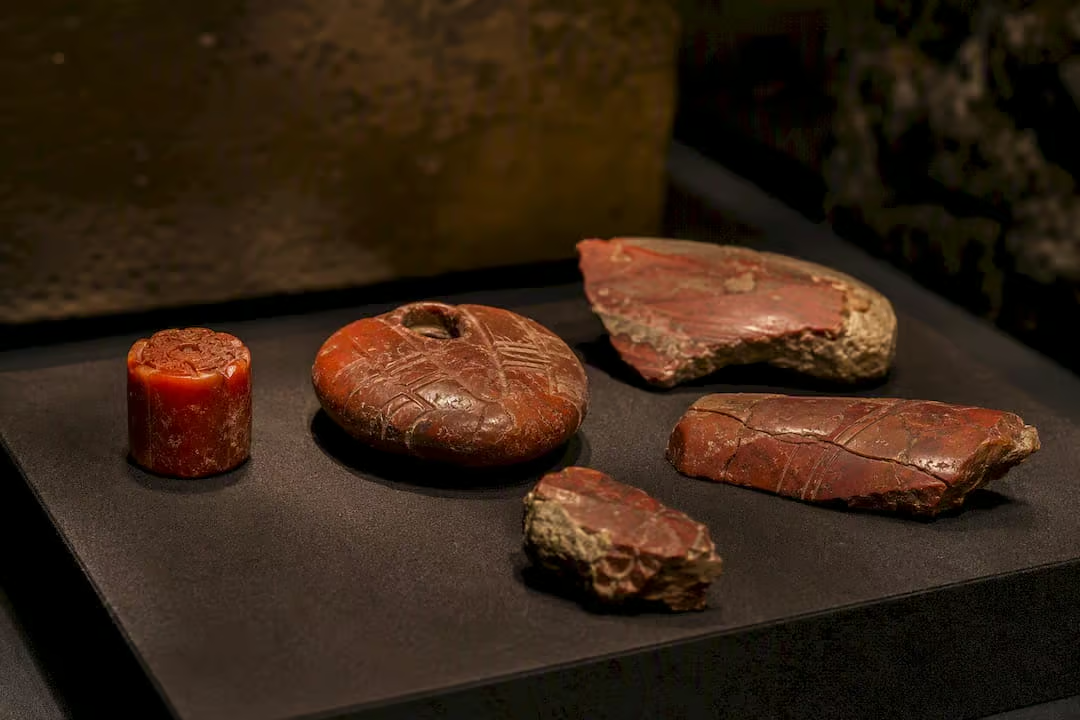
Across that long history, a few symbolic threads repeat: protection, grounding, courage, and safe travel. Red varieties in particular tend to get linked to vitality and strength, likely because the color itself reads as bold and alive.
Contemporary crystal-practice communities describe jasper as grounding, protective, and nurturing, a framing that echoes historical uses but isn’t the same as a scientifically verified property, according to the Crystal Almanac’s entry on jasper. It’s worth separating the two: documented history tells us people carried jasper for protection and status for millennia. Modern spiritual claims build on that legacy but represent belief and practice, not settled fact.
Wearing and Caring for Jasper Jewelry
Because jasper is opaque, lapidaries almost never facet it. Cabochons, beads, and carved pendants let the pattern do the talking, which is exactly why you’ll find jasper worked into so much artisan jewelry rather than cut into sharp geometric facets like a sapphire or topaz.
Care is straightforward if you keep a few habits in mind:
- Clean with a soft cloth and mild soap, never harsh chemicals or ultrasonic cleaners.
- Keep dyed jasper away from prolonged sun exposure and extreme heat, since color can fade or shift.
- Store pieces separately to prevent scratching against harder stones or metal clasps.
- Remove jewelry before swimming, cleaning, or heavy manual work.
For a deeper look at aftercare across gemstone types, HerMJ’s gemstone jewelry care guide walks through the basics piece by piece.
Jasper as a Given Name: Meaning and Popularity
The name Jasper means “treasurer,” and it sits in the same family as Caspar, Kasper, and Jesper, all variations on that same Persian root passed down through different European languages, per Wikipedia’s entry on the given name.
In the United States, Jasper has moved from an old-fashioned, almost forgotten name into something parents are picking again, part of a broader trend toward vintage names with texture and history. If you want current standing, the Social Security Administration publishes yearly rankings that track the name’s direction rather than static popularity, and Jasper has been climbing over the past decade.
Common nicknames include Jazz and Jas. For sibling names, parents often reach for other nature-adjacent or vintage picks like Hazel, Wren, or Silas to match Jasper’s earthy, old-soul feel.
Does Jasper Appear in the Bible?
The stone jasper appears in scripture, most notably in the Book of Revelation’s description of the New Jerusalem’s walls and foundations, a reference GemFYI traces back to some of the earliest gem symbolism in Western tradition.
The name Jasper, however, doesn’t appear in the Bible at all. Its link to one of the Magi is a medieval invention, added centuries after the biblical text was written.
An Artisan’s View on Working With Jasper
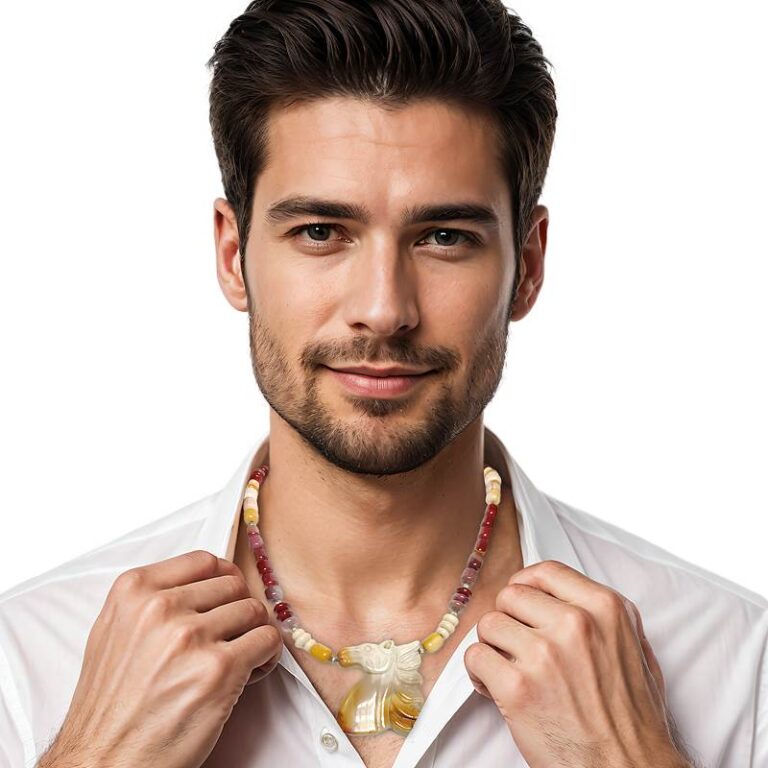
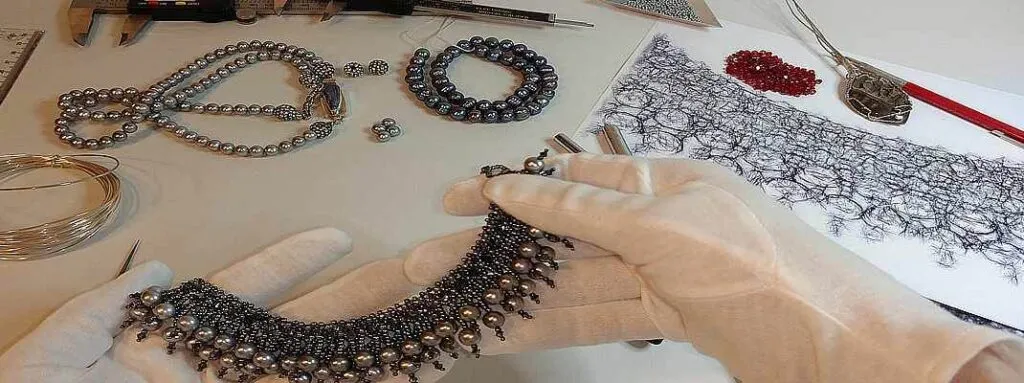
Every piece of jasper I’ve worked with tells a slightly different story, and that’s the whole appeal for me. No two slabs cut the same way, so a Jasper Copper Necklace or a Colorful Sea Sediment Jasper Bracelet ends up one of a kind almost by accident.
I gravitate toward jasper for gift pieces because the name meaning does half the work. A “treasurer” stone for someone you treasure isn’t subtle, but it lands every time. Pair it with warm metals like copper or brass for the best contrast against jasper’s earthy palette, and consider layering pieces the way HerMJ’s seasonal styling guide recommends. US orders ship free with no minimum.
— Veronique
Find Your Own Jasper Piece at HerMJ
Jewelry made from genuine freshwater pearls, natural gemstones, and jasper is available, so if this guide has you wanting to wear the stone rather than just read about it, you’re in the right place. Pieces are crafted rather than mass produced, which means the pattern in your Botswana Red Jasper Necklace won’t repeat on anyone else’s wrist or neck.
If pearls are more your style, or you want to pair jasper’s earthy tones with something brighter, the Modern Drop Pearl Earrings offer that contrast in a single set. US orders ship free with no minimum, and international orders ship free for orders of $150 and above. Browse the current jasper and pearl collections and pick the piece whose story matches the one you want to tell.