


Akoya vs Freshwater Pearls: How to Choose Yours
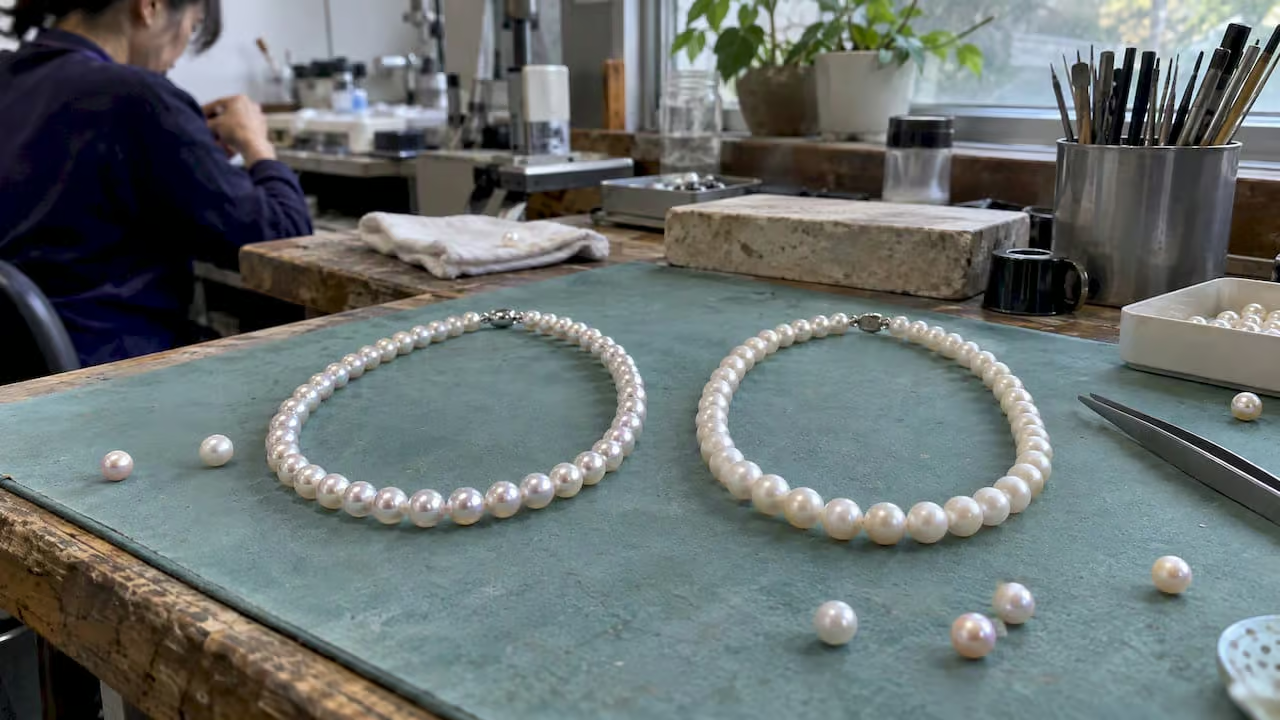
Akoya pearls are saltwater cultured pearls, prized for a crisp, mirror-like luster and a classic white or cream look.
Freshwater pearls grow in lakes and ponds, come in many more colors and shapes, and cost less for the same size. Neither is “better.”
The right one depends on the look you love, your budget, and how you plan to wear them.
I’ve spent years around both, and I’m happy to walk you through the differences in plain language. By the end, you’ll know what to look for, which labels to question, and which pearl suits your life.
TL;DR
- Akoya pearls come from saltwater oysters and are known for sharp, mirror-like luster in white and cream, usually in a narrow size range.
- Freshwater pearls come from freshwater mussels, offering a wider palette (pink, peach, lavender), more shapes, and generally a lower price.
- Terms like “freshwater akoya” and “Chinese akoya” are misleading trade names, and the GIA warns shoppers about them.
- Choose Akoya for uniform, traditional elegance. Choose freshwater for color, character and value.
- Whichever you pick, look at nacre quality, not just surface shine.
What Akoya and Freshwater Pearls Actually Are
Both are cultured pearls, meaning people help the process along while the animal does the real work. The difference starts with the animal and the water.
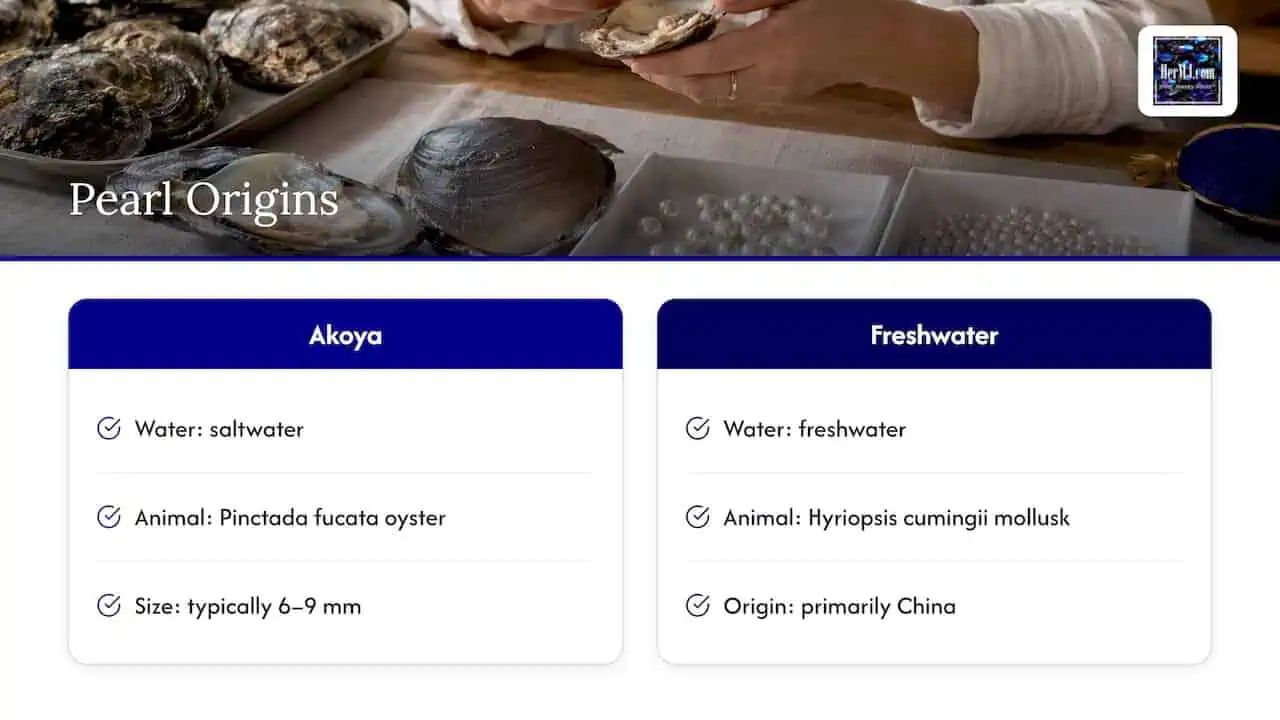
According to the GIA, Akoya pearls are saltwater cultured pearls from the Pinctada fucata oyster. They typically measure 6-9 mm. Freshwater cultured pearls, primarily from China, come from the Hyriopsis cumingii mollusk.
The GIA’s overview of pearl types explains that different mollusks in freshwater and saltwater environments produce pearls that vary in size, color, luster, and value.
That origin matters more than most shoppers realize. A pearl’s identity is rooted in its environment, its mollusk and its place of origin, not in how it looks under a jewelry-case light.
For a broader tour of the family, my visual guide to different types of pearls covers South Sea and Tahitian pearls, and my piece on freshwater versus saltwater pearls goes deeper into the water itself.
Luster: The Mirror Versus the Soft Glow
Luster is the first thing people notice, and it’s where Akoya earns its reputation. Cooler water slows the oyster down, so nacre (the layered, iridescent material that coats a pearl) builds up slowly and finely.
The GIA describes saltwater Akoya as small but bright, with a famed white-to-cream look. The result is that crisp, mirror-like reflection you can almost see your face in.
Freshwater pearls can glow beautifully too, with a softer, satiny shine. Modern culturing has narrowed the gap, and well-grown freshwater strands can rival the look of classic saltwater ones.
That’s good news if you love the look but not the price.
My advice: judge luster in natural daylight, near a window, and compare strands side by side if you can. Sharp reflections of a window frame mean high luster. A chalky, dull surface means thin nacre, whatever the pearl’s origin.
Color, Shape and Size
Here the two types diverge most.
Akoya pearls are the traditionalists. Expect white and cream, sometimes with a rosé or silver overtone, in sizes that rarely stray from that 6 to 9 mm window. They’re often round, which is part of their uniform, polished elegance.
Freshwater pearls are the free spirits. Per the GIA, they offer a significantly broader range of sizes and colors, including pink, peach, and lavender, plus shapes from round to oval, button, drop, and baroque. Those organic shapes aren’t flaws. They’re the signature of a living gem.
| Feature | Akoya | Freshwater |
|---|---|---|
| Water | Saltwater | Lakes and ponds |
| Mollusk | Pinctada fucata oyster | Hyriopsis cumingii mollusk |
| Typical size | 6 to 9 mm | Much wider range |
| Color | White and cream, with subtle overtones | White, pink, peach, lavender and more |
| Shape | Mostly round | Round to baroque |
| Luster | Sharp, mirror-like | Satiny to bright, varies by quality |
| Price at similar size and quality | Generally higher | Generally lower |
Why Akoya Costs More
The price gap isn’t marketing. As the GIA explains, Akoya oysters typically produce one pearl at a time, while a single freshwater mollusk can produce many at once.
Higher culturing costs and greater rarity drive up Akoya prices for pearls of similar size and quality.
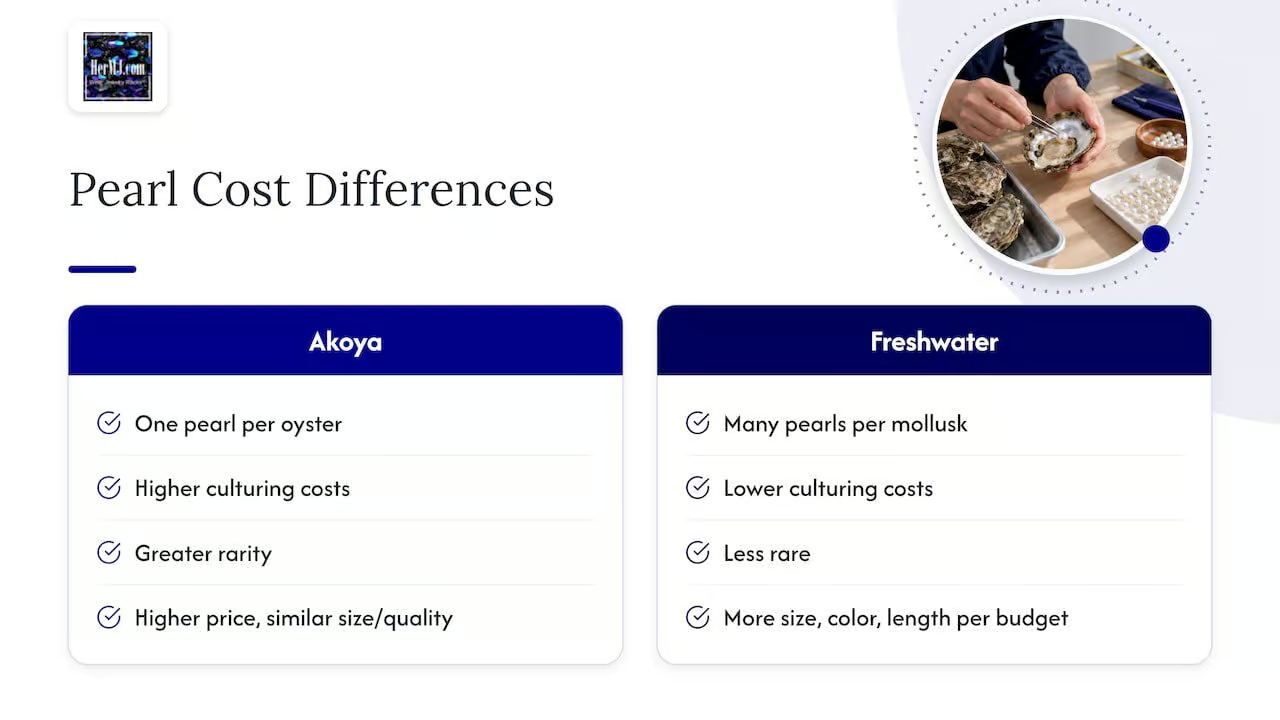
That’s why a freshwater strand often delivers more size, color, and length for the same money. If you’d like numbers for the U.S. market, my freshwater pearl price guide and pearl necklace cost breakdown show what different budgets actually buy.
For what drives quality and cost, see our guide to freshwater pearl value.
One caution: price alone doesn’t prove origin. A low price on something called Akoya should raise your eyebrows, which brings us to this category’s biggest trap.
The “Freshwater Akoya” Problem
You’ll see listings that say “freshwater akoya,” “Chinese akoya,” or “baby akoya.” These names are confusing on purpose, or at least by habit.
The GIA has warned that some sellers use such trade names for bead-nucleated freshwater pearls. These pearls are freshwater, not saltwater, and the terms aren’t official pearl classifications.
Why does it happen? Modern bead-nucleated freshwater pearls can be small, round, white, and bright, so they look a lot like Akoya.
A GIA lab note on small freshwater bead cultured pearls describes a strand of near-round pearls of about 5.45 mm that needed lab identification, which shows how close the resemblance can be.
Here’s what I’d do as a shopper:
- Read the listing for the water. A trustworthy description says “saltwater Akoya” or “freshwater,” plainly.
- Question vague names. If the word “akoya” appears next to “freshwater” or a country of origin, ask what the pearl really is.
- Inspect closely. The GIA notes that a small, flat, rounded spot on an otherwise spherical pearl can subtly indicate certain bead-nucleated freshwater pearls.
- Know the limits of your eyes. Appearance alone is unreliable. Labs use advanced methods, including X-ray fluorescence to check manganese levels, to separate the two for certain.
I’m not saying freshwater pearls that resemble Akoya are bad. Many are lovely. I’m saying you deserve to know what you’re buying, and a fair name makes that possible.
How to Tell Them Apart at Home
You can’t be certain without a lab, but a few habits help.
- Look at color range. Pink, peach, or lavender body color points to freshwater. White and cream are shared by both.
- Look at the strand. Perfectly matched, round pearls of 6-9 mm fit Akoya, but they also fit well-made freshwater strands.
- Look at the drill holes and surface. Flat spots, ridges, or tiny pits tell you something about growth. Smooth, mirror-bright surfaces suggest strong nacre.
- Ask for documentation. A seller who knows the pearl’s origin will tell you without hesitation.
If the pearls are a significant purchase, a gem lab report settles the question. For everyday jewelry, a clear, truthful listing is usually enough.
Which Should You Choose?
The GIA’s pearl guidance frames it well: there’s no single best pearl, only the best match for your aesthetic and intended use. Here’s how I’d translate that.
Choose Akoya if
- You want the classic, uniform strand for weddings, heirlooms or a traditional wardrobe.
- Mirror-sharp luster matters more than color or shape.
- You’re comfortable paying more for saltwater origin and rarity.
Choose freshwater if
- You love color, from soft blush to deep lavender, or you enjoy organic shapes.
- You want a longer strand, larger pearls, or more pieces for the same budget.
- You’ll wear your pearls often, mixing them with casual outfits, stacked bracelets, and drop earrings.
My Golden Rule is simple: pick the pearl that resonates with your style and makes you smile when you put it on. If you love it, you’ll wear it more and care for it better.
Our Perspective at HerMJ
We work with genuine freshwater pearls, natural gemstones and crystals, and we hand-make each piece. That’s a deliberate choice.
We believe beautiful, unique jewelry shouldn’t carry a price that keeps it out of reach, and freshwater pearls let us offer real craftsmanship at accessible pricing.
We also believe in plain labels. When we talk about freshwater pearls, we call them freshwater. We’d rather you fall in love with a pearl for what it is than buy a name that stretches the truth.
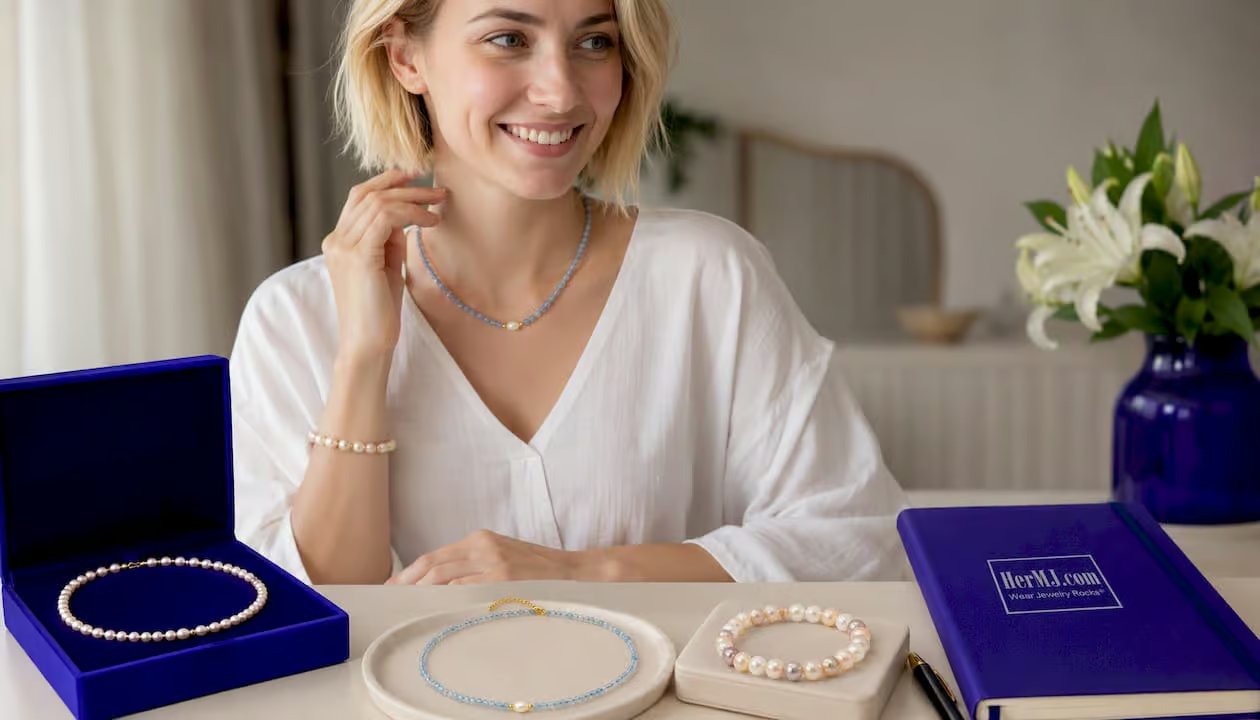
You can get a classic Akoya-style look in freshwater, and something far more personal: a blush strand paired with aquamarine, a baroque drop, a bracelet with a soft peach glow.
Many of our customers tell us they chose us for the quality and for the one-of-a-kind feel, and we take that seriously.
Pearls are living gems, and I treat them like fine art: with attention, patience, and a little reverence.
— Veronique
Shop Freshwater Pearl Jewelry at HerMJ
If freshwater sounds like your match, start with our necklaces for strands and pendants, or try the Elegant Freshwater Pearl Necklace for a timeless first piece.
For a lighter touch, the Lustrous Freshwater Pearl Bracelet is easy to wear daily, and the Pearl and Aquamarine Necklace pairs pearl glow with cool gemstone color.
You can also browse modern drop earrings or the full collection at https://www.HerMJ.com.
U.S. orders ship free with no minimum. International orders ship free on orders of $150 or more.
Caring for Your Pearls
Whichever type you choose, pearls are organic and can be damaged by perfume, hairspray, sweat, and acids. Put them on last, after makeup and fragrance, and wipe them with a soft, slightly damp cloth when you take them off. Store them separately in a soft pouch so harder gemstones don’t scratch the nacre.
Thick nacre defines longevity. A pearl with a thin coat can wear through over time, so look past surface shine and ask about quality. Strung pearls also benefit from restringing every so often, since a necklace based on silk thread weakens with wear.
FAQ
Which is more expensive, Akoya or freshwater pearls?
Akoya pearls are generally more expensive than freshwater pearls of similar size and quality, according to the GIA. Akoya oysters typically produce one pearl at a time, while a freshwater mollusk can produce many. That difference in yield and culturing cost shows up at the jewelry counter.
How can you tell if pearls are Akoya or freshwater?
Color, shape, and surface give clues, but appearance alone is unreliable, especially with small, round, white pearls. Labs use advanced methods such as X-ray fluorescence to be sure. For everyday purchases, buy from a seller who clearly states the pearl’s origin.
Are Akoya pearls worth buying?
They can be, if you want that sharp, mirror-like luster and a classic white or cream strand, and the higher price fits your budget. If color, shape variety, and value matter more, freshwater pearls often give you more for the money. Worth is personal here.
What is a “freshwater akoya”?
It’s a misleading trade name. The GIA says the pearls are bead-nucleated freshwater pearls, not saltwater Akoya. Ask a seller to state plainly whether a pearl is freshwater or saltwater.
Sources
- GIA: Freshwater Akoyas, A Trending Misnomer for Certain Freshwater Pearls
- GIA Gems & Gemology: Small Freshwater Bead Cultured Pearls
- GIA News: Different Pearl Types Explained
- GIA
Recommended
- Different Types of Pearls: Your Complete Visual Guide
- Saltwater vs Freshwater Pearls – A tale of Two Pretties
- The difference between freshwater and saltwater pearls
- Freshwater Pearl Prices: Your U.S. Buyer’s Guide