


Jewelry Setting Types: Bezel, Prong, Channel and More
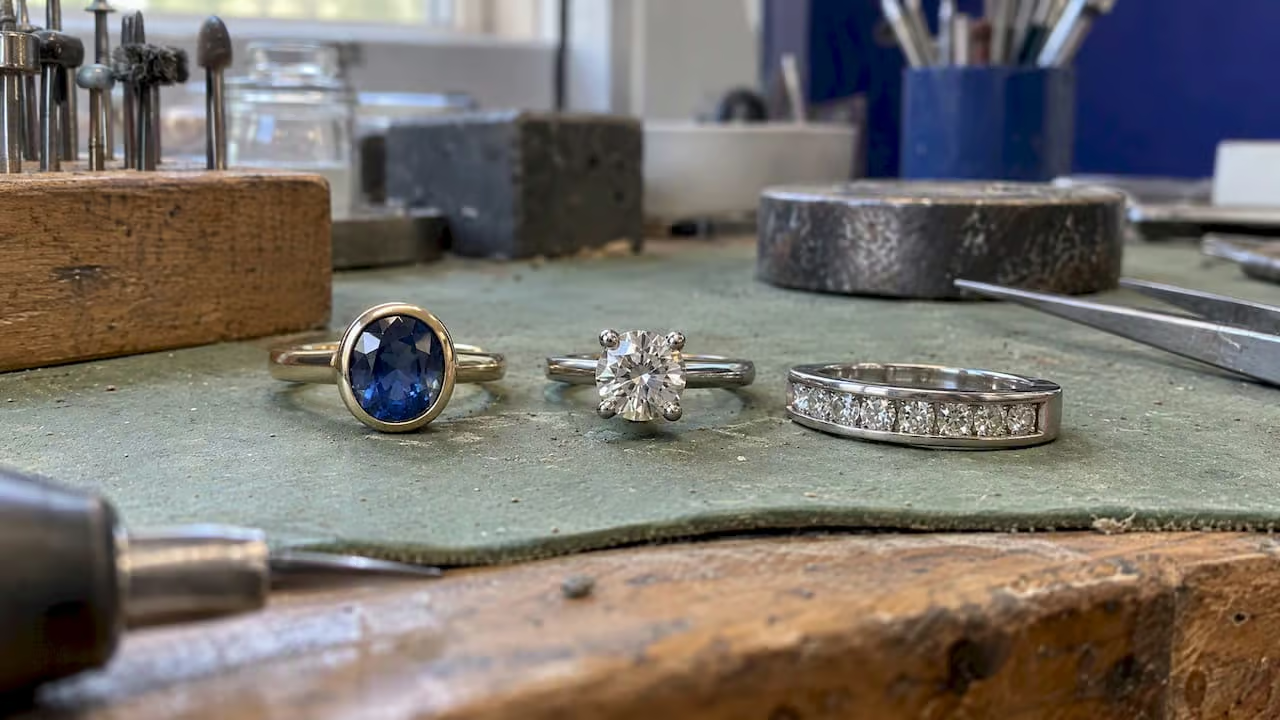
A jewelry setting is the metal structure that holds a stone in place, and the type you choose decides how much light the stone catches, how well it’s protected and how much upkeep it needs.
The main styles are prong, bezel, channel, pavé, flush and tension. Each one trades sparkle against security in its own way, and the right pick depends on the stone and on how you wear the piece.
I’ve designed with pearls and gemstones for years, and I’ll say this plainly: the setting matters as much as the stone.
A beautiful gem in the wrong mounting gets chipped, snagged or scratched. The same gem in a well-chosen one can last for decades. Here’s how to tell the styles apart and match them to necklaces, earrings and bracelets.
TL;DR:
- A setting has two jobs: to hold the stone securely and to protect it, according to GIA’s buying guidance.
- Prong settings show the most light but need periodic checks. Bezel settings wrap the stone in metal for the most protection and the fewest snags.
- Channel and pavé settings suit rows of small accent stones, and pavé is harder to repair when a stone is lost.
- Pearls are softer than other gems on the Mohs scale, so they need gentle, separated settings. Never let them touch harder gems like diamonds.
What a setting actually does
It helps think of a setting as the frame around a painting. It shapes how you see the piece, and it also keeps the piece safe.
GIA describes the setting’s role as twofold: holding the stone and protecting it from damage. Different settings protect to different degrees, and none is the single best choice for everyone.
So the useful question isn’t “which setting is prettiest?” It’s “which setting fits this stone and this wearer?”
A person who types all day and hikes on weekends needs something different from someone who wears a statement necklace to dinner twice a month.
Three things guide the decision:
- The stone’s durability. Hardness is only part of the consideration. Designers also weigh toughness (resistance to breaking) and stability (resistance to chemicals, heat and light), as GIA’s gemstone durability guide explains.
- The type of jewelry. Earrings and necklaces take fewer knocks than bracelets, which brush against desks, door frames and sleeves all day.
- Your lifestyle. GIA suggests balancing how active you are against the protection.
Prong settings: maximum light, regular checkups
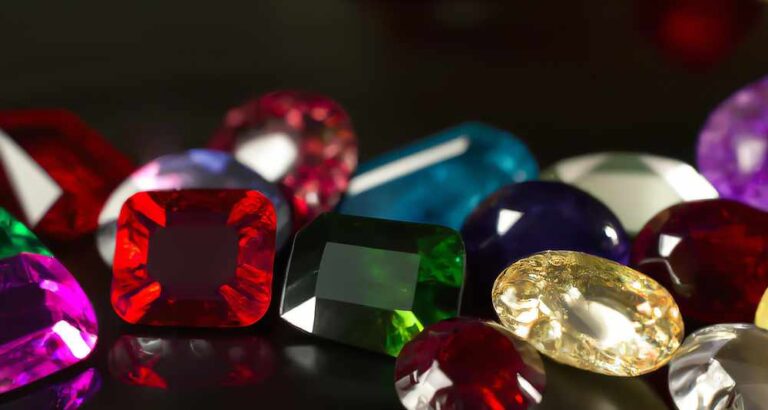
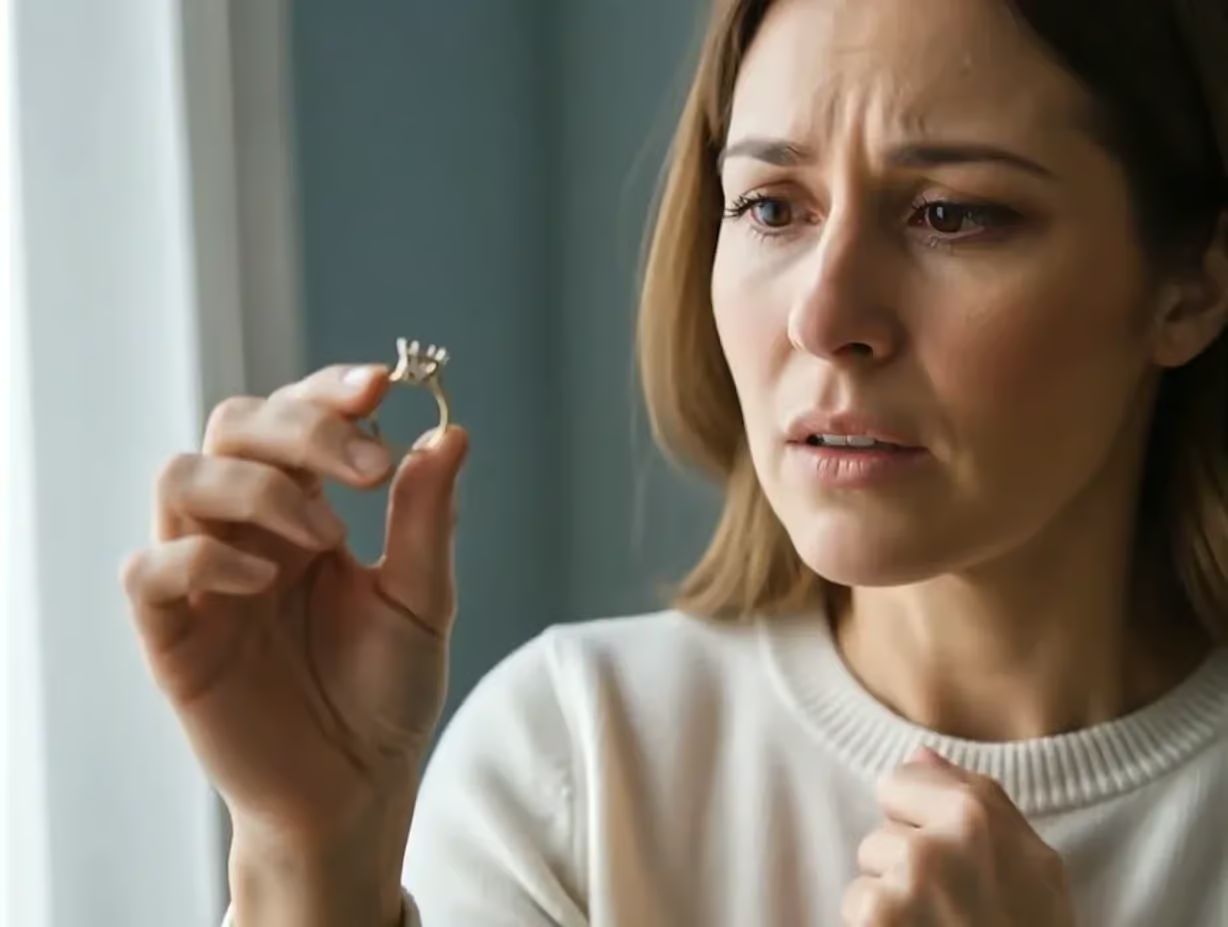
A prong setting uses small metal claws to grip the stone. Because so little metal covers it, light enters from many angles, and that’s why prongs are the classic choice for faceted gems.
According to GIA, four-prong settings often show more of the stone, while six-prong settings typically offer higher security.
The trade-off is upkeep. Prongs can catch on clothing and wear down over time, which raises the risk of a loose stone. If you choose prongs, plan on a professional inspection now and then. It’s a small habit that saves a lot of heartache.
Prongs work beautifully for pendants and drop earrings, where the stone hangs away from daily friction. They’re less ideal on a bracelet you wear while working with your hands, unless the prongs are low and well-protected.
Bezel settings: the protective choice
If you’ve wondered what a bezel setting is, picture a thin metal rim running all the way around the stone, like the frame of a watch crystal. That continuous collar gives the highest level of protection against bumps and leaves nothing to snag on a sweater or your hair.
Bezels are a natural fit for active lifestyles. They’re also good for stones with sharp, chip-prone points, such as marquise cuts.
They’re most common on round and oval stones, since bezels for square or marquise shapes are technically harder to make and less often done.
But there’s a catch. A bezel limits the light entering from the sides, and it can dull a poorly cut stone. GIA advises assessing the cut quality before committing to a full-wrap bezel. For cabochons, the smooth, domed stones common in gemstone jewelry, a bezel is often the most flattering choice because cabochons don’t rely on facets for sparkle. Their beauty is color and glow, and the rim frames both.
Bezel vs. prong: how to choose
This is the comparison readers ask about most, so here it is side by side.
| Feature | Prong | Bezel |
|---|---|---|
| Light reaching the stone | Highest, from many angles | Reduced at the sides |
| Protection from bumps | Moderate | Highest |
| Snag risk | Prongs can catch clothing | Very low |
| Maintenance | Periodic professional inspection | Lower, but check the rim |
| Best for | Faceted stones, sparkle-first looks | Cabochons, active wearers, chip-prone cuts |
My rule of thumb: if you want fire and brilliance, choose prongs and accept the checkups. If you want a piece you can wear and forget, choose a bezel. For an active lifestyle, you might prefer a bezel.
Someone after maximum sparkle might prioritize prongs and accept regular professional inspection.
Channel settings: a smooth, snag-free row
In a channel setting, stones sit side-by-side between two parallel metal strips. The result is a smooth surface with no prongs to catch.
GIA’s bracelet guide notes that it protects the stone’s edges and is often used for accent stones in bands or bracelets, giving a streamlined, modern look. Round, princess and baguette cuts are the usual candidates.
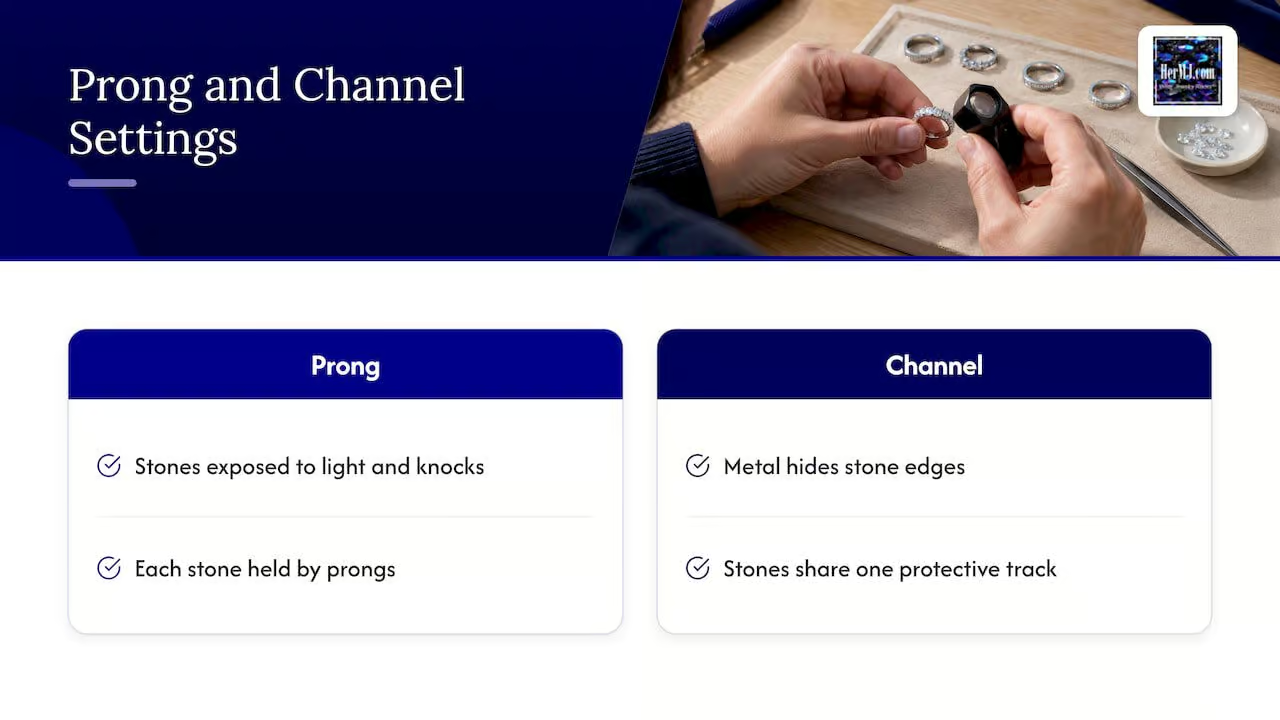
That makes channel the practical sibling of prong. When people compare prong and channel, the real difference is exposure.
Prongs expose each stone to light and to knocks. A channel hides the stone’s edges and lets the stones share one protective track, though the metal walls cover part of each gem, so you see a little less sparkle from the side.
If you’re curious how makers display channel settings for accent stones in custom designs, configurator tools show the effect clearly.
For a daily-wear bracelet, channel is one of the smartest choices. You can browse our bracelets to see how different mountings look on the wrist.
Pavé settings: a surface of tiny stones
Pavé (pronounced “pah-VAY”) means “paved” in French. A jeweler drills small holes and secures many tiny stones, typically 0.20 carat or smaller, with little metal beads. The effect is an uninterrupted surface of sparkle that can also make a center stone look larger.
The downside is repair. Because the work is so intricate, it’s harder for a bench jeweler to replace a lost stone than in a single-stone setting. Pavé is lovely on earring tops and pendant bails, where friction is low. Skip it where the piece rubs constantly against surfaces.
Other setting types worth knowing
The top search results cover a wider range than the big four. These are the others you’ll meet while shopping.
- Flush (gypsy): The stone sits level with the metal surface, held in a drilled hole. It’s sleek and low-profile, and it’s among the setting types GIA lists for engagement jewelry.
- Tension: Pressure from the metal holds the stone, which gives the illusion of floating.
- Bar: Metal bars separate stones in a row, leaving the sides open to light.
- Basket: Prongs joined by a lower rim, which adds a little structure and shows the stone from the side.
- Cup and peg (for pearls): A tiny metal cup and post hold a drilled pearl, usually with adhesive. This is the classic pearl earring approach, and it’s one reason pearl studs look so clean.
I’ll be careful here: the first four are used across stone types, while pearl mounting depends on the piece. Ask the maker how a specific pearl piece is attached before you buy.
Setting pearls: a different set of rules
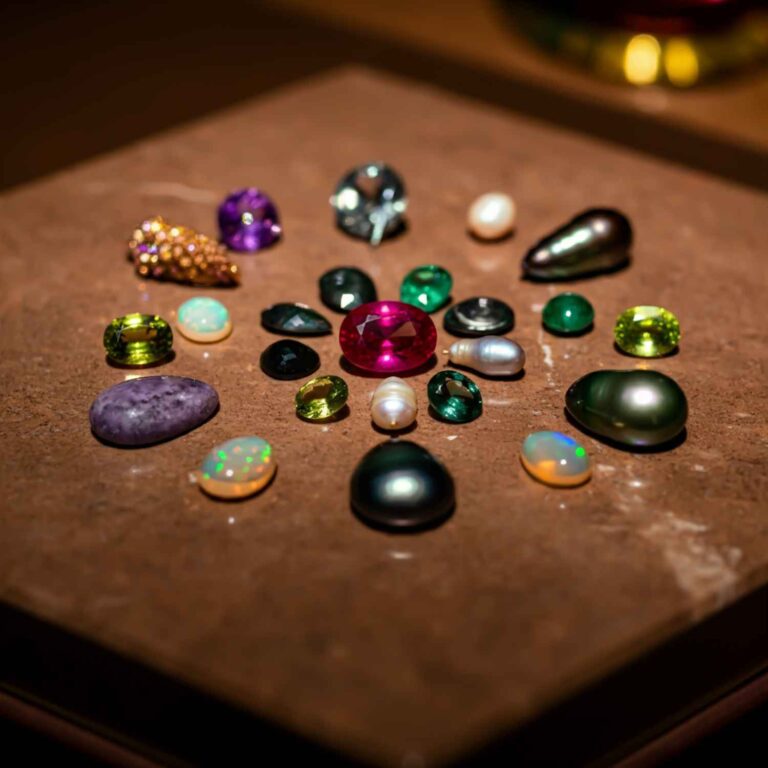
Pearls aren’t like diamonds or sapphires. They’re organic, and GIA rates them at 2.5 to 4.5 on the Mohs scale. That makes them soft, and it shapes every decision about their settings.
The golden rule: a pearl should never compete for space with a harder stone. GIA warns that a harder gem can scratch the pearl if they come into contact, so look for protective settings that keep the stones separated during normal wear.
I explain the same logic in our guide to Mohs hardness and how much damage a diamond can do to other gems.
What does that mean in practice?
- Choose gentle mountings. Cups, pegs and drilled-and-strung designs protect the pearl from impact better than a tight prong squeeze.
- Keep chemicals away. Pearls are susceptible to perfume, makeup and hairspray, which can damage the nacre. GIA says to wear them only after cosmetics have dried and never expose them to chlorine or ammonia.
- Mind the metal work. Heat from repair work like soldering can harm stones already set nearby. GIA advises consulting an experienced bench jeweler before cleaning or setting a gemstone when its treatment history or identity is uncertain.
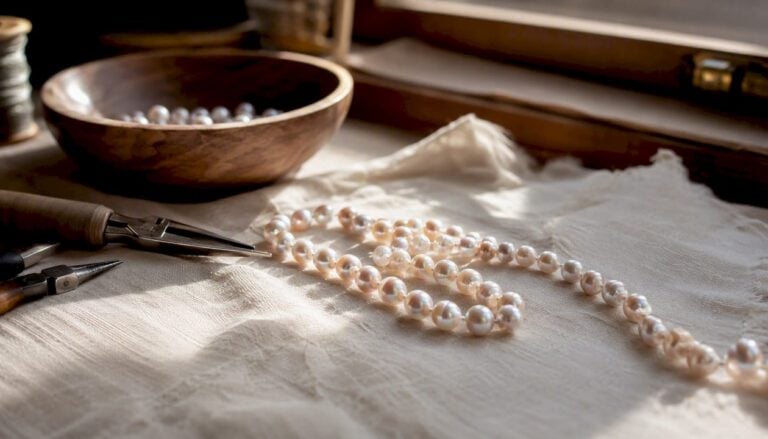
For the day-to-day side, my guides on how to clean pearls safely and whether pearls can get wet pick up where this section leaves off. Pearls are living gems in spirit. They reward the gentle attention you’d give a fine piece of art.
Matching setting to jewelry type
Here’s how I think about it, piece by piece.
Necklaces and pendants
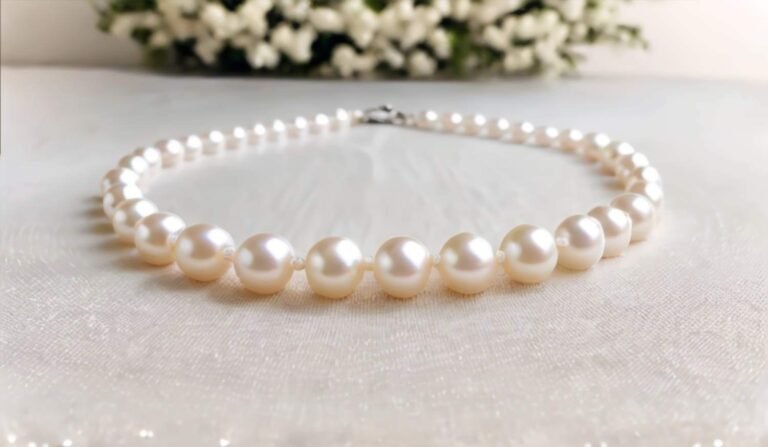
Pendants hang away from most contact, so prongs and pavé are both comfortable choices. A bezel suits a cabochon pendant you’ll wear every day. For strands of pearls, the question is the knotting and clasp rather than a metal setting, and a knot between pearls keeps them from rubbing together.
Take a look at our necklaces to see the range.
Earrings
Earrings rarely take hard knocks, so you can favor beauty. Prongs let a faceted stone dance with light, while a cup-and-peg mount keeps a pearl tidy and secure. Drops move more, so check that the connection point feels sturdy.
Bracelets
Bracelets get the most abuse. Bezel and channel settings are the sensible picks because nothing sticks out to snag. If you love the look of prongs on a wrist, keep them low and schedule inspections.
Home decor gemstones
Crystal and gemstone decor sits on a shelf rather than on you, so protection matters less and display matters more. Open mountings that show the whole stone are usually the right call.
Our perspective on settings
We believe a setting should serve the stone, not compete with it.
HerMJ was built around handmade pieces with genuine freshwater pearls, natural gemstones and crystals, offered at accessible prices, and that mission shapes how we look at construction
. A piece should look elegant on day one and feel just as dependable years into the future.
When we think about a design, we ask three questions. How hard is the stone? How will this person wear it? And what’s the gentlest way to hold it?
For pearls, that last question comes first every time. Softness isn’t a flaw, but it asks for respect. I’d rather help you choose a protective, well-matched piece than sell you something that looks dramatic and wears out quickly.
My advice is simple. Look closely at a piece before you buy. Check that the stone sits snugly, the metal is smooth and nothing catches when you run a fingertip over it. Then ask how it should be cared for. A good maker will answer happily.
— Veronique
Find a setting that fits your life
If you’re ready to see these ideas in real pieces, browse the pearl and gemstone jewelry collection here at HerMJ, or go straight to our modern drop earrings and European crystal jewelry.
HerMJ pieces are handmade, with great care, and each is an exceptional value. US orders ship free with no minimum, and international orders ship free at $150 or more.
A quick buying checklist
Before you check out, run through this list.
- Name the stone. Pearl, cabochon gemstone or faceted crystal? Each points to a different setting.
- Name the activity. Desk job, gym, travel or evening wear?
- Pick protection or sparkle. You can rarely maximize both.
- Check for separation. If a pearl shares a piece with harder gems, confirm they can’t touch. GIA’s advice is to prioritize the pearl’s safety in these designs.
- Plan the upkeep. Prongs and pavé need periodic inspection. Bezels and channels need less.
FAQ
What is the most secure jewelry setting?
A bezel is generally the most protective because the metal rim surrounds the whole stone. GIA notes that it guards against bumps and snags. The cost is less light entering from the sides.
Is a bezel or prong setting better?
Neither wins every time. Prongs maximize brilliance and need regular inspection, while bezels protect best and suit active wearers. Choose based on your stone’s cut and how hard you are on your jewelry.
What’s the difference between prong and channel settings?
Prongs grip each stone with small claws and show it from many angles. Channel settings hold a row of stones between two metal strips for a smooth, snag-free surface, as GIA’s bracelet guide describes. Channels suit bracelets and bands, while prongs suit single feature stones.
Which settings are best for pearls?
Gentle mountings that protect the soft nacre, such as cup-and-peg earrings or knotted strands, are good choices. Pearls should be kept apart from harder stones that could scratch them. Ask your jeweler how a particular piece is built.
Sources
- 10 Tips for Buying an Engagement Ring, GIA 4Cs
- Tennis Bracelet Buying Guide, GIA 4Cs
- Settings That Make Your Diamond Look Bigger, GIA 4Cs
- Diamonds vs. Pearls, GIA 4Cs
- Gemstone Durability: Design to Display, GIA
Recommended
- Types of Jewelry Statement Pieces: Annual Style Guide
- Types of Jewelry Statement Pieces: Modern Style Guide
- What Is Gemstone Cluster Jewelry: Style Guide 2026
- Pearl Earring Styles: When to Wear 4–12mm Studs, Drops, and Hoops