


Pink Gemstones List: 14 Stones, From Blush to Rose
Pink shows up in more gemstone families than most people expect. Rose quartz, morganite, kunzite, pink tourmaline, pink sapphire, spinel, pink opal, and a handful of others all earn the color, and each one carries it differently.
Some are soft and milky, some are glassy and bright, and some are rare enough to sit in a safe. Below, I’m describing the stones worth knowing, how their shades differ, and which ones suit jewelry you’ll wear often.
TL;DR:
- The pink gemstones jewelry lovers meet most are rose quartz, morganite, kunzite, pink tourmaline, pink sapphire, pink spinel, pink opal, and rhodonite.
- For light pink or blush tones, look at rose quartz, morganite, kunzite, and pink opal. For deeper rose, look at rubellite tourmaline, rhodolite garnet and pink sapphire.
- Hardness matters more than shade for daily wear: a stone at 7 or above on the Mohs scale handles knocks far better than a soft one.
- Natural pink diamonds are among the rarest pink stones, while rose quartz is one of the most abundant and affordable.
- Pick the pink that fits how you’ll wear it: bracelets and necklaces forgive softer stones, and earrings sit safely away from knocks.
The pink gemstones list at a glance
Here’s the quick reference. Hardness figures use the Mohs scale, where 10 is diamond. I’ve grouped the stones by how they behave in jewelry, because that’s what you’ll feel after the first month of wearing a piece.
| Stone | Typical pink shade | Approx. Mohs hardness | Best in |
|---|---|---|---|
| Rose quartz | Pale, milky blush to medium pink | 7 | Necklaces, bracelets, beads |
| Morganite | Pink, salmon, rose, peach | 7.5 to 8 | Pendants, earrings, bracelets |
| Kunzite | Pastel pink to lilac and violet | 6.5 | Pendants, earrings |
| Pink tourmaline / rubellite | Soft pink to vivid red-pink | 7 to 7.5 | Earrings, pendants, bracelets |
| Pink sapphire | Pale to hot pink | 9 | Any jewelry type |
| Pink spinel | Soft to vivid pink | 8 | Earrings, pendants |
| Pink opal | Soft, opaque pastel | 5.5 to 6 | Pendants, earrings |
| Pink pearl | Rosé overtone, blush | 2.5 to 3 | Necklaces, earrings |
| Pink diamond | Faint to intense pink | 10 | Fine jewelry |
The hardness numbers for sapphire, opal, apatite, fluorite, rhodochrosite and pink pearls come from the Gem Society’s pink gemstone guide. Morganite’s 7.5 to 8 range is from GIA’s morganite guide, and rose quartz’s 7 from the International Colored Gemstone Association.
Light pink gemstones: soft, blush and rose shades
If you’re after something delicate, this is the family to start with. These stones read as pale, airy and romantic, and they pair easily with both neutrals and bolder colors.
Rose quartz
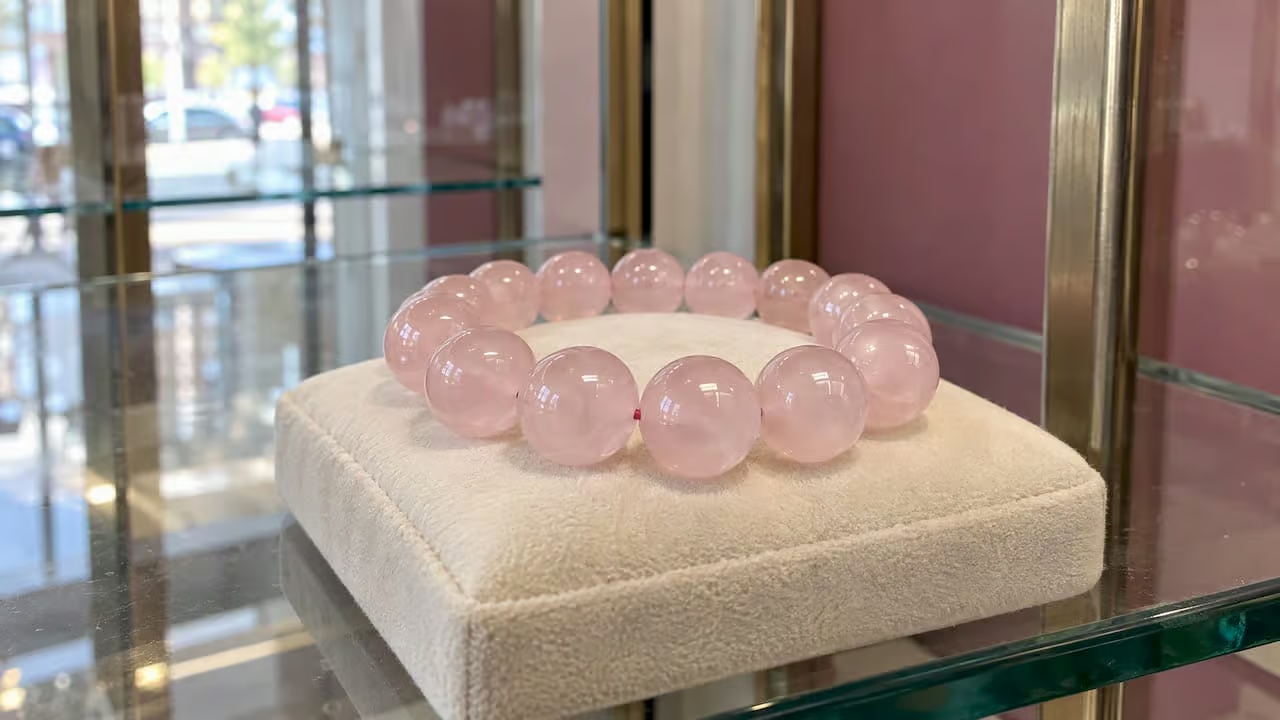
Rose quartz is the friendliest pink there is. It runs from very pale to medium or dark pink and tends to be slightly milky, with a soft glow rather than sparkle.
It ranks 7 on the Mohs scale and is typically translucent or cloudy, which is exactly why it’s abundant and affordable compared with many other pink stones, according to the ICA.
I reach for rose quartz when someone wants real stone, real color, and a gentle price. It also takes beautifully to beads, which is why it works so well in necklaces and bracelets.
To see it in a finished piece, our rose quartz stone necklace and high-quality rose quartz bracelet show how different the stone looks depending on bead size and cut.

Morganite
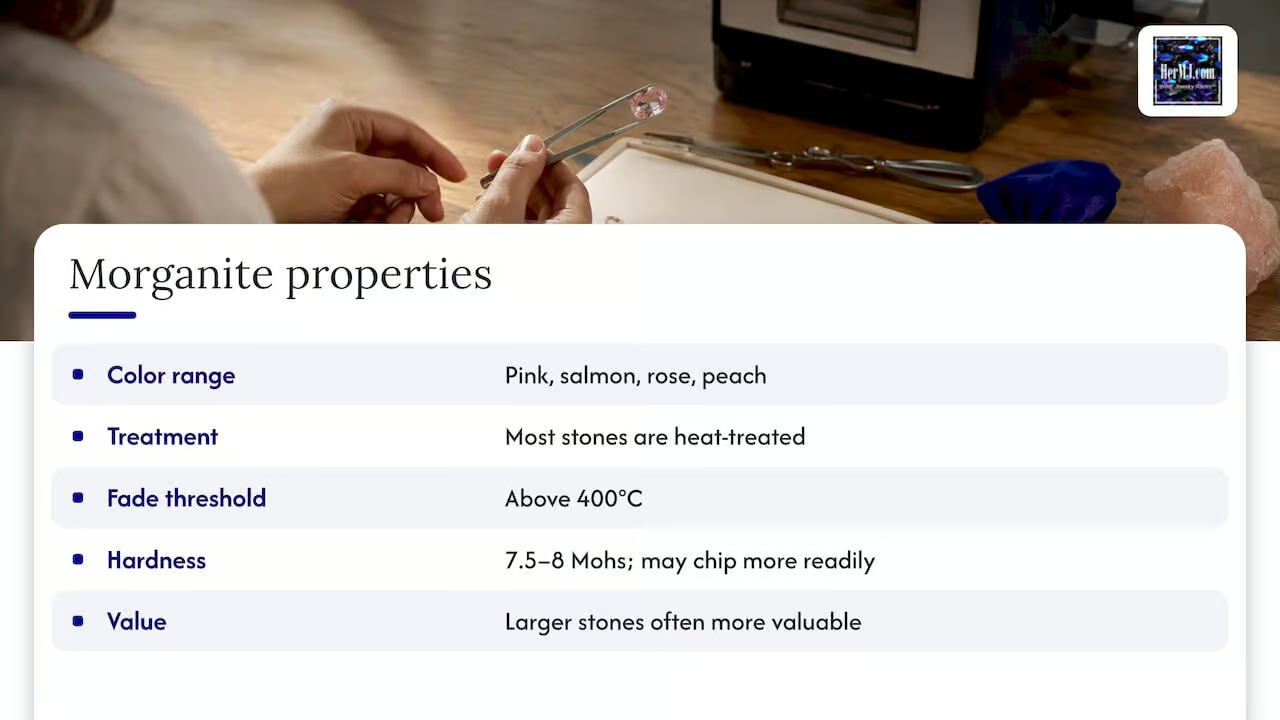
Morganite is a pink-to-peachy member of the beryl family., GIA describes its range as pink, salmon, rose and peach, and notes that color intensity increases with size, so larger stones are often more valuable (GIA). Its color comes from trace manganese, per GIA’s pink gemstone guide.
Most morganite is heat-treated to remove yellow or orange tinges and leave a stable pink. GIA says that color won’t fade unless the stone is exposed to temperatures above 400°C, so everyday wear isn’t a concern.
At 7.5 to 8 it’s durable, though it can chip more readily than harder gems, so a protective setting helps.
Kunzite
Kunzite is a transparent pastel pink that leans toward lilac, and the most prized colors run from intense pink to violetish purple, according to GIA.
It’s a variety of spodumene. Strong, prolonged sunlight can fade its color, so it’s a stone for evenings and indoor light ,more than for a beach vacation.
Pink opal
Pink opal is opaque, creamy and calm, a pastel with no flash at all. At 5.5 to 6 on the Mohs scale, it belongs in pendants and earrings, where it’s protected from daily bumps (Gem Society). It’s the pink I recommend to anyone who loves a matte, almost porcelain look.
Pink pearls and rosé overtones
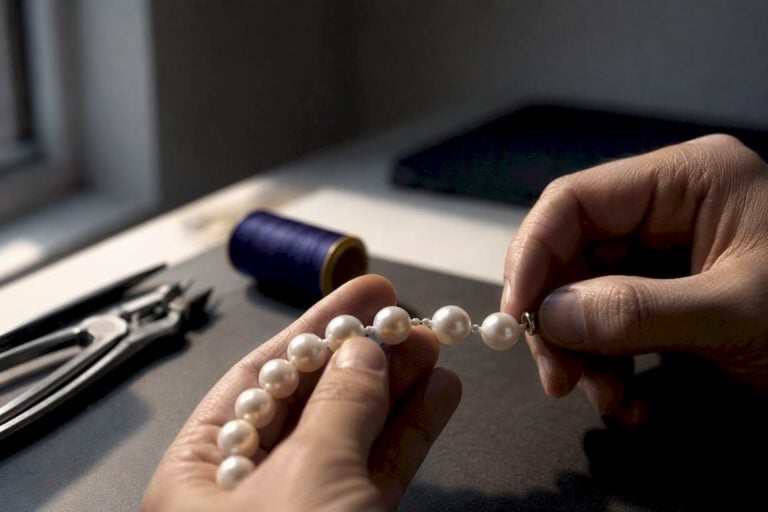
Pearls deserve a place on any pink list. Freshwater pearls often carry a natural blush or rosé glow, and they bring luster that no faceted stone can match.
They’re soft, about 2.5 to 3 on the Mohs scale, so they’re best in necklaces and earrings rather than anything that takes hard knocks. For how to clean, store, and wear pearls well, our pearl care guides at HerMJ cover it all, so I’ll leave the details there.
Deeper rose and vivid pink stones
When you want color that holds its own across a room, these are the stones to look at.
Pink tourmaline and rubellite
Tourmaline comes in nearly every color, and its red-to-pink varieties are called rubellite in the trade (GIA). Expect a lively, saturated pink with real depth. It’s hard enough for most jewelry, and it’s a favorite for earrings.
Pink sapphire
Pink sapphire is corundum, the same mineral family as ruby, which makes it exceptionally hard at 9 on the Mohs scale. The Gem Society calls it the most commonly available pink gemstone on the market, thanks to how abundant corundum is worldwide (Gem Society).
The line between ruby and pink sapphire is cultural as much as scientific: GIA’s policy requires red to be the dominant hue for a stone to be called ruby (GIA).
Pink spinel
Spinel is a bright, clean pink that’s often mistaken for sapphire or tourmaline. It’s hard, lively, and increasingly sought after, and GIA includes it in its pink gemstone buying guide alongside the better-known names.
Rhodolite garnet
Garnet stretches into pink too, and rhodolite is the raspberry-leaning pink-purple member of the family. It brings warmth that reads richer than a pastel without turning fully red.
Pink diamond
Natural pink diamonds are among the rarest pink gemstones, and GIA notes that the closure of the Argyle mine has tightened supply further (GIA). GIA also calls pink one of the most valuable hues among colored diamonds (GIA). If someone asks me for the rarest pink gem, this is the answer.
Opaque and banded pinks with character
Some pinks aren’t about clarity at all. They’re about pattern.
- Rhodonite: a rosy pink with black manganese-oxide veins, which give every bead its own map.
- Rhodochrosite: raspberry and pale pink bands. It’s soft, around 3.5 to 4.5, so it works best as a pendant or earring stone.
- Strawberry quartz: quartz with tiny red inclusions that create a sweet, speckled pink. Our strawberry quartz gemstone bracelet shows how playful it looks.
- Pink amethyst: a gentle lavender-pink that sits between two color families. It makes a lovely room jewelry piece for a shelf or desk.
How to tell similar pinks apart
Pale pink stones look alike under shop lights. Rose quartz, morganite, kunzite and pink sapphire can all read as “soft pink” from a few feet away, and display lighting tends to exaggerate that similarity. Judging them in daylight, away from the case, tells you far more.
A more reliable way to sort them is to skip the color at first and check three things in order:
- Transparency. Is it see-through, translucent or opaque? Rose quartz is typically translucent and softly glowing, while morganite, kunzite, and pink sapphire are transparent.
- Hue. Does it lean peach (morganite), lilac (kunzite), blue-pink (some sapphires), or pure rose?
- Saturation. How deep is the color? Larger morganite is usually deeper than smaller stones.
Pink topaz and pink tourmaline are the pair people ask about most. Both can look like a warm, clear pink.
Topaz is generally harder on the Mohs scale, but it also has a cleavage that makes it prone to chipping on a sharp knock, while tourmaline usually shows a more natural-looking, varied pink.
If you’re buying a faceted stone and the difference matters to you, ask the seller for a lab report or the stone’s identification, since eyes alone can’t settle it.
Choosing pink stones for jewelry you’ll actually wear
Hardness decides how a piece ages. A bracelet takes more abuse than earrings, and pearls and opal need more care than sapphire. A simple rule I give friends:
- Harder than 7 (sapphire, spinel, tourmaline, morganite, rose quartz): comfortable for bracelets and daily necklaces.
- Between 5 and 7 (kunzite, opal, apatite): wonderful in pendants and earrings, where they’re away from the knocks of everyday life.
- Softer than 5 (pearls, fluorite, rhodochrosite): best saved for occasional wear or earrings and necklaces.
The Gem Society groups pink pearls, fluorite, apatite, opal, and rhodochrosite as stones better suited to pendants, earrings, and occasional wear (Gem Society).
Pink diamond jewelry should be cleaned with warm water and mild soap and a soft brush, then stored in a padded box so other stones don’t scratch it (GIA).
If you’re curious how all these colors form in the first place, our guide to gemstone colors and names explains it. And if you’re pairing pink with the rest of your wardrobe, gemstone jewelry outfit pairing gives you easy combinations.
My perspective on pink
I think pink is the most forgiving color in jewelry. It flatters nearly every skin tone, it works with denim as easily as with a dress, and it carries a feeling of warmth that people notice before they know why.
What I love most is that you don’t need a fortune to wear it well. A strand of rose quartz, a pink amethyst on your shelf, a freshwater pearl with a blush overtone: these are real stones with real character, handmade and priced for people who want to wear them, instead of admiring them from behind glass.
My advice is to you is choose the shade that makes you smile first, then check the hardness for how you’ll wear it. That order keeps jewelry joyful and practical at the same time.
Veronique
Where to find pink pieces at HerMJ
At HerMJ, we make handmade jewelry from genuine freshwater pearls, natural gemstones, and crystals, and pink runs through the collection.
Start with the pearl and gemstone jewelry on the homepage, or go straight to the bracelets, necklaces, or modern drop earrings to see how different pinks look in finished pieces.
U.S. orders ship free with no minimum. International orders ship free on orders of $150 or more.
If you also want to bring pink into your space along with your wrist, our room jewelry collection turns gemstones into small decor pieces.
And if pink isn’t your birth month’s color, our alternative birthstones by month page can point you to other gifts.
FAQ
Which natural stone is pink?
Several are. Rose quartz, morganite, kunzite, pink tourmaline, pink sapphire, pink spinel, pink opal, and rhodonite all occur naturally in pink. Rose quartz is the most abundant and affordable of them.
What is the rarest pink gemstone?
Natural pink diamonds are generally considered among the rarest, and GIA notes that supply has tightened since the Argyle mine closed. Fine pink sapphires and vivid rubellite are far more available, but top-quality stones in large sizes still command high prices.
What are the best light pink gemstones for jewelry?
Rose quartz, morganite, kunzite, and pink opal are the classic pale pinks. Rose quartz and morganite are the sturdiest of the group, so they suit bracelets and daily necklaces. Kunzite and opal are lovely in pendants and earrings.
Does morganite fade?
Morganite’s pink is stable in normal wear. GIA says the heat treatment used on most morganite leaves a color that won’t fade unless the stone is exposed to temperatures over 400°C. Kunzite is the pale pink that deserves more care around strong sunlight.
Is pink sapphire the same as ruby?
They’re both corundum, so chemically they’re relatives. GIA’s policy is that a stone must have red as its dominant hue to be called ruby, and anything lighter or more pinkish is a pink sapphire.
Sources
- GIA Pink Gemstone Buying Guide
- GIA Morganite Engagement Rings Buying Guide
- GIA Pink Diamond Buying Guide
- Gem Society: 21 Beautiful Pink Gemstones
- International Colored Gemstone Association: Rose Quartz
Recommended
- White Gemstones List: 18 Stones and How to Wear Them
- Gemstone Colors And Names — How Do They Get Their Color?
- Alternative Birthstones | Handmade Gemstone Jewelry by Month
- Black Gemstones, Mohs Wearability and Care