


How to Stop Jewelry Turning Skin Green
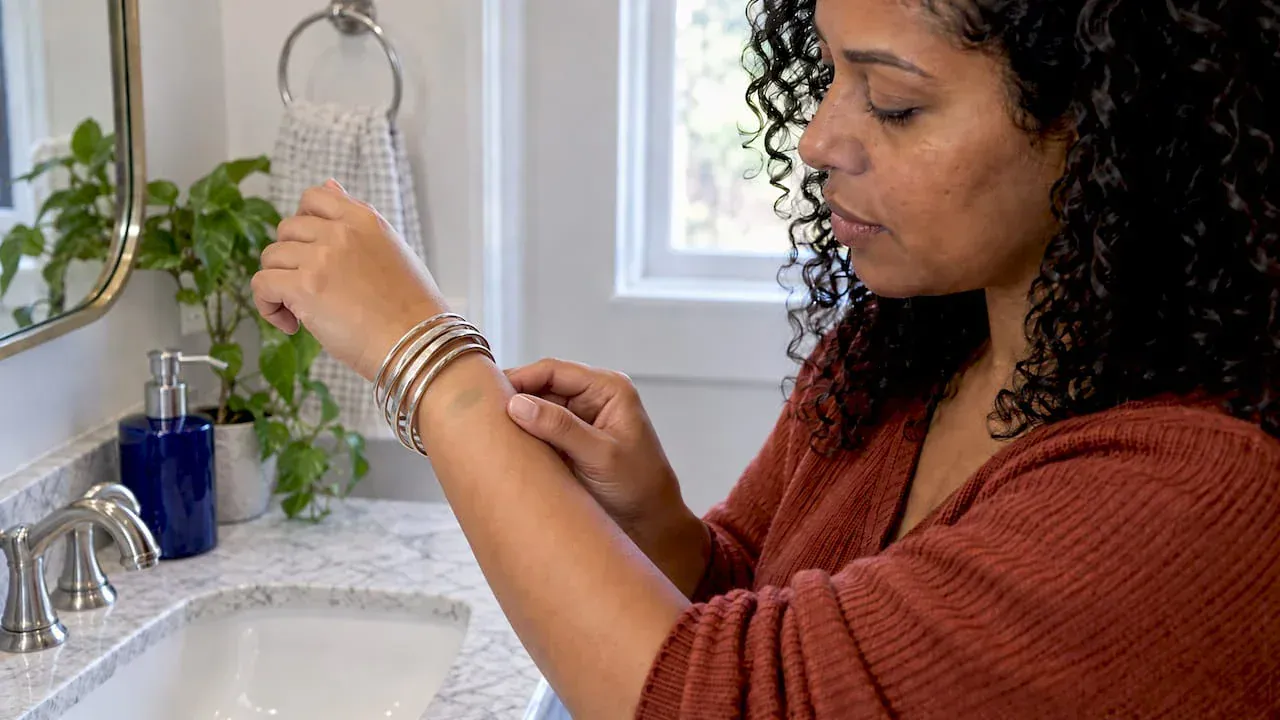
That green ring around your wrist or neck is a small chemical reaction, not a sign that something’s wrong with you. Copper in the metal reacts with sweat, lotion, or perfume and leaves a green film on your skin. It’s harmless, it washes off, and you can avoid it entirely by choosing the right materials. At HerMJ, we build our pearl and gemstone pieces so the beauty is in the stones and pearls you’ll wear every day.
TL;DR
- Green skin comes from copper, including the copper hiding under silver or gold plating, reacting with sweat, lotions, and other products.
- The mark isn’t harmful, washes off with soap and water, and fades within days once you stop wearing the piece.
- To prevent it, keep jewelry away from water, lotion, and perfume, and put a clear barrier between metal and skin.
- Itching, redness, or scaly patches point to a metal allergy such as nickel, which is a different issue from green staining.
- Pearls and natural gemstones strung on Soft Flex cord minimize metal contact with your skin.
What actually turns your skin green
The culprit is copper. According to Nebraska Medicine’s dermatology team, the green is oxidation of copper reacting with sweat, lotion or other products on your skin. It can happen with other metals too, just less often.
Chemists describe the same thing a little more poetically. The Royal Society of Chemistry explains that sulfur, salt water, and sweat form copper compounds that create a thin patina called verdigris. It’s the same green layer that covers the Statue of Liberty. On a statue, it’s a protective coat. On your wrist, it simply rubs off.
That’s why the reaction varies from person to person and day to day. Your skin chemistry, how much you sweat, the weather, and the products you’ve applied all affect how quickly copper reacts. The same bracelet can leave no mark in January and a green band in July.
Is the green stain harmful?
No. Nebraska Medicine’s dermatologist, Dr. Jennifer Adams, reassures patients that the green residue isn’t harmful and washes off with soap and water. The Plumb Club adds that the discoloration fades on its own within a few days.
If you want a sense of timing, Resto NYC suggests mild green clears in one to two days, moderate in three to five, and dark staining in up to one to two weeks. It also suggests seeing a doctor if discoloration lasts longer than two weeks, spreads, or comes with pain, swelling, itching, rashes or signs of infection.
Which jewelry is most likely to do it
Copper hides in more places than most shoppers expect.
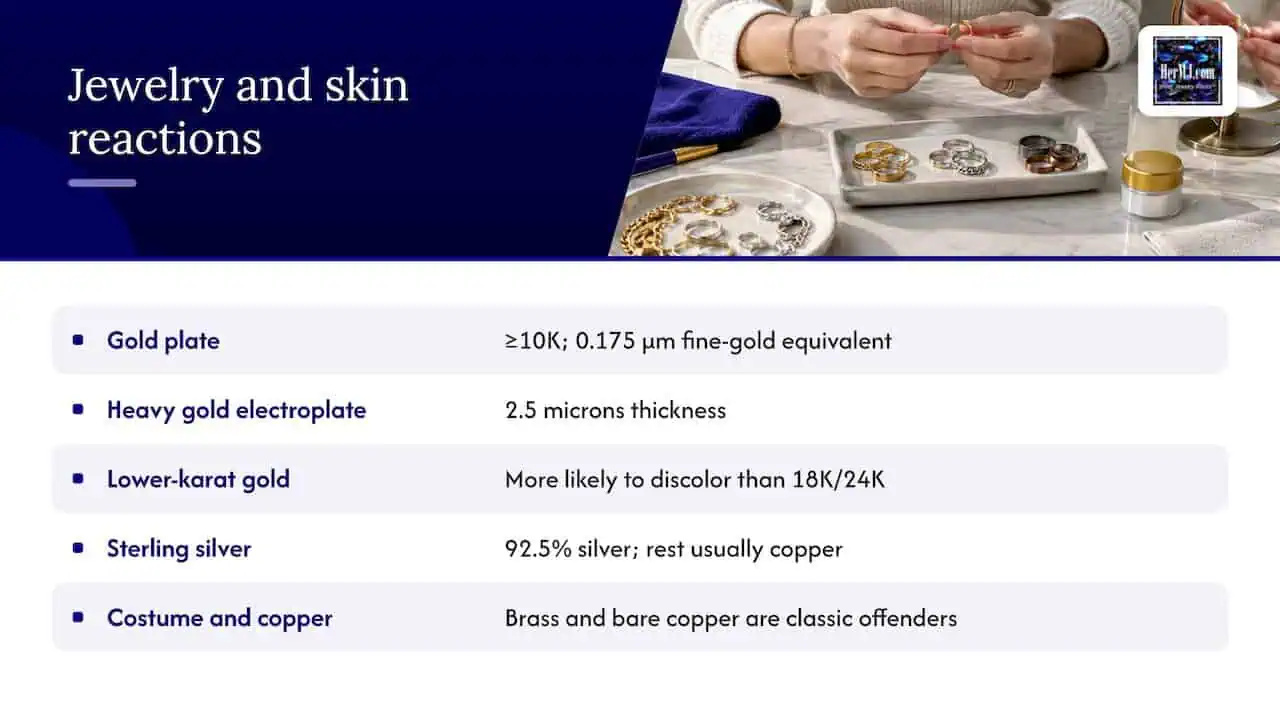
Plated pieces. Plating is a thin layer of precious metal over a base metal, often one containing copper. Once that layer wears through, the base metal meets your skin. Under the FTC’s Jewelry Guides, “gold plate” requires at least 10-karat gold at a minimum thickness equivalent to 0.175 microns of fine gold, while heavy gold electroplate requires 2.5 microns. That’s a very thin coat, which is why plated jewelry can start marking skin after some wear. My guide to gold-filled versus gold-plated explains the difference in more detail.
Lower-karat gold. Science Notes reports that 10K and 14K yellow gold are more likely to contain enough copper to discolor skin than 18K or 24K.
Sterling silver. Sterling is 92.5% silver, and the rest is usually copper. So a piece of 925 silver can leave a green or gray mark in humid weather or on skin that’s particularly acidic (based on perspiration, lotions, or fragrances you may be wearing). Storage matters here too, and my piece on preventing silver tarnish covers humidity care.
Costume and copper pieces. Brass and bare copper are the classic offenders, especially in clasps, chains, and findings that sit against skin.
What to do when it happens
Stay calm and wash the area with soap and water. The mark will fade without any treatment. Then decide what to do with the piece.
For plated jewelry, Dr. Adams suggests two fixes: have a jeweler recoat it with the precious metal, or brush a clear coat of nail polish over the surfaces that touch your skin, but be aware that the polish will wear off and need reapplying every so often.
If you’re not sure a mark is staining or something more, look at your skin. Green with no other symptoms is staining. Reddish skin with itchy, scaly patches suggests a reaction to a metal such as nickel. That’s a sign to consult with your dermatologist. Patch testing can confirm an underlying allergy.
How to stop jewelry from turning your skin green
Prevention comes down to three habits.
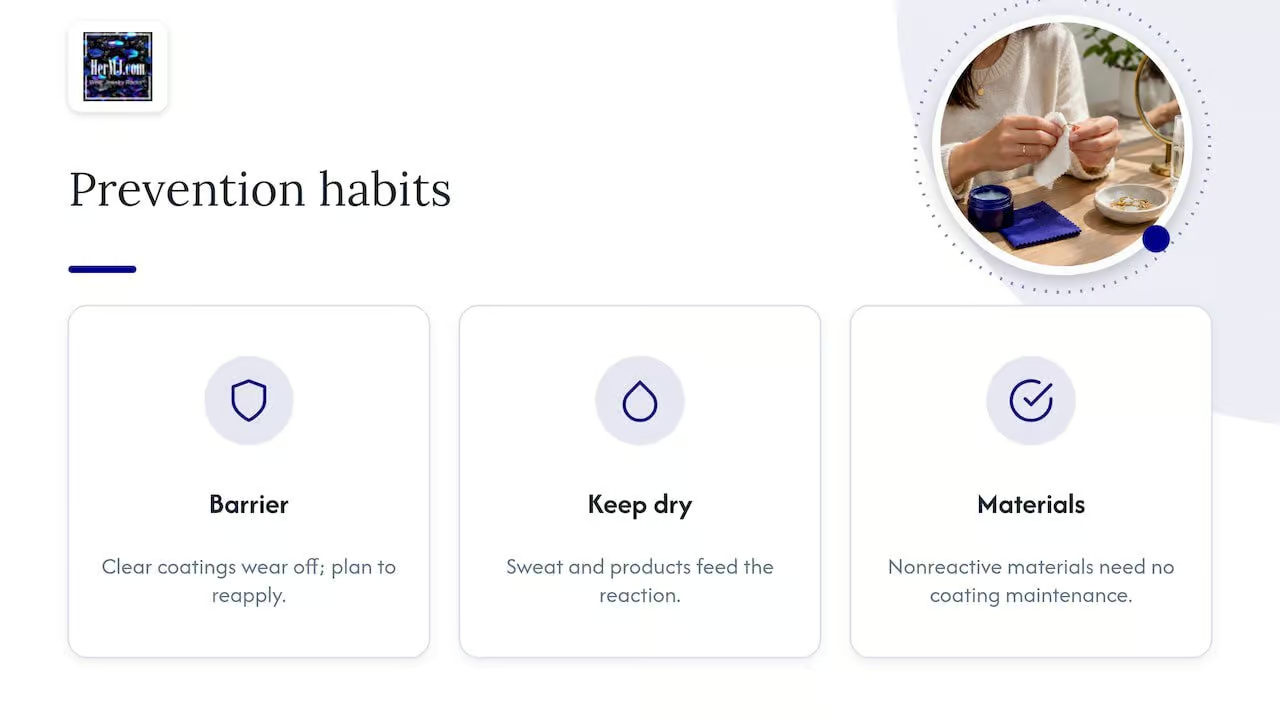
Build a barrier. The Plumb Club recommends a thin layer between metal and skin, such as clear nail polish, beeswax, or a clear protective coating. These wear off, so plan to reapply them.
Keep it dry and product-free. Sweat, lotion, sunscreen, and perfume all feed the reaction. As I always recommend with pearls and other jewelry, one simple rule works well: jewelry is the last thing on and the first thing off. Take it off before showering, washing your hands, swimming, and working out. And make sure the area is dry before slipping the items back on.
Choose materials that don’t react. This is the fix that lasts, because no coating needs maintenance. Which brings us to the next question.
Skin-friendly materials for sensitive skin
If your skin reacts easily, start with the metal. Dermatologists quoted by Byrdie recommend surgical stainless steel, titanium, platinum, niobium, and 14K or 18K gold as less likely to cause reactions. They also note nickel can cause red, itchy, scaly patches, and that an over-the-counter dimethylglyoxime test can check a piece for nickel.
Sensitive skin is a broader issue than jewelry alone. Everyday contact with fabrics, dyes, and hardware can trigger it, and this guide to contact dermatitis helps you spot patterns in what irritates your skin. For metals specifically, my nickel-free jewelry questions and the HerMJ page on hypoallergenic earrings go even further.
Why pearls and gemstones are a smart answer
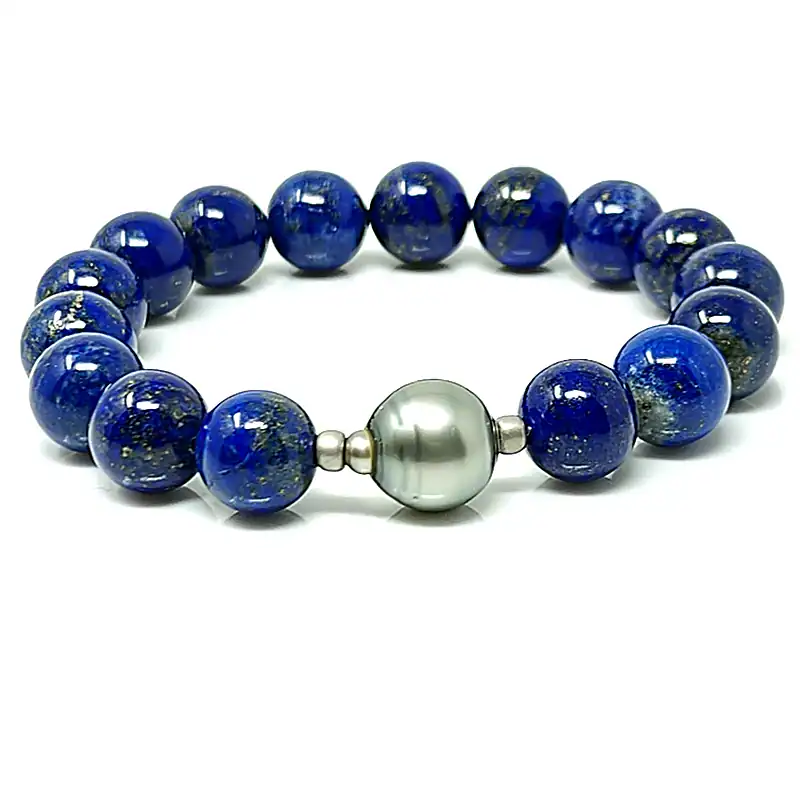
The stone itself doesn’t oxidize the way copper does. A freshwater pearl or a polished gemstone bead sits against your skin while the metal stays small: a clasp, a hook, a few findings. That’s a very different situation from a solid chain of plated base metal.
The stringing matters too. We join our pearls and gemstones with Soft Flex cord. Silk is lovely, but it can stretch and break over time, and Soft Flex gives a piece a sturdier, more dependable hang. Pearls are living gems that appreciate gentle treatment, so for cleaning and storage, see our page on pearl care.
Where to start with HerMJ
If you’d like pieces built around genuine freshwater pearls and natural gemstones, begin with our necklaces or bracelets. The Green Tourmaline and Pearl Necklace is a nice example, with a green that comes from the stone, not your skin. For earrings, our Modern Drop Pearl Earrings are an easy everyday choice.

US orders ship free with no minimum, and international orders ship free on orders of $150 or more. Browse everything at https://www.HerMJ.com.
My perspective at HerMJ
Green skin is one of the most common frustrations I hear about, and it’s almost always a materials story. When a piece is mostly base metal with a thin plated finish, the finish eventually gives way, and your skin takes the blame.
That’s why we design around pearls and natural gemstones. They’re the heart of the piece, so the part touching your skin is the beautiful part. We believe affordable jewelry shouldn’t mean a piece you have to baby, coat in nail polish, or worry about after every shower.
My golden rule is simple: wear what you love, and let the materials do the work. Choose real pearls and real stones, store them well, and they’ll reward you with luster for years.
Veronique
FAQ
Does sterling silver turn skin green?
Sometimes, yes. Sterling contains copper, and that copper can react with sweat, humidity, or lotions. The mark is harmless and washes off with soap and water.
Is green skin from jewelry dangerous?
No. The green is a thin film of copper compounds, and dermatologists describe it as harmless. See a doctor if the discoloration lasts more than two weeks, spreads, or comes with itching, swelling, pain, or a rash.
How can I tell staining from an allergy?
Staining is just color on the skin, with no other symptoms. An allergy, often to nickel, causes red, itchy, scaly patches. A dermatologist can confirm it with patch testing.
What jewelry is best for sensitive skin?
Look for titanium, platinum, surgical stainless steel, niobium or higher-karat gold. Pearls and natural gemstones with minimal metal contact are also a gentle choice.
Sources
- Why does some jewelry turn my skin green? (Nebraska Medicine)
- Why does copper jewellery turn your skin green? (Royal Society of Chemistry)
- Why Jewelry Turns Skin Green (The Plumb Club)
- How long will my finger stay green? (Resto NYC)
- FTC Jewelry Guides, 16 CFR Part 23
- Why Do Rings Turn Your Finger Green or Black? (Science Notes)
- The Safest Jewelry Metals (Byrdie)
Recommended
- Jewelry and Water: What’s Safe in the Shower, Pool and Ocean
- Jewelry Tarnish – How To Prevent Jewelry From Tarnishing