



How to protect yourself when shopping online

Learn critical safety tips to protect yourself when shopping online and the best ways to make the most informed purchases for a secure shopping experience.
- How to protect yourself when shopping online
- Learn critical safety tips to protect yourself when shopping online and the best ways to make the most informed purchases for a secure shopping experience.
- Shopping online requires discipline
- How To Stay Safe From Online Jewelry Risks
- Evaluate the Store's Digital Security
- Don't Be A Product—You Are Not A Piece Of Jewelry
- Online Store Risks & Your Data
- Customer Trust
- Make Shopping For Online Jewelry Sales A Virtual Reality
- Take a look at Privacy.com and use this link to get $5 you can spend anywhere online.
- Online Safety Password Protection: Your Digital Gate Keeper
- Congratulations, In the Jewelry Buyers Dojo, You're Now An Online Ninja
Shopping online requires discipline
The world of the web is wide and beautiful, but there are places within it that are best avoided.
But how can you tell? Just as crucial as getting the best value for your transaction, how to protect yourself when shopping online is the way to safeguard youself when buying a piece of jewelry.
After all, the same taps and clicks make your keyboard, mouse, and phone respond identically to the words and pictures on every site you visit. Determining the value of what’s behind the online retailer is mostly up to you.
To many of us, online jewelry stores are a scary proposition.
And to a few, it is the reason that we frequently gaze at that potentially perfect product — even place it in our virtual shopping bag — just before abandoning it in the store, never to return.
In an ideal world, there would be a way to determine how committed each vendor is to their responsibility of serving potential online customers. We would know if their respective jewelry was as fabulous and true-to-life as they claim, and if we could trust them to deliver on that promise as we make our way to the checkout page.
Well, there are.
How To Stay Safe From Online Jewelry Risks

On a basic level, it’s essential to know how to protect yourself when shopping online. There are some common means with which we have all become familiar, such as social proof (the term for what the word on the street says about the online jewelry shop and/or product via Instagram, Facebook, and Twitter), and customer reviews, such as the nearly universally recognized Google search engine.
But with the ever-multiplying prospect of online stores sprouting up like trees in the expanding forest of Internet commerce, it has become more challenging to recognize the disreputable areas of the forest through the virtual trees. In short…
Evaluate the Store’s Digital Security
SSL’s primary responsibility is to safely and securely connect your computer or mobile browser’s shopping experience to the store you’ve browsed into.
In the recent past, we have each clicked the secure padlock icon in the address bar at the top of our browsers to see the reassuring…
“Connection is Secure.”
But too few of us know that there are different “certificates,” which are digital pieces of computer code that establish the secret handshake issued between that store’s computer server and our own computers, tablets, and cell phones.
Most of us have at one time used the term SSL, and may even remember that it stands for “Secure Sockets Layer,” which is the electronic protocol for establishing secure links between networked computers (don’t worry, we will not get lost in the bits and bytes or TLS versus SSL or other certificate details — for this discussion, there are much more important things to focus on).
Let’s take a quick look at the certificate’s important role in ensuring the security of the communication stream between jewelry retailers and the information you share with them.
Integrated into the bits and bytes of the store’s SSL vocabulary is the secret language that makes our individual conversations a digital enigma to anyone outside of the store and your own browser.
Because of this, no one else can spy on the private digital conversations that take place during our shopping transactions.
Although SSL and its corresponding software certificate have become a common technical standard that underpins our shopping security, few know that there are different types and even different methods for store owners to obtain one.

Although an online jewelry business can implement a free SSL certificate, the EV-SSL certificate comes at a cost, both in terms of the store owner’s financial investment and the business resources required to obtain and maintain it.
Now things become truly interesting as we depart entirely from the realm of technology and emerge into the real world of customer protection and Internet security solutions backing our online sales.
It is here that we find the most essential benefit of the EV-SSL certificate. For an online jewelry business to obtain one, it must meet every requirement, as the certificate authorities systematically inspect it.
These certificate issuers are a small, select alliance of trusted multinational organizations within the computing industry.
In fact, a certificate provider may deny an EV-SSL certificate request due to a failure in one or more aspects of the requesting company’s vetting process.
These companies must get a less rigorously validated certificate before anyone can browse their site securely via SSL.
At HerMJ, we recognize that it’s well worth the cost and effort. We are consumers, too.
It’s essential to establish a high level of trust and, correspondingly, know that you can trust the verified company on the other side of your phone or computer screen. This is one crucial component of establishing that fact.

If this sounds serious, it is. In fact, at the conclusion of the validation, when the respected certificate authority issues the E-Commerce website a trusted EV-SSL certificate, the store also receives a warranty for identity assurance of up to $1,000,000.
| Her Majesty’s Jewels, LLC holds a website identity assurance warranty of $1,000,000 subject to the terms and conditions of the Relying Party Warranty. |
Don’t Be A Product—You Are Not A Piece Of Jewelry
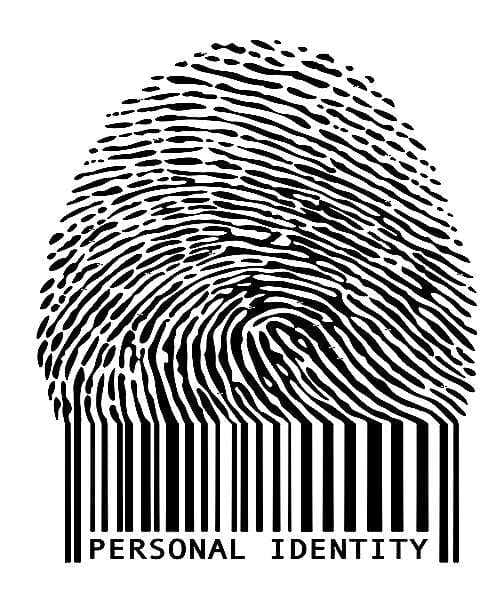
Your value to each business you visit is often more than the potential to exchange your hard-earned dollars for their goods or services.
Even if you didn’t complete the purchase or take them up on an offer to improve some aspect of your consumer life, there are still other things they can ask of you.
You may periodically find that the corresponding information exchanges speak on your behalf to a particular company you never intended to.
We’ve all been there, haven’t we? It comes via that just-in-time-for-dinner phone call from someone offering you a service to help ease the burden of your stressful schedule with a free hotel stay, or the enthusiastic caller who repeats your name after every sentence.
In other words, an unsolicited call.

One way they come to us is the unfortunate sharing of information we entrusted to a vendor. But why?
In the age of social media and digital marketing, we have become even more essential products than the products our solicitors hope we’ll buy.
A group of names they’ve identified as valid spenders can fetch a pretty penny for a vendor with a cache of valued shoppers known to have shown an interest in a particular product type or market via previous online activity.
Online Store Risks & Your Data
Even Worse, once jewelry manufacturers or jewelry store owners have your data, they can “offer” it to another vendor or agency, turning your contact information into a product.
Now they’ll focus on your value as someone they can persuade to buy their offering (or receive an opportunity to experience a free, introductory fill-in-the-blank online marketing form).
True, the experience could deliver a once-in-a-lifetime buying opportunity. Still, more often than not, you’ll have to extract yourself from a virtual never-ending series of sales pitches. And who wants that?
Although there’s little risk of being solicited from the dark dimension, the never-ending cascade of uncontrollable and unwanted interactions is just about as unwelcome.
There is no complete and absolute way to block your phone, email, and possibly even your mailbox from these unfortunate events, but there is a way to fortify your resilience against them.
Customer Trust
For those shopping from within the EU, one timely addition to the European consumer protection arsenal is the General Data Protection Regulation. Also known as the GDPR, Europe has strengthened consumer privacy protections.
It puts an admirable amount of power in consumers’ hands by providing strong opt-out provisions, as well as the right to correct and delete data collected during an online transaction.
Though not as far-reaching in the United States, similar laws are coming into effect in places like California, such as the California Consumer Privacy Act (CCPA), which went into effect in January 2020.
Colorado, Virginia, and New York have taken the lead in implementing their own privacy acts.
An increasing number of states, like North Dakota and Hawaii, are implementing their own provisions to protect our online shopping safety.
What does this mean?

Companies in these states — and an increasing list of others — will add this to their websites.
Look for privacy statements and take advantage of opportunities to manage your identity — and who has a say in controlling it with you.
Even better, find out which companies have made it their policy to keep things private. A few companies in the jewelry industry — including us at HerMJ — commit not to sell customer data. Speaking for ourselves at HerMJ, it only makes sense. After all, to earn customer loyalty, there must be customer confidence.
Make Shopping For Online Jewelry Sales A Virtual Reality
One interesting way to significantly reduce online jewelry risks when you virtually venture out to experience all the online jewelry market has to offer for those sparkling luxury jewelry designs is actually to virtualize it.
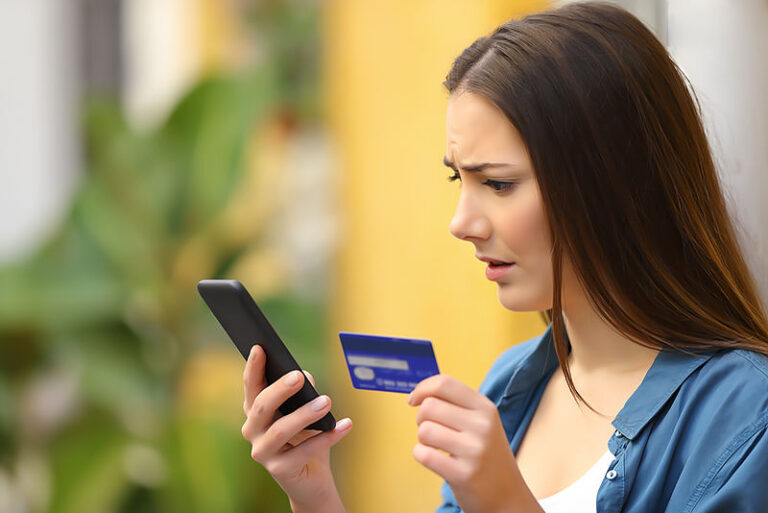
To explain what this means in real terms, consider that there are several innovative solutions in the market to protect our payment transactions.
The process involves using a proxy, or virtual stand-in, for the credit card that you can keep a close eye on — and limit to the very specific payment it was (virtually) created for.
In this way, your actual financial account exists as the funding source behind the protection of the virtual credit card.
In effect, you will use a secondary credit card in front of your primary credit card and allow it to serve the purpose of processing the transaction. You may even pause it, or limit the dollars that it has access to. Very handy!

This protects your online shopping experience by completing the transaction with a limited-use, virtual card that you can link to a specific vendor, purchase amount, or timeframe.
For example, for a Visa Card in your wallet, you register it with the virtual card company of your choice. I use the company, Privacy.com.
My Privacy.com account lets me create virtual cards that draw from my main Visa account — but I can set the virtual card’s limit and who can access the funds.
If I’ve never shopped at Acme.com’s Tropical Fish and Chips Emporium, I can generate a virtual card with a limited connection to my default Visa card.
By assigning the card to Acme’s checkout and allocating only the required amount (a $49.95 transaction), I’ve created a firewall that limits the virtual card to that amount with that vendor.
I can allow future transactions if I decide their Tropical Fish and Chips are a must (only for my fish tank, I assure you).
In that case, I can increase the limit or dictate a monthly amount not to be exceeded. It’s that simple. And by doing this, I can sit back knowing that any “mistake” they may make in charging me for jewelry items in transactions I disapprove will be declined.

As with any similar service, there are things to keep in mind.
Some vendors may view the virtual card as a pre-paid card, which they may not support. In such a case, you can defer to your standard mode of payment — so long as you vet the vendor before doing so.
Although you may add other source accounts, such as bank or checking accounts, or another credit card to your virtual card account, some account types may not be supported by the system.
You should contact the virtual card company to determine whether there may be any issues before signing up.
I’ve provided some information, should you want to check out Privacy.com. It is one of my favorite ways to manage credit card information and ensure online safety when conducting transactions.
Take a look at Privacy.com and use this link to get $5 you can spend anywhere online.
Online Safety Password Protection: Your Digital Gate Keeper
Could you imagine using your car key only if you could memorize and sketch each ridge and groove? Wouldn’t that make it easy for someone else to know what your key’s profile is and duplicate it?
Okay, that’s a rather ambitious analogy, but you would never consider cutting a key based on what you want it to look like (or how you imagine it will function in a lock).
In the same way, many of us use passwords that are “easy to manage,” meaning they’re very convenient to type into their various digital locks because they’re easy for us to recall.
Unfortunately, that same ease is true for the rest of the universe.
In an age where computer AI is in just about everything electronic, it takes seconds to hack an easily remembered password.
Even worse, for those of us who pride ourselves on our “ABC123MomsMaidenName” super-long and impressively complex passwords, it doesn’t help your online safety to use the same password across multiple websites.
The most effective way to manage what the industry calls a “strong password” for online safety is to include alphanumeric characters, special characters (non-alphanumeric), and uppercase and lowercase letters.
And let a password manager manage it for you.
By this, I mean a well-respected piece of software like LastPass, StickyPassword, or Keeper.
The best solutions are those that allow you to keep the program under lock with a master password known only to you — and then allow the password manager to generate complex secondary passwords you uniquely assign to individual websites or applications.
In such a scenario, you’ll only need one complex password to access the application and then tell it to supply each new password to specific websites and online retail stores.
The application generates a password that looks far too intimidating for anyone to remember — and too complex for the average hacker to guess.
Congratulations, In the Jewelry Buyers Dojo, You’re Now An Online Ninja

You’ve earned yourself more than my thanks for reading this. You now know more about online jewelry risks, safety, and how to protect yourself.
It will enhance your confidence as you embark on your journey to visit the next online jewelry business. With everything you’ve learned here, that journey will be a lot safer.
Feel free to put what you’ve learned into practice when you browse our exquisite jewelry at HerMJ.com
Until then, safe shopping!