


Opal Meaning: Symbolism, History, and What It Stands For
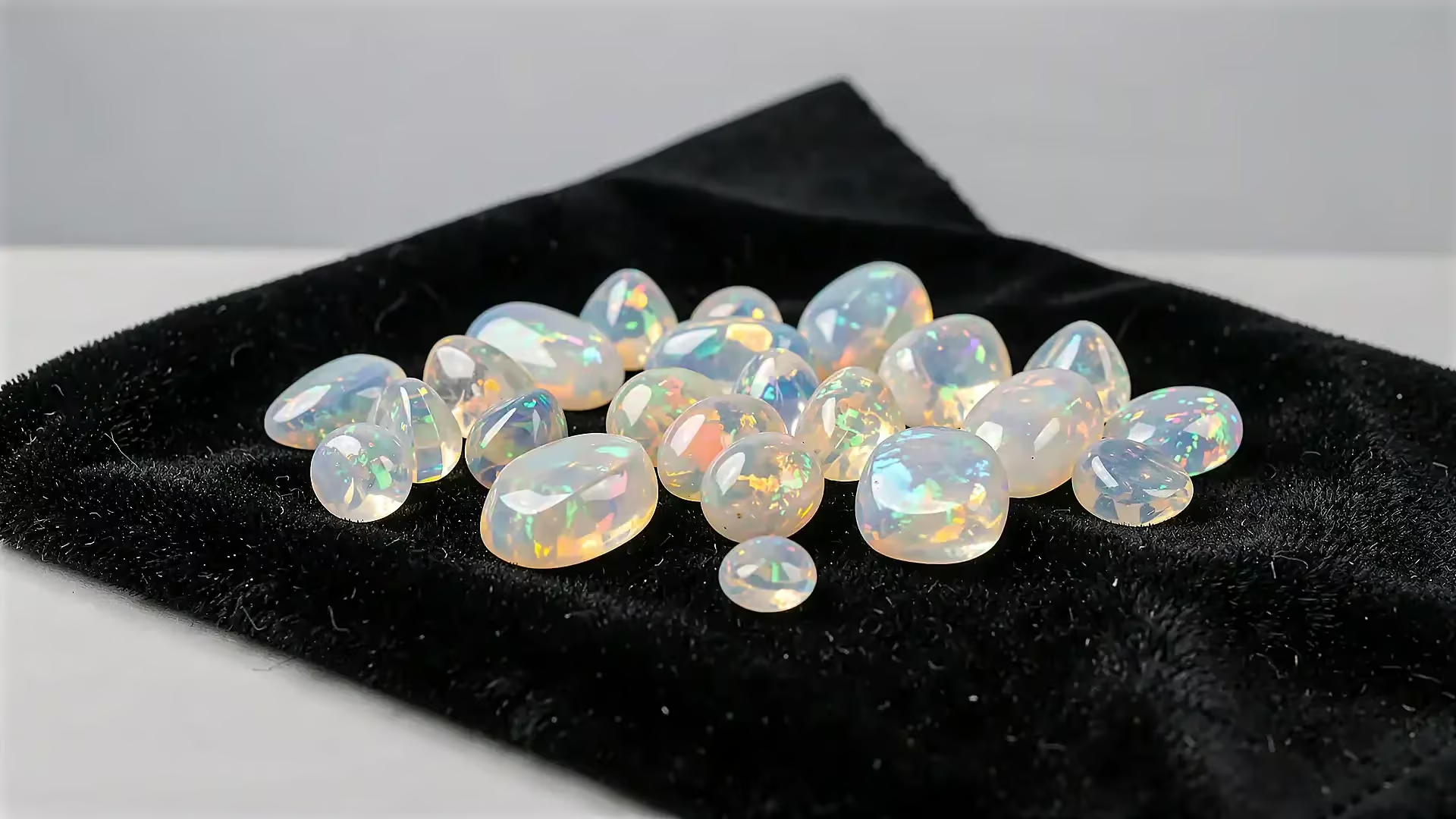
Opal traditionally stands for hope, purity, truth, creativity and faithfulness. It’s the October birthstone, and its shifting flashes of color have inspired stories for roughly two thousand years.
Some of those stories are lovely history, some are folklore, and a few are just clever marketing. I’ll sort them out for you here, so you can wear opal because it moves you, not because of a claim that doesn’t hold up.
TL;DR:
- Opal is traditionally linked to hope, purity, truth, fidelity and imagination, and it’s the October birthstone and a 14th anniversary gift.
- The “opal is unlucky” idea comes from a 19th-century novel, not from ancient belief.
- Spiritual meanings (love, prophecy, protection) come from folklore, and there’s no scientific evidence that opal heals anything.
- Opal is soft and water-bearing, so it needs gentler handling than most gemstones.
- Body color matters: white, black and fire opals each carry slightly different associations.
What opal symbolizes
The most consistent thread in opal’s story is hope. The American Gem Trade Association describes opal as a symbol of hope, fidelity and purity, prized for its play-of-color. The Gemological Institute of America records hope, purity and truth as the stone’s historical themes.
That makes sense when you hold one. A good opal doesn’t show a single color. It flickers from green to violet to orange as you turn your wrist, as if light were living inside the stone. People have read that movement as change, possibility, and a touch of magic, which is why opal so often turns up in gifts marking a new chapter.
In everyday terms, here’s how I’d summarize the traditional meanings:
- Hope and optimism: the stone’s changing colors suggest that nothing stays one shade forever.
- Purity and truth: the glow looks soft and clear, especially in lighter stones.
- Creativity and imagination: no two opals show the same pattern, so each one feels like an original.
- Fidelity: a reason opal is a recognized gift for the 14th wedding anniversary, per the AGTA.
Where the meaning comes from: a short history
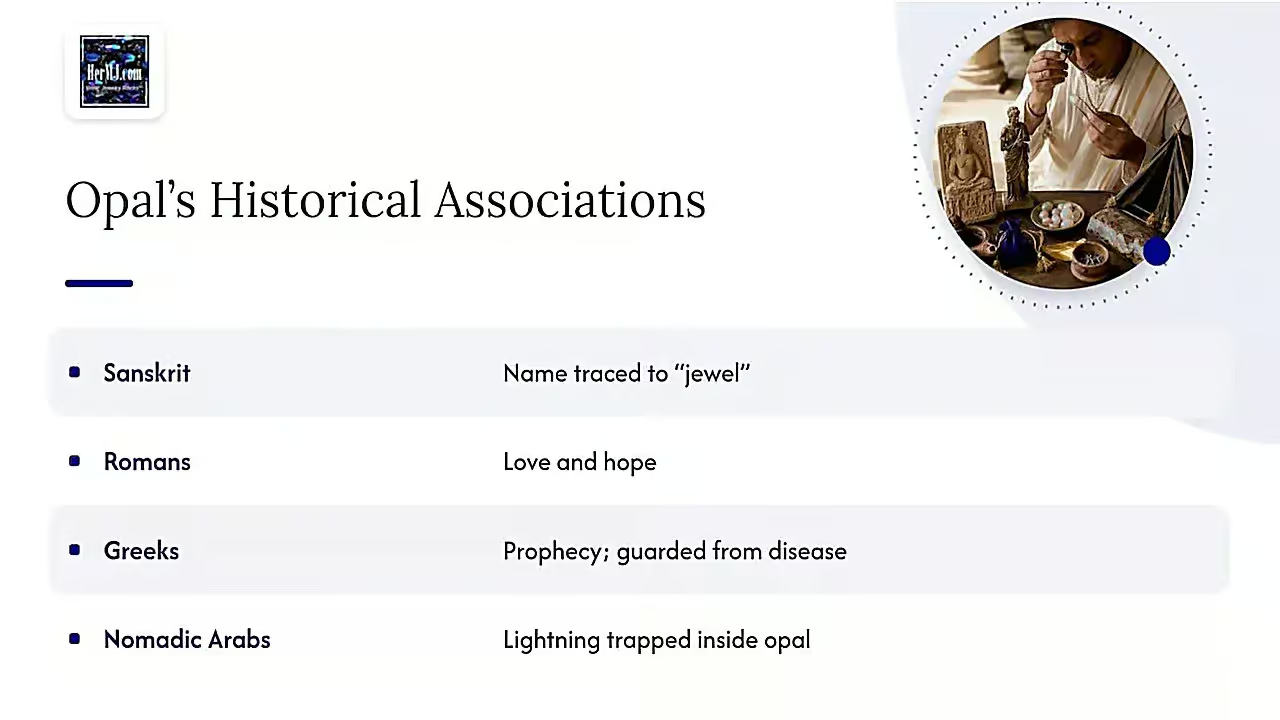
The Romans called the stone opalus, which GIA notes was close to a synonym for “precious stone.” In ancient Rome, opal stood for love and hope. The name itself is often traced further back to a Sanskrit word for “jewel.” The Old Farmer’s Almanac adds that different cultures read the stone differently: Romans tied it to love, Greeks to prophecy, and nomadic Arab tribes believed opals fell to earth during thunderstorms with lightning trapped inside.
Because an opal flashes so many colors, people once believed it held the powers of every colored gemstone at once. That idea explains why opal was considered the ultimate talisman for so long. A single stone seemed to hold a whole palette.
The Greeks went a step further. According to GIA, they believed opals gave their owners the gift of prophecy and guarded them from disease. I love that story, and I’ll come back to what it does and doesn’t tell us in the section on protection.
The opal superstition, and who started it
You may have heard that opal is bad luck unless it’s your birthstone. That belief is surprisingly young. GIA traces the idea to Sir Walter Scott’s 19th-century novel Anne of Geierstein, and the International Gem Society says the 1829 book helped give opal a poor reputation.
Nothing in ancient tradition called the stone unlucky. A fictional plot did that.
The myth stuck hard enough that jewelers reportedly saw opal sales drop. Today it’s mostly a curiosity. If someone warns you off opal, you can thank a novelist and wear yours with confidence.
Opal as the October birthstone
Opal is the traditional October birthstone, alongside tourmaline as the modern alternative. The AGTA also lists it as the gift for a 14th wedding anniversary. Birthstone lists have shifted over the years, and the International Gem Society notes that revisions have mostly been driven by marketing.
That doesn’t make the tradition less meaningful. It just means you’re free to choose whichever stone speaks to you.
If you were born in another month and still love opal, you can wear it. If you’d like to see what else pairs with each month, my guide to alternative birthstones by month is a good place to browse.
Does opal’s meaning change with its color?
To a degree, yes, though most of these distinctions are modern and come from jewelry culture rather than ancient texts.
What’s firmly documented is how color affects the stone’s look and value. GIA explains that opal types differ in body color and transparency, and that black opal is favored because its dark background makes the play-of-color stand out. Vivid flashes that cover the whole spectrum earn the highest regard in GIA’s quality factors.
Here’s how I’d describe the commonly told associations:
| Opal type | Look | Commonly associated with |
|---|---|---|
| White or light opal | Pale, milky body with soft flashes | Purity, calm, gentle optimism |
| Black opal | Dark body, vivid flashes | Mystery, individuality, strong imagination |
| Fire opal | Warm orange to red body | Energy, passion, confidence |
| Common (non-play-of-color) opal | Solid color, no flashes | Quiet, grounded comfort |
Treat that last column as tradition, not fact. Meaning is personal, and the stone you feel drawn to is usually the right one for you. If you’re curious about why gemstones come in the shades they do, I explain how gemstones get their color.
Opal’s spiritual meaning
In modern crystal practice, opal is described as a stone of emotional expression, intuition, creativity, and self-worth. Many people use it as a reminder to speak honestly with themselves, or to stay open during a transition. Those uses grow out of the older folklore: Roman love, Greek prophecy, the lightning of the Arab tribes.
Spiritual meaning works best as a personal ritual. You might wear opal on a day when you need courage to share an idea, or place a piece on your nightstand as a daily nudge toward hope. The meaning you give it is real to you, and that’s what makes a keepsake feel special.
Opal benefits and protection: what’s belief, what’s evidence
You’ll find websites claiming opal treats infections, balances energy, or shields you from harm. I’d rather be straightforward.
Crystal healing is described as a pseudoscientific practice, and there’s no peer-reviewed scientific evidence that it has any effect. Reported benefits are generally attributed to the psychological effects and belief.
That’s why the old Greek belief that opal guards against disease belongs on the history shelf, not the medicine cabinet. If you have a health concern, a licensed doctor is the person to see, and a pretty stone should never replace that visit.
What opal can offer is quieter and still valuable:
- A mindful anchor. Wearing something meaningful can help you pause and set an intention.
- Beauty you notice daily. The play-of-color is a small pleasure.
- A story to share. Opal makes a thoughtful gift because the symbolism is easy to explain.
Opal’s properties: why it needs gentle care
Here’s the part where meaning meets physics. According to the International Gem Society, opal is amorphous silica that holds 3% to 21% water, has a hardness of 5.5 to 6.5, and fractures conchoidally and unevenly. Most opals have a specific gravity of 1.9 to 2.23. AGTA also notes that opal’s Mohs hardness makes it prone to scratching and damage.
In plain language, opal is a softer, more delicate gem than quartz or sapphire, and it contains water. That’s part of why the colors seem to glow from within. It also means a few habits help:
- Put opal on after lotion, perfume, and hairspray.
- Store it separately in a soft pouch so harder stones don’t scratch it.
- Avoid sudden temperature swings and long exposure to heat or dryness.
- Choose protected styles, such as pendants and earrings, for daily wear, since they bump into fewer surfaces than bracelets.
For general cleaning guidance on handmade pieces, my handmade gemstone jewelry care guide walks you through it step by step.
My perspective on opal
I design with gemstones every day, and people most often ask about opal because of its emotional connection. This is my view: meaning is a gift you give yourself. I’d tell you that a piece of jewelry connected to an intention, a birthday, or someone you love becomes more than a physical accessory.
That’s why I focus on handmade pieces made with genuine pearls, natural gemstones, and crystals at affordable prices, and on personalizing pieces to your taste. When you choose opal, choose it for the way it moves in the light.
Think about where you’ll wear it, since a delicate stone suits a pendant better than a piece that takes daily knocks. And if you’re buying for someone else, tell them the story: hope, truth, a little bit of lightning.
— Veronique
Shopping for opal-inspired jewelry at HerMJ
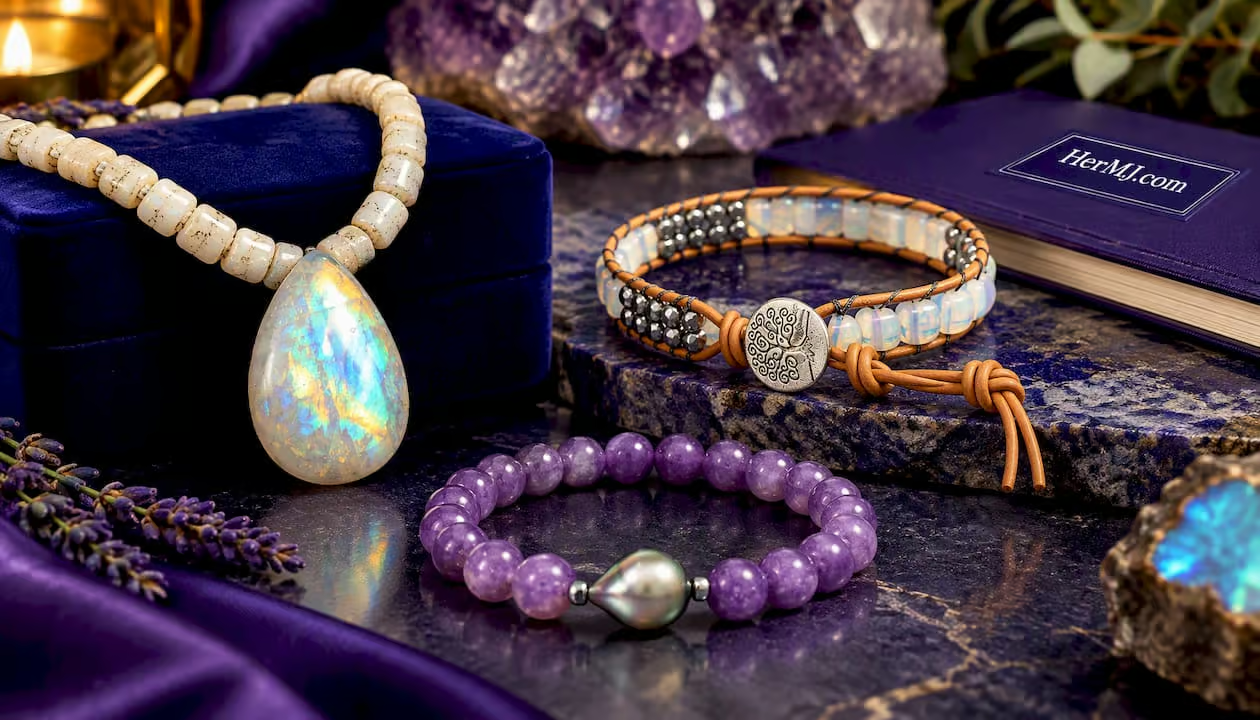
If you’d like to wear this symbolism, start with HerMJ’s Moonstone pendant. The pendant keeps the adularescence glow close to your heart and away from daily bumps.
For a softer, glowing bracelet look, the HerMJ opalite beaded bracelet is a lovely option. Opalite is sold under its own name, so read each listing to see exactly what the stone is. You can also browse all necklaces and bracelets.
US orders ship free with no minimum, and international orders ship free at $150 or more.
Styling opal so it feels like you
Opal’s color play makes it easy to wear. Soft white flashes sit beautifully against neutrals, denim, and pastel knits, while darker stones add drama to black and jewel tones. My outfit pairing guide shows how to match gemstone color with what’s already in your closet.
Pick one statement piece and let it lead. A pendant with flashes of green and blue doesn’t need a matching bracelet. Let it be the conversation starter.
FAQ
What does opal symbolize?
Opal traditionally symbolizes hope, purity, truth, fidelity and creativity. Its changing colors lead many people to see it as a stone of change and possibility. Those meanings come from history and tradition, not from science.
Is opal bad luck?
No. The idea that opal is unlucky unless it’s your birthstone comes from Sir Walter Scott’s 19th-century novel Anne of Geierstein, not from ancient belief. Jewelry and gem authorities treat it as a myth, so you can wear opal if your birthday is January to December.
Does opal have any proven benefits?
No scientific evidence shows that opal or any crystal heals or treats illness. Studies of crystal healing suggest that reported effects are due to the placebo effect. Many people still enjoy opal as a personal reminder of hope or creativity, which is a perfectly good reason to wear it.
What is the spiritual meaning of opal?
Spiritually, opal is linked to emotional expression, intuition, imagination and optimism. These ideas build on old folklore, such as Roman associations with love and Greek beliefs in prophecy. Treat them as personal symbolism rather than fact.
What are opal’s physical properties?
Opal is amorphous silica that contains 3% to 21% water. It has a Mohs hardness of 5.5 to 6.5, so it scratches more easily than many gems. It’s best protected from knocks, harsh chemicals and extreme temperature changes.
Sources
- Opal, American Gem Trade Association
- Opal History and Lore, GIA
- Opal Quality Factors, GIA
- October Birthstones: Opal and Tourmaline, The Old Farmer’s Almanac
- Opal Gems: Value, Price, and Jewelry Information, International Gem Society
- Opal Symbolism, International Gem Society
- Crystal healing, Wikipedia
Recommended
- Why Jewelry Symbolizes Relationships: Meanings and History
- Meaning Of Amethyst Crystal
- Amethyst Meaning: An Artisan Buying Checklist
- Agate Meaning: What This Banded Stone Represents