


What Is Organic Jewelry Design? A 2026 Style Guide
The Edit
- Organic jewelry design captures natural forms through fluid shapes, asymmetry, and textured surfaces. It emphasizes natural materials like pearls, amber, coral, and mineral gemstones, crafted with intentional irregularities and sculptural silhouettes. This style offers unique, comfortable, and meaningful jewelry aligned with sustainability and personal expression.
Organic jewelry design is the art of creating pieces that mirror the natural world’s flowing shapes, textures, and imperfect beauty.
Rather than following strict geometric rules, this style draws inspiration from leaves, water, shells, and branches, producing fluid silhouettes and relaxed asymmetry that feel alive on the body. The 2026 Flow & Form trend confirms that organic jewelry is no longer a niche aesthetic.
It’s a full movement celebrating individuality through imperfection, and it’s resonating deeply with people who care about sustainable fashion and personal expression.
What is organic jewelry design, and how is it defined?
Organic jewelry design is a style that captures the essence and textures of nature through abstraction rather than literal copies of natural objects.
A leaf pendant doesn’t look like a pressed botanical specimen. Instead, it evokes natural beauty emotionally through varied curves, irregular surfaces, and a sense of growth rather than construction. That distinction is what separates organic design from decorative motifs of nature.
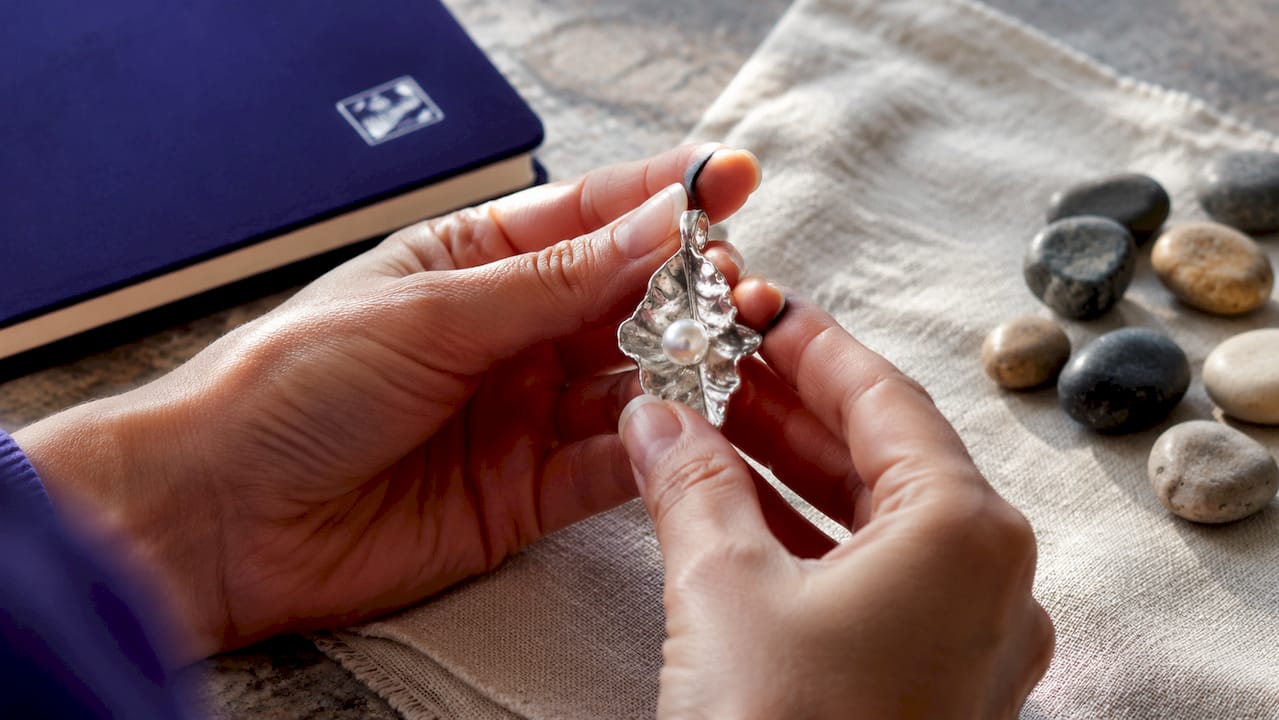
The defining traits of organic jewelry are asymmetry, fluid movement, sculptural silhouettes, and varied surface textures. You won’t find repeating geometric grids or mirror-image symmetry here.
Instead, each piece reads as something that grew rather than something stamped out of a mold. Fluid shapes and natural textures are the visual language of this style, and they communicate something geometric jewelry simply cannot: a sense of ease and natural belonging.
Organic design is also distinct from the broader category of “nature-inspired” jewelry. A piece can feature a butterfly motif and still be rigidly geometric. True organic design prioritizes the feeling of nature over its literal imagery. That’s a subtle but meaningful difference, and it’s the reason organic pieces feel so personal to the people who wear them.
What materials are used in organic jewelry?
The materials in organic jewelry split into two clear categories: organic gemstones and mineral gemstones. Understanding the difference helps you appreciate why certain materials feel so at home in this design style.
Organic gemstones are formed by living organisms rather than by geological processes. The most recognized examples include:
- Pearls: Formed inside mollusks, pearls carry a soft luster and subtle surface variation that no two stones share exactly. They’re the quintessential organic gemstone in jewelry design.
- Amber: Ancient tree resin fossilized over millions of years. Its warm golden tones and occasional inclusions make every piece one of a kind.
- Coral: A skeletal material from marine organisms, prized for its branching forms and deep color range.
- Jet: A form of fossilized wood, historically used in mourning jewelry for its deep matte black finish.
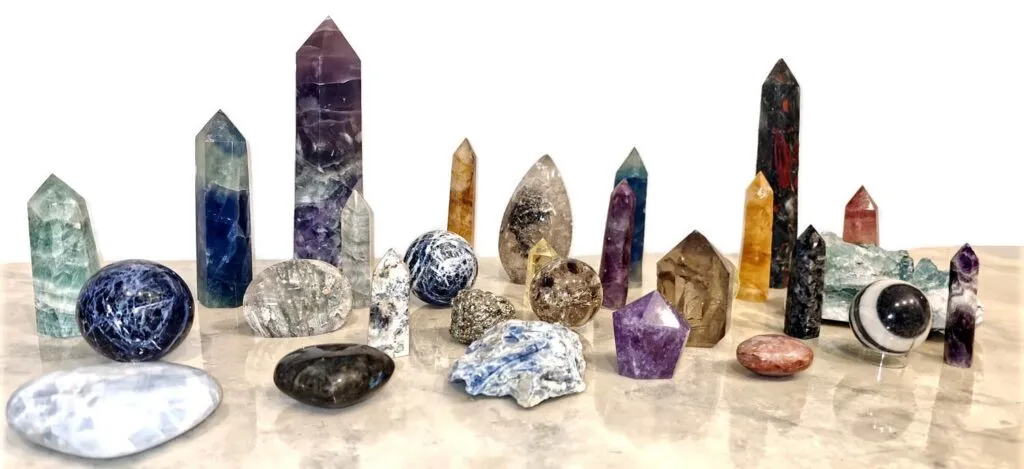
Mineral gemstones like peridot, aquamarine, garnet, and moonstone also appear frequently in organic jewelry. Designers choose them for their color, translucency, and the way they interact with light when set in fluid, asymmetric metalwork. You can see this combination beautifully in handcrafted natural stone jewelry that pairs raw gemstone energy with sculptural settings.
Sustainable and natural materials align naturally with eco-conscious values, which is a big reason organic jewelry resonates with the sustainable fashion community. When a piece uses a pearl formed by a living creature or amber that took millennia to develop, it carries a story no synthetic material can replicate.
Pro Tip: Organic gemstones like pearls and amber are more susceptible to chemicals, heat, and abrasion than mineral stones. Clean them gently with a soft damp cloth and store them separately to protect their surfaces.
What techniques and design principles define organic jewelry?
Organic jewelry’s distinctive look comes from deliberate creative choices, not happy accidents. Skilled artisans use specific techniques to produce that naturalistic, grown quality. Here are the core principles at work:
Intentional asymmetry. Organic designers deliberately avoid mirror symmetry. They use asymmetric spacing and varied curve angles to create a relaxed balance that feels natural rather than engineered. Recognizing this quality is one of the clearest ways to identify organic craftsmanship in a finished piece.
Mixed surface finishes. Blending polished, satin, and sandblasted textures within a single piece creates dynamic depth. This technique mimics how natural objects catch light unevenly, the way a shell gleams in some spots and goes matte in others.
Sculptural silhouettes. Organic pieces are often three-dimensional in a way that flat geometric jewelry isn’t. Designers build volume and movement into the metalwork itself, so the piece shifts and catches light as the wearer moves.
Abstracted natural forms. Rather than copying a leaf exactly, a designer abstracts its essential qualities: the curve of its edge, the rhythm of its veins, the way it tapers. This abstraction is what gives organic jewelry its emotional resonance without making it feel costume-like.
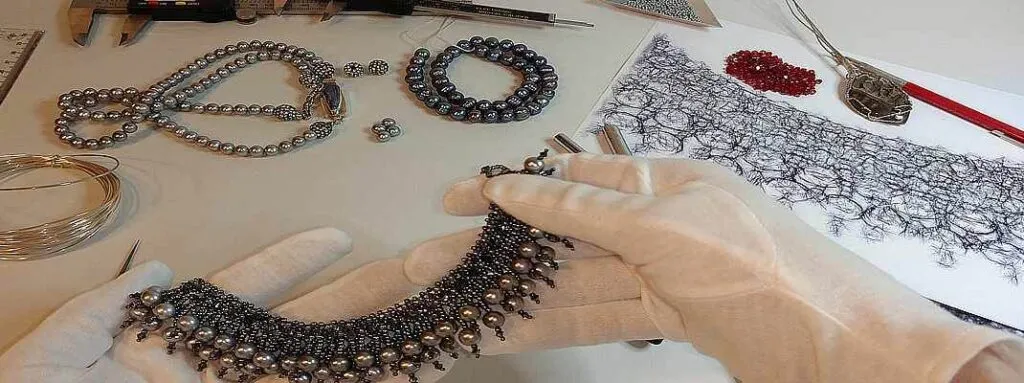
Introduced irregularities. Jewelry makers deliberately introduce irregularities such as varied surface finishes and asymmetric spacing to produce a naturalistic feel. This is skilled craft, not carelessness. You can learn more about recognizing these hallmarks in a guide on truly handcrafted pieces.
Pro Tip: When shopping for organic jewelry, turn the piece over and examine the back. Authentic handcrafted organic work shows subtle tool marks and slight variations that machine-made pieces won’t have.
What are the benefits of choosing organic jewelry?
Organic jewelry offers a set of benefits that go well beyond aesthetics. Here’s why so many people drawn to sustainable fashion are making it their go-to style:
- Genuine uniqueness. Because organic design embraces asymmetry and natural variation, no two pieces are truly identical. That’s especially true when organic gemstones like pearls are involved, since each stone forms differently. Your piece is yours alone.
- Comfort and wearability. Soft, flowing shapes sit gently against the body. There are no sharp geometric edges or rigid forms pressing into your skin. The 2026 Flow & Form trend specifically highlights how organic pieces balance statement style with everyday wearability.
- Emotional connection. Organic jewelry connects the wearer to nature in a way that feels personal and expressive. Wearing a piece shaped by natural inspiration carries a quiet meaning that purely decorative jewelry often lacks.
- Sustainability alignment. The 2026 jewelry market shows rising consumer preference for handmade, nature-inspired pieces that reflect environmental awareness. Organic jewelry aligns naturally with that value system, especially when it features ethically sourced organic gemstones.
- Wearable art. Organic pieces function as a sculpture you can wear. They invite conversation and reflect a personal aesthetic that goes beyond trend cycles.
Organic jewelry also ages beautifully. Pearls develop deeper luster over time with wear. Amber’s surface can take on a warm patina. These materials reward those who choose them, making organic jewelry a genuinely long-term investment in personal style.
How does organic jewelry design compare with other design styles?
Organic and geometric jewelry styles differ fundamentally in their inspiration, form, and mood. Understanding that contrast helps you choose pieces that genuinely match your personality and lifestyle.
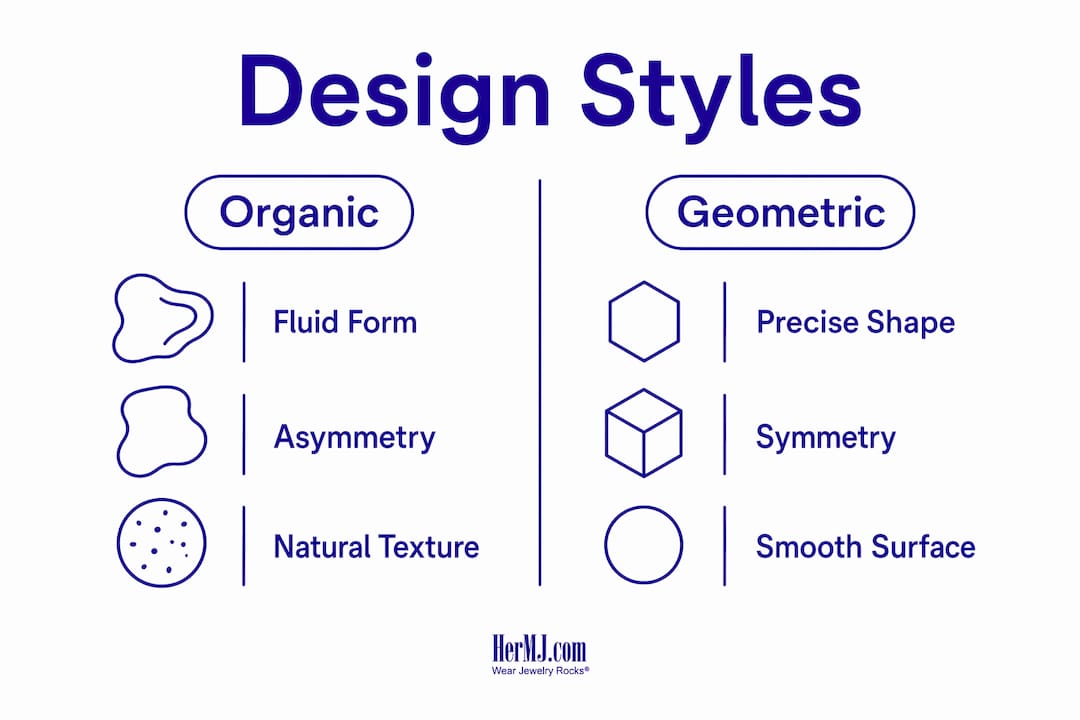
| Style feature | Organic design | Geometric design |
|---|---|---|
| Form | Fluid, irregular, sculptural | Structured, angular, repeating |
| Symmetry | Relaxed, asymmetric balance | Precise, mirror symmetry |
| Texture | Varied, mixed finishes | Uniform, consistent surface |
| Inspiration | Nature, living forms, growth | Architecture, mathematics, order |
| Mood | Soft, personal, expressive | Bold, formal, graphic |
| Best suited for | Casual wear, creative styling, eco-conscious values | Professional settings, minimalist aesthetics |
Organic design prioritizes natural inspiration and imperfect beauty, while geometric design celebrates precision and structure.
Neither is superior.
They serve different wearers and different moments. Someone drawn to a clean, architectural wardrobe may love geometric pieces for daily wear. Someone who gravitates toward natural fabrics, earthy tones, and sustainable brands will almost always feel more at home in organic jewelry.
The interesting space is where both styles meet. Some designers blend organic metalwork with geometric stone cuts, or set an asymmetric pearl in a structured bezel.
That tension between order and nature produces some of the most compelling contemporary jewelry being made right now. If you want to see how organic gemstones translate across seasons and occasions, the 2026 gemstone style guide offers a useful reference point.
Key Takeaways
Organic jewelry design is the most personal and sustainable choice in contemporary jewelry, defined by natural inspiration, asymmetry, and materials born from living organisms.
| Point | Details |
|---|---|
| Core definition | Organic jewelry design captures nature’s essence through fluid shapes, asymmetry, and abstracted natural forms. |
| Material distinction | Organic gemstones like pearls, amber, and coral come from living organisms and require gentle, specialized care. |
| Signature techniques | Mixed surface finishes, intentional asymmetry, and sculptural silhouettes produce the naturalistic organic look. |
| Key benefits | Organic pieces offer genuine uniqueness, everyday comfort, emotional resonance, and alignment with sustainable values. |
| Style contrast | Organic design is soft and imperfect, while geometric design is structured and precise, serving different wearers and moods. |
Why organic jewelry is worth paying attention to in 2026
I’ve spent years working with pearls and gemstones, and I’ll tell you something that doesn’t get said enough: most people underestimate how much a jewelry style communicates about who you are before you say a word.
Organic jewelry is particularly honest in that way. It doesn’t perform perfectly. It celebrates the kind of beauty that actually exists in nature, which is varied, textured, and a little unpredictable.
What I find genuinely exciting about the organic design movement in 2026 is that it goes beyond an aesthetic trend. It’s a values statement.
When someone chooses a pearl necklace with an asymmetric drape over a perfectly uniform strand, they’re saying something about how they see the world. That matters to me as someone who works with these materials every day.
My advice for anyone new to organic jewelry: start with pearls. They’re the most accessible organic gemstone; they work with almost any outfit, and their natural luster does the design work for you. A single freshwater pearl on a fluid wire setting is a masterclass in organic design principles. From there, you can build toward more sculptural pieces as your eye develops.
One thing I always tell people: don’t confuse organic design with rustic or unfinished. The best organic jewelry is exquisitely crafted. The irregularities are intentional. The asymmetry is considered. Knowing how to appreciate artisan craftsmanship changes how you shop and what you value in a piece.
— Veronique
HerMJ’s artisan pearl and gemstone jewelry collection
HerMJ crafts artisan jewelry using genuine pearls and organic gemstones, which makes it a natural fit for anyone drawn to organic design principles. Each piece is handmade, which means the subtle variations and fluid forms that define organic jewelry are built right into the collection.
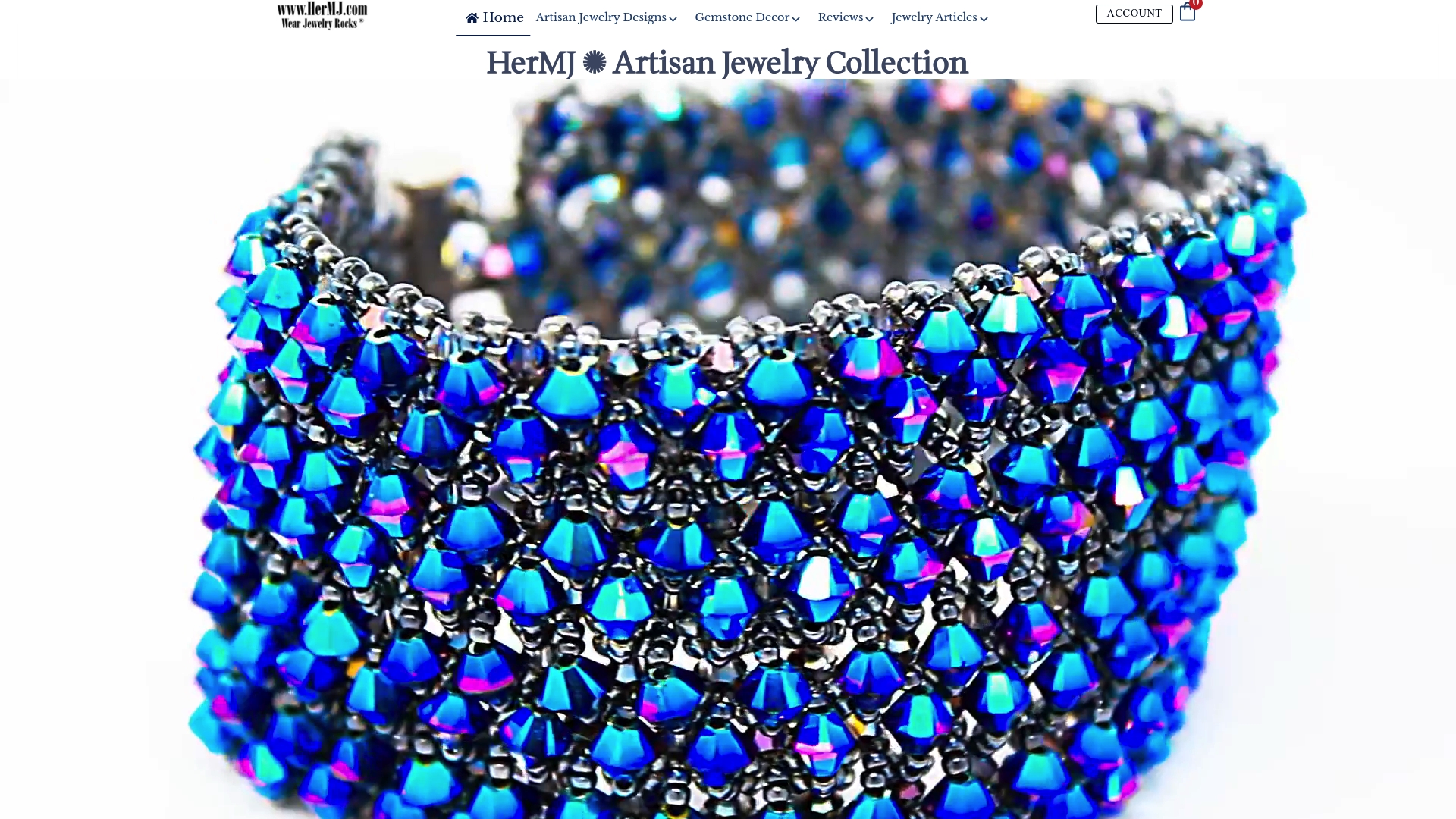
If you’re ready to wear organic design, the elegant Freshwater Pearl Necklace is a beautiful starting point. For something that blends organic gemstones in a more layered composition, the Pearl And Aquamarine Necklace and the Peridot And Pearl Fusion Necklace both capture that fluid, nature-inspired spirit.
US orders ship free with no minimum. International orders ship free for orders of $150 or more, and orders below that threshold ship via USPS, with the customer covering the cost.
FAQ
What is the definition of organic jewelry design?
Organic jewelry design is a style defined by fluid shapes, asymmetry, and natural inspiration drawn from forms like leaves, water, shells, and branches. It prioritizes the feeling of nature over geometric precision or strict symmetry.
What materials are used in organic jewelry?
Organic jewelry features both organic gemstones, including pearls, amber, coral, and jet, and mineral gemstones such as peridot, garnet, and aquamarine. Organic gemstones come from living organisms and carry unique natural variation that reinforces the organic aesthetic.
How is organic jewelry made?
Organic jewelry is made through handcrafting techniques that introduce intentional asymmetry, mixed surface finishes, and sculptural metalwork. Artisans abstract natural forms rather than copying them literally, producing pieces that feel grown rather than manufactured.
What are the benefits of organic jewelry over geometric styles?
Organic jewelry offers genuine uniqueness, everyday comfort, and a personal connection to nature that geometric styles don’t provide. It also aligns with sustainable fashion values, particularly when it features ethically sourced organic gemstones.
How do I recognize authentic organic jewelry craftsmanship?
Look for varied curve angles, a relaxed balance rather than perfect symmetry, and mixed surface textures within a single piece. Turning the piece over to check for subtle tool marks and slight variations confirms that it is handcrafted, authentic, and organic.
Recommended
- Gemstone Jewelry for Every Season: Style Guide
- What Is Art Deco Jewelry Style? A Design Guide
- Jewelry Styles Explained: Know What’s Important
- Unique Gemstone Necklace Styles Worth Wearing