


Why Handmade Jewelry Has Imperfections and Why That Matters
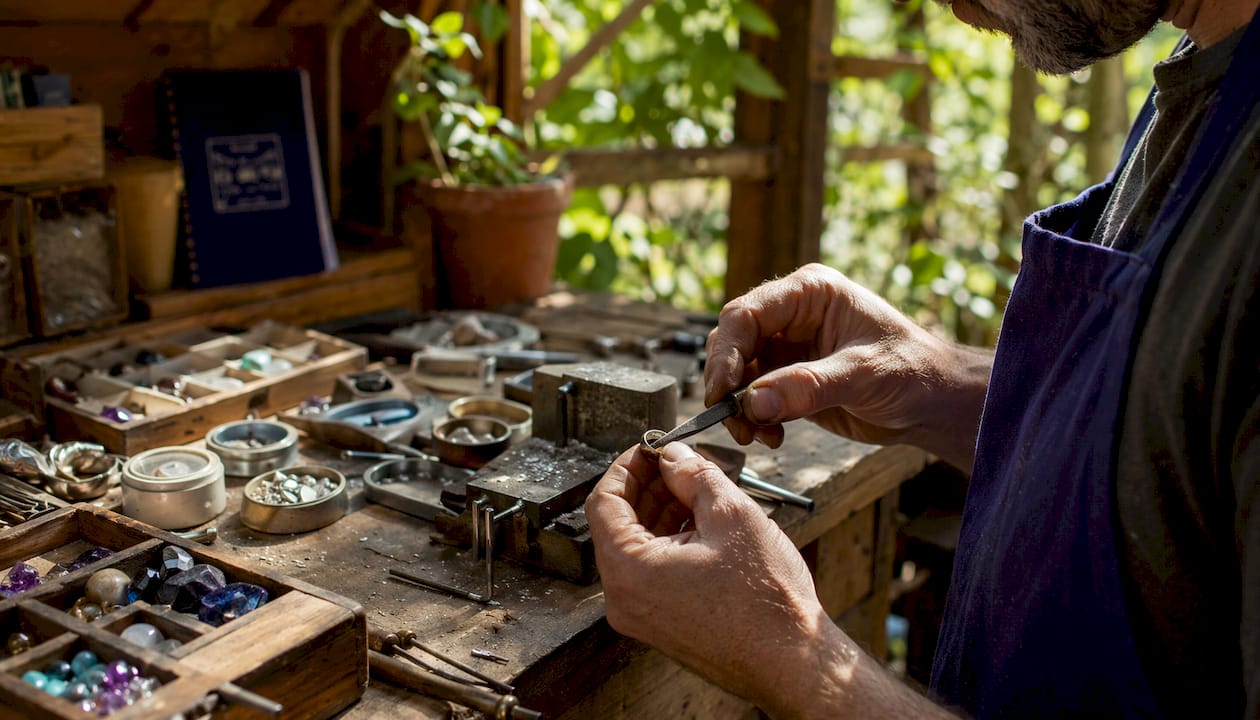
Handmade jewelry has imperfections because every piece is shaped by human hands, not machines. A slight asymmetry in a pendant, a faint hammer mark on a silver surface, a stone set just a fraction off-center — these aren’t mistakes. They’re the natural result of an artisan making deliberate choices at every stage of creation. Here’s what those variations actually represent:
- Minor asymmetry in shape or prong placement, reflecting hand-positioning during forming
- Tool marks from hammering or soldering that can’t be replicated twice
- Textural differences across the surface where hand-finishing varies with each pass
- Subtle size shifts between paired pieces like earrings, caused by manual shaping
- Natural material variation in gemstones and pearls that no two pieces share
These traits aren’t flaws to apologize for. They’re proof that a skilled person made your piece, one decision at a time.
Why does human craftsmanship naturally create imperfections?
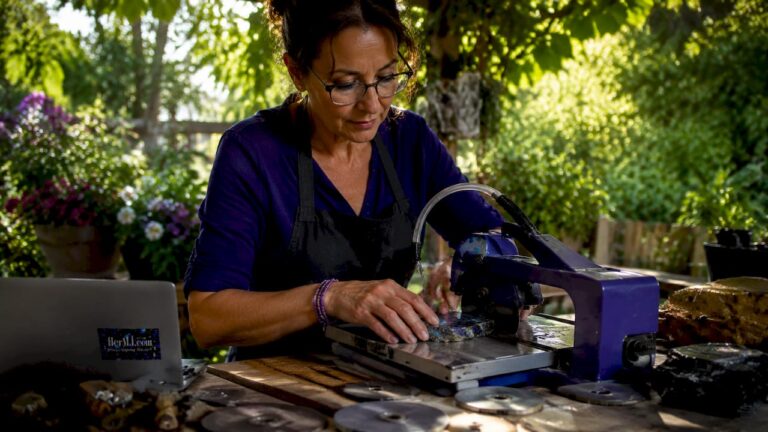
Every artisan works with hand tools and time-tested techniques: hammering, soldering, hand-finishing, stone setting. Artisan jewelers use tools and old techniques like hammering and soldering that can’t produce identical marks twice, so each piece carries its own fingerprint of texture and story. That’s not a limitation. It’s the nature of the process.
A factory machine repeats the same motion thousands of times with no variation. An artisan, by contrast, makes micro-adjustments throughout, responding to how the metal behaves, how the stone sits, how the surface catches light. Those adjustments are where character comes from.
- Each stage involves individual judgment, from shaping metal to setting stones
- No two soldering passes are identical, leaving subtle surface differences
- Hand-finishing varies with pressure and angle, creating organic texture
- Material response differs with temperature, humidity, and metal purity
Mass-produced items are engineered for complete uniformity, while handmade pieces result from individual decisions at each stage, causing unique markers. That contrast is exactly what makes handmade jewelry worth seeking out.
Pro Tip: When you examine a handmade piece, look at the back and underside. Artisan work shows consistent attention even where you can’t see it while wearing the piece.
How do imperfections add to the value of handmade jewelry?
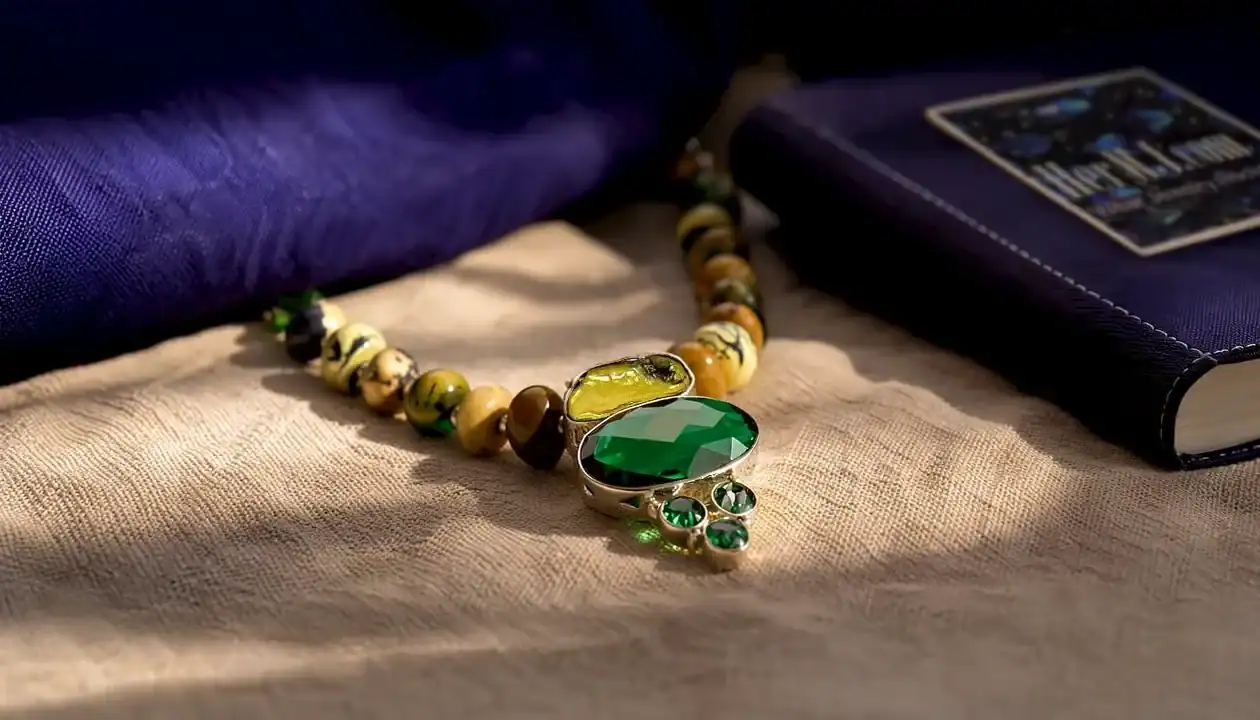
The variations in a handmade piece create something a machine-made item simply can’t offer: depth. That small shift in curve, the way light hits a hammered surface, the organic texture of a hand-polished edge. These details give a piece soul. Unique imperfections add character, reflecting the artisan’s style and making each piece feel personal.
Collectors and enthusiasts who appreciate artisanal craftsmanship actively look for these markers. They’re not tolerating imperfections. They’re seeking them as proof of authenticity. A piece that looks too perfect, too uniform, often signals mass production regardless of how it’s marketed.
- Emotional connection grows when you know no one else owns the exact same piece
- Perceived value increases with visible evidence of skilled human work
- Imperfections age gracefully, developing patina and character over time
- Each piece becomes a collectible, tied to a specific artisan’s hand and moment
There’s also something reassuring about a piece that doesn’t pretend to be flawless. It reflects the same organic quality you find in handmade jewelry’s unique benefits — a warmth that polished uniformity can’t replicate.
What causes the most common imperfections in handmade jewelry?
Understanding where specific variations come from helps you appreciate them rather than question them. Most arise from four sources: the material itself, the tools used, the process of setting, and the finishing stage.
- Metal softness and purity affect how evenly a surface forms under a hammer or file
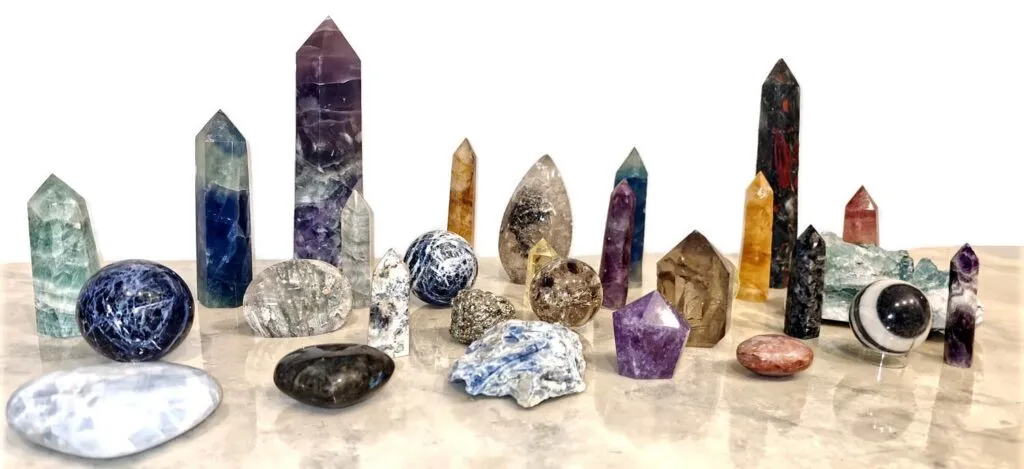
- Gemstone and pearl shapes are naturally irregular, so settings adapt to each stone
- Soldering marks remain visible when solder flows slightly beyond the join
- Hand-polishing variation means some areas catch light differently than others
- Dimensional shifts occur when wire or sheet metal responds differently to heat
Imperfections in handmade jewelry typically stem from material behavior, manual shaping, stone setting, and finishing practices, which together contribute to slight variations rather than defects.
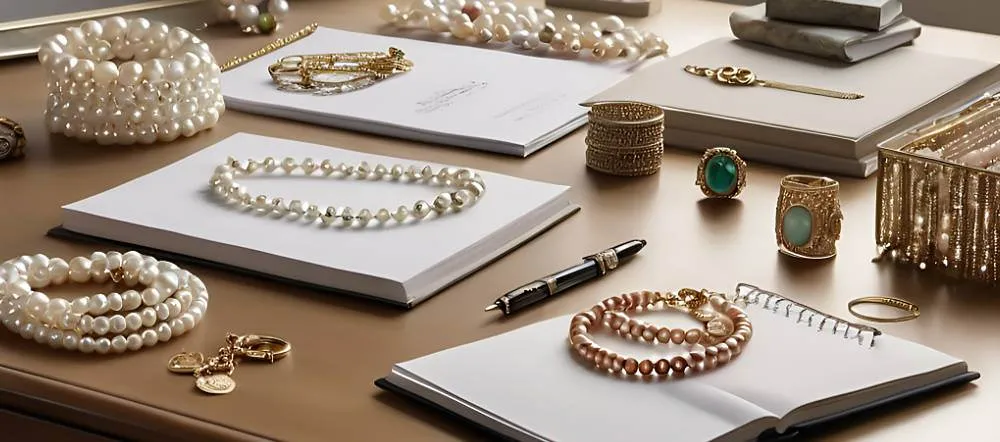
A pearl that sits slightly forward in its setting isn’t loose. It’s positioned where the artisan found the best visual balance for that particular stone’s shape.
These small variations also don’t compromise durability. Mindful care, like keeping pieces away from harsh chemicals and storing them separately, preserves the finish and protects the artisan’s work over time.
How can you recognize and appreciate the details of artisan craftsmanship?
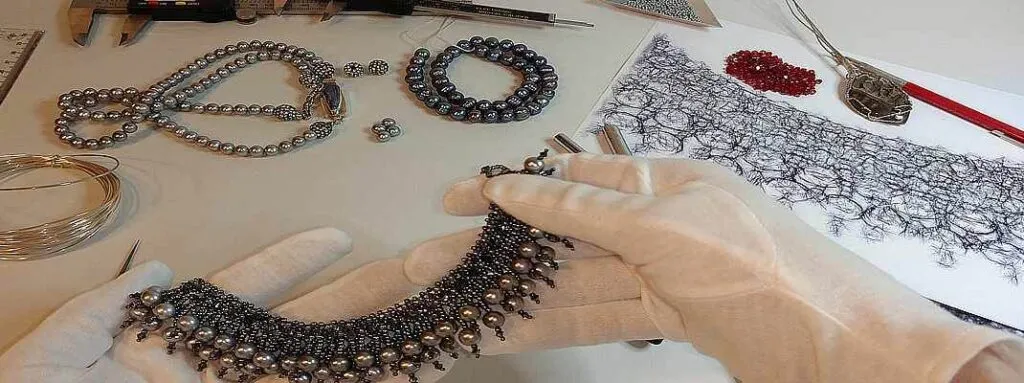
Learning to read a handmade piece changes how you experience it. You stop looking for perfection and start looking for intention. Identifying authentic artisan-crafted jewelry involves recognizing distinct features such as asymmetrical prong settings, subtle polishing differences, and evidence of thoughtful human intervention in multiple details.
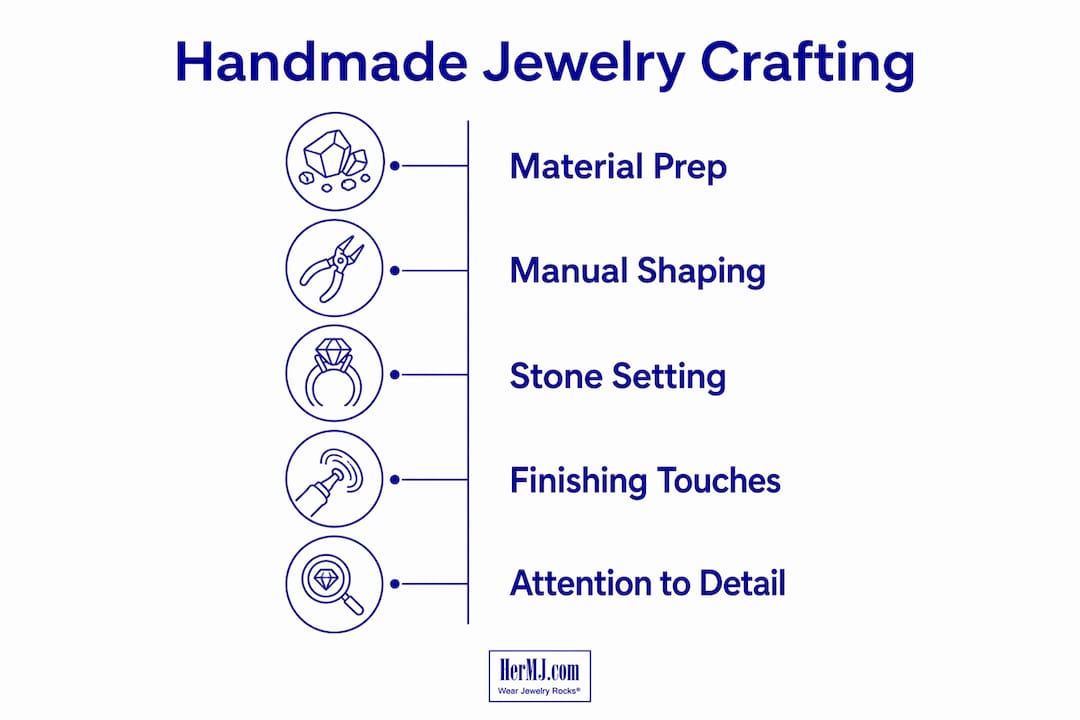
Start at the surface. Run your finger across the back of a pendant or the inside of a bracelet. Handmade pieces often show gentle texture variations where machine-made pieces feel uniformly smooth. Look at stone settings closely. Prongs that vary slightly in height or angle were placed by hand, not stamped by a die.
Consistency of finish matters too, even when the finish itself varies. A skilled artisan produces variation with control, not carelessness. Handmade jewelry makers can detect and fix issues like uneven links or off-center stone settings that factory workers performing isolated tasks might miss. That individual attention shows in the final piece.
Pro Tip: Compare the front and back of a piece. Artisan work shows care on surfaces you’d never see in a photo. If the back looks rushed or rough, it may be “hand-finished” in name only.
If you want to go further, learning about handcrafted jewelry-making techniques gives you a real appreciation for why certain marks appear and what they say about the maker’s process.
Key Takeaways
Handmade jewelry has imperfections because skilled artisans use traditional hand tools and individual judgment at every stage, producing variations in texture, shape, and finish that no machine can replicate or erase.
| Point | Details |
|---|---|
| Imperfections are intentional markers | Tool marks, asymmetry, and texture differences reflect the artisan’s process, not careless work. |
| Human craftsmanship can’t produce uniformity | Hammering, soldering, and hand-finishing create unique surface variations in every piece. |
| Variations increase value and authenticity | Collectors and wearers seek artisan markers as proof that a piece is genuinely handmade. |
| Material behavior drives many differences | Metal purity, gemstone shape, and heat response all contribute to subtle dimensional shifts. |
| Individual inspection raises quality | Artisans examine every piece personally, catching issues that statistical factory sampling misses. |
At HerMJ, every piece is crafted by hand using genuine pearls and gemstones, which means each one carries its own quiet signature. If you’re drawn to jewelry that feels personal rather than perfect, explore the Elegant Freshwater Pearl Necklace or the Pearl and Aquamarine Necklace, both made with the kind of care that shows up in the details. US orders ship free with no minimum.
Recommended
- How to Identify Truly Handcrafted Jewelry Pieces
- How to Appreciate Artisan Jewelry Craftsmanship Details