


925 Stamp Meaning: What Sterling Silver Marks Tell You
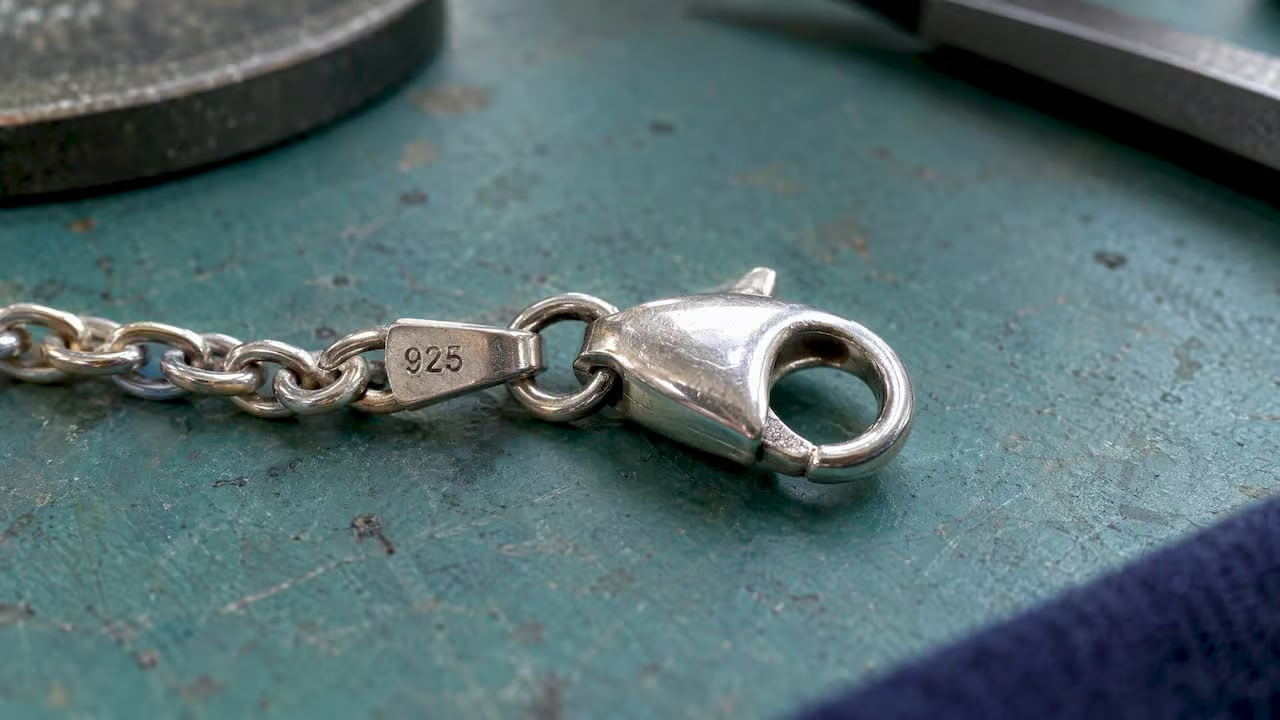
A 925 stamp means the piece is sterling silver: 925 parts per thousand pure silver (92.5%), with the remaining 7.5% made up of other metals, usually copper.
That tiny number, pressed near a clasp or on the inside of a band, is a purity mark. It tells you about the metal. It doesn’t tell you who made the piece, how well it was made, or whether the stamp itself is trustworthy.
I’ll walk you through what the stamp says, what variations like S925 and 925 Italy mean, how 925 compares with 999 fine silver, and the simple checks I use myself. Think of a stamp as a good first clue, never the final verdict.
TL;DR:
- 925 means 92.5% pure silver and 7.5% other metals, which is the standard for sterling silver in the US.
- S925 and 925 Italy are variations on the same purity claim. The letters or country name don’t change the silver content.
- 999 fine silver is purer but too soft for most everyday jewelry, so 925 is the practical choice for pieces you’ll wear often.
- A stamp can be faked, so look for a maker’s mark too, and confirm with a few simple home checks.
- Tarnish and the occasional green mark on skin are normal for sterling, not signs of a fake.
What the 925 stamp actually says
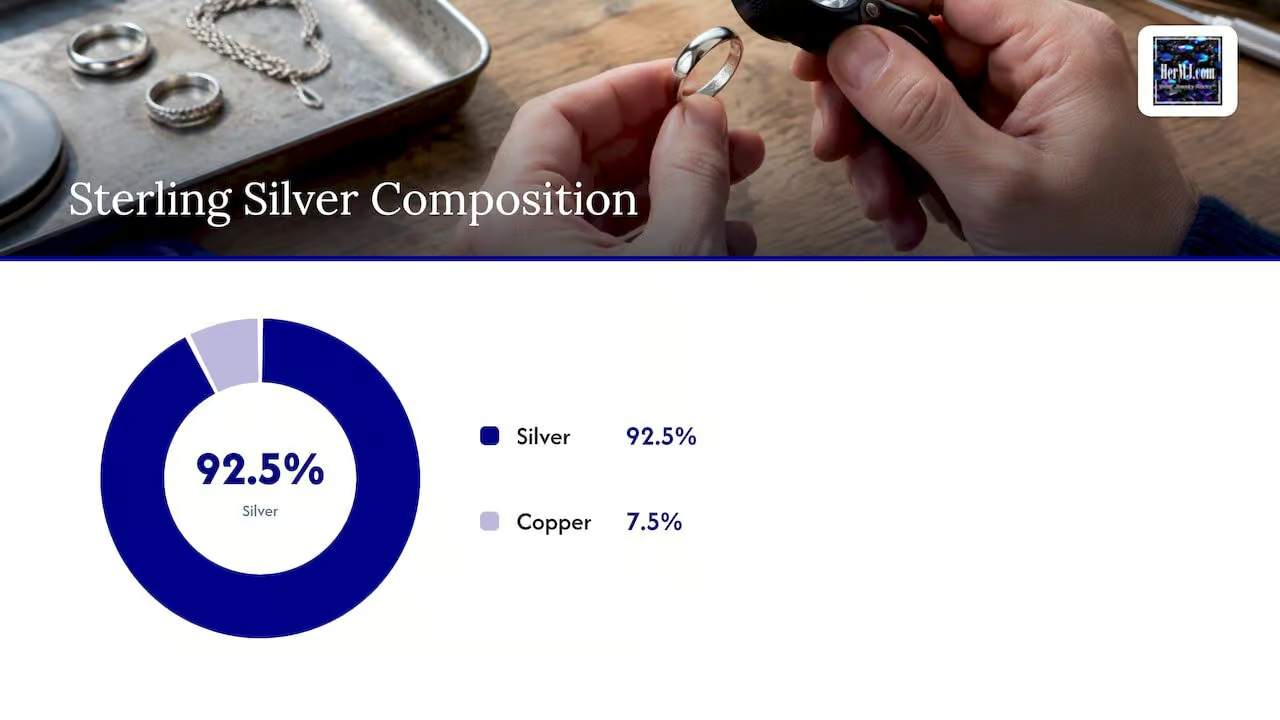
The number describes a ratio. The U.S. Geological Survey explains that silver purity is expressed in parts per thousand, called fineness: pure silver is 1,000 fine, and sterling, at 92.5 percent silver, is 925 fine. So “925” is simply shorthand for 925 parts silver out of every 1,000.
The Federal Trade Commission uses the same math. Under its guidance, the words silver, sterling, and sterling silver describe products with 92.5% pure silver, and such products are sometimes marked 925.
In the US, you can’t legitimately call an item sterling if it falls below that threshold.
GIA, the gemological institute, describes it the same way: sterling is an alloy of 925 parts silver and 75 parts copper, and the stamp is known as a quality mark.
Why the other 7.5% matters
Silver in its pure state is beautiful. According to the USGS, it has the whitest color and the highest reflectivity of any metal. It’s also soft. A pure silver bracelet would dent, bend, and scratch with ordinary wear.
Adding a little copper gives the metal backbone. That’s the whole story behind sterling: a practical balance of luster and strength that keeps a handmade piece in shape for years. As a designer, I think of it as the quiet structure behind the shine.
S925, 925 Italy and other variations
You’ll see the number written several ways, and it helps to know what each one means.
| Mark | What it means | What it doesn’t tell you |
|---|---|---|
| 925 | Sterling silver, 92.5% pure | Who made it |
| S925 | The same claim, often with an S for “sterling” or “silver” | Whether the maker is accountable |
| 925 Italy | Sterling silver, marked as made in Italy | Quality of design or finish |
| STERLING | The word instead of the number | Maker or origin |
| 925 plus a small logo | Sterling, with a maker or brand identified | Nothing extra needed, this is the best case |
What “925 Italy” means
The stamp makes two separate statements. The 925 is the purity. Italy indicates the country of origin, and Italy has a long reputation for chain-making, which is why you often see it on chains and necklaces.
The word doesn’t make the silver purer. A sterling piece made in Turkey, India, Thailand, or the US is still 92.5% silver, and a missing country name doesn’t make it fake.
What S925 means
S925 is common on pieces made overseas and sold through online marketplaces. In most cases, it’s just sterling written another way.
Because the letter isn’t a formal standard on its own, I’d treat S925 as a prompt to look for more clues, such as a maker’s mark, rather than as proof.
Stars, dots and other small marks
Tiny symbols next to the 925 are usually a maker’s mark, a factory code, or a design flourish. They can be useful. A mark that’s consistent across a seller’s pieces tells you someone is standing behind the work. That brings us to the part most guides skip.
Why a maker’s mark matters as much as the number
The FTC says that when a quality mark like 925 is used, it should be accompanied by the maker’s mark or registered trademark of the manufacturer. The reasoning is accountability. If a company puts its name next to the claim, it’s putting its reputation there too.
An item stamped 925 with no brand or maker’s mark is more suspect than one that clearly identifies who’s behind it. That’s why, when I source or design, I care as much about the story behind the stamp as the stamp itself.
Stamps can also be faked. Sellers sometimes stamp 925 on plated base metal to fool buyers, which is why Jewelers Mutual advises using a magnet test or a professional assessment when you’re in doubt, rather than relying on the stamp alone.
925 vs 999: which silver is better for jewelry?
Both are real silver. They simply sit at different points on the purity-versus-durability scale.
| 925 sterling | 999 fine silver | |
|---|---|---|
| Silver content | 92.5% | 99.9% |
| Other metals | About 7.5%, usually copper | Trace amounts |
| Feel | Firm, holds its shape | Soft, bends and scratches easily |
| Best for | Necklaces, bracelets, earrings, daily wear | Special-purpose or low-wear pieces |
| Typical stamp | 925 or STERLING | 999 or FINE SILVER |
Fine silver has a gorgeous, bright white look, but its softness is also its weakness. Thin chains, prongs, and clasps made from it wear down fast.
GIA notes that silver’s malleability makes it easy to shape, and that frequent wear leaves nicks and dents on softer metals. For pieces you’ll wear most mornings, 925 is the sensible answer, and I’d choose it every time.
One common myth is worth clearing up: 999 isn’t immune to tarnish. Fine silver tarnishes too, only more slowly, because it has less copper to react. So a 999 stamp isn’t a way to avoid cleaning.
How to tell whether a 925 piece is real
No single test is definitive. I combine two or three and look at the whole picture.
- Find the stamp and the maker’s mark. Check inside the clasp, on the tag-end of a chain, or on the back of a pendant. Use a loupe or your phone’s camera zoom. Crisp, evenly pressed characters are a better sign than blurry or oddly raised ones.
- Try a magnet. Real sterling is non-magnetic, so it shouldn’t be strongly attracted to a magnet, as Jewelers Mutual explains. A strong pull suggests a different base metal. Keep in mind that a clasp or spring can contain steel, so test the main body of the piece.
- Rub it with a clean white cloth. Genuine silver oxidizes, and polishing can leave a black residue on the cloth.
- Smell it. An unpleasant metallic or sulfurous odor often signals silver plating over base metal.
- Read the other marks. Letters like EP, EPNS, or SP indicate silver plating, a thin silver coating over nickel, brass, or copper. Under FTC guidelines, those items aren’t sterling and will eventually wear, chip, or flake.
- See a jeweler. If the piece is valuable or sentimental, a professional can properly test the metal. Look for a jeweler with formal gemological education or manufacturing training, as GIA recommends when choosing a jeweler.
If the piece passes the magnet test but you still feel unsure, don’t rely on a home acid kit unless you know how to use it.
Skin and surface finishes can cloud the result, and a jeweler’s test is quick.
Tarnish and green skin: normal for sterling
People often assume that a blackened chain is a fake. It’s usually the opposite.
Sterling is an alloy of silver and copper, and it reacts with sulfur compounds in the air, which causes natural tarnishing. Jewelers Mutual notes that a piece that never tarnishes is likely another metal or wears a heavy protective coating.
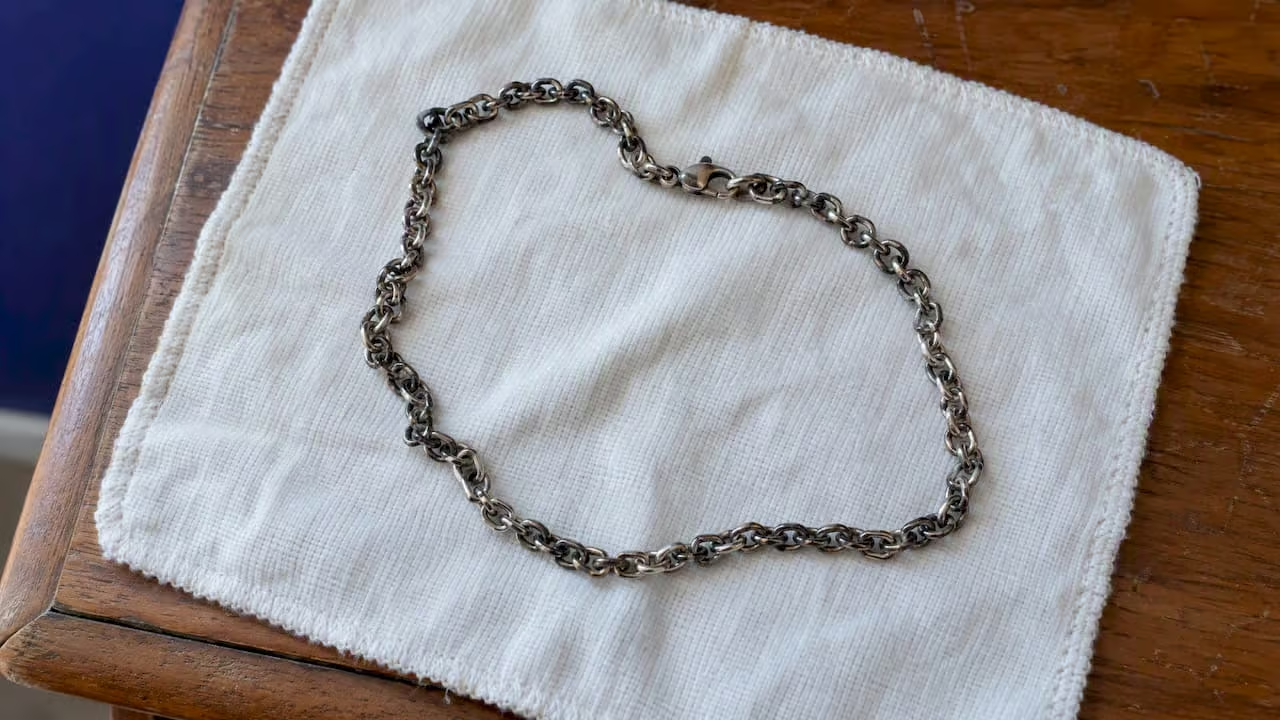
The same copper explains the occasional green or gray mark on skin. That’s a harmless reaction between the copper in the alloy and your skin’s moisture and acidity, and it doesn’t mean the silver is fake.
If it bothers you, a thin coat of clear nail polish on the inside of a band is an old trick, though I’d simply wipe the piece after wearing it and keep it dry.
Storage matters more than most people expect. My guide on preventing silver tarnish with proper humidity care explains how to slow the process, and the broader piece on how to prevent jewelry from tarnishing covers everyday habits.
If you wear sterling beside pearls or stones, the advice on how to care for handmade gemstone jewelry keeps both looking their best.
What 925 doesn’t mean
It helps to understand the number’s limits, because they matter when you’re shopping.
- It isn’t a quality grade of the whole piece. The stamp covers the metal. It says nothing about a stone’s cut, a clasp’s strength, or the quality of the knotting on a pearl strand.
- It isn’t a value guarantee. Sterling jewelry is valued far more for its design and craftsmanship than its melt value. Don’t expect a stamp alone to make a piece an investment.
- It doesn’t mean solid throughout if it says “plated” anywhere. Look at the product description. Terms like “sterling silver plated” or “vermeil” mean a layer over something else.
- It isn’t a spiritual symbol. If you’re wondering whether 925 has hidden meaning, in jewelry it’s just a purity ratio. Numerology is a separate topic.
When the metal is the main question, comparing sterling to other options is fair. Our piece on sterling silver versus stainless steel in jewelry weighs durability, skin feel, and long-term value.
Our perspective at HerMJ
HerMJ designs focus on freshwater pearls, natural gemstones, and crystals, and we think of metal as the frame around the art. A stamp is where trust starts, but it isn’t where it ends. We’d rather you understand what you’re buying than simply take our word for it.
Here’s how I look at it. Handmade jewelry should deliver craftsmanship at a price that doesn’t feel out of reach, and that only works when you can tell what’s real.
So I encourage the same habits: read the description, check for the maker’s mark, and ask questions before you buy. If a piece in our shop is sterling silver, the product page has the details, and our team is happy to answer questions about any piece.
Good jewelry should feel like yours.
— Veronique
Pearl and gemstone pieces to see in person
If you’re checking stamps because you’re building a collection you’ll wear for years, start with the pieces where the metalwork and stones work together.
Our Sterling Silver Pearl Necklace and Green Tourmaline and Pearl Necklace are good places to look at how sterling frames a stone.
Browse the full range of pearl and gemstone jewelry at HerMJ, and US orders ship free with no minimum. International orders ship free on orders of $150 or more.
A quick checklist before you buy silver jewelry
- Look for 925, STERLING, or a clearly stated sterling description in the listing.
- Find a maker’s mark or brand name beside the stamp.
- Check whether the listing says “plated,” “filled,” or “vermeil.”
- Run the magnet test when the piece arrives.
- Read return and care information so you know what to expect.
- Store the piece dry and separate from other jewelry to limit scratches and tarnish. Our guide to storing necklaces without tangling helps here.
FAQ
What does 925 mean on jewelry?
It means the metal is sterling silver: 92.5% pure silver mixed with 7.5% other metals, usually copper. The copper makes the silver strong enough for everyday wear. The stamp indicates metal purity only, not the piece’s design or construction.
Is S925 real silver?
Usually, S925 indicates sterling silver, and many real pieces carry it. But a stamp alone can be faked, and plated base metal is sometimes marked 925. Look for a maker’s mark, test the main body with a magnet, and buy from a seller who clearly describes the metal.
Does 925 sterling silver tarnish?
Yes, and that’s normal. The copper in the alloy reacts with sulfur in the air, so real sterling darkens over time. Plated pieces can also tarnish when the thin coating wears away, so tarnish alone doesn’t prove what’s underneath. Dry storage and gentle polishing keep it under control.
What’s the difference between 925 and 999 silver?
999 fine silver is 99.9% pure, while 925 sterling is 92.5% pure. Fine silver is softer and bends or scratches more easily, so sterling is the usual choice for necklaces, bracelets, and earrings you’ll wear often. Both can tarnish.
Sources
- Buying Platinum, Gold, and Silver Jewelry | Consumer Advice (FTC)
- How to Tell if Silver Jewelry is Fake: 6 Tests to Try at Home | Jewelers Mutual
- Silver | U.S. Geological Survey
- Silver Statistics and Information | U.S. Geological Survey
- White Metal Options for Your Engagement Ring | GIA 4Cs
- Silver: A metal that shows its mettle | GIA 4Cs
- Ten Tips for Buying Jewelry | GIA 4Cs
Recommended
- The Value of Sterling Silver vs Stainless Steel in Jewelry
- Micron Gold Plating: What You Need to Know Before Buying
- What Is Hand Stamped Jewelry: A Beginner’s Guide
- What Is a Signature Jewelry Piece? Your Style Guide